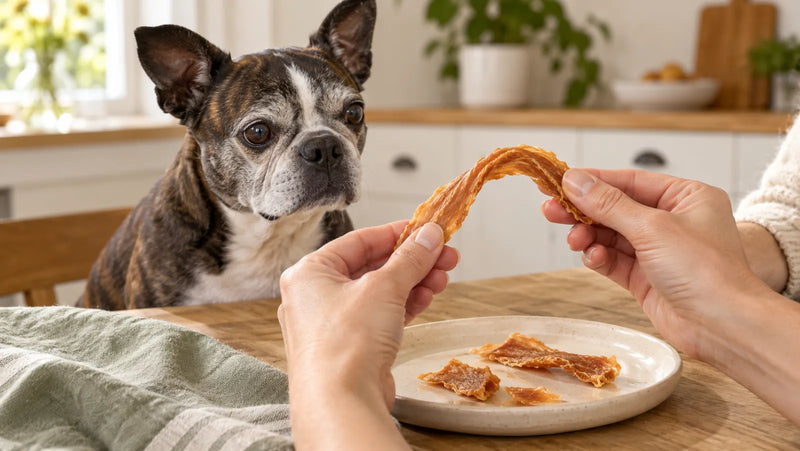
Dog treats for realtor closing gifts work when the client has confirmed there is a dog in the household and wants a pet-food gift. American Paws can fill customer-supplied private-label pouches from a 10 lb-per-product minimum, with wholesale pricing from $14/lb in the current catalog. The realtor or gift partner supplies the approved branded pouch and remains responsible for the outer welcome bag and final client handoff unless a written quote says otherwise.
Select the exact treat and pouch before ordering cards, tissue or boxes. Then plan the unopened shelf-life window, storage, quantity and delivery around the actual closing—not the date first entered into a transaction calendar. A delayed escrow should not leave an unlabeled food item in a hot car, an empty house or a welcome basket intended for a different household.
The strongest program feels personal without guessing. Confirm that the buyer wants a dog gift, keep the treat sealed in its finished food pouch, and include a non-pet alternative for anyone who declines. That turns a charming idea into a repeatable real estate closing-gift process.
Dog Treats for Realtor Closing Gifts: Quick Buying Facts
| Decision | Current American Paws fact | What the realtor must confirm |
|---|---|---|
| Recipient | A sealed dog-treat pouch can be a welcome-bag component for a confirmed pet-owning household | The client wants the gift and the selected ingredient is acceptable |
| Minimum | 10 lb per product | The exact product and total pounds; several products cannot be mixed to create one 10 lb minimum |
| Starting price | From $14/lb; see the current catalog | Current product price, private-label scope, packaging, freight, destination and timing |
| Private-label pouch | The customer supplies the approved printed pouch; American Paws fills the confirmed product and net weight, adds an oxygen absorber where specified, and heat-seals | Artwork, printing, pouch fit, label version, delivery date and physical sample |
| Welcome bag | Outer-bag assembly and one-by-one client delivery are not automatically included in food-pouch filling | Who supplies, kits, stores, addresses and hands off each finished gift |
| Company fact | California-based; FDA Food Facility Registration No. 13526766664 | The registration is not FDA product approval, label approval, certification or endorsement |
The American Paws private-label dog-treat manufacturing guide explains the full program. Use the wholesale program to review the business path and the private-label page to submit the actual product, pouch, quantity, destination and timing request.
Confirm the Household Wants a Dog Gift Before Ordering
A closing gift should recognize the client, not an assumption stored in a CRM. A social-media photo, an old conversation or a property tour with a dog does not establish that the household still has that pet, accepts food gifts, or can use the chosen ingredient. Ask a short, practical question before assigning a pouch to the transaction.
The confirmation can stay simple: “Would a sealed dog-treat welcome gift be useful for your household?” If the client says yes, share the exact product and ingredient information before the handoff when possible. The realtor does not need a veterinary history. The buyer only needs a clear opportunity to accept the identified gift, decline it, or choose a non-pet alternative.
- Do not infer pet ownership. Confirm it directly and close to the intended gift date.
- Do not hide the food identity. Keep the complete label visible on the finished sealed pouch.
- Do not pour loose treats into a decorative jar or paper bag. The recipient needs the product identity, ingredient statement, net quantity, storage directions and business information that travel with the food package.
- Do not promise suitability for every dog. A household may decline because of diet, ingredient, texture, size, medical plan or personal preference.
A non-pet alternative also protects the relationship when a dog gift is no longer appropriate. The substitute might be a houseplant voucher, local-service credit or simple handwritten note. The point is not to collect private details; it is to avoid presenting food that the client did not request.
Choose One Treat Before Designing the Welcome Bag
Begin with one exact product. Record its current name, ingredient statement, texture, intended net weight, storage directions and package dimensions. Different dog treats occupy different amounts of space even at the same weight, and natural pieces can vary in shape and thickness. An empty pouch or product photograph cannot prove how a filled pouch will sit beside keys, a card or other welcome materials.
Compare the current American Paws dog-treat assortment product by product. A realtor gift program may prefer a small sealed pouch, but “small” is not a production specification. The proposed fill weight must fit the actual customer-supplied pouch while leaving a usable opening and clear heat-seal area. The finished pouch must also fit the actual outer bag without folding the label or pressing the food against sharp objects.
American Paws currently states a 12-month unopened shelf life for chicken jerky, freeze-dried chicken and freeze-dried beef liver when stored in a cool, dry place away from sunlight; reseal after opening. That statement should not be extended to every product. Confirm the selected item, current label, lot/date method and storage language for the order, then build the closing schedule inside that verified window.
Shelf life is not a reason to buy an unlimited backlog. Use expected closings, realistic delays and an intentional reserve. Keep finished pouches in their approved storage conditions, rotate them by the recorded date, and never replace a lot or date marking with an improvised office sticker.
Separate the Private-Label Food Pouch From the Realtor Welcome Bag
The phrase “branded welcome bag” can blur three different jobs: making the food pouch, assembling the outer gift, and delivering it to a named client. Define each job before asking for a quote.
The realtor supplies approved branded pouches and artwork
The established private-label process uses customer-supplied printed pouches. The realtor, brokerage or gift partner supplies the approved logo artwork, arranges printing and sends the physical pouches for the confirmed job. American Paws does not automatically print a real estate logo merely because an order is private label.
The private-label dog-treat packaging guide covers usable opening width, food-contact suitability, barrier evidence, closure, clear seal zone, label layout, fill-weight fit and artwork version. Test a physical sample before authorizing a full pouch run. A beautiful digital mockup cannot demonstrate whether the opening works with the product or whether the seal area remains clean and flat.
American Paws fills and seals the confirmed treat pouch
For the confirmed scope, American Paws fills the selected product and approved net weight into the customer-supplied pouch, adds an oxygen absorber where specified, and heat-seals the package. The exact product, pounds, fill weight, pouch, label version, count, destination and schedule must appear in the order discussion.
American Paws is based in Highland, California, and uses FDA Food Facility Registration No. 13526766664. State the registration as a facility fact. It does not mean FDA approved the realtor campaign, reviewed the logo, certified the pouch, approved the finished label or endorsed the treat.
The realtor or fulfillment partner handles final kitting and delivery
Unless the quote explicitly includes more, plan for the realtor, brokerage, closing-gift vendor or local fulfillment partner to receive the sealed pouches and assemble the outer welcome bags. That party adds the card, tissue, home-service information or other approved components, stores the kits correctly, and coordinates the final office, property or doorstep handoff.
Keep sharp keys and metal tools from rubbing directly against the food pouch. Keep candles, fragrance, liquids, chocolate and human snacks physically separated so leaks, odor transfer or ingredient confusion do not affect the sealed dog-treat pack. A simple kit with fewer components is often easier to inspect and repeat.

Calculate Inventory From Fill Weight and Expected Closings
A pipeline count does not equal a pouch count. Separate signed transactions, probable future closings and unconfirmed leads. Then choose the fill weight and convert the planned finished pouches into pounds of one product.
Ten pounds contains 160 ounces. A planned 1 oz pouch therefore represents 160 theoretical pouches before samples, setup, verification, damage or replacement reserve. That is planning math, not a promised finished yield. The actual quote and production plan must use the approved product, net weight, pouch and documented reserve.
- Count confirmed opt-in households. Exclude clients who declined, have not answered or need a non-pet gift.
- Select one product and one net weight. Do not combine unrelated products in the same quantity calculation.
- Multiply net weight by planned pouch count. Convert ounces to pounds and compare the result with the 10 lb-per-product minimum.
- Add a named reserve. Separate samples, damaged components and expected near-term closings instead of hiding them in a vague overage.
- Reconcile what is received and used. Record finished pouch count, lot/date information, assigned transactions, remaining inventory and storage location.
The dog-treat fundraiser planning guide covers a different channel, but its discipline around preorders, receiving, controlled handoffs and reconciliation is useful here too. A realtor program should preserve that control without borrowing the fundraiser's sales model.
Plan Around a Closing Date That Can Move
Closing dates change. Appraisal, underwriting, repairs, title questions, insurance, document corrections or the client's own schedule can move the handoff after a gift has been ordered. Treat the first calendar date as a planning input, not a guarantee printed into packaging.
Work backward through the real dependencies: product selection, sample decision, artwork approval, pouch production, physical pouch delivery, package test, fill-and-seal scheduling, freight to the kitting location, outer-bag assembly and the final client appointment. Ask American Paws for the current lead time after the product, pounds, pouch status, destination and desired in-hands date are known. There is no responsible universal turnaround promise.
Create a delay rule before the first kit is assembled. Decide who updates the recipient assignment, where sealed pouches remain stored, who checks the current date and package condition before handoff, and what happens when a client changes address or receives keys remotely. Never leave food unattended at an empty property without the client's permission and a delivery plan appropriate for the weather and package.
For brokerages with many agents, use one central record rather than separate desk stashes. Log each finished pouch by product, lot/date, storage location and assigned transaction. That makes it possible to move a pouch to another confirmed household without losing traceability when one closing slips.
Keep the Food Label Clear Even When the Logo Leads
A prominent real estate logo can identify the giver, but it cannot replace food information. The FDA animal-food labeling overview identifies federal basics including the product identity, net quantity, manufacturer or distributor name and place, and a listing of all ingredients. FDA also notes that state laws apply, so distribution markets matter.
The private-label dog-treat label requirements checklist organizes product identity, net quantity, ingredient statement, guaranteed analysis, business information, feeding purpose and lot/date planning. Use current federal and state sources and qualified review when a legal determination is needed.
Keep campaign copy modest. Avoid “safe for every dog,” “hypoallergenic,” “calming,” “therapeutic,” “vet approved” and similar health or universal-suitability statements unless they are true, appropriately supported and permitted. A welcome card should not add claims that would be inappropriate on the food package. A warm line about celebrating the new home is enough.
Make the Gift Realtor-Specific Without Rewriting a Corporate Program
A realtor program is defined by the transaction handoff: a known household, one property milestone, a closing date that may move, local assembly and a direct client relationship. The dog-treat corporate-gift planning guide covers the broader employee, client, event and holiday-box use case, including distributed recipient lists and outer-box fulfillment. Use that broader process when the campaign is not tied to individual home closings.
For a real estate gift, personalization can come from the outer card and timing rather than extra claims on the food. A message can welcome the household, identify the sealed treat as a gift for their dog, and remind the recipient to review the label before feeding. Keep brokerage promotions, referral requests and service-provider coupons separate from the required food information.
Run one physical pilot through the actual handoff. Fill the outer bag with the sealed sample pouch, keys or key envelope, card and every planned insert. Carry it in the same vehicle, store it for the expected interval and open it in the intended order. Check the seal, label visibility, abrasion, crushed pieces, odor transfer, card condition and whether the bag still looks deliberate rather than crowded.
Realtor Closing-Gift Handoff Checklist
- Confirm that the client wants a dog gift. Prepare a non-pet alternative.
- Select the exact product. Record the ingredient statement, texture, current unopened shelf-life statement and storage directions.
- Choose and test the fill weight. Use the real product in the real customer-supplied pouch.
- Approve one artwork and label version. Keep the realtor logo from displacing required food information.
- Convert planned pouch count to pounds. Apply the 10 lb minimum to each product separately.
- Submit the full job for a current quote. Include product, pounds, net weight, pouch status, destination and requested in-hands date.
- Assign outer-bag work. Name the party responsible for inserts, kitting, storage, addresses and final delivery.
- Build one complete pilot. Inspect it after realistic storage and transport.
- Set a closing-delay rule. Preserve label, lot/date and recipient records when the calendar changes.
- Inspect before handoff. Verify the correct client, intact seal, visible label and appropriate package condition.
Frequently Asked Questions
Can American Paws print my real estate logo on the bags?
The established private-label process uses customer-supplied approved printed pouches. The realtor, brokerage or gift partner arranges the artwork, printing and pouch delivery unless a different service is confirmed in writing. Test a physical pouch before a full print run.
What is the minimum order for realtor closing-gift pouches?
The current minimum is 10 lb per product. It is not a mixed 10 lb across several products. Wholesale pricing starts from $14/lb in the current catalog; confirm the exact product price, private-label scope, packaging, freight, destination, availability and timing for the proposed job.
Can I use small pouches for one-dog households?
A small pouch can work when the physical sample fits the selected product and net weight while preserving a usable opening, food-appropriate barrier, clear seal area, closure and readable label. The package size does not remove the 10 lb-per-product minimum, and natural pieces may require more volume than an empty-pouch mockup suggests.
How long do the treats stay fresh for a closing-gift program?
American Paws currently states a 12-month unopened shelf life for chicken jerky, freeze-dried chicken and freeze-dried beef liver when stored in a cool, dry place away from sunlight; reseal after opening. Confirm the selected SKU, current label, lot/date method, storage and planned handoff window. Do not apply that statement to every product.
Does American Paws assemble and deliver each welcome bag?
Do not assume outer-bag assembly or individual delivery is included. The established private-label scope is filling the confirmed product and net weight into customer-supplied approved pouches, adding an oxygen absorber where specified, and heat-sealing. The realtor or fulfillment partner handles final kitting and client delivery unless the quote expressly includes more.
What if the closing date changes?
Keep finished sealed pouches under the exact storage directions, update the central recipient assignment, and confirm any material schedule or destination change. Preserve the package's original lot/date information. A postponed closing does not justify relabeling food or leaving it unattended at the property.
Can one 10 lb order cover two different products?
No. The minimum applies to each product separately. If a program uses two treats, calculate the pounds, pouch, label, count and reserve for each one and request a quote for both.
Send a Complete Realtor Gift Request
A useful request lists the expected number of confirmed dog households, exact product, pounds per product, planned net weight, pouch dimensions, artwork and printing status, physical sample status, outer-bag assembler, storage location, shipping destination, requested in-hands date and pilot need. Include the contingency for closings that move.
Ready to plan a sealed dog-treat welcome gift for new homeowners? Send those details through the American Paws private-label page. The team can confirm the current product choices, 10 lb-per-product minimum, catalog pricing, customer-supplied pouch process, freight and timing for the actual realtor program.