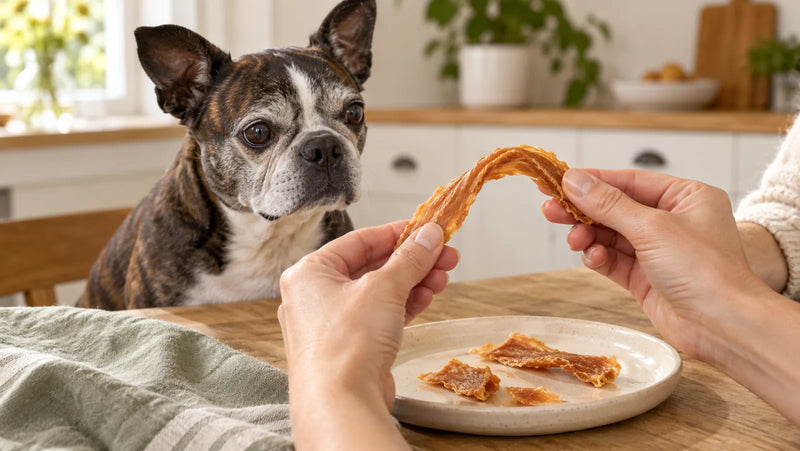

Wholesale dog treats for veterinary clinics should be selected by job, patient restrictions, and traceability—not flavor or price per pound alone. A controlled program uses tiny, quick rewards for approved exam-room reinforcement, keeps open staff stock separate from sealed front-desk retail, and records the exact product offered. Single-ingredient labels can make screening easier, but the medical team still decides whether any treat fits an individual dog.
A clinic is not an ordinary treat counter. One patient may be fasting, another may be on an elimination diet, and a third may become more reactive around food. The same bag can be appropriate for one use and wrong for another. Define the use case first; then compare ingredients, calories, texture, packaging, storage, lot identity, and the supplier's current terms.
Wholesale Dog Treats for Veterinary Clinics: Quick Framework
| Clinic job | What the treat must do | Control before use | Inventory lane |
|---|---|---|---|
| Routine exam or sample collection | Break into tiny pieces, disappear quickly, and create little mess | Confirm owner permission, diet fit, swallowing fit, and behavior fit | Open staff-use stock |
| Take-home reinforcement plan | Match the veterinary team's written plan and the owner's handling ability | Name the exact product, amount, and stop conditions | Sealed labeled package |
| Front-desk retail | Give the buyer an intact ingredient list, feeding role, storage directions, and lot identity | Keep the package sealed and make no universal health claim | Retail inventory |
| Recovery, prescription diet, or elimination trial | Follow the treating team's patient-specific nutrition plan | Do not substitute a wholesale treat for prescribed food or post-operative nutrition | Use only what the medical record approves |
The first three lanes can support a well-run practice. The fourth is a medical decision. A product being soft, small, freeze-dried, or single-ingredient does not make it suitable after anesthesia, dental work, gastrointestinal illness, or another procedure.
Start With the Exam-Room Job
The AAHA Canine and Feline Behavior Management Guidelines describe food rewards as one tool for distraction, redirection, counterconditioning, and reducing fear and stress. They also urge caution about food allergies and about dogs that become more aggressive in the presence of any food. That is a useful purchasing boundary: a reward can assist handling, but food is not automatically the right tool for every patient.
For routine handling, the useful unit is the piece the patient receives, not the full treat in the bag. Test whether one piece can be divided cleanly into tiny rewards without dangerous shards, oily residue, or excessive crumbs. Staff should be able to deliver it quickly and stop immediately when the patient refuses food, gulps, coughs, guards, becomes more aroused, or the medical team changes the plan.
Reward value also depends on the job. A brief weight check may need no food. A longer cooperative-care sequence may need multiple tiny reinforcers, all counted together. Professional trainers making hundreds of repetitions face a different operating calculation; the separate guide to wholesale dog treats for dog trainers focuses on usable rewards per pound, breakability, delivery speed, and working stock.
Put Permission and Medical Restrictions Ahead of the Treat Jar
A visible staff checklist prevents a friendly gesture from bypassing the medical record. Before offering food, confirm the fields that matter for that patient and visit:
- Owner permission: may the clinic use food, and did the owner bring an approved option?
- Current diet: ordinary maintenance food, veterinary therapeutic diet, elimination trial, weight-loss plan, or another restricted plan.
- Known or suspected reactions: named proteins, other ingredients, and any uncertainty that should stop use.
- Fasting or procedure instructions: the treating team decides whether food is permitted before or after care.
- Mechanical fit: teeth, oral pain, swallowing history, piece size, and the dog's eating style.
- Behavior: food motivation, guarding, frantic grabbing, nausea, refusal, or escalating arousal.
- Calorie plan: every clinic reward joins the day's other treats, toppers, pill foods, and table extras.
Record the exact SKU or ingredient rather than “clinic treat.” If an owner later reports a reaction, the practice needs the product name, protein, lot or date identity, amount, and timing. A generic jar with no retained label removes the information the team would need most.
Single-Ingredient Helps Screening; It Does Not Mean Hypoallergenic
A one-ingredient label answers one practical question: what named food entered the product? That can be easier to review than a long formula with flavors, starches, humectants, or mixed proteins. It does not prove that the named protein suits every dog, and it does not make chicken, beef, or another meat allergy-proof.
The Merck Veterinary Manual overview of canine allergies explains that an elimination trial includes treats and everything else the dog eats, including table food, flavored medications, and toothpaste. During the trial, dogs should receive only foods and treats recommended by the veterinarian. A clinic's ordinary reward jar can therefore invalidate a carefully controlled trial even when the treat looks simple.
Use “single ingredient” as a label fact, not a medical claim. Maintain an approved-option process for patients with diet restrictions, and allow the owner to provide the exact veterinary-approved food when that is the clearest route. Never relabel a conventional treat as hypoallergenic, prescription, sensitive-stomach, or recovery food merely because the ingredient list is short.
Match Texture and Portion to the Patient and Procedure
Tiny, quick rewards for routine handling
For an approved dog, a clinic reward should be small enough to finish quickly and easy for staff to divide consistently. The full piece may be much larger than the working reward. Weigh several representative pieces and several staff-made fragments before estimating use; irregular whole-cut treats do not produce an honest universal piece count.
The WSAVA dog-treat guide recommends that treats provide no more than 10% of a dog's daily calories and notes that conventional treats may not suit a dog with a medical condition, dietary sensitivity, or veterinary-prescribed diet. Ten percent is a ceiling shared by all extras, not a clinic target. The treating team may set a lower allowance or no extras at all.
Dental, swallowing, gastrointestinal, and recovery plans
Texture is a patient decision, not a marketing adjective. A dry piece that crumbles easily may still be wrong for a dog with oral pain, aspiration risk, nausea, a prescribed texture, or a procedure-specific feeding plan. A flexible strip can still demand chewing and can still be too large. “Soft” on a sales sheet is not clinical clearance.
After surgery or another procedure, follow the discharge plan for timing, food, water, medication delivery, and portion. Do not position jerky, freeze-dried meat, or any retail dog treats as post-operative nutrition. If the team approves a food reward, document the exact choice and amount; if it does not, use another reinforcement method.
Keep Clinic-Use Stock Separate From Front-Desk Retail
Open clinic stock is an operating supply. Store it in a clean, food-safe, closed working container; retain the original label and lot identity; date the opening; follow the product's current storage directions; use dedicated clean tools; and discard stock that has an uncertain identity, handling history, odor, moisture change, pests, or damaged packaging. A working cup should hold only the small quantity needed for the session.

Front-desk inventory is different. Keep take-home bags factory sealed with the current label intact. Do not refill a retail pouch from an open bulk case, cover its lot information, or convert an operating supply into an unlabeled customer unit. The practice can explain why it selected a simple assortment without implying that clinic resale is a blanket veterinary endorsement.
Multi-dog daycares face a related but distinct permissions-and-portioning problem. Their workflow is covered in the guide to wholesale treats for dog daycare and boarding facilities; a clinic should keep its own medical-record and patient-screening controls rather than copying a general facility jar.
What a Veterinary Buyer Should Ask a Supplier
Request evidence for the exact item, not only the brand. A useful supplier packet or current product page should let the buyer verify:
- the complete ingredient statement and intended species;
- whether the item is a treat or another feeding type;
- guaranteed analysis and calories in a usable unit;
- country-of-origin and responsible-company statements for that product;
- package sizes, approximate dimensions, and realistic texture description;
- lot code, best-by information, unopened and opened-storage directions;
- current wholesale format, minimum, availability, and price;
- complaint, quality, withdrawal, and recall contacts; and
- what evidence must stay with open clinic stock and sealed resale inventory.
The FDA's complete-and-balanced pet-food explainer notes that treats, snacks, and supplements are generally not complete and balanced diets. That feeding role belongs in staff language and front-desk explanations. A high-protein meat treat is still an extra; it does not replace balanced food or a veterinary nutrition plan.
Facility registration also needs careful language. The FDA's animal-food business guide explains when manufacturing, processing, packing, or holding animal food can require food-facility registration. Registration identifies a facility under that federal system; it is not FDA product approval, a certification seal, or a promise that one item suits one patient.
How to Forecast a 10 lb Per-Product Order
The American Paws wholesale minimum is 10 lb per product. That is a purchasing unit, not a feeding instruction; how many patient rewards a case yields depends on the clinic's own fragment size. Whole-cut size and the clinic's chosen fragment size vary, so forecast from a small controlled test rather than an invented pieces-per-pound number.
- Define eligible visits. Estimate how many dogs may receive this exact product after screening—not total appointments.
- Test the working fragment. Break and weigh a realistic tiny reward several times; record crumbs and unusable pieces.
- Measure one week. Track actual grams opened, offered, refused, discarded, and carried into the next shift.
- Separate retail demand. Forecast sealed take-home bags independently from open clinical stock.
- Add only a modest buffer. Storage life, space, cash, and staff consistency matter more than a low theoretical cost per piece.
Public program pricing starts at $14/lb; see the current catalog. The exact item, current quote, format, availability, freight, and timing need confirmation. Start with one protein or texture that has a defined clinic job before adding variety that complicates screening and stock control.
How American Paws Fits a Controlled Clinic Program
American Paws operates in Highland, California and lists FDA Food Facility Registration No. 13526766664. Current meat-treat formats include products with short, readable labels, but the buyer must verify the live facts for the exact item. Compare the current American Paws dog treats by ingredient, feeding role, calorie information, size, texture, and storage directions rather than treating the whole assortment as one formula.
The wholesale path is for current finished products and bulk purchasing. The separate private-label path uses customer-supplied approved bags: American Paws fills the selected product, adds an oxygen absorber, and heat-seals the package within the agreed scope. Review the broader private-label dog treat manufacturer guide before deciding whether a clinic needs ordinary wholesale, sealed resale inventory, or its own approved branded package.
For current wholesale products and a clinic-specific quote, use the American Paws wholesale program. If customer-supplied branded bags are genuinely part of the plan, review the American Paws private-label program separately. Do not mix the two paths in an inventory forecast or assume the same packaging, unit count, cost, or lead time.
A Six-Step Clinic Purchasing and Handling SOP
- Define the job. Write whether the item is for routine reinforcement, a documented take-home plan, or sealed retail.
- Set exclusions. Put owner permission, diet trial, prescription diet, fasting, oral/swallowing, behavior, and calorie checks into the workflow.
- Audit the exact product. Verify ingredients, calories, texture, label, lot, storage, current terms, and contact path.
- Separate inventory. Keep open working stock, owner-supplied approved food, and sealed retail packages physically and administratively distinct.
- Train the team. Define who can approve, offer, record, replenish, clean, and discard each lane.
- Reorder from evidence. Use actual grams, waste, exclusions, retail sell-through, and storage performance—not enthusiasm or gross appointment count.
A one-page SOP is more valuable than a crowded treat bar. It gives a new technician the same stop rules as an experienced buyer, preserves patient and lot identity, and makes the next order depend on observed use.
Frequently Asked Questions
What is the American Paws wholesale minimum for veterinary clinics?
The current minimum is 10 lb per product. Contact American Paws for the current item list, quote, format, availability, freight, and timing. Ten pounds is an order quantity, not a patient serving recommendation.
Are single-ingredient treats hypoallergenic?
No. A single-ingredient label can simplify ingredient review, but a dog can react to the named protein. Elimination-diet, prescription-diet, and allergy-management patients should receive only what the treating veterinary team approves.
Can a clinic use wholesale treats during exams?
Food rewards can support positive reinforcement for some patients when the veterinary team approves them. Screen owner permission, diet, fasting status, swallowing, behavior, and calories first. Stop when food is contraindicated or increases risk or arousal.
What treats should a dog have after surgery?
Follow the individual discharge plan. The veterinarian decides whether, when, and what the dog may eat after a procedure. A wholesale or retail treat should never be presented as universal post-operative nutrition.
Can a clinic resell treats from an opened bulk case?
Do not turn open operating stock into unlabeled retail units. Keep customer inventory sealed with the current label, lot, best-by, ingredient, storage, and responsible-company information intact. Confirm the intended wholesale and retail format before ordering.
Does FDA registration mean FDA approval?
No. Food-facility registration is not product approval, certification, or patient-specific clearance. Evaluate the exact product facts and the clinic's medical and operating controls separately.
Build One Controlled Reward Lane First
Begin with one defined clinic job, one approved screening workflow, and one traceable product. Measure actual use, refusals, waste, storage, and retail demand before adding another protein or format. That keeps the reward program useful to the team without letting a convenient jar outrun the medical record.
Send American Paws the intended clinic use, preferred protein and texture, pounds per product, storage plan, patient exclusions, retail needs, and target date through the wholesale inquiry page. The useful order is the one the practice can screen, identify, store, portion, explain, and reorder consistently.