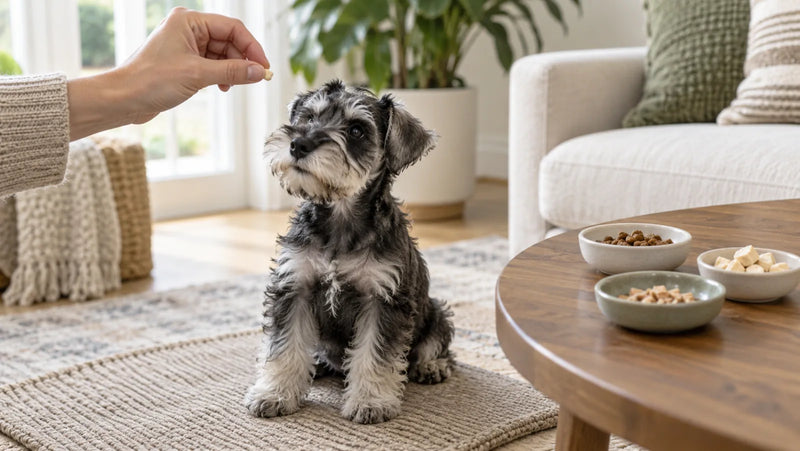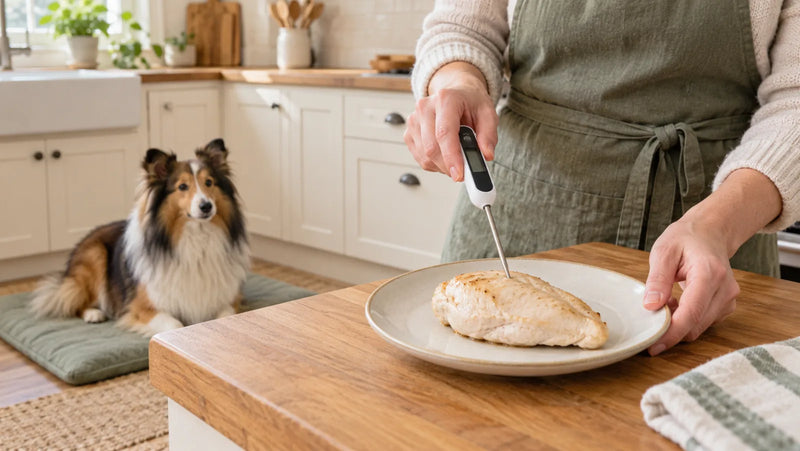

Can dogs eat cauliflower? Yes—dogs can eat plain cauliflower in small, bite-size pieces. Raw florets can be firm, while steamed or boiled cauliflower is usually easier to chew. Either form should be unseasoned, cooled, and counted with every other treat.
Start with one small piece. A larger unfamiliar serving can cause gas or stomach upset, and a hard chunk can be awkward for a dog that gulps. Keep cheese, butter, cream, onion, garlic, salt, sauces, and rich cauliflower dishes out of the dog’s bowl because the complete recipe—not the word “cauliflower”—decides the real risk.
Can Dogs Eat Cauliflower? The Short Answer
| Cauliflower form | Share it? | Safer decision |
|---|---|---|
| Washed raw floret | Usually, in a small piece | Trim it to the dog’s chewing style and supervise |
| Steamed or boiled plain | Usually, in a small amount | Cook until easy to cut, cool fully, and add nothing |
| Coarse stem, core, or outer leaf | Not the easiest part to offer | Remove tough pieces, or cook and mince a tiny amount rather than giving a large fibrous chunk |
| Cauliflower with cheese, butter, cream, oil, or salt | Skip as an intentional treat | Richness and seasoning can cause a separate problem |
| Casserole, crust, frozen meal, restaurant side, or unknown recipe | Do not assume | Check every ingredient, package, and swallowed object before deciding what to do |
The veterinarian-reviewed PetMD cauliflower guide describes plain cauliflower as non-toxic to dogs, notes that raw or completely plain cooked pieces can be offered, and warns that larger amounts can cause extra gas and stomach discomfort. That is a useful general answer, not clearance for every dog or recipe.
A dog on a prescription diet, an elimination trial, or an individualized medical feeding plan should not receive an extra food unless the veterinarian responsible for that plan approves it.
Raw vs. Cooked Cauliflower for Dogs
Raw florets
Raw cauliflower is edible, but it is firm and fibrous. Wash it, remove spoiled areas, and cut one floret into a piece the individual dog can control rather than swallow whole. A small dog or a fast gulper may need the piece minced or may be better served a softer cooked form.
Supervision matters more than a decorative “bite-size” label. Watch how the dog picks up, chews, and swallows the first piece. Do not throw a hard floret for the dog to catch in the air, and do not leave a bowl of raw cauliflower within reach.
Steamed or boiled cauliflower
Plain steaming or boiling softens the vegetable without requiring butter, oil, salt, or sauce. Cook it until a fork or knife moves through the piece easily, then let it cool completely. Offer it alone so any response can be connected to one new food.
The VCA/LifeLearn vegetable-treat table lists 50 grams of boiled or steamed cauliflower at about 11 calories. That number is a reference point, not a serving instruction: 50 grams can be a visually large amount for a small dog, and calorie fit does not erase gas, texture, or prescription-diet concerns.
Frozen, riced, mashed, crust, and casserole forms
A frozen floret is harder than a thawed one and can be a poor match for a small dog, dental limitation, or gulping habit. If using previously frozen plain cauliflower, thaw it and cut it to a manageable texture. Plain riced cauliflower can be easier to portion, but packaged versions may include seasoning, oil, or other vegetables.
“Mashed cauliflower” often means cauliflower mixed with butter, cream, cheese, salt, garlic, or seasoning. Cauliflower pizza crust can include cheese, egg, flour, oil, salt, onion, garlic, or toppings. Casseroles and restaurant sides can add the same ingredients. These are mixed dishes, so the dog’s answer comes from the complete recipe.
Can Dogs Eat Cauliflower Stems and Leaves?
The floret is the easiest part to standardize. A cauliflower stem, core, or outer leaf is not automatically a poison exposure, but coarse plant material can be tougher to chew and harder to portion. Large stem chunks can create a choking or obstruction concern, especially for small dogs and dogs that swallow before chewing.
For an intentional taste, trim away the coarse core and outer leaves. If someone wants to use a tender stem or leaf, wash it, cook it plain, mince it finely, and offer only a tiny amount after checking that it fits the dog’s diet. There is no nutritional reason to make a dog finish the whole plant.
If a dog already swallowed a small plain leaf or stem fragment and is acting normally, remove the remaining pieces and monitor. Trouble swallowing or breathing, repeated retching, vomiting, abdominal pain, marked lethargy, refusal to eat, or inability to keep water down needs prompt veterinary guidance.
How Much Cauliflower Can a Dog Eat?
There is no universal safe floret count. Pieces differ in size, dogs differ in calorie needs and digestive tolerance, and cauliflower shares one treat budget with every biscuit, chew, training reward, topper, and table-food extra offered that day.
Use this as a first-taste guide, not a daily allowance:
| Dog size | Conservative first taste | Preparation |
|---|---|---|
| Under 20 lb | One piece smaller than ½ inch | Softly cooked and minced if the dog gulps |
| 20–50 lb | One small ½-inch piece | Raw if chewed well, or softly cooked |
| 51–90 lb | One or two small pieces | Offer separately and watch the first response |
| Over 90 lb | Two small pieces | Do not scale up to a bowl because the dog is large |
Wait and observe before offering it again on another day. A dog that develops gas, loose stool, vomiting, reduced appetite, or discomfort does not need a larger trial. A dog that tolerates one piece still needs the full amount kept inside the veterinarian-approved extras budget.
PetMD and VCA both use the common guideline that treats and extras should remain no more than about 10% of daily calories, with the complete diet supplying the rest. Our daily dog-treat calorie guide explains how to share that single budget across every extra instead of assigning a separate 10% to cauliflower.
Why Cauliflower Can Cause Gas or Stomach Upset
Cauliflower is a cruciferous vegetable with fiber that reaches the gut and can be fermented by intestinal bacteria. Gas is a predictable possibility, particularly after a large or unfamiliar portion. Some dogs may also develop loose stool, vomiting, reduced appetite, or abdominal discomfort.
Mild gas after one small plain piece is different from a swollen painful abdomen, repeated unproductive retching, difficulty breathing, collapse, or severe restlessness. Those signs are not a reason to wait for a food article to settle the question; contact an emergency veterinary clinic.
Do not use gas as proof that cauliflower is “detoxing” the dog, and do not keep increasing the amount to build tolerance. Stop the new food, preserve the recipe or package if relevant, and ask the veterinarian about persistent or significant signs.
Cheese, Butter, Cream, Onion, and Garlic Change the Answer
A plain vegetable and a prepared side dish are different exposures. Butter, oil, cream, and cheese can turn a light piece of cauliflower into a rich, high-fat serving. Salt, stock, bouillon, bacon, gravy, and seasoning blends add more variables. The safest intentional share is plain.
Onion, garlic, leeks, and chives are Allium ingredients and are toxic to dogs. Powdered forms can be easy to miss in a cheese sauce, seasoning packet, frozen meal, soup, crust, or restaurant dish. Do not scrape off the visible sauce and assume the cauliflower underneath is cleared.
If a mixed dish was swallowed, write down the dog’s weight, time, possible amount, full ingredient list, product name, and any missing packaging, foil, skewer, or container part. Call the veterinarian, emergency clinic, or ASPCA Animal Poison Control at 888-426-4435 when a toxic ingredient may be involved. A consultation fee may apply. Do not induce vomiting or give a home remedy unless a veterinary professional directs it for that specific case.
How to Prepare One Plain Cauliflower Trial
- Confirm the diet fit. Ask first for a dog on a prescription diet, elimination trial, calorie restriction, or medical feeding plan.
- Wash and inspect. Remove spoiled areas, soil, packaging, bands, and coarse outer material.
- Choose the texture. Use one small raw floret for a careful chewer or steam/boil it plain until easy to cut.
- Trim the piece. Make it smaller than the dog can gulp; mince it for a tiny dog or one with limited chewing control.
- Cool and serve alone. Add no butter, oil, cheese, cream, salt, stock, onion, garlic, or sauce.
- Count and observe. Record it with the day’s other dog treats and stop if gas or digestive upset appears.

What to Do if a Dog Ate Cauliflower or a Mixed Dish
| What happened | Practical response |
|---|---|
| One small plain piece, dog comfortable | Remove extra access, count it with treats, and observe |
| Large amount of plain cauliflower | Call the veterinarian for an individual plan, especially for a small dog or one with health conditions |
| Repeated vomiting/diarrhea, pain, distention, lethargy, or poor appetite | Seek veterinary guidance promptly; do not keep testing food |
| Trouble swallowing/breathing or suspected blockage | Begin emergency veterinary care |
| Dish contains onion, garlic, another toxic ingredient, or swallowed packaging | Save the evidence and call now for case-specific toxicology or foreign-body advice |
| Recipe unknown | Treat “unknown” as useful information and contact the veterinarian rather than guessing |
Do not wait for symptoms when a known toxic ingredient may be present. Conversely, do not label every plain cauliflower nibble a poisoning emergency. The exact form, amount, dog, timing, recipe, and symptoms determine the next step.
Cauliflower vs. Broccoli and Brussels Sprouts
Cauliflower, broccoli, and Brussels sprouts are related vegetables, and all can produce gas when overfed. They are not interchangeable, however. The guide to broccoli for dogs owns broccoli florets, stalk texture, and its ingredient-specific cautions. The guide to Brussels sprouts for dogs covers that compact leafy vegetable and its preparation.
For a wider list of plain produce choices and foods to avoid, use the dog-safe vegetable guide. The separate guide to butternut squash for dogs covers a cooked, peeled squash with different texture and preparation needs. Do not transfer a portion or cooking rule from one vegetable to another.
Frequently Asked Questions
Can puppies eat cauliflower?
A weaned puppy may be able to taste one tiny plain cooked piece, but growth nutrition leaves little room for extras. Ask the puppy’s veterinarian, keep the complete growth diet in charge, and use a texture the puppy can control. Do not introduce several new foods on the same day.
Can dogs eat raw cauliflower?
Yes, many dogs can eat one small washed raw floret. Cut it to the dog’s chewing ability and supervise because raw cauliflower is firm. A gulper, tiny dog, or dog with dental or swallowing limitations may need a softer form or a different treat.
Can dogs eat cooked cauliflower?
Yes, when it is steamed or boiled plain, cooled, and served in a small piece. Do not add butter, oil, cheese, cream, salt, stock, onion, garlic, gravy, or seasoning.
Can dogs eat cauliflower leaves or stems?
A small plain fragment is not automatically a toxic exposure, but coarse leaves, core, and stem are harder to standardize and large pieces can be difficult to chew or pass. For an intentional share, remove the toughest parts or cook and mince a tiny amount.
Can dogs eat cauliflower cheese or cauliflower pizza crust?
Do not assume they can. Cheese sauce and crust recipes may contain fat, salt, dairy, onion, garlic, egg, flour, oil, or other toppings. Read the complete recipe or package. If the dog already ate it, use the actual ingredients and amount when calling the veterinarian.
When should I call a veterinarian?
Call for a large amount, repeated vomiting or diarrhea, abdominal pain or swelling, marked lethargy, poor appetite, trouble swallowing or breathing, collapse, a suspected blockage, a prescription-diet conflict, or any mixed dish that may contain onion, garlic, another toxin, or swallowed packaging.
Keep Cauliflower Plain and Optional
Cauliflower can be an occasional extra, not a required part of a dog’s diet. One small plain piece, an appropriate texture, and an honest count inside the day’s treat budget are enough. If it causes gas or discomfort, choose something else.
Prefer a fully labeled reward instead of table food? Single-ingredient formats such as dehydrated chicken hearts and chicken gizzards in the current American Paws dog-treat assortment each carry their own ingredient list, format, calories where listed, and feeding directions. No dog treat or vegetable replaces a complete diet or case-specific veterinary advice.