

cat treats
Can Cats Eat Shrimp? Cooked, Plain and Peeled — A Few Pieces Only
Learn which shrimp form a healthy adult cat may try, how to remove the shell, tail and vein, how to cook it plainly, and how small the first taste should be.
Your Cart 0
Item added to your cart

The American Paws Journal
Expert guides, ingredient insights, and care tips from our team — for dogs and the people who love them.
Browse ArticlesBrowse by topic

bones
Cook salmon for dogs to 145°F without oil, salt, or seasoning; remove skin and every pin bone, then serve a conservative curren...

canned fish
Tuna is not acutely poisonous, but repeated or large servings add avoidable mercury exposure; skip it as a routine treat and ch...

dog treats
Dogs may have a small amount of plain, fully cooked shrimp after every shell, leg, and tail is removed; raw shrimp, rich season...

bones
Dogs may eat small amounts of fully cooked, boneless, unseasoned lower-mercury fish; species, raw-fish infection, bones, mercur...
dog chews
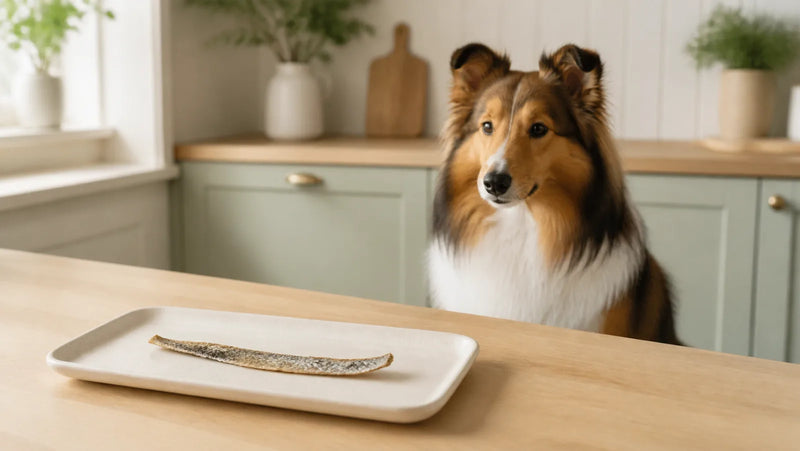
Pollock-skin chews are often thin and crisp, but the real product matters. Compare cod and salmon, then check fat, freshness, s...
buying guide
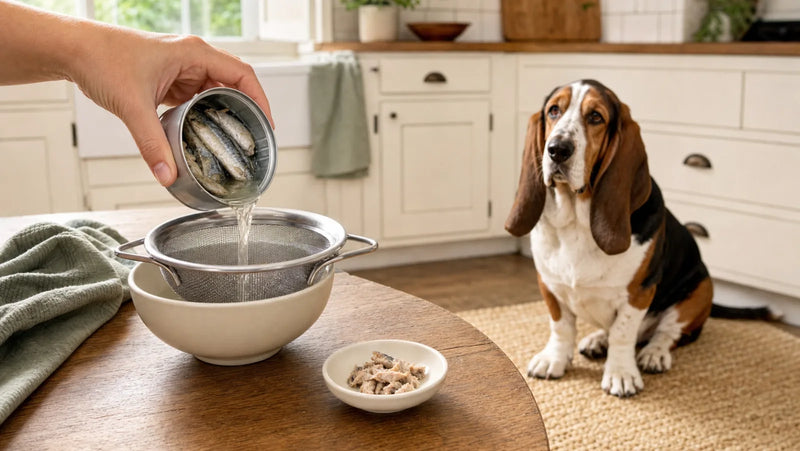
Learn how to choose a plain water-packed, no-salt-added sardine can, inspect the package, handle soft bones, and measure a smal...

dog treat safety
Compare cod, salmon, and pollock fish-skin treats with a practical guide to labels, omega-3 claims, freshness, storage, portion...
dog treats
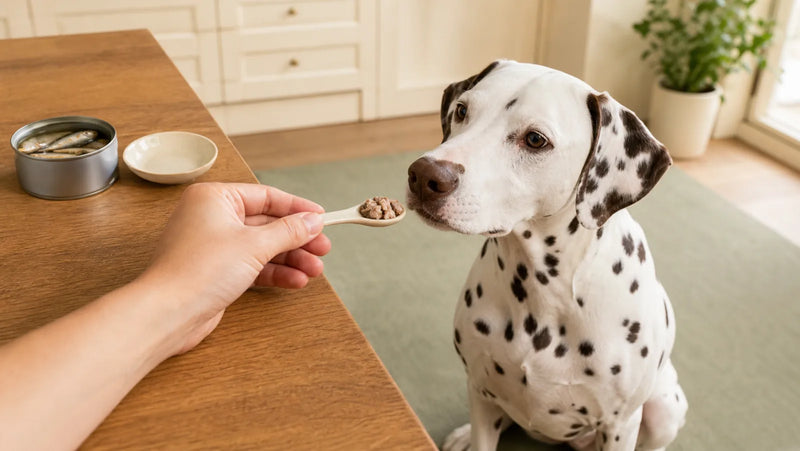
Sardines can provide useful omega-3 fats and protein. See the benefits, conservative weekly frequency by dog size, and the safe...
dog treats
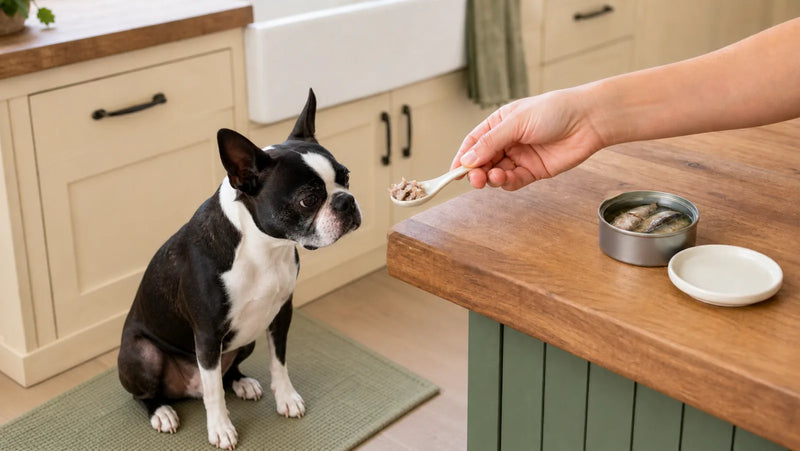
Learn how to choose plain no-salt-added sardines, handle soft bones, compare mercury risk, and calculate a small serving from t...
No articles in this topic yet.



