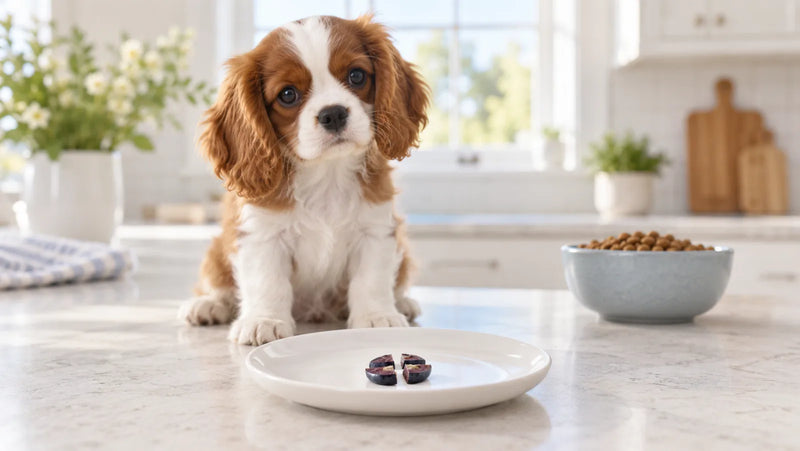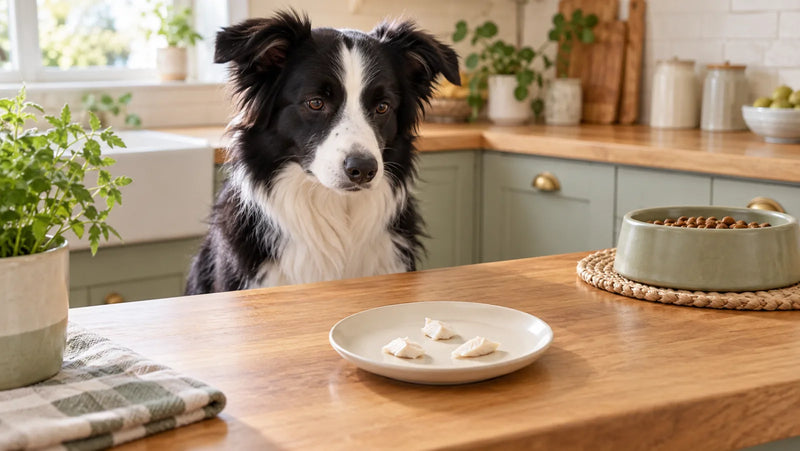

Can dogs eat shrimp? Yes—many healthy adult dogs can have a small taste of plain shrimp that is fully cooked, cooled, and completely peeled. Remove the head, shell, legs, and tail before cutting the meat into a dog-appropriate piece. Raw shrimp, fried or breaded shrimp, cocktail sauce, garlic butter, and heavily salted or pre-seasoned shrimp stay out of the dog’s bowl.
Shrimp is an optional extra, not a required source of protein and not a replacement for complete and balanced dog food. The safest first serving is deliberately tiny because shrimp size varies and a dog can react to a new food even when the food is not generally considered toxic.
Can Dogs Eat Shrimp? The Quick Answer
- Plain, fully cooked shrimp meat: a very small amount may be suitable for an otherwise healthy adult dog.
- Raw or undercooked shrimp: skip it because cooking is the practical way to reduce pathogen risk.
- Shell, tail, head, and legs: remove every part. They can create choking, mouth-injury, or gastrointestinal foreign-body concerns.
- Fried, breaded, buttery, spicy, sauced, brined, or heavily salted shrimp: do not choose it as a dog treat. The full recipe and label matter after an accidental theft.
- A dog with a prior seafood reaction, prescription or elimination diet, swallowing problem, or nutrition-sensitive medical condition: ask the veterinarian before sharing—or simply skip shrimp.
The American Kennel Club’s shrimp guidance reaches the same qualified conclusion: cook shrimp, remove the shell, avoid fried or breaded preparations, and keep portions small. A yes to one peeled bite is not permission to share the restaurant plate.
A Safe Shrimp Has to Pass Five Checks
The word shrimp does not describe preparation, attached parts, seasoning, amount, or the individual dog. Use all five checks before offering any.
| Check | What to confirm | Why it matters |
|---|---|---|
| Cooking | The meat is fully cooked, firm, pearly, and opaque | Raw seafood can carry harmful germs that appearance alone cannot rule out |
| Physical parts | Head, shell, legs, and tail are completely removed | Hard or sharp pieces can choke, scratch, lodge, or obstruct |
| Recipe and label | No garlic, onion, heavy salt, butter, oil, sauce, breading, or unknown seasoning | A mixed dish creates different ingredient and calorie questions |
| Amount | The first taste is a cut piece, not a skewer, bowl, or handful | Shrimp size varies and every extra shares one calorie budget |
| Dog | No known reaction, diet conflict, swallowing issue, or veterinary restriction | A generally edible food can still be wrong for one dog |
If any check is unknown, there is no benefit to guessing. Keep the food, package, or restaurant ingredient list available and ask the veterinary team when the dog has already eaten it.
Can Dogs Eat Raw Shrimp? Skip It
Do not plan to feed raw shrimp. AKC warns that uncooked shellfish may contain harmful pathogens. The FDA’s fresh and frozen seafood safety guide likewise recommends thorough cooking to reduce foodborne-illness risk and notes that freezing does not kill every harmful germ.
Freezing, ceviche, and a quick sear are not substitutes for full cooking
A package marked previously frozen does not mean ready to eat. Acid in ceviche, a marinade, smoking, or a brief surface sear also does not give a dog owner a reliable way to confirm that the center is fully cooked. Sushi shrimp may be cooked, raw, seasoned, sauced, or paired with other ingredients; identify the actual preparation rather than relying on the menu category.
The FDA’s 145°F benchmark is written for human seafood safety, not as a veterinary treatment or canine dose. It is a useful kitchen standard: most seafood should reach 145°F, and cooked shrimp flesh becomes firm, pearly, and opaque. A thermometer plus visual doneness is more dependable than color alone.
Prevent raw-seafood cross-contamination
Keep raw shrimp and its liquid away from the dog’s serving dish, complete food, treats, and ready-to-eat ingredients. Wash hands with soap and warm water after handling raw seafood. Clean the board, knife, thermometer, bowl, counter, and sink area before using them for cooked food.
Do not return cooked shrimp to a plate that held the raw batch. Refrigerate or freeze seafood promptly, thaw it in the refrigerator when possible, and discard shrimp with a sour, rancid, fishy, or ammonia-like odor. Cooking spoiled seafood does not turn it into an appropriate dog treat.
Remove the Shell, Tail, Head, and Legs
Serve only the soft cooked meat. A shrimp tail is not a handle for the dog, and a shell is not a chew. AKC specifically flags shrimp shells as choking and obstruction hazards, especially for small breeds. Heads, legs, antennae, and shell fragments add more hard or pointed material without providing a needed benefit.
The risk is physical rather than proof that shrimp shells are chemically poisonous. A swallowed tail does not guarantee an obstruction, but outcome depends on the dog’s size, the piece’s size and stiffness, how many parts were eaten, chewing, timing, and symptoms. Small dogs, puppies, and dogs that gulp deserve particular caution.
Do not promote shrimp shells as a home calcium or joint supplement. Their variable hardness and digestibility make them a poor way to pursue a nutrient, and a dog eating complete and balanced food should not need shell scraps to correct the diet. If a veterinarian has identified a nutritional need, use the plan and product they recommend.
Seek urgent care for trouble breathing, blue or pale gums, collapse, repeated gagging or retching, repeated vomiting, marked drooling, difficulty swallowing, a swollen or painful abdomen, inability to keep water down, or profound lethargy. Do not reach blindly into the throat or try to push a shell through with bread, oil, milk, or another food.
Plain Shrimp Is Different from Seasoned Shrimp
Steamed, boiled, baked, or poached without extras
The simplest candidate is fresh or frozen shrimp cooked in plain water or dry heat, with no salt, oil, butter, seasoning, sauce, or garnish. Cool it fully, peel it completely, remove the tail, and cut the meat before the dog sees it. “Cooked” is only one gate; a fully cooked garlic-butter shrimp still fails the recipe check.
Garlic butter, Cajun seasoning, cocktail sauce, breading, and frying
Restaurant and party shrimp commonly arrive with more than seafood. Garlic and onion ingredients create a toxicology concern. Butter, oil, breading, cheese, or creamy sauce can make the bite much richer and more calorie-dense. Cajun, blackening, barbecue, and seafood-boil blends may add substantial salt, onion, garlic, chile, or other spices. Cocktail sauce can add sodium and may contain horseradish, sweetener, and additional flavor ingredients.
Do not claim that one lick of sauce is automatically poisoning. Identify the complete recipe, amount, earliest time, dog’s weight, and current signs. An unknown restaurant dish, a large theft, a dog with a medical restriction, or a known hazardous ingredient deserves prompt case-specific advice.
Frozen, precooked, and packaged shrimp still need a label check
Frozen does not mean raw or cooked, and precooked does not mean plain. Products may be sold in brine, treated with added salt, glazed, marinated, seasoned, sauced, breaded, or paired with a seasoning packet. Read the ingredient list and nutrition panel every time because recipes can change.
Rinse-off advice is not a reliable fix for a seasoned or brined product. Rinsing cannot prove how much sodium or seasoning remains inside the food, and it cannot undo breading, frying, or an unknown ingredient. If the product is complicated, choose no shrimp for the dog.
Shellfish Allergy and Food Intolerance in Dogs
A dog can react to a new food, including an animal protein, but do not assume shellfish allergy is common in dogs or that a person’s shellfish allergy predicts the dog’s response. Food allergy, intolerance, a rich preparation, contamination, and an unrelated illness can produce overlapping signs. A veterinarian—not one home trial—sorts them out.
VCA’s overview of allergies in dogs explains that reactions can involve the skin, digestive tract, or breathing. Watch after a first taste for itching, hives, red skin, facial or muzzle swelling, vomiting, diarrhea, coughing, wheezing, unusual drooling, weakness, or a sudden behavior change.
- Mild isolated stomach upset: stop shrimp, offer no more new food, and contact the veterinary clinic if it persists, worsens, or involves a puppy, senior, or medically vulnerable dog.
- Facial swelling, breathing difficulty, repeated vomiting, weakness, collapse, or shock-like signs: go to an emergency veterinary clinic immediately. Do not wait to see whether the reaction fades.
- Recurring itch, ear trouble, or digestive signs: keep a complete diet history and ask the veterinarian about proper evaluation. Do not diagnose a shrimp allergy from an online list or an unstructured food swap.
A dog already participating in a veterinary elimination diet should receive no unapproved shrimp taste. One off-plan protein can make the trial harder to interpret.
Cholesterol and Sodium: Keep the Risk in Perspective
AKC notes that shrimp is high in cholesterol. That is a reason to keep it an occasional, small extra—not a reason to say one peeled shrimp causes high blood cholesterol, heart disease, or pancreatitis. There is no universal canine cholesterol cutoff that turns a piece count into a medical prescription.
Sodium needs equally careful wording. Plain shrimp contains naturally occurring sodium, while brine, salt, seasoning, sauce, and restaurant preparation can add much more. Do not label every frozen shrimp “high sodium” without reading the package. For a dog with kidney disease, heart disease, high blood pressure, fluid-balance concerns, or a sodium-managed diet, ask the treating veterinarian rather than interpreting the human nutrition panel alone.
Fried, buttery, or creamy shrimp also carries more fat than plain shrimp meat. Dogs with a history of pancreatitis, fat restriction, or another therapeutic diet should not receive an improvised taste. The preparation can matter more than the word shrimp.
How Much Shrimp Can a Dog Eat?
There is no universal veterinary shrimp dose, and “one shrimp” is not a standard unit. A tiny salad shrimp and a jumbo shrimp can differ several-fold in weight. The table below gives conservative first-taste ceilings for the cooked meat only after every shell part and seasoning has been removed. They are not daily allowances, toxicity thresholds, or goals.
| Dog size | Cautious first-taste ceiling | Serving note |
|---|---|---|
| Under 20 lb | One quarter to one half of a small shrimp | Dice into pieces smaller than the dog’s usual reward; skip for gulpers |
| 20–49 lb | Up to one half of a small shrimp | Offer one cut piece, wait, and do not add another new food |
| 50–79 lb | Up to one small shrimp | Cut it rather than encouraging the dog to swallow it whole |
| 80 lb and over | Up to two small shrimp | Large body size does not make a bowl or skewer appropriate |
Start below the ceiling when the shrimp is large or the dog has never eaten it. Do not scale up simply because AKC says one or two pieces are usually enough for most dogs; that broad guidance still depends on shrimp size, dog size, diet, health, and tolerance.
The WSAVA treat guide recommends that all treats and extras together provide no more than 10% of daily calories so complete and balanced food supplies at least 90%. Shrimp, table scraps, chews, toppers, biscuits, and training rewards share that single allowance. Our daily dog-treat calorie guide explains the shared-budget calculation; shrimp does not receive a separate 10%.
How to Prepare Shrimp for a Dog
- Start with a reputable chilled or frozen product. Avoid damaged packages, thaw-refreeze signs, and sour, rancid, fishy, or ammonia-like odors.
- Thaw safely. Use the refrigerator when possible. Keep raw shrimp and liquid away from cooked food and the dog’s bowl.
- Remove obvious parts before cooking when practical. Take off the head, shell, legs, and tail. Devein for clean preparation, but do not call the digestive tract a toxic vein.
- Cook it plain. Use steaming, boiling, baking, or poaching with no salt, oil, butter, sauce, garlic, onion, or seasoning.
- Confirm doneness. Use the FDA’s 145°F human seafood benchmark or cook until the meat is firm, pearly, and opaque. Do not serve a translucent center.
- Cool and inspect again. Check every surface and curve for a missed shell shard, tail segment, leg, or hard piece.
- Cut the first taste. Measure from the size table, dice for the dog, and offer one piece while supervised.
- Store leftovers promptly. Refrigerate cooked shrimp within two hours—within one hour above 90°F—and keep the dog away from shells and trash.

Which Dogs Should Skip Shrimp or Ask a Veterinarian?
- Puppies: shrimp is unnecessary, tiny airways and calorie budgets leave less room for error, and a complete growth diet has priority.
- Dogs that gulp or have swallowing, dental, mouth, or gastrointestinal foreign-body concerns: skip a food whose attached parts require meticulous removal.
- Dogs with a prior fish, seafood, or shrimp reaction: do not retest at home without veterinary direction.
- Dogs on elimination, prescription, kidney, heart, sodium-managed, diabetic, weight-loss, gastrointestinal, pancreatitis, or fat-restricted plans: use only approved extras.
- Dogs with active vomiting, diarrhea, abdominal pain, appetite loss, or another unexplained sign: do not add shrimp to “tempt” eating before the cause is assessed.
- Immunocompromised dogs: avoid raw seafood and ask the veterinary team whether any new people food belongs in the plan.
A dog can live a complete life without shrimp. When the individual fit is uncertain, skipping it is a complete decision, not a nutritional loss.
What to Do If a Dog Eats Raw Shrimp, a Tail, or Seasoned Shrimp
First identify the exposure. Raw shrimp, a swallowed tail, garlic-butter shrimp, and two plain cooked pieces present different questions. Do not collapse them into “my dog ate shrimp.”
- Prevent more access. Secure the food, shells, skewers, packaging, sauce, plates, and trash.
- Check breathing and swallowing. Trouble breathing, blue or pale gums, collapse, repeated gagging, frantic mouth-pawing, or inability to swallow is an emergency. Leave for the clinic and call ahead when possible.
- Save the evidence. Keep the product label and restaurant receipt or ingredient list. Record raw versus cooked, attached parts, seasoning, amount missing, earliest time, dog’s weight, conditions, and current signs.
- Call based on the actual risk. Contact the veterinarian promptly for a small dog that swallowed a tail or shells, multiple hard parts, a skewer, a large raw amount, a known diet restriction, repeated vomiting or diarrhea, abdominal pain, appetite loss, marked lethargy, or an unknown preparation.
- Escalate a toxin question. If the recipe contains garlic, onion, another known dog toxin, or an unknown concentrated seasoning, contact the veterinarian, emergency clinic, or ASPCA Animal Poison Control at (888) 426-4435. A consultation fee may apply.
- Do not improvise treatment. Do not induce vomiting or give hydrogen peroxide, salt, oil, butter, bread, milk, charcoal, or a forced meal unless the professional handling this exact case directs it.
A healthy dog that steals one plain, fully cooked, peeled piece and remains normal may only need close observation, but contact the veterinarian if any sign develops. A shell or tail problem can remain quiet before obstruction signs appear, so use a lower threshold for a small dog or a clearly missing hard piece.
Shrimp, Fish, and Fish-Skin Treats Are Different Decisions
Shrimp is a crustacean shellfish, not a finfish. The broad questions about lower-mercury finfish species, fish bones, raw-fish disease, cooked skin, and tuna belong to our complete cooked-fish safety guide. This page stays with shrimp meat, shells, tails, seasoning, reactions, and portions.
Prepared fish-skin chews create another separate decision about species, texture, storage, package handling, and supervised chewing. Our dried fish-skin chew guide owns that format. A dried skin product does not make a shrimp shell into a chew, and a peeled shrimp taste does not answer whether a long-lasting chew fits a particular dog.
American Paws does not currently claim a shrimp, shellfish, or fish-skin product. That disclosure matters: this article is a food-safety guide, not a disguised shrimp recommendation.
Frequently Asked Questions
Can dogs eat cooked shrimp?
Yes, many healthy adult dogs can have a tiny amount when the shrimp is fully cooked, plain, cooled, and completely free of the head, shell, legs, and tail. Cut the meat for the dog, use a conservative first taste, and stop if any digestive, skin, facial-swelling, or breathing sign appears.
Can dogs eat shrimp tails?
No. Remove the tail before serving. It can choke, scratch, lodge, or become a gastrointestinal foreign body, especially in a small dog or after multiple pieces. A swallowed tail is not guaranteed to obstruct, but call the veterinarian for a small dog, a large or stiff piece, multiple parts, or any gagging, vomiting, pain, appetite loss, or lethargy.
Can dogs eat fried or breaded shrimp?
Do not choose it as a dog treat. Frying and breading add fat and calories, while batter, seasoning, sauce, and restaurant recipes may add substantial salt, garlic, onion, dairy, or other ingredients. After an accidental theft, investigate the exact product rather than assuming every fried shrimp creates the same emergency.
Can puppies eat shrimp?
There is no need. A puppy’s complete growth diet, tiny treat budget, fast eating, and smaller airway make shrimp easy to skip. If a puppy eats raw shrimp, shells, tails, a skewer, or a seasoned product, save the evidence and call the veterinary clinic for case-specific advice.
Can dogs eat shrimp every day?
Daily shrimp is unnecessary. It can crowd the shared extras budget, make reaction tracking harder, and turn a tiny optional taste into an unbalanced habit. A dog needing a regular home-prepared protein or therapeutic diet requires veterinary formulation, not a daily shrimp rule from a general article.
Keep Shrimp Plain, Tail-Free, and Tiny
The useful answer is narrower than “shrimp is safe.” Start with a suitable adult dog, cook the shrimp fully, remove every hard part, add no seasoning, cut a tiny first taste, and count it with all other extras. Raw seafood, shell fragments, tails, sauces, skewers, and oversized servings create avoidable problems.
If the goal is a predictable reward rather than sharing this particular people food, compare the actual ingredient panels, calories, textures, and piece sizes across all current American Paws dog treats. Purpose-made dog treats still require portion control and an individual fit, but a complete label is easier to evaluate than an unknown restaurant shrimp.