Can dogs eat honeydew? A healthy adult dog may try one small piece of ripe, plain honeydew flesh after the whole melon is washed and the seed cavity and every strip of rind are removed. For a conservative first taste, use one cube no larger than about half an inch, then make it smaller or flatten it for a small dog or a dog that gulps.
Honeydew is an optional extra, not a needed source of hydration or nutrition. Skip it for dogs whose veterinarian restricts fruit, sugar, calories, or unplanned foods. Do not intentionally feed the seeds, tough rind, dried sweetened melon, fruit salad, or a flavored honeydew product.
Can Dogs Eat Honeydew? Start With the Exact Form
The name of the fruit does not settle the decision. The soft inner flesh, the loose seeds, the fibrous rind, and a honeydew-flavored food create different questions.
| Honeydew form | Planned feeding decision | Why |
|---|---|---|
| Ripe, fresh flesh | One small first-taste piece may fit an eligible healthy adult dog | Wash the whole melon first, then remove the complete seed cavity and all rind |
| Seed cluster and stringy cavity material | Remove rather than serve | A few stray seeds are not the same as intentionally feeding the concentrated seed mass |
| Green or white rind | Do not feed | The tough material can be a choking or gastrointestinal foreign-object concern |
| Dried or candied honeydew | Skip unless a veterinarian has reviewed the exact product | Drying concentrates the food, and packaged versions may add sugar or other ingredients |
| Fruit salad, smoothie, dessert, drink, or candy | Skip | Other fruits, sweeteners, dairy, flavorings, or unknown ingredients must be evaluated separately |
The broader fruit safety guide for dogs covers grapes, raisins, mixed fruit, and the basic screen for unfamiliar produce. Honeydew needs this separate page because its smooth outer rind, central seed cavity, soft flesh, and common prepared forms require their own handling steps.
Wash the Whole Honeydew Before the Knife Crosses the Rind
Even though the dog will not eat the rind, wash the intact melon before cutting it. A knife can carry material from the outside surface into the flesh. The FDA produce-safety guidance says to rinse produce under running water, scrub firm produce such as melons with a clean produce brush, and dry it with a clean cloth or paper towel. It also advises against washing produce with soap, detergent, or a commercial produce wash.
Start with clean hands, a clean knife, and a clean cutting board. Keep raw meat and its utensils away from the fruit-preparation area. Discard a melon that is spoiled or has an unsafe history rather than trimming a dog portion from it. A ripe piece should be plain and fresh, with no syrup, seasoning, salt, chili, lime mixture, or sweetener.
Remove the Seed Cavity and Every Strip of Rind
Cut the washed melon in half. Scoop out the entire cluster of seeds along with the loose, stringy cavity material. Then slice away the green outer rind and the firmer pale layer directly beneath it until only soft ripe flesh remains. Inspect the piece from every side before sizing it for the dog.
Honeydew seeds are not treated here as a known poison. The practical rule is still to remove them: there is no reason to serve the concentrated seed mass, and swallowing a clump adds avoidable material. One unnoticed loose seed in an otherwise prepared bite is a different exposure from eating the entire cavity.
The rind is also not being labeled poisonous. It is tough, fibrous, and difficult to chew into a predictable dog-size bite. A strip or chunk can create choking, vomiting, or a possible gastrointestinal obstruction. Cutting away only the dark outer skin is not enough; remove the firm rind layer that remains attached to the flesh.

How Much Honeydew Can a Dog Eat?
For an eligible healthy adult dog trying honeydew for the first time, one seedless, rind-free cube no larger than about half an inch is a conservative starting point. That is an editorial first-taste rule, not a universal serving, a daily target, or proof that a larger amount is safe. Make the piece smaller for a small dog. Flatten or finely dice it for a dog that gulps rather than chews.
Offer the piece by hand or place it in the bowl after the dog’s normal meal. Do not let the dog bite from a wedge or whole melon, because that removes control over the rind, amount, and bite size. Wait and watch before considering honeydew on another day. Stop if the dog develops vomiting, diarrhea, abdominal discomfort, itching, swelling, or another unexpected sign.
The World Small Animal Veterinary Association’s dog-treat guidance says treats and other extras should stay below ten percent of daily calories while complete and balanced food supplies the main nutrition. Honeydew shares that extras budget with training treats, chews, toppers, table tastes, and every other snack. The daily dog-treat budget guide explains why the dog’s calorie plan matters more than a generic number of pieces.
Honeydew Contains Sugar, So Some Dogs Should Skip It
Fruit sugar does not make a tiny prepared piece automatically unsafe for every healthy dog, but it does make portion control relevant. The VCA fruit-and-vegetable guidance advises washing produce, removing seeds and rinds where appropriate, and accounting for the sugar and calories in fruit. A large bowl of melon is not a dog serving.
Ask the veterinarian before offering honeydew to a dog with diabetes, pancreatitis history, gastrointestinal disease, weight-management needs, a prescription diet, or another medically managed condition. VCA’s discussion of nutrition and pancreatic disease specifically advises avoiding sugary people foods for dogs with diabetes. Do not use honeydew to treat low blood sugar, constipation, dehydration, poor appetite, or any illness unless the veterinary team has supplied that exact plan.
Dogs on an elimination diet or a tightly controlled food trial should not receive an unapproved fruit taste. Puppies need complete growth nutrition and have little room for optional extras. Dogs that cannot chew safely or have a history of swallowing food whole need a veterinarian’s advice about texture and size rather than a standard cube.
Fresh, Frozen, Dried, and Mixed Honeydew Are Not Interchangeable
Fresh honeydew flesh is the most controllable form because the owner can wash the melon, remove the seed cavity and rind, and size one piece. Use it plain and ripe.
Frozen plain honeydew still counts as the same fruit and the same extras budget, but a hard frozen cube can be difficult for some dogs to chew. Thaw and resize it instead of handing over a large icy piece. Never assume a commercial frozen blend contains only honeydew; inspect every ingredient.
Dried honeydew is concentrated and easy to overfeed by piece count. Candied versions may include added sugar. Skip dried or sweetened melon unless the veterinarian has reviewed the exact label and amount for the individual dog.
Fruit salad, smoothies, boba drinks, frozen desserts, yogurt mixtures, candy, and flavored products are recipes, not plain honeydew. Grapes or raisins in a fruit mix require urgent attention, and sugar-free products may contain ingredients that change the risk. Preserve the package or recipe and evaluate the complete ingredient list.
Cut Honeydew Needs Refrigerator Control
Refrigerate cut honeydew promptly in a clean covered container. Do not leave a dog portion at room temperature for hours, return a licked piece to the family container, or keep softened leftovers because they look wasteful to discard. When the storage history is uncertain, throw the fruit away.
Prepare the dog’s piece from the same safely handled melon, but keep the dog behind a gate or away from the cutting area. That prevents access to the rind, seeds, knife, cutting board, trash, and a rolling half-melon. Dispose of the rind and seed mass in a secured bin.
Honeydew and Cantaloupe Share a Workflow, Not a Keyword
Honeydew usually has pale green flesh and a smooth-looking rind, while cantaloupe has orange flesh and a netted exterior. Those visual differences do not remove the shared preparation controls: wash the whole melon, remove the complete seed cavity, cut away every bit of rind, and size only the soft flesh.
The separate cantaloupe safety guide for dogs answers cantaloupe-specific searches without pretending that the two names are interchangeable. Kiwi has different anatomy again: its small seeds are embedded through the flesh and its fuzzy skin creates a separate preparation decision. Use the kiwi guide for dogs rather than transferring this melon method to that fruit.
What to Do if a Dog Ate Honeydew Rind, Seeds, or Too Much Flesh
- Remove access. Secure the melon, rind, seed pile, fruit salad, package, trash, knife, and cutting board.
- Identify the form. Determine whether the dog ate prepared flesh, loose seeds, a seed cluster, rind, packaging, or a mixed recipe.
- Record the exposure. Note the amount, time, dog’s weight, health conditions, and any current signs.
- Save evidence. Keep the ingredient panel, recipe, photo, or remaining rind so the veterinary team can assess the actual exposure.
- Call when risk is present. Contact a veterinarian or emergency clinic for swallowed rind, a large amount, an unknown mixed product, a high-risk dog, or any symptoms.
- Follow professional directions. Do not induce vomiting or give oil, salt, milk, bread, medication, or another home remedy unless the clinician handling the case instructs you to do so.
| Exposure | Practical next step |
|---|---|
| One small prepared flesh piece; healthy adult dog is comfortable | Remove the rest, count the extra, provide normal access to fresh water, and observe |
| A few loose seeds with otherwise prepared flesh | Do not offer more; observe and call if the amount, dog, or signs create concern |
| Seed cluster or a large amount of flesh | Call the veterinary team for amount- and dog-specific advice |
| Strip or chunk of rind | Seek prompt veterinary advice because choking or obstruction may be possible |
| Fruit salad, drink, dessert, candy, or unknown product | Save the label or recipe and call promptly if risky or unknown ingredients are present |
| Repeated vomiting, painful or swollen abdomen, lethargy, inability to keep water down, choking, breathing trouble, or collapse | Seek urgent veterinary care |
Do not wait for symptoms after a known foreign-object exposure or a mixed recipe containing a clearly dangerous ingredient. A veterinarian can decide whether home observation, an examination, imaging, or another step fits the actual dog and timing.
A Labeled Dog Treat Is Easier to Inspect Than a Mixed Melon Recipe
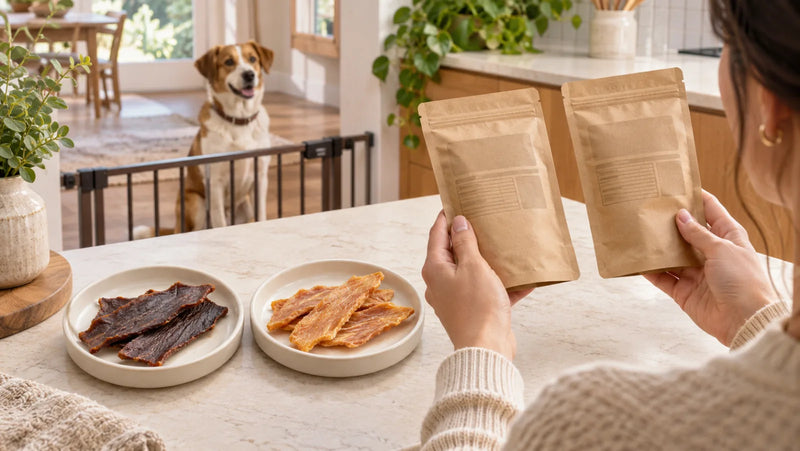
Honeydew does not replace complete dog food or a purpose-made reward. A labeled dog treat gives an owner an ingredient statement, storage directions, feeding guidance, and a defined format to review. It still needs to fit the individual dog, chewing style, medical plan, and daily extras budget.
Use the American Paws dog treats collection to compare current labels and formats. Check the exact item rather than assuming every treat shares the same ingredients or texture, and resize the chosen reward when needed for safe handling and calorie control.
Frequently Asked Questions
Can puppies eat honeydew?
Puppies need complete growth food and have limited room for optional extras. Ask the puppy’s veterinarian before offering honeydew. If approved, the flesh still must be washed, seedless, rind-free, plain, and sized for the puppy.
Can dogs eat honeydew rind?
Do not intentionally feed honeydew rind. It is tough and can create a choking or gastrointestinal foreign-object concern. Call the veterinary team promptly after a swallowed strip or chunk, especially if the amount is uncertain or the dog has symptoms.
Can dogs eat honeydew seeds?
Remove the entire seed cluster and stringy cavity before serving the flesh. A few unnoticed loose seeds are not the same as intentionally feeding the seed mass. Record the amount and call for veterinary advice if a dog ate a large cluster or becomes unwell.
Can dogs eat frozen honeydew?
Only plain honeydew with no rind or seeds should be considered, and the dog must already be eligible for the fruit. Thaw and resize hard frozen cubes so the texture and bite size fit the dog. Inspect every ingredient in a commercial frozen blend.
Can dogs eat dried honeydew?
Dried fruit is concentrated, and candied versions may contain added sugar. Do not treat a dried piece as equivalent to a fresh cube. Skip it unless the veterinarian has reviewed the exact label and amount.
Is honeydew good for dog hydration?
Do not use honeydew to treat dehydration. Normal access to fresh water remains essential, and a dog that is not drinking, is repeatedly vomiting, or appears dehydrated needs veterinary guidance. Honeydew is only an optional extra for an eligible dog.
Can a diabetic dog eat honeydew?
Do not add honeydew to a diabetic dog’s plan without veterinary approval. Fruit contributes sugar and calories, and diabetes management depends on a consistent, individualized feeding and medication schedule.
Use One Prepared Cube, Then Stop
The safe path is narrow and simple: choose a sound ripe melon, wash the intact rind under running water, scoop out the complete seed cavity, remove every strip of rind, and resize one small piece of soft flesh for an eligible healthy adult dog. Count it with all other extras and watch the dog after the first taste.
Skip honeydew when the medical plan, ingredient list, storage history, or swallowed form is uncertain. For a more predictable reward, compare labeled American Paws dog treats by the current ingredients, texture, and feeding guidance while complete dog food remains the nutritional foundation.