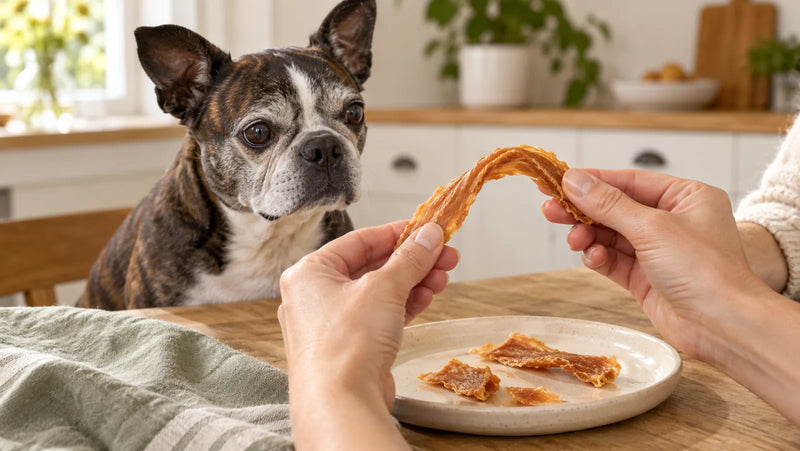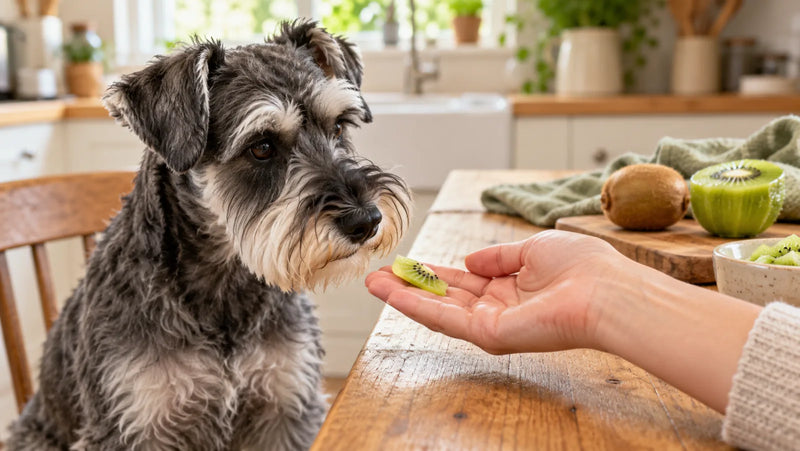

Can dogs eat fruit? Yes—many healthy dogs can have small pieces of certain fruits after the seeds, pits, cores, rinds, stems, and tough peels are removed. Prepared apple, banana, blueberries, watermelon, strawberries, and pear flesh are common examples, but fruit is optional and should never displace complete dog food.
Grapes and raisins are the urgent exception: they can cause acute kidney injury in dogs. If a dog may have eaten either one, call a veterinarian or animal poison-control service immediately rather than waiting for symptoms. Other “no” fruits have different problems—such as a pit that can obstruct, a peel or plant part that irritates, or a sugar and fat load that does not fit the dog.
Can Dogs Eat Fruit? The Short Answer
The safest way to use a fruit list is to ask five questions: What exact fruit is it? Which part will the dog eat? How was it prepared? How much is involved? Does it fit this dog’s health plan? A fruit can move from one column to another when the part or preparation changes.
| Small prepared pieces may fit | Urgent no | Skip or use special caution |
|---|---|---|
|
|
|
The third column is deliberately not called “equally toxic.” A grape exposure and one lick of plain avocado flesh do not have the same evidence, mechanism, or response. When the list explains why an item is there, you can make a safer decision than a red-or-green graphic alone allows.
Safe Fruits for Dogs—and How to Prepare Them
The American Kennel Club’s fruit and vegetable guide treats dog-safe fruit as an occasional extra, not a dietary requirement. Preparation is part of the safety verdict. Wash produce, identify every part, remove hard or fibrous material, and cut one piece for the dog’s mouth and eating style.
Apples and pears: wash, core, seed, and cut small
Plain apple and pear flesh can be occasional options after the stem, core, and every seed are removed. Cut a thin piece rather than offering a half fruit. Cores can be choking or foreign-body hazards, while crushed or chewed seeds create a different chemical question. Our complete apple safety and serving guide handles the broad apple decision without turning this parent page into another apple article.
Pear follows the same general preparation rule: wash the fruit, remove the stem, core, and seeds, and offer only a small piece of fresh flesh. Canned pears in syrup are not equivalent. A dedicated pear guide will own the detailed seed, portion, and format questions; this pillar keeps only the parent-list answer.
Bananas: peel and portion the soft flesh
Remove the banana peel and cut a small piece of flesh. Banana is soft, but a large sticky chunk can still be awkward for a small dog or a fast gulper. Its sugar and calories also count. The complete banana safety and serving guide explains preparation and portions, while the parent list only establishes that peeled flesh may fit.
Blueberries and strawberries: wash, trim, and size for the dog
Wash berries thoroughly. Blueberries may be offered fresh or plain frozen, but a whole frozen berry can be a choking risk for a tiny dog or gulping dog; thaw, halve, or gently crush it when needed. Use the blueberry safety and portion guide for those details.
Remove a strawberry’s stem and leaves, then halve or slice the fruit. Whole strawberries can be too large for small dogs. Syrup-packed, chocolate-covered, yogurt-coated, jammed, or artificially sweetened strawberries are different products. Our strawberry preparation and portion guide covers those formats.
Watermelon, cantaloupe, and mango: flesh only
For watermelon, remove the hard rind and every visible seed, then cut the flesh into a manageable piece. Rind can be difficult to chew and may obstruct; it is not a handle for the dog to hold. The watermelon flesh, seed, and rind guide separates those risks.
Cantaloupe follows a similar flesh-only rule: no rind and no seed mass. Mango needs its skin and large hard pit removed. Never hand a dog a whole stone fruit to “work on,” and do not assume a pit is safe because some flesh remains attached. Coconut is a flesh-only case with a fat limit; see our coconut guide for dogs.
Toxic Fruits for Dogs: Not Every “No” Means the Same Thing
Grapes and raisins: call now, even before symptoms
Do not give dogs grapes, raisins, sultanas, or foods containing dried grapes. The ASPCA’s people-food hazard guide explains that grape and raisin exposure can lead to kidney damage. Individual response and tartaric-acid content vary, so a dog’s breed, past exposure, or lack of immediate symptoms does not establish safety.
The Merck Veterinary Manual’s grape and raisin toxicosis review describes early vomiting or diarrhea and possible progression to acute renal failure. It also shows why a published number is not a home “safe count”: fruit composition and effects vary, and prompt professional evaluation can matter before signs appear.
If an exposure may have occurred, remove access, keep the package or food, estimate the amount and time, note the dog’s weight, and call a veterinarian, emergency clinic, or ASPCA Animal Poison Control at (888) 426-4435. The service is available 24 hours a day, 365 days a year, and a consultation fee may apply. Do not induce vomiting unless the professional handling the case directs you.
Avocado: a conservative skip, but not the same emergency as grapes
Avocado illustrates why risk categories need context. ASPCA notes that avocado’s most severe persin concerns primarily involve certain other animal species. AKC still recommends keeping avocado away from dogs because the pit, skin, and leaves contain more persin, the large pit can choke or obstruct, and the fatty flesh can cause digestive upset or contribute to pancreatitis risk when too much is eaten.
The practical advice is to choose an easier fruit rather than deliberately serving avocado. If a dog licked a tiny amount of plain flesh, do not claim that it guarantees poisoning. Identify whether pit, skin, leaves, guacamole ingredients, onion, garlic, or a large amount was involved, then call the veterinary team with those facts.
Cherries: flesh, pit, stem, and leaves are different hazards
The fleshy part around a cherry pit is not the same material as the pit, stem, or leaves. But whole cherries are a poor dog treat because the pit can choke or obstruct, and damaged pits and other plant parts contain cyanogenic compounds. Two or three swallowed pits also create a geometry problem independent of chemistry.
Do not say that one intact pit guarantees cyanide poisoning or that a pit will definitely pass. Keep discarded pits in a dog-proof bin. After a whole-cherry or pit exposure, call the veterinarian with the dog’s size, the number and condition of pits, the time, and any choking, vomiting, pain, appetite, or stool changes.
Citrus: peel, oil, plant parts, and quantity matter
ASPCA distinguishes a small amount of citrus flesh—which is unlikely to cause more than minor stomach upset—from significant amounts and exposure to stems, leaves, peels, seeds, and concentrated essential oils. That means one peeled orange segment is not automatically a poisoning emergency, but it also does not make lemon peel, lime rind, citrus oil, or a bowl of fruit a sensible treat.
Many dogs dislike acidic citrus. There is no nutritional reason to persuade them. Skip the peel, seeds, zest, oils, sweetened lemonade, marmalade, and large servings, and choose a simpler prepared fruit if a fruit treat fits at all.
Figs: fresh edible fruit is not the same as a fig plant
“Fig” can mean fresh edible fruit, dried fruit, a cookie or bar, or ornamental Ficus plant material. Those should not be collapsed into one toxic-fruit statement. A veterinarian-reviewed fig guide says a small amount of fresh edible fig is not toxic to dogs, although too much can cause gastrointestinal upset. Dried figs concentrate sugar, and fig bars add other ingredients.
Fig plant leaves, branches, bark, and sap are a different exposure and can irritate skin or the gastrointestinal tract. Unless you can identify the edible fruit and know the dog’s diet permits it, skip figs and use a better-established option. After plant-material exposure, wash sap from skin as directed by the veterinary team and report the plant identity, amount, time, and signs.

Remove Pits, Cores, Seeds, Rinds, Stems, and Tough Peels
Fruit preparation follows a repeatable sequence:
- Identify it. Do not feed a wild berry, fallen tree fruit, mixed fruit cup, or smoothie when the full ingredient list is unknown.
- Wash the exterior. Remove dirt and surface residue before cutting, even when the peel will be discarded.
- Remove non-flesh parts. Take out the pit, core, seeds, rind, stem, leaves, and any tough peel that could choke or obstruct.
- Inspect the finished piece. “Seedless” is not a guarantee that every seed or hard fragment is absent.
- Cut for the dog. Use a thin, manageable piece for the dog’s mouth, teeth, swallowing ability, and gulping behavior.
- Offer one piece under supervision. Fruit is a taste, not a chew toy or unattended enrichment item.
For common problem parts, use the dedicated guides. A swallowed apple core needs chemical-versus-obstruction triage; a banana peel creates a different foreign-body question; and watermelon rind has its own size and symptom considerations. The fruit flesh being non-toxic does not make every attached part edible.
How Much Fruit Can a Dog Eat?
There is no universal cup, slice, or berry count for all dogs and all fruits. Calories, sugar, fiber, water, and piece size differ by fruit. The dog’s needs also vary with body size, body condition, life stage, complete diet, activity, medical conditions, and every other extra eaten that day.
The World Small Animal Veterinary Association’s treat guide says all treats together should supply no more than 10% of daily calories. That ceiling includes fruit, training rewards, chews, toppers, table scraps, and food used to give medication. It is not 10% for fruit plus another 10% for dog treats.
Start with one tiny piece and keep the rest of the day familiar. For the calculation behind an individual allowance, use our daily dog-treat calorie guide. The single-fruit articles below give more useful portion context than a misleading one-size-fits-all fruit chart.
Introduce One Fruit at a Time
Choose one prepared fruit and offer one small piece. Do not introduce apple, banana, blueberries, and watermelon together in a “healthy” bowl. If vomiting, diarrhea, gas, itching, facial swelling, breathing trouble, appetite change, or discomfort follows, a mixed bowl makes the responsible ingredient hard to identify.
Keep the dog’s normal food and other treats unchanged during the first test. If the piece is tolerated, repeat the same small amount on another day before increasing. Stop after recurrent signs and call the veterinarian; a home taste test does not diagnose an allergy, intolerance, or disease.
Fresh, Frozen, Dried, Canned, and Processed Fruit
- Fresh: wash, remove unsafe parts, and cut one small piece. Check for mold, fermentation, or spoilage.
- Plain frozen: may be useful after the fruit is prepared, but a hard frozen piece can be a choking or dental concern. Thaw, halve, or mash for a small dog or gulper.
- Dried: has less water and more concentrated calories and sugar per bite. Commercial products may add oil, sugar, sulfites, flavoring, or coatings.
- Canned or cupped: may sit in syrup, juice concentrate, sweetener, or mixed-fruit liquid. “No sugar added” does not prove every ingredient fits the dog.
- Juice and smoothies: remove the useful chewing/portion boundary and may combine many fruits, sweeteners, dairy, protein powder, supplements, or xylitol-containing ingredients.
- Snacks and desserts: fruit rolls, gummies, jam, jelly, cookies, pies, yogurt coatings, chocolate-covered fruit, and candy are processed foods, not servings of plain fruit.
Fruit Guides by Type
Banana guides
Use the broad banana guide for flesh safety and preparation, then choose the child that matches the real question. Banana benefits and sugar limits owns the nutrition angle; the puppy-specific banana guide handles readiness and growth-food priorities; the peel guide handles an accidental swallowed peel; and the banana-chip label guide compares dried, fried, sweetened, and freeze-dried formats.
Apple guides
The broad apple guide owns apple flesh safety and preparation. For a different intent, use the apple benefits and sugar-limit guide, the puppy-specific apple guide, the green-apple preparation guide, or the apple-core ingestion guide. Each page answers a narrower question so this pillar does not make five apple articles compete for the same query.
Blueberry, watermelon, and strawberry guides
Use the linked blueberry guide for berry size, fresh-versus-frozen serving, and portions; the linked watermelon guide for flesh, seed, rind, and ingestion questions; and the linked strawberry guide for stems, whole-fruit choking, frozen fruit, canned fruit, and sweetened products. This page establishes where each fruit sits in the larger safe-fruit system, while the child pages keep the detail.
Which Dogs Need Veterinary Guidance Before Fruit?
Ask the veterinary team before adding fruit—or simply skip it—when a dog has diabetes, pancreatitis history, kidney disease, obesity treatment, gastrointestinal disease, a known food reaction, swallowing trouble, a prescription diet, or a veterinary elimination trial. The relevant issue may be sugar, calories, fiber, potassium, fat, texture, or strict ingredient control rather than whether the fruit appears on a generic safe list.
Puppies should get nearly all nutrition from complete growth food. Tiny prepared fruit may fit only after the puppy is eating solids reliably and the veterinary plan permits extras. The banana and apple puppy guides above explain why a calendar age alone does not create permission.
What to Do After a Risky Fruit Exposure
- Remove access. Secure the bowl, bag, plant, compost, trash, and any dropped pieces.
- Identify the exact item and part. Grape flesh, an avocado pit, cherry pits, citrus oil, apple core, and fig leaves create different decisions.
- Preserve evidence. Keep the package, ingredient list, photograph, plant sample, or remaining fruit. Record the estimated amount, time, dog’s weight, and symptoms.
- Escalate grapes and raisins immediately. Call the veterinarian, emergency clinic, or ASPCA Animal Poison Control even when the dog looks normal.
- Call for pits, cores, rinds, and peels based on the object and dog. Breathing trouble, choking, collapse, repeated retching, persistent vomiting, abdominal pain or swelling, inability to eat, severe lethargy, straining, blood, or black stool warrants urgent veterinary care.
Do not induce vomiting or give hydrogen peroxide, salt, oil, milk, bread, activated charcoal, or forced food unless the veterinarian or poison-control professional directing the case tells you to. A sharp pit or large object can create new injury on the way back up, and the safest decontamination method depends on the exposure and timing.
Frequently Asked Questions
Can puppies eat fruit?
Some weaned puppies may have a tiny piece of a prepared dog-safe fruit when their veterinary plan allows it, but complete growth food must stay the nutritional priority. Cut pieces much smaller than an adult serving, introduce one fruit at a time, and keep all extras within the puppy’s limited calorie space.
Can dogs eat frozen fruit?
Plain frozen dog-safe fruit may fit after seeds, pits, cores, rinds, stems, and tough peels are removed. Size and hardness still matter. Thaw, halve, or mash pieces for a small dog, a dog with dental disease, or a dog that gulps.
Can dogs eat dried fruit?
Dried fruit is concentrated and may contain added sugar, oil, preservatives, or coatings. Raisins and other dried grapes are never dog treats. For another dried fruit, read the full label and use a much smaller portion only if the veterinary plan permits it; plain fresh fruit is usually easier to assess.
Can dogs drink fruit juice or smoothies?
They do not need them. Juice concentrates sugar and removes the natural portion boundary. Smoothies may contain several fruits, dairy, sweeteners, supplements, protein powders, chocolate, caffeine, or xylitol-containing ingredients. Water should remain the normal drink.
Is fruit healthier than dog treats?
Not automatically. A prepared piece of safe fruit can be a low-fat occasional option, but it still contributes calories and sugar and may not fit a medical diet. A clearly labeled purpose-made treat can be easier to portion and track. “Fruit” and “dog treat” describe categories, not a universal health ranking.
Keep Fruit Small, Plain, Prepared, and Optional
Fruit works best as a small optional taste: identify it, remove hazardous parts, cut it for the dog, introduce one kind at a time, and count it with every other extra. Keep grapes and raisins completely away, and treat toxin exposure differently from a swallowed pit, rind, core, or peel.
If fruit does not fit the dog’s health plan or you want a predictable label, browse all current American Paws dog treats and compare the ingredients, calories, size, and texture of each actual product. No fruit or catalog item replaces veterinary or poison-control care after a risky exposure.