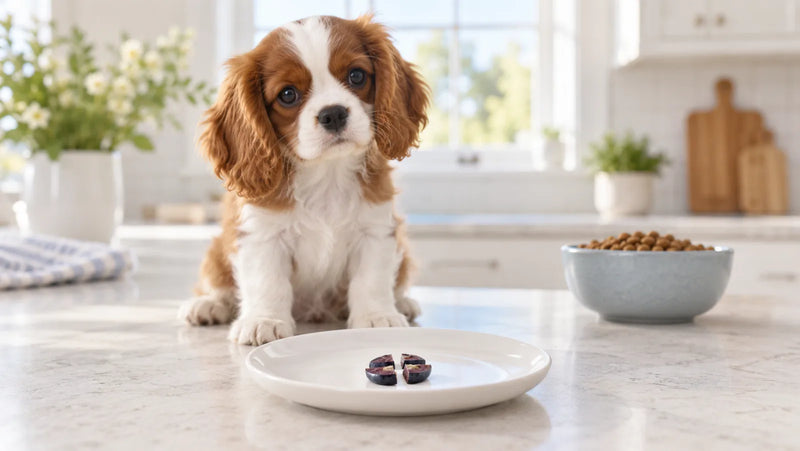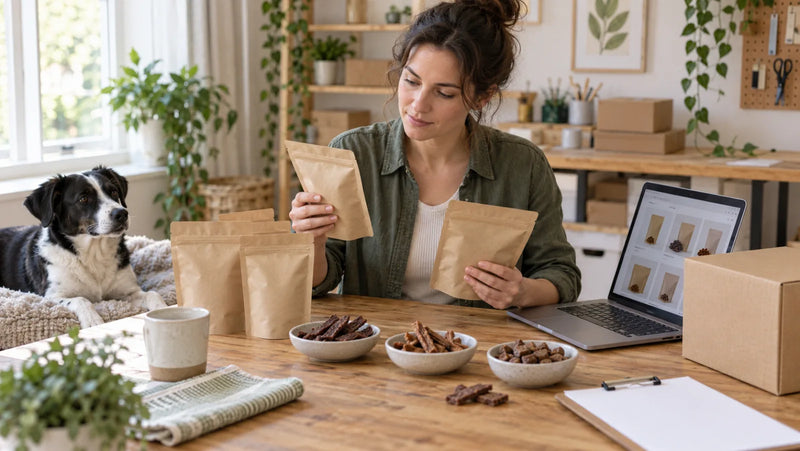

If you are wondering, “Can dog have banana chips?” the answer depends on what the bag means by banana chips. A tiny piece of plain dehydrated or freeze-dried banana can fit as an occasional treat for many healthy dogs. Fried or oil-cooked grocery chips, especially versions with added sugar, honey, syrup, salt, flavoring, or coatings, are better left off the dog-treat menu.
The shelf name is not enough. Some packages contain only banana; others turn banana into a calorie-dense human snack. Read the ingredient list, serving size, calorie line, and texture before deciding. Even a one-ingredient dried banana is concentrated fruit, so “plain” means simpler—not unlimited.
Can Dog Have Banana Chips? Start With the Ingredients
Banana flesh itself is not the main problem. The American Kennel Club says peeled banana can be offered to dogs in small portions, while its natural sugar makes it an occasional snack rather than a daily staple. Drying removes water and makes it easy to eat more banana solids in a small-looking handful.
Use this first-pass rule:
- Ingredient list says only “banana”: possibly shareable in a very small, size-appropriate piece after the dog tolerates banana.
- Ingredient list adds coconut oil, palm oil, another oil, sugar, honey, syrup, salt, flavoring, or a coating: skip it as a routine dog treat.
- Package does not show a clear ingredient list or process: do not guess from the front photo or the word “natural.”
This page owns the dried-chip decision. For fresh fruit, use our broad fresh-banana safety and serving guide. For nutrient claims and honest sugar limits, see banana nutrition and sugar limits for dogs.
Fried vs Dehydrated vs Freeze-Dried Banana Chips
These formats can look similar in a product photo, but they are not interchangeable. The ingredient list tells you what was added; the manufacturer's process description tells you how the piece was made. Oil in the ingredients proves the product is not plain banana, but it does not by itself prove the exact temperature or equipment used.
| Format | What to look for | Default dog decision | Why |
|---|---|---|---|
| Fried or oil-cooked grocery chips | The description says fried, or the ingredients add coconut, palm, or another oil; sugar may also appear. | Skip as a routine treat. | Added fat and often added sweetener use calories without making the banana more appropriate for a dog. |
| Plain dehydrated banana | Only banana; usually darker, denser, and chewy to crisp depending on thickness and dryness. | A tiny occasional piece may fit. | No added oil or sweetener, but the fruit is concentrated and texture varies. |
| Plain freeze-dried banana | Only banana; commonly pale, light, porous, and crisp. | A tiny occasional piece may fit. | Simple ingredients and easy-to-break texture, but still concentrated fruit—not sugar-free. |
| Sweetened, flavored, or coated chips | Sugar, honey, syrup, salt, spices, chocolate, yogurt-style coating, or flavoring appears. | Do not share. | The product is a formulated human snack with avoidable extras and sometimes dog-dangerous ingredients. |
Fried or oil-cooked grocery chips
Many familiar crisp banana chips are made as human snack food. A typical label may put banana first and then list coconut oil or palm oil and sugar. Banana being the first ingredient does not cancel the rest of the recipe.
Added oil makes the snack more calorie-dense and can contribute to digestive upset when a dog eats a large amount. Added sugar is unnecessary because banana already contains natural sugar. Do not call one stolen ordinary chip a poisoning event solely because oil or sugar is present, but do not build it into the dog's routine either.
Plain dehydrated banana
Dehydration uses moving warm air to remove moisture. The result may be pliable, leathery, or crisp depending on thickness, time, humidity, and the equipment. A one-ingredient product avoids added oil and sweetener, but it can still be sticky, dense, or tough enough to need cutting for a small dog or a gulper.
The National Center for Home Food Preservation notes that commercial banana chips vary and may be sweetened or treated for crispness. That is why a familiar round yellow shape cannot tell you the recipe.
Plain freeze-dried banana
University of Minnesota Extension explains that freeze-drying freezes food and removes ice through sublimation. The result is usually lightweight and porous, which can make a small piece easier to break into training-size crumbs.
Freeze-dried does not mean fresh, zero-sugar, low-calorie, sterile, nutritionally complete, or automatically appropriate for diabetes. It describes a moisture-removal method. Check that banana is the only ingredient and keep the portion tiny.

How to Read a Banana-Chip Label for a Dog
Ingredient list first
The FDA explains that packaged-food ingredients are listed in descending order by weight. Start there, not at “all natural,” “fruit snack,” “no artificial colors,” or a picture of a fresh banana.
For the simplest option, the whole list should be one word: banana. If the bag lists oil or a sweetener, it is not plain dried fruit. “No added sugar” is useful but does not erase the banana's natural sugar; “unsweetened” also does not tell you whether oil was used. Read every line.
Our full guide shows how to read a dog-treat ingredient label in order. The same discipline applies when the package was designed for people.
Serving size and calories second
A human serving can be a handful or an ounce—far too much dried fruit for many dogs. Check calories per serving and how many pieces the label considers one serving. Then scale down to one small fragment, not one human portion.
All extras share the same allowance. Banana chips, training rewards, table food, dental chews, and toppers together should generally stay within about 10% of daily calories. Use our shared daily treat-calorie budget before deciding how much space remains.
Texture and piece size third
Press or snap the piece before offering it. A hard curved chip, sticky strip, or dense round can be a poor fit for a toy dog, a puppy, a dog with dental disease, or any dog that swallows food without chewing. Break a plain piece into fragments the dog cannot gulp whole, and supervise the first trial.
Do not assume crisp food cleans teeth. Banana chips are not a dental product, and a hard chip can still fracture, lodge, or be swallowed awkwardly.
How Much Plain Dried Banana Can a Dog Have?
Chip diameter, thickness, density, and calories vary too much for a universal “one chip per X pounds” rule. The safest approach is to break a plain, one-ingredient piece and start below these conservative visual amounts:
| Dog size | First serving of plain dried banana | After tolerance is established |
|---|---|---|
| 2–10 lb | One pea-size crumb | One or two pea-size crumbs, occasionally |
| 11–20 lb | One pea-size crumb | Up to roughly one-quarter of a thin small round |
| 21–50 lb | One or two small fragments | Up to roughly one-half of a thin small round |
| 51–90 lb | One small fragment | Up to one thin small round |
| 91+ lb | One small fragment | One or two thin small rounds if the calorie plan allows |
This is a cautious serving guide, not a veterinary prescription or a daily quota. Use the lower amount for a puppy, a sedentary dog, a dog receiving many training rewards, or a product that is thick and calorie-dense. Dogs with diabetes, weight-loss plans, prescription diets, formal food trials, or recurring gastrointestinal problems need veterinary guidance before any dried fruit is added.
Bananas do not become sweeter because water leaves, but dried pieces contain less water. Per ounce or casual handful, that usually means more banana solids, natural sugar, and calories than fresh slices. Tiny really does mean tiny.
How to Serve Banana Chips Safely
- Confirm the whole recipe: only banana, with no oil, sweetener, salt, coating, or flavor blend.
- Break the piece first: choose a size and texture the individual dog can chew without gulping.
- Offer one fragment: do not scatter a handful or leave an open bag within reach.
- Supervise: stop if the dog coughs, gags, struggles to chew, or tries to swallow a large hard piece.
- Watch tolerance: do not repeat the treat if vomiting, diarrhea, marked gas, itching, or appetite changes follow.
- Store as directed: keep the bag sealed and discard pieces that are damp, moldy, rancid-smelling, insect-damaged, or past the maker's instructions.
Remove every bit of peel before drying. The peel is not the subject of this portion guide; it is fibrous and difficult to digest. If the dog swallowed it, use our dedicated guide on what to do if a dog swallowed the peel.
What If My Dog Ate Fried or Sweetened Banana Chips?
One ordinary fried or sweetened banana chip is unlikely to poison an otherwise healthy medium or large dog solely because it contains banana, oil, or sugar. Remove the bag, read the entire ingredient list, estimate how much is missing, and monitor for vomiting, diarrhea, abdominal discomfort, or unusual lethargy. A tiny dog, a dog with pancreatitis, diabetes, another medical condition, or a dog that ate a large amount deserves an earlier call to the veterinarian.
Treat the situation as urgent if the ingredients include xylitol, chocolate, raisins, macadamia nuts, or another known dog toxin; if the dog swallowed packaging; or if there is repeated vomiting, a swollen or painful abdomen, collapse, tremors, trouble breathing, or severe weakness. Do not induce vomiting unless a veterinarian or poison-control professional specifically directs you.
Keep the package for the ingredient list, serving size, lot information, and veterinary call. “Banana chips” alone is not enough information for useful triage.
A Plain Homemade Dehydrated Banana Method
Choose a ripe but firm banana, remove the peel completely, and cut the flesh into even slices about 1/4 inch thick. Arrange the slices in one layer with no oil, sugar, honey, syrup, salt, cinnamon, or coating. Utah State University Extension's home-drying guide uses 135–140°F and gives roughly 6–10 hours in a dehydrator or 8–12 hours in an oven; actual time depends on slice thickness, airflow, humidity, and equipment.
Dry until the pieces match the tested guide's finished texture, then cool completely before packing. Homemade rounds are often chewy rather than commercial-crisp. If the center retains moisture, condensation appears in the container, or mold or an off odor develops, discard the batch. Because home dryness is not laboratory-verified, follow research-based storage guidance and do not promise a long pantry life.
Frequently Asked Questions
Are freeze-dried bananas safe for dogs?
Plain freeze-dried banana with banana as the only ingredient can be offered in a tiny occasional piece to many healthy dogs. It is still concentrated fruit with natural sugar, so the format does not create a free-food exception.
Are unsweetened banana chips safe for dogs?
Possibly, but “unsweetened” answers only one question. Check whether oil, salt, flavoring, preservatives, or coatings are present and whether the piece is a safe size and texture. A one-ingredient plain dehydrated product is the simpler choice.
Can dogs eat banana chips made with coconut oil?
A stolen small chip is not automatically toxic because it contains coconut oil, but an oil-added product is more calorie-dense and unnecessary as a routine dog treat. Choose plain banana instead, and call the veterinarian after a large exposure or symptoms—especially for a dog with a fat-restricted plan.
Are banana chips better than fresh banana for dogs?
Not generally. Fresh banana contains more water and is easier to portion as a soft tiny slice. Plain dried formats are portable and easy to break, but they concentrate the fruit and can be overfed quickly. Choose by the individual dog and calorie plan, not by a claim that dried is healthier.
Can puppies have banana chips?
A puppy may tolerate a tiny soft fragment of plain banana, but hard chips can be an awkward chewing fit and extras can displace complete growth food. Ask the veterinarian before making dried fruit a puppy habit, and use a crumb rather than a whole round.
Choose the Ingredient List, Not the Shelf Name
The honest answer is format-specific: skip fried, oil-added, sweetened, flavored, or coated banana chips; consider only a tiny occasional piece when the ingredient list says banana and the texture fits the dog. Freeze-dried is not automatically healthier, and dehydrated is not automatically plain. The label settles those questions.
American Paws does not currently sell banana treats, so we will not pretend that one is waiting on our shelf. If a measured, clearly labeled meat-based reward suits your dog's plan better, browse all current American Paws dog treats. Whatever you choose, keep the piece small, count it in the shared treat budget, and let the complete main diet stay in charge.