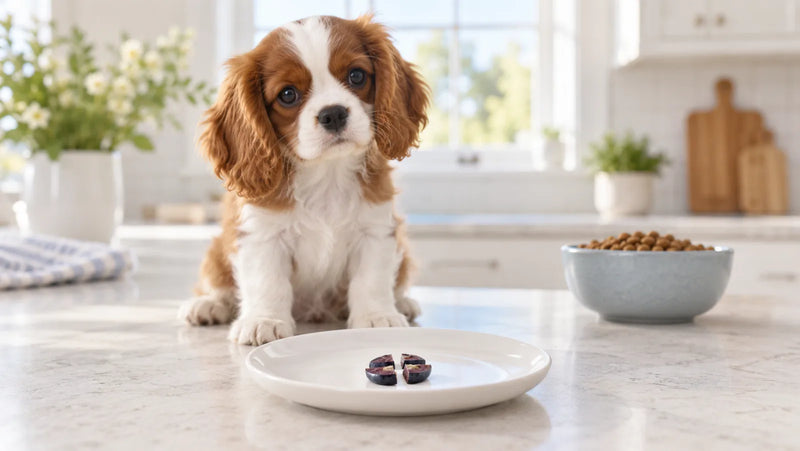

Yes—dogs can eat green apples, including Granny Smith apples, when the fruit is washed, cored, seedless, and cut into small pieces. Green apples follow the same safety rules as red apples: share only the flesh and optional skin, never the stem, core, or seeds.
The tart taste may make a green apple less appealing to some dogs, but green color does not make properly prepared apple flesh toxic. Start with one small piece, especially for a dog with a sensitive stomach, and count it with every other snack in the day's treat allowance.
Can dogs eat green apples? Yes, with preparation
Fresh green-apple flesh is an optional food, not something a dog needs for complete nutrition. A healthy dog may enjoy a small plain slice after you remove the core, stem, and every seed. Wash the apple under running water, cut the flesh for the dog's size, and supervise while the dog chews.
The American Kennel Club's apple guidance recommends removing the seeds, core, and stem, washing the fruit, cutting it into manageable pieces, and serving it in moderation. Those steps apply whether the peel is bright green, yellow-green, or red.
Plain fruit is the important qualifier. Caramel apple, apple pie, sweetened dried apple, candy coating, and sugar-free apple products introduce very different ingredients and calorie loads. They are not equivalent to one small piece of fresh fruit.
Green apples versus red apples: the safety rules are the same
Granny Smith is tart, not a separate toxin category
Granny Smith is the familiar tart green apple in many grocery stores. Flavor, sweetness, and acidity vary among apple varieties and with ripeness, so color alone cannot tell you that every green apple is more acidic, lower in sugar, or “healthier” than every red one.
For the dog, the practical difference is often preference. One dog may like a crisp tart slice, another may spit it out, and a third may tolerate apple only in a very small amount. Do not sweeten the fruit to persuade a reluctant dog. There is no nutritional reason a dog must learn to like green apples.
The broad apple safety guide for dogs covers apple forms, general preparation, and accidental exposures across varieties. This page stays with the narrower green-apple question: the flesh can be shared, while the same discarded parts stay out.
The peel is optional for a sensitive dog
Apple skin is edible for many dogs after washing, but it adds texture and fiber. If a dog has a sensitive digestive system or is trying apple for the first time, peel one small piece and see how the dog handles it. Peeling is a comfort choice, not a guarantee against an upset stomach.
Stop offering apple if it repeatedly leads to vomiting, diarrhea, excess gas, abdominal discomfort, itching, or another concerning change. A veterinarian should guide food choices for a dog with recurring digestive problems, diabetes, swallowing difficulty, a prescription diet, or a supervised elimination trial.
Why the seeds, core, and stem stay out
Seeds contain cyanogenic glycosides
The apple flesh is the shareable part. The ASPCA identifies cyanogenic glycosides in apple seeds, stems, and leaves. Chewing or crushing seeds is more concerning because it can release cyanide-forming compounds.
That does not mean one accidentally swallowed intact seed normally causes poisoning, and it does not make the prepared flesh unsafe. It does mean there is no benefit to serving seeds. Slice around the core and check both sides of each piece before it reaches the dog.
The firm core is a physical hazard
An apple core is dense, awkwardly shaped, and difficult to break down. It can be gulped, lodge in the throat, or contribute to an intestinal obstruction. The stem adds no useful food value and can be swallowed with the core, so discard both where a counter-surfing dog cannot retrieve them.
Separating these hazards keeps the advice accurate: the seeds raise a chemical-exposure concern, while the core raises choking and foreign-body concerns. Neither problem is a reason to hand over a whole apple when small prepared slices are easy.

How to prepare green apple slices for a dog
- Choose a sound apple. Skip fruit that is moldy, fermented, leaking, or badly spoiled.
- Wash the outside. Rinse and rub the surface under running water before cutting, even if you plan to peel it.
- Remove the stem and entire core. Do not merely pluck out the visible seeds and leave a hard core ring.
- Check for seeds. Cut from the flesh side and inspect each piece rather than letting the dog chew from the whole apple.
- Cut for the individual dog. Use a thin slice or small cube that the dog can comfortably chew; make pieces smaller for a small dog or a dog that gulps food.
- Offer it plain. Do not add sugar, syrup, caramel, spice, salt, nut butter, or sweetener.
- Supervise and observe. Start with one piece, then wait through the next normal meal-and-stool cycle before offering more.
A food introduced carefully should be boring: one ingredient, one small taste, and no competing new foods that make a reaction hard to interpret. If the dog swallows without chewing, apple may not be a useful treat format for that dog.
How much green apple can a dog eat?
Start with one small piece
For a first trial, one small cube or a thin bite-size slice is enough. “Small” should reflect the dog's mouth and usual food size, not a human snack portion. A toy-breed dog and a large dog should not automatically receive the same piece.
After a successful introduction, one or two small slices may be plenty for an occasional serving. A whole apple is unnecessary and brings far more fiber and natural sugar than a taste. Too much apple can lead to stomach discomfort or loose stool even though the prepared flesh is not toxic.
Keep every treat in one shared budget
A common veterinary nutrition guideline is to keep treats and extras to no more than about 10% of daily calories, leaving at least 90% for complete-and-balanced food. That is a ceiling for apple, biscuits, chews, toppers, training rewards, and table bites combined—not 10% for each category.
Our shared daily treat-calorie budget explains how to count the whole day. For an individual amount, use the dog's food calories, body condition, activity, and veterinary plan rather than a universal “slices by weight” chart.
Apple has useful nutrients, but the apple benefits and limits guide explains why that does not turn it into necessary nutrition or a free food. Small and occasional is a more honest rule than adding apple because of a vitamin list.
Which dogs need extra caution or veterinary guidance?
Ask the veterinarian before adding green apple for a dog with diabetes, a medically directed weight-loss plan, chronic digestive disease, trouble chewing or swallowing, a history of foreign-body obstruction, or a prescription or elimination diet. Apple may be compatible with some individual plans, but the internet cannot set that dog's portion.
Puppies should be fully weaned, comfortable with solid complete growth food, and able to chew a very small piece. Growth food must remain in charge. Older dogs may need a thinner or peeled piece if dental disease, missing teeth, or swallowing changes make a crisp slice difficult.
Do not use green apple as a treatment for diarrhea, constipation, dental disease, or weight loss. If a dog is already vomiting, has diarrhea, refuses regular food, or seems painful, adding fruit can obscure the problem rather than solve it.
If a dog grabs the discarded parts
If a dog eats seeds, a stem, or an apple core, remove any remaining pieces and call the veterinarian for advice with the dog's weight, the amount, whether seeds were chewed, the time, and any symptoms. Do not induce vomiting unless a veterinary professional specifically directs it.
Trouble breathing, collapse, severe weakness, repeated vomiting, a swollen or painful abdomen, unproductive retching, choking, or inability to keep water down needs urgent veterinary care. This is the short safety response; a core-specific ingestion guide should make the detailed decision tree rather than this green-variety page.
Green-apple forms to avoid
- Whole apples and cores: oversized and needlessly expose the dog to seeds, stem, and a firm core.
- Caramel or candy apples: high in sugar and fat, sticky, and sometimes coated with unsafe extras.
- Apple pie and pastries: often contain sugar, butter, spices, and a rich crust; some recipes include ingredients that are unsafe for dogs.
- Sweetened or sugar-free applesauce: may add sugar, spices, or xylitol. The separate applesauce label-safety guide covers that format.
- Dried apple rings or chips: concentrated and sometimes sweetened; firm pieces can also be easy to overfeed.
- Fermented, moldy, or spoiled fruit: belongs in secure waste, not a dog bowl.
If you want to use apple as a reward, fresh plain slices are easier to inspect and portion than a processed apple product. Still, fruit is not ideal for every training session because wet pieces are harder to carry and repeated rewards can add up quickly.
Frequently asked questions
Can dogs eat Granny Smith apples?
Yes. Granny Smith is a tart green apple, and its fresh flesh can be served after washing, removing the stem, core, and seeds, and cutting a small plain piece. Some dogs simply dislike the tart flavor.
Can dogs eat green apples with skin?
Many dogs can eat washed green-apple skin in a small amount. Peel the first piece for a dog with digestive sensitivity or if the texture is difficult to chew. Skin is optional, while removing the core and seeds is a firm safety step.
Can puppies eat green apples?
A fully weaned puppy who reliably eats complete growth food may try one tiny, seedless, peeled piece sized like familiar kibble. Ask the veterinarian first for a very young puppy, a puppy with digestive signs, or one on a prescribed diet.
Are green apples too acidic for dogs?
There is no blanket rule that green apple flesh is toxic or “too acidic” for dogs. Tart varieties may be less appealing, and any new fruit or too much apple can upset an individual stomach. Start small and stop if the dog does not tolerate it.
Can dogs eat green apples every day?
They do not need to. If a veterinarian considers apple appropriate, a small measured piece may fit on some days, but it must share the treat budget with every other extra and should never displace complete food.
Make the safe part easy to share
Green apples and red apples have the same practical rule: share a little washed flesh, remove the stem, core, and seeds, cut for the dog, and supervise. Tartness changes preference more than the safety verdict. When in doubt, one small peeled piece is a sensible test—and skipping apple altogether is also fine. For the wider safe-and-toxic list, see our overview of which fruit dogs can eat.
Fruit can be an occasional extra, while purpose-made rewards may be easier to size and count for everyday use. You can compare all American Paws dog treats by ingredients, texture, calories, and your veterinarian's guidance, then keep apple and every other reward within one measured daily plan.