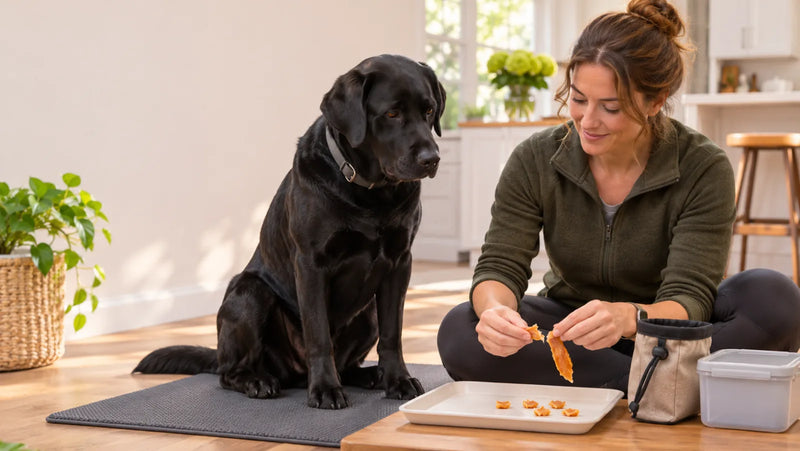

Can dogs eat whipped cream? Most healthy adult dogs can have a tiny lick-sized dab of verified plain whipped cream once in a while. A whole café cup is often much more than a taste, and dogs with dairy intolerance, a history of pancreatitis, a veterinarian-directed low-fat diet or another dietary restriction should skip it unless their veterinary team says otherwise.
Check the exact product before sharing. Canned, tub, homemade and coffee-shop toppings can differ in dairy, fat, sugar, flavorings and sweeteners. If a sugar-free product contains xylitol—also called birch sugar, wood sugar or birch bark extract—do not give any and contact a veterinarian or emergency clinic immediately after an exposure.
Can Dogs Eat Whipped Cream? The Short Answer
A plain dab is usually an optional people-food taste, not a useful daily reward. The safest candidate is an otherwise healthy adult dog that has handled dairy before, has no current stomach upset and is not on a weight-loss, fat-restricted, elimination or other medical diet. Measure the amount before the dog sees the cup or can.
“Puppuccino” is a nickname, not a standardized recipe or portion. One café may use plain dairy whipped cream; another may use a sweetened topping, flavoring or a larger cup. Ask what product is used, request only a light dab and keep coffee, chocolate, syrups and sweetener blends out.
Frozen dairy desserts have their own serving and ingredient risks. Use the dog ice-cream safety guide for scoops, frozen mixes and accidental tub raids rather than treating whipped cream and ice cream as interchangeable.
Why Whipped Cream Can Upset a Dog
Lactose tolerance varies
Whipped cream is a dairy product and still brings lactose. Some dogs can handle a tiny amount; others develop loose stool, gas or abdominal discomfort. VCA's veterinarian-reviewed food-intolerance guidance lists diarrhea, bloating and abdominal discomfort after cow's or goat's milk among signs associated with lactose intolerance.
A tolerated lick does not prove that a larger cup will be comfortable. Start small, offer no other new food that day and watch the individual dog's response. Repeated digestive signs deserve a veterinary discussion instead of repeated at-home testing.
Fat and calories add up quickly
Whipped cream concentrates dairy fat into a food that is easy to over-serve. A tall swirl can look light because it contains air, but it is still an extra that must fit inside the dog's daily calories. The amount, brand and recipe matter more than the size of the paper cup.
VCA's canine pancreatic-disease nutrition guidance explains that veterinary low-fat diets are often used for dogs with pancreatitis and that commercial treats and people food should be included when reviewing dietary fat. A dog with a pancreatitis history or a prescribed low-fat plan should not receive an improvised whipped-cream taste.
Sugar is not the only label issue
Ordinary added sugar raises the calorie load but is not the same hazard as xylitol. Flavorings and the food underneath the topping also matter. Chocolate, coffee, alcohol, raisins, macadamia nuts and other unsuitable ingredients can turn a dessert exposure into a different decision. Use the toxic-foods response guide when the whole recipe is unknown or a toxic ingredient may be present.
Dogs That Should Skip Whipped Cream
Do not offer a taste when the dog has any of these conditions or instructions unless the veterinary team has specifically approved it:
- a previous episode of pancreatitis or a veterinarian-directed low-fat diet;
- known dairy intolerance or a repeat history of gas, diarrhea or abdominal discomfort after dairy;
- current vomiting, diarrhea, poor appetite, abdominal pain or unexplained lethargy;
- a weight-management, diabetes, elimination, allergy or other medical-diet plan;
- a known reaction to an ingredient in the exact topping; or
- a veterinary instruction to avoid people food or unplanned extras.
A young puppy has less room for low-value extras while growth food is doing the nutritional work. Ask the veterinarian before introducing whipped cream to a puppy, especially if the puppy is not fully weaned, has a sensitive stomach or has not settled onto a complete growth diet.
How Much Whipped Cream Can a Dog Have?
For an eligible healthy adult dog, use a measuring spoon and treat the first taste as an observation, not a serving challenge. The following are deliberately small starting amounts for verified plain whipped cream:
| Dog size | Conservative first taste | How to serve it |
|---|---|---|
| Under 20 lb | About 1/4 teaspoon | One small lick from a clean spoon or dish |
| 20–50 lb | About 1/2 teaspoon | A shallow measured dab |
| Over 50 lb | About 1 teaspoon | A level teaspoon, not a filled cup |
These amounts are not a medical dose, a daily allowance or a reason to increase the portion after one symptom-free taste. The exact product label, the dog's calorie needs and the veterinary plan control. The WSAVA guide to feeding treats to dogs recommends that treats stay below 10% of daily calories so complete food can provide the other 90%.
Count whipped cream together with training rewards, chews, table tastes and every other extra. The daily dog-treat calorie guide helps put all of those items into one budget.
Puppuccinos at Coffee Shops: Order a Dab, Not a Cup
Before ordering, ask the barista what whipped product is used and whether the cup contains anything else. If staff cannot identify the ingredients, skip it. If the product is verified plain and the dog is eligible, request the smallest possible swirl or use a spoon to remove a measured dab. The dog does not need to finish the cup.
Keep the beverage itself out of reach. A cup that has held coffee, mocha, flavored syrup or another drink should not become the dog's serving dish. Bring a clean spoon or small container if café visits are part of the routine.
Excitement can also make a dog gulp. Offer the dab away from foot traffic, other dogs and dropped food. A calm lick is easier to control than handing over a cup that can be chewed, swallowed or spilled.

Canned, Homemade and Sugar-Free Whipped Cream
Canned and tub toppings
Read the ingredient list and nutrition panel on the exact container. Dairy base, added sugar, flavoring and fat can differ. Do not let the dog lick the nozzle or eat directly from the tub; both make the amount hard to control and can contaminate the package.
Homemade cream
If a healthy dog is getting a taste, reserve the tiny plain portion before adding vanilla extract, alcohol, chocolate, coffee, flavored syrup or sweetener. “Homemade” does not make a recipe dog-safe when the added ingredients are unknown or unsuitable.
Sugar-free requires an ingredient check
Sugar-free does not automatically mean xylitol, but it makes the ingredient list essential. The FDA warns that xylitol can appear in sugar-free desserts and can cause a dangerous drop in a dog's blood sugar along with other serious effects. The label may also use the names birch sugar, wood sugar or birch bark extract.
If xylitol appears—or if the ingredient list for a sugar-free topping cannot be obtained—do not offer it. After a known or possible exposure, call a veterinarian, emergency animal clinic or animal poison-control service immediately. Preserve the container and report the product, ingredients, amount, time, dog and current signs. Do not wait for symptoms and do not induce vomiting unless a veterinary professional directs it. The dog xylitol emergency guide covers the urgent response in detail.
Whipped Cream on Fruit or Holiday Desserts
Evaluate the food under the topping separately. A little cream does not make a mixed dessert safe, and it does not cancel risks from pits, seeds, chocolate, alcohol, raisins, nuts, spices or sweeteners.
For a verified plain fruit plate, prepare the fruit for the dog before adding cream. The pear preparation and seed guide explains the core and seed boundary, while the mango peel and pit guide handles that fruit's separate preparation. Do not scrape whipped cream from a finished dessert and assume the remaining bite is plain.
At a holiday table, inspect the whole dish. Frosted or mixed cookies need the sugar-cookie ingredient check. A party-plate theft involving a wrapper, seasoned filling or rich dough should follow the tamale exposure workflow rather than focusing on a dollop of topping. The Christmas dinner food guide for dogs helps separate plain shareable components from dishes that should stay off the dog plate.
What to Do After a Dog Eats Whipped Cream
If the dog had one small lick of verified plain whipped cream and feels normal, remove the rest, provide normal access to water and watch for vomiting, diarrhea, bloating, abdominal discomfort, reduced appetite or unusual behavior. Keep the product label available in case a question develops.
Call the veterinarian when the amount was large, the dog has a relevant medical history, the ingredients are uncertain, or digestive signs are repeated, severe or accompanied by pain, weakness or lethargy. An unknown sugar-free product should be treated as an ingredient-identification problem immediately; a product containing xylitol requires urgent veterinary help.
Do not use another food, oil, salt or hydrogen peroxide as a home remedy. A veterinarian or poison professional can decide whether treatment or monitoring is needed from the exact product, amount, time, body weight and clinical signs.
Better Repeatable Rewards
Whipped cream is difficult to portion consistently and adds little to training beyond novelty. For repeated practice, choose dog treats with a current label, known calorie information, a texture that fits the dog's mouth and a piece size that can be counted. Match every item to the individual dog's allowed ingredients and feeding plan.
You can compare current American Paws dog treats by exact live label and feeding information. A dairy taste and a packaged reward still share one extras budget, so reduce the rest of the day's treats when anything additional is served.
Frequently Asked Questions
Can dogs have a puppuccino from a coffee shop?
A healthy adult dog may have a measured dab if staff can identify a plain whipped-cream product and nothing else is mixed in. Request a small swirl rather than serving the full cup.
Is canned whipped cream safe for dogs?
The answer depends on the exact ingredients, the dog and the amount. Verify that it contains no xylitol or unsuitable flavoring, then offer only a tiny measured taste to an eligible dog.
Can dogs eat sugar-free whipped cream?
Do not offer it until the complete ingredient list has been checked. If xylitol or one of its listed aliases appears, keep it away from the dog. A known or possible ingestion needs immediate veterinary or poison-control guidance.
Can puppies have whipped cream?
Ask the veterinarian first. A puppy's complete growth food is the priority, and dairy, fat and unplanned extras can be difficult for a small or sensitive digestive system.
Can lactose-free whipped cream be a regular treat?
No. Removing lactose does not remove fat, calories, sweeteners or flavorings. Screen the complete recipe and keep any approved taste occasional and measured.
What signs can dairy intolerance cause?
Loose stool, gas, bloating and abdominal discomfort can follow dairy in an intolerant dog. Stop offering the product and call the veterinarian when signs are severe, persistent or accompanied by vomiting, pain, weakness or poor appetite.
Keep the Treat Smaller Than the Occasion
The practical rule is simple: verify a plain product, make sure the dog is an appropriate candidate and measure a dab before offering it. The café visit or holiday photo does not require a full cup. One or two licks deliver the novelty while leaving room for complete food and planned rewards.
For everyday reinforcement, choose a labeled reward from the current dog-treat collection and use the daily treat-budget guide to count it. If the whipped cream was sugar-free, mixed with another dessert, eaten in a large amount or followed by concerning signs, save the package and contact the veterinary team promptly.