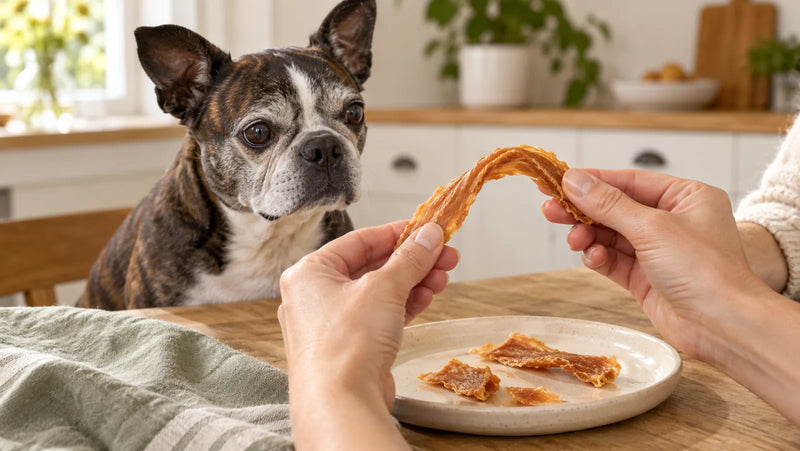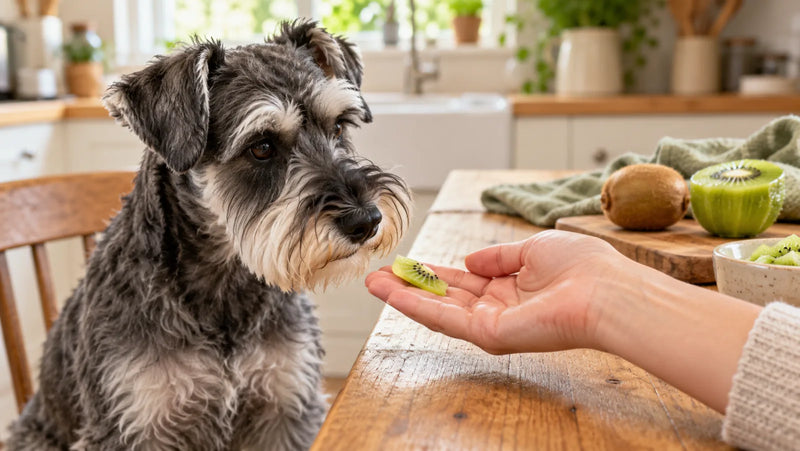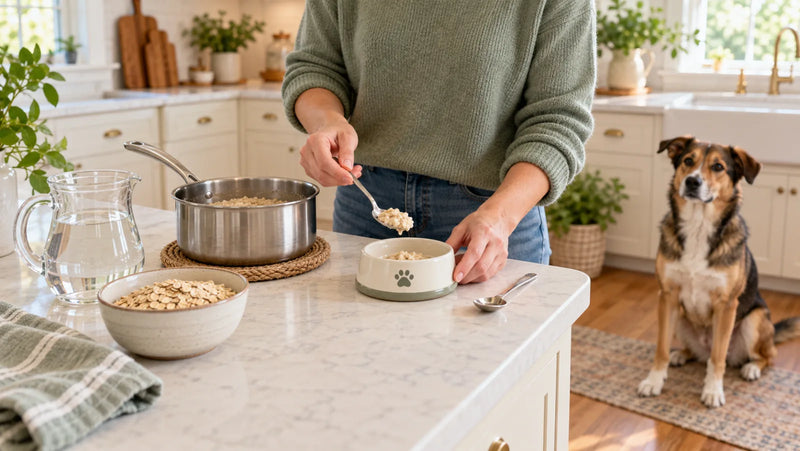

Christmas dinner foods dogs can eat include tiny portions of fully cooked, boneless, skinless, unseasoned turkey or chicken; pure pumpkin; plain unsweetened cooked sweet potato; dog-size raw carrot or green bean pieces; and cored, seedless apple. Set them aside before the Christmas recipe begins.
Keep cooked poultry bones, onion, garlic, and leek dishes, Christmas pudding or cake with dried grapes, chocolate, xylitol-sweetened desserts, fatty skin and gravy, alcohol, and raw yeast dough away from every dog. If a risky food was already eaten, preserve the package or recipe and call a veterinarian or animal poison-control service rather than waiting for symptoms. Candy canes and other peppermint sweets have their own checks in our candy canes guide for dogs.
Christmas Dinner Foods Dogs Can Eat: The Quick List
A food belongs on the dog’s tiny tasting plate only when the ingredient, preparation, portion, and individual dog all fit. “Turkey” is not enough information: plain lean meat is a different food from skin covered in butter, gravy, stuffing, glaze, or roasting juices. The same ingredient-state rule applies to every vegetable and fruit.
| Tiny plain portions may fit | Keep away from dogs |
|---|---|
|
|
This is a screening table, not a universal menu. Dogs with food allergies, diabetes, kidney disease, pancreatitis history, swallowing trouble, sensitive stomachs, weight-management plans, or prescription diets may need to skip every people-food extra unless the veterinary team approves it.
Build the Dog’s Plate Before Christmas Cooking Starts
Plain lean poultry only
If you plan to share turkey or chicken, reserve a small piece before brining, rubbing, stuffing, glazing, saucing, or roasting with aromatics. Cook it fully, remove all skin and visible fat, and inspect the finished piece for every bone. Do not carve a “plain-looking” bite from meat that sat against seasoned stuffing or collected rich drippings.
The American Kennel Club’s turkey guidance likewise limits sharing to plain cooked turkey meat, calls for skin removal, and warns about fat, seasoning, onion, and garlic contamination. Turkey is not inherently toxic, but the Christmas recipe can turn it into the wrong food for a dog.
Choose two or three plain produce tastes, not a second dinner
Pure pumpkin, plain cooked sweet potato, dog-size raw carrot or green-bean pieces, and cored seedless apple can be candidates for a healthy dog. They are not all required. Choose two or three tiny tastes the dog already tolerates, or choose none when the meal is medically restricted.
Set those pieces aside before butter, oil, salt, sugar, syrup, marshmallow, cream, cheese, glaze, gravy, onion, garlic, or leek enters the recipe. “Vegetable side” is not a safety guarantee. A raw green bean and a creamy green-bean casserole have different ingredients; plain sweet potato and candied sweet potato are different foods.
Keep every extra inside one shared treat budget
The tasting plate is not a second Christmas dinner. All holiday bites, training rewards, chews, toppers, and dog treats share one limited calorie allowance while complete dog food remains the meal. Our daily dog-treat calorie guide explains how to count the whole day rather than giving each guest or each dish a separate allowance.
If the dog has not tried one of the foods before, Christmas dinner is a poor time to introduce a crowded sampler. Noise, visitors, schedule changes, and several unfamiliar ingredients can make a digestive problem harder to interpret.
Christmas Pudding, Fruitcake, and Mince Pies
Dried grapes make traditional recipes dangerous
Traditional Christmas pudding, fruitcake, and many mince-pie fillings contain raisins, currants, or sultanas. Those names describe dried grapes, and dogs can develop serious kidney injury after grape or raisin exposure. Individual sensitivity is unpredictable, so do not assume one dried fruit is safe because the dog is large or has eaten it before.
Recipes vary. That means you should inspect the actual ingredient list, not claim every mince pie is identical. But when raisins, currants, sultanas, grapes, or an unknown dried-fruit mix is present, the answer is no. Keep the tray, crumbs, wrappers, serving spoon, and trash out of reach.
Alcohol and rich ingredients add separate problems
Some puddings, cakes, sauces, and fillings also use brandy, rum, liqueur, butter, suet, or rich icing. Alcohol creates its own toxicity risk, while a very fatty serving can cause vomiting or diarrhea and may contribute to pancreatitis in a susceptible dog. Do not promise that flaming or cooking removed every trace of alcohol from a recipe you did not measure.
The ASPCA’s people-food hazard guide covers grapes and raisins, alcohol, chocolate, alliums, xylitol, fatty foods, bones, and raw yeast dough. Its instruction is practical: note what and how much was eaten, then contact a veterinarian or poison control.

Chocolate Coins, Yule Log, and Cocoa Desserts
Chocolate coins, advent-calendar pieces, truffles, cocoa-dusted desserts, chocolate decorations, and Yule log are not dog treats. Risk depends on the type and amount of chocolate, the dog’s weight, and other ingredients, but that variability is a reason to call—not a reason to estimate safety at home.
Dark chocolate, baking chocolate, and cocoa powder are especially concentrated sources of methylxanthines, while milk and white chocolate can still create other problems because of fat, sugar, wrappers, and recipe additions. If chocolate was eaten, use our chocolate-exposure action guide to gather the package, cocoa percentage, amount, time, dog’s weight, and symptoms, then contact a professional promptly.
Icing, Sugar-Free Baking, and Xylitol
Ordinary sugar is not a reason to share icing, but a “sugar-free” label can signal a much more urgent hazard. Xylitol may appear in candy, gum, mints, baked goods, icing, dental products, and some nut or seed spreads. Labels may also use the names birch sugar or wood sugar.
The FDA’s holiday hazard guidance tells owners to check for xylitol and call a veterinarian immediately after suspected exposure. Do not wait for weakness, staggering, collapse, or seizures, and do not calculate a home “safe bite” from where xylitol appears in the ingredient list.
Stuffing, Gravy, Skin, Bones, and Alliums
Onion, garlic, and leek can hide in savory dishes
Stuffing, gravy, stock, casseroles, sausages, roast vegetables, and seasoning blends commonly contain onion, garlic, leek, or chive. These allium ingredients can damage red blood cells, and concentrated powders may be easy to miss. Skimming off a visible onion does not remove what cooked into the dish.
Read labels on prepared stock, gravy granules, stuffing mix, seasoning packets, and pre-marinated meat. When the full recipe is unknown, do not improvise a dog portion from it.
Skin, drippings, and gravy are rich—not dog-safe lean meat
Roasted poultry skin, fat trimmings, drippings, butter-rich gravy, and sausage-heavy sides can cause digestive upset and may contribute to pancreatitis risk, especially for a dog with a previous episode or prescribed low-fat diet. It would be inaccurate to say one stolen bite diagnoses pancreatitis, but these foods should not be offered deliberately.
The lean-meat exception does not travel with the sauce. Remove skin and visible fat, and share only the separately prepared plain meat if the dog’s health plan allows it.
Cooked poultry bones are not leftovers for dogs
Cooked turkey and chicken bones can splinter, lodge in the airway or digestive tract, injure tissue, or create an obstruction. Secure the carcass, carving board, plates, and trash as soon as the meal ends. Do not give the dog a bone to “include” them in Christmas.
If a bone was swallowed, do not induce vomiting or force bread, oil, or another home remedy. Follow the cooked poultry-bone safety guide and call the veterinary team for advice based on the bone, amount, time, dog, and symptoms.
Alcohol and Raw Yeast Dough
Keep mulled wine, beer, spirits, cocktails, brandy butter, rum sauce, liqueur chocolates, soaked cakes, and unattended glasses away. Alcohol can cause vomiting, poor coordination, weakness, breathing problems, tremors, coma, and worse. A dog can also encounter alcohol through uncooked yeast dough.
Raw yeasted dough can expand in the stomach and produce ethanol during fermentation. That creates both a painful distention emergency and alcohol exposure. Cover rising dough and place it in a closed area the dog cannot enter; a towel over a bowl on a low counter is not secure.
What to Do After a Risky Christmas-Food Exposure
- Remove access. Move the dog away, secure remaining food, clear the floor, and contain the trash without putting yourself at risk.
- Preserve evidence. Keep the package, recipe, ingredient list, wrapper, photograph, or sample. Record the food, estimated amount, time, dog’s weight, and any symptoms.
- Call promptly. Contact your veterinarian, an emergency veterinary clinic, or ASPCA Animal Poison Control at (888) 426-4435. The service is available 24 hours a day, 365 days a year, and a consultation fee may apply.
Do not wait for symptoms after a known or suspected exposure to raisins or other dried grapes, xylitol, chocolate, alcohol, or raw yeast dough. Do not induce vomiting or give hydrogen peroxide, milk, oil, salt, bread, activated charcoal, or any home remedy unless a veterinarian or poison professional specifically directs it for that dog and exposure.
Choking, trouble breathing, collapse, seizures, repeated vomiting, severe weakness, a painful or enlarging abdomen, or loss of consciousness requires emergency care.
Christmas Dinner vs the Thanksgiving Food Guide
Both holidays share a plain-before-seasoning rule, but the recipe landscape is different. Our Thanksgiving food-safety guide owns the Thanksgiving plate—its turkey, stuffing, casseroles, pumpkin pie, and holiday-specific ingredient states.
This Christmas page owns the risks that become unusually prominent around Christmas: dried-grape pudding and fruitcake, mince pies, icing and sugar-free baking, chocolate coins and Yule log, alcohol-soaked desserts, mulled drinks, and raw dough for holiday breads. Linking the two guides is more useful than pretending they are duplicate lists with different decorations.
Keep Guests, Plates, Desserts, and Trash Under One Plan
Choose one adult to control the dog’s rewards. Pre-measure the whole day’s allowance, tell guests not to share from their plates, place desserts and drinks above reach, and move bones and food waste directly into a latched bin. Do not leave a dog alone beside a buffet, coffee table, open handbag, children’s sweets, or wrapped food gifts.
For the full guest script, treat bank, and gathering flow, use our holiday dog-treat plan. For everyday label, texture, and portion screening, the safe dog-treat selection guide is the nearest safety pillar while the Q4 cluster grows.
Frequently Asked Questions
Can dogs eat Christmas turkey?
A tiny amount may fit when the turkey is fully cooked, boneless, skinless, lean, and genuinely unseasoned. Reserve it before brine, butter, glaze, stuffing, onion, garlic, gravy, or drippings are involved. Skip it when the dog’s veterinary diet does not allow extras.
Can dogs eat Christmas pudding or fruitcake?
No. Traditional recipes commonly contain raisins, currants, or sultanas and may also contain alcohol and substantial fat or sugar. Keep the dessert, crumbs, utensils, and trash out of reach. Call promptly after a suspected dried-grape exposure.
Can dogs eat mince pies?
Do not offer them. Many mince-pie fillings contain dried grapes, and recipes may add alcohol, sugar, fat, spices, or other ingredients. Check the exact package after an accidental bite and contact a professional when raisins, currants, sultanas, xylitol, chocolate, alcohol, or an unknown filling may be involved.
Can dogs eat Christmas vegetables?
A few short pieces of plain raw carrot or green bean may fit a healthy dog that chews them safely. Pure pumpkin and plain cooked sweet potato are other possible tiny tastes. Butter, cream, cheese, gravy, glaze, salt, onion, garlic, leek, and casseroles make them different foods.
What if a dog ate a cooked turkey or chicken bone?
Call the veterinary team for advice rather than waiting for a blockage or trying to make the dog vomit. Report the bone type, size, amount, time, dog’s weight, and symptoms. Choking or breathing difficulty is an immediate emergency.
Share a Plain Taste, Not the Christmas Dish
A dog-safe Christmas taste is decided before the recipe starts: a tiny piece of plain lean poultry or one or two simple produce tastes, all counted inside the usual treat budget. The cooked bones, seasoned stuffing, rich skin and gravy, dried-grape desserts, chocolate, xylitol, alcohol, and raw dough stay secured.
American Paws does not sell a Christmas dinner, seasonal gift box, or emergency remedy. If you want a normal labeled reward for another day, browse all current American Paws dog treats and compare ingredients, calories, texture, and the individual dog’s needs. For a suspected poisoning or obstruction, skip the shopping step and call the professionals.