
Are chicken bones safe for dogs? No: cooked chicken bones are not safe for dogs. They can splinter into sharp pieces and may cause choking, mouth injuries, stomach irritation, or intestinal blockage. If your dog already ate a chicken bone, call your veterinarian or an emergency vet for guidance. This guide explains the real risks, what signs to watch for, and safer chicken options that still give dogs the flavor and chewing satisfaction they love.
The goal is not to scare careful pet parents. It is to make the safe choice clear. Dogs love chicken, and many dogs love chewing, but cooked bones are a risky way to satisfy that instinct. Safer choices include supervised natural chews, simple chicken treats, and appropriately sized rewards made for dogs rather than leftovers from the dinner plate. One popular option: see whether dogs can eat chicken feet and how to serve them safely.
Are chicken bones safe for dogs? The short answer
Cooked chicken bones should be avoided. Baking, roasting, grilling, boiling, or frying changes the structure of the bone and can make it brittle. When a dog bites down, a cooked bone may crack into pointed fragments instead of breaking down cleanly. The same rules apply to holiday birds; see our guide to dogs and turkey bones.
Those fragments are the problem. They can scrape the mouth, lodge in the throat, irritate the stomach, or create a blockage farther down the digestive tract. Even if a dog has eaten bones before without obvious trouble, that does not make cooked chicken bones a safe routine treat.
Raw chicken bones are a different discussion, but they are not risk-free either. They can still create choking concerns, digestive trouble, and bacteria exposure. For most pet parents, the safest answer is simple: skip chicken bones and choose dog-appropriate chicken chews or treats instead.
Why cooked chicken bones are dangerous
Chicken bones are small, thin, and easy for a dog to crush. That sounds convenient, but it is exactly why they can become hazardous. A larger recreational chew made for dogs is designed with the dog in mind. A cooked chicken wing, thigh, or drumstick bone is a leftover food item, not a pet treat.
Splintering and choking
Cooked bones can break into sharp, uneven pieces. A dog may swallow those pieces quickly, especially if the bone smells like meat or if the dog is worried someone will take it away. Fast swallowing raises the risk of choking or lodging in the throat.
Sharp fragments may also cut the gums, tongue, or inside of the mouth. Sometimes the first sign is drooling, pawing at the mouth, gagging, coughing, or refusing food. If you see those signs after a dog has had access to bones, contact a veterinarian promptly.
Internal blockage and injury
The bigger worry is what happens after the bone is swallowed. Bone fragments can irritate or injure the digestive tract. In some cases, pieces can create constipation, obstruction, or more serious internal injury. These problems are not always obvious right away.
Warning signs can include repeated vomiting, bloating, painful belly, lethargy, bloody stool, straining to poop, loss of appetite, or unusual behavior. This article is not a diagnosis tool. If your dog ate a chicken bone and you are unsure what to do, call your veterinarian, an emergency vet, or a pet poison/triage hotline and follow their advice.
What about raw chicken bones?
Some raw-feeding discussions treat raw bones differently from cooked bones because raw bones are less brittle. That difference matters, but it does not mean raw chicken bones are automatically safe for every dog.
Raw bones can still be swallowed too quickly, become a choking hazard, damage teeth, or cause digestive upset. Raw poultry can also carry bacteria that may be a concern for dogs, people, children, seniors, or anyone in the home with a weakened immune system.
If you are considering raw bones as part of a feeding plan, talk with your veterinarian first. Your dog's size, chewing style, health history, diet, and household risk all matter. For everyday treating, most pet parents are better served by dog-specific chews and treats that are easier to portion and supervise.
What to do if your dog ate a chicken bone
First, stay calm and remove any remaining bones from reach. Do not try to pull a bone from your dog's throat or mouth if doing so could push it deeper or cause a bite. Do not induce vomiting unless a veterinarian specifically tells you to do so.
Next, call your veterinarian or an emergency clinic. Be ready to tell them your dog's size, the type of bone, whether it was cooked or raw, about how much was eaten, when it happened, and whether your dog is showing symptoms. A small dog swallowing cooked wing bones is a different situation than a large dog chewing a tiny fragment, so details help.
While you wait for professional guidance, watch for gagging, repeated vomiting, drooling, abdominal pain, bloating, lethargy, bloody stool, straining, or refusal to eat. Even if your dog seems normal, follow the vet's instructions. Some problems can take time to appear.
Safer ways to give dogs that chicken they love
Dogs do not need cooked bones to enjoy chicken. The better path is to choose treats made for dogs, feed the right size, supervise chewing, and avoid anything that encourages gulping. American Paws focuses on chicken options that fit that practical approach: recognizable ingredients, made in the USA, and prepared with care.
Dehydrated chicken feet: a natural chew
Dehydrated chicken feet can be a natural chicken chew for dogs who enjoy texture and chewing. They are not the same as cooked dinner bones. They should still be given with supervision, matched to your dog's size and chewing style, and removed if your dog tries to swallow large pieces.
For many pet parents, supervised chicken feet are a more intentional choice than handing over leftover bones. They give dogs a chicken-based chewing experience while avoiding the brittleness and splintering risk of cooked poultry bones.
Chicken jerky: a safe high-value treat
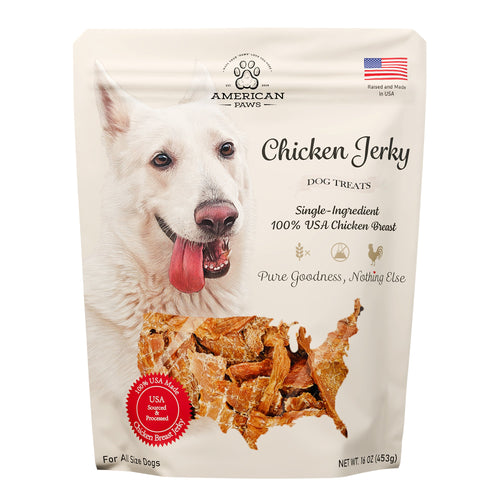
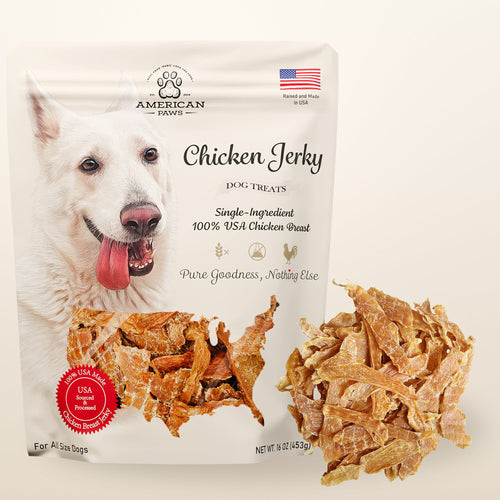
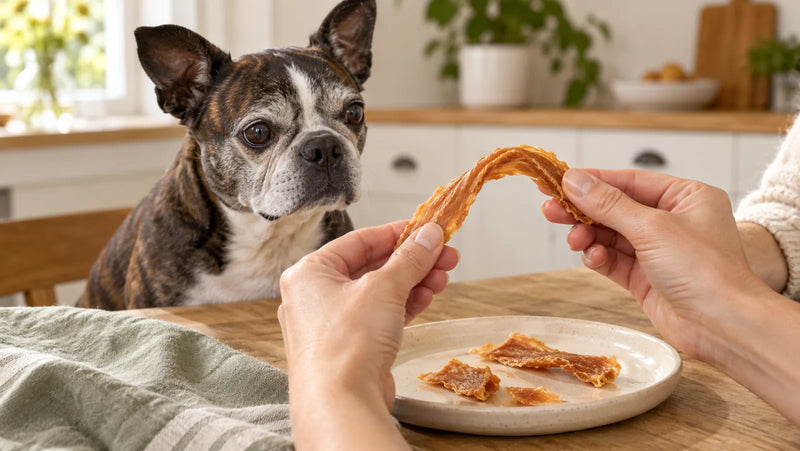
If your dog loves chicken flavor but does not need a chew, chicken breast jerky is a straightforward reward. Whole-cut American Paws chicken breast jerky is a single-ingredient option, which makes the label easy to understand and the treat easy to break into smaller pieces.
Jerky is especially useful when you want a high-value reward after walks, grooming, training, or calm behavior. It gives the chicken aroma dogs notice without the bone risk that comes from cooked leftovers.
You can also browse the full American Paws chicken collection to compare jerky, freeze-dried chicken, chicken feet, and toppers for different moments in your dog's routine.
How American Paws makes chicken treats safely
American Paws is based in Highland, California and makes treats in the USA with a focus on simple, recognizable ingredients. The brand was founded in 2019 and works from a USDA-inspected facility, which supports a more accountable approach than anonymous, mystery-ingredient treats.
That does not mean every product has the same ingredient list. Some products are single-ingredient, like whole-cut chicken breast jerky. Others are all-natural formulas designed for a different texture or use. The important point is accuracy: read the label, choose the right treat for your dog, and use treats as part of a balanced routine.
If you want to go deeper on label simplicity, read our guide to single-ingredient dog treats and simple labels.
Frequently asked questions
Can dogs eat cooked chicken bones?
No. Cooked chicken bones can splinter and may cause choking, mouth injuries, or digestive blockage. Avoid giving cooked poultry bones to dogs.
Are raw chicken bones safe for dogs?
Raw chicken bones are less brittle than cooked bones, but they still carry risks, including choking, digestive upset, tooth damage, and bacteria exposure. Ask your veterinarian before feeding raw bones.
Are dehydrated chicken feet safe for dogs?
Dehydrated chicken feet can be an appropriate natural chew for some dogs when fed with supervision and matched to the dog's size and chewing style. No chew is risk-free, so monitor your dog and remove small or sharp pieces.
What should I do if my dog swallowed a chicken bone?
Remove any remaining bones and call your veterinarian or an emergency vet. Tell them whether the bone was cooked, your dog's size, about how much was eaten, and any symptoms you see.
What can I give instead of chicken bones?
Choose dog-appropriate options such as supervised dehydrated chicken feet, chicken jerky, freeze-dried chicken treats, or other properly sized chews. Avoid cooked leftovers that were not made for dogs.
Ready to give your dog chicken flavor without cooked bone risk? Explore American Paws chicken treats, including natural chews and simple jerky rewards made for real daily routines.