
How many treats can a cat have per day? There is no single safe piece count for every cat. Keep all treats and extras below 10% of your cat's daily calories, leave at least 90% for complete and balanced food, and divide the treat-calorie budget by the calories in each piece.
For an average healthy adult cat weighing 4 kg (about 8.8 lb) and in ideal body condition, the World Small Animal Veterinary Association gives an example ceiling of about 22 treat calories per day. That could mean 22 one-calorie bites, 11 two-calorie bites, or only four five-calorie pieces—and fewer once a topper, pill food, or table bite enters the day. The calories, not the number in your hand, are what count.
How many treats can a cat have per day? The quick answer
Start with your cat's actual daily calorie target. Multiply it by 0.10 to find the maximum calories available for all extras, then divide by the calories in one treat. Round down to a whole piece and subtract every other snack or topper already given.
Daily calorie target × 10% ÷ calories per treat = maximum full treats for the day.
This result is a ceiling, not a goal. Your cat does not need to use the whole allowance, and the right limit may be lower for a cat that is overweight, less active, on a prescription diet, or living with a medical condition. Ask your veterinary team for the daily calorie target if you do not already have one.
Do not borrow the number from a dog chart. Cats have their own energy needs, and our separate daily dog-treat guide is built for a different species and body-size range.
The cat-treat 10% rule in plain English
Complete and balanced meals supply the nutrition
The AAFCO pet-food label guide explains that a complete food contains all required nutrients and a balanced food supplies them in the proper ratios. Most products clearly sold as treats or snacks are supplemental; they are not required to provide the complete nutrition of a main diet.
That distinction matters especially for cats. A piece of chicken may be a useful reward, but chicken alone is not a complete feline diet. Keeping at least 90% of daily calories in appropriately labeled complete and balanced food protects room for the nutrients the main diet was formulated to supply.
Ten percent is a ceiling, not a target
The WSAVA guide to feeding treats to cats advises keeping treats below 10% of daily calorie intake and never using them to replace a meal. It also recommends choosing an appropriate size and shape and asking the veterinary team about the right type and quantity for an individual cat. For choosing that treat, see our best cat treats guide.
You do not need to fill that 10% every day. A cat who enjoys two tiny training crumbs and no other extras has not missed a nutritional requirement. Treats serve bonding, enrichment, medication support, or training; they are optional calories, not a food group that must be completed.
Daily cat-treat calorie guide by body weight
How to use the WSAVA healthy-adult table
WSAVA publishes the following maximum treat-calorie examples for average healthy adult cats in ideal body condition. Pounds are rounded conversions to make the chart easier to use in the United States.
| Cat's weight | Maximum treat calories per day |
|---|---|
| 2.5 kg (5.5 lb) | 18 kcal |
| 3 kg (6.6 lb) | 20 kcal |
| 3.5 kg (7.7 lb) | 21 kcal |
| 4 kg (8.8 lb) | 22 kcal |
| 4.5 kg (9.9 lb) | 24 kcal |
| 5 kg (11 lb) | 25 kcal |
| 5.5 kg (12.1 lb) | 26 kcal |
| 6 kg (13.2 lb) | 26 kcal |
| 7 kg (15.4 lb) | 28 kcal |
Notice that the allowance does not rise in a straight line with scale weight. A heavier cat is not automatically entitled to more treats if the extra weight reflects excess body fat rather than a larger healthy frame. Use the row only as a reference, not as a reason to preserve a high calorie intake.
When the table does not apply
The chart is not a kitten feeding table and does not prescribe calories for pregnant or nursing cats, underweight or overweight cats, highly active cats, seniors with changing needs, or cats with illness. It assumes an average healthy adult at ideal body condition.
If your cat falls outside that description, use the calorie target from your veterinarian rather than choosing a row by current scale weight. This is especially important for cats with diabetes, kidney or urinary disease, gastrointestinal disease, food sensitivity, obesity, or a veterinary-prescribed diet.
How to calculate the number of treats
The three-step formula
- Confirm daily calories. Use the feeding plan from your veterinarian or the adjusted amount that keeps your cat at an ideal body condition—not an online guess based on weight alone.
- Set the extras ceiling. Multiply daily calories by 0.10. A cat eating 220 kcal per day has up to 22 kcal for every treat and extra combined.
- Divide and round down. Divide the remaining extra calories by the kcal in one treat. If the label says 5 kcal per piece, 22 ÷ 5 allows no more than four full pieces before any other extras.
Look for a calorie statement on the package. It may list kilocalories per piece, cup, ounce, or kilogram. If a piece value is missing, contact the manufacturer rather than assuming that two treats of similar size have similar calories. Density and ingredients can make visually identical pieces very different.
Worked examples for 1-, 2-, and 5-calorie treats
Here is how the same 22-kcal ceiling changes with the product. These are mathematical maximums for the example adult, not recommended daily targets.
| Calories per treat | Math | Maximum full pieces before other extras |
|---|---|---|
| 1 kcal | 22 ÷ 1 | 22 |
| 2 kcal | 22 ÷ 2 | 11 |
| 5 kcal | 22 ÷ 5 | 4 |
A whole-piece count is not always the best way to reward. If one five-calorie piece breaks into eight safe crumbs, you still fed five calories—not eight treats' worth of calories. Breaking pieces increases reward moments without increasing the food.
Count toppers, training rewards, pill food, and table bites
The daily budget includes more than treats from a pouch. Count every food item added beyond the complete meal:
- training rewards and clicker-training bites;
- freeze-dried crumbs sprinkled as a topper;
- food used to hide medication;
- lickable treats, broth, or paste with calories;
- small tastes of plain human food; and
- snacks given by different people in the household.
One pinch at breakfast, several rewards during training, and a bedtime snack can look harmless in isolation. Together they share the same allowance. A topper does not stop counting because it lands in the meal bowl, and crumbling a treat changes its shape but not its calories.

A simple household rule helps: measure the day's extras into one small container each morning. Everyone rewards from that container. When it is empty, use play, brushing, praise, access to a favorite perch, or another nonfood reward instead of opening a second allowance.
Why the same cat may need fewer treats over time
Body condition and activity
A cat's calorie needs can change even when the number on the scale barely moves. Neutering, aging, less outdoor activity, a move to a smaller home, or recovery from an injury may lower energy use. Seasonal or household changes can also reduce play.
Watch the trend, not one day. Unplanned weight gain, a disappearing waist, or difficulty feeling the ribs may mean total calories need review. Do not launch a crash diet or simply remove a large amount of complete food. Ask the veterinary team to assess body condition and design an appropriate adjustment.
Kittens, seniors, and medical diets
Growing kittens need complete food formulated for growth, and the adult WSAVA table is not their guide. For the separate age question, read when kittens can start having treats. Our guides also cover whether regular or adult cat treats fit a kitten and choosing treats for kittens.
Senior cats do not all need the same change. Some become less active; others lose weight or muscle and need a medical workup. A sudden increase in hunger, meal refusal, unexplained weight change, vomiting, diarrhea, or drinking and urinating more is not just a treat-budget problem. Schedule veterinary care. For soft, low-calorie options that suit an older cat, see our guide to treats for senior cats.
A prescription diet deserves special caution. Extra food can interfere with the reason the diet was selected. Ask the prescribing veterinary team before adding even a single-ingredient treat or topper.
Make a small calorie budget feel like more rewards
Break one freeze-dried piece into several moments
Cats respond to timing and flavor, not to a reward's visual size. A tiny crumb delivered immediately after the desired behavior can reinforce the lesson without turning each repetition into a full snack.
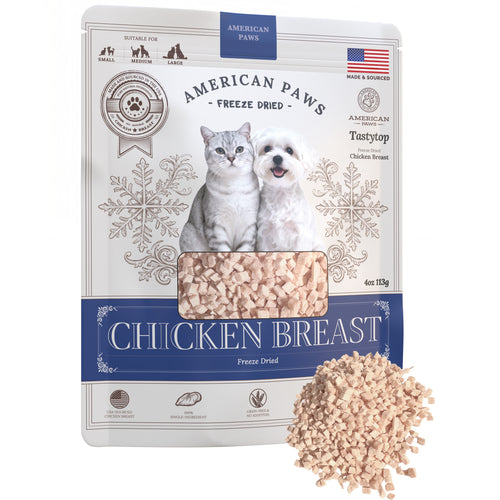
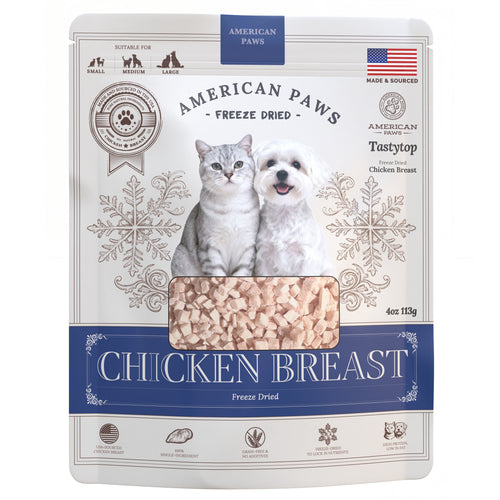
American Paws single-ingredient freeze-dried chicken for cats and dogs is made from 100% USA chicken breast and contains approximately 5 kcal per full piece. The light pieces can be broken smaller, so one piece can become several training moments while still totaling about five calories. It is a supplemental treat, not a complete meal.
For more on the format, see our guide to freeze-dried chicken treats for cats. Single ingredient means the ingredient list is short; it does not mean calorie-free, complete and balanced, hypoallergenic, or appropriate for every cat.
Reserve the day's allowance before the first treat
Decide what the treats are for. If you plan a training session, reserve the highest-value crumbs for it instead of spending the budget on random kitchen handouts. Our cat-line pillar explains using tiny cat treats for training, including reward timing and piece size.
You can also use a measured portion of the cat's regular complete food for easy repetitions when the texture and feeding plan allow it. Because those pieces come from the meal allotment, they do not add new calories. Keep higher-value extras for harder behaviors or distractions.
Signs your cat may be getting too many treats
Possible signs that extras are crowding the day include:
- gradual weight gain or loss of ideal body condition;
- less interest in complete meals while still asking for treats;
- soft stool, vomiting, or digestive upset after reward-heavy days;
- persistent begging reinforced by frequent handouts;
- different household members unknowingly feeding duplicate snacks; and
- a topper portion that has grown from a dusting into a second food serving.
Those signs are not diagnoses. Appetite or weight changes can have medical causes, and vomiting or diarrhea should not automatically be blamed on treats. Keep a short food log and share it with the veterinarian, including product names, calories, amounts, and who fed what.
A practical daily cat-treat routine
- Confirm your cat's daily calorie target and ideal body condition with the veterinary team.
- Calculate a maximum extras budget of 10% or less.
- Read the calorie content for every treat and topper.
- Set aside the day's allowance in one container and assign part of it to training.
- Break larger pieces to an appropriate size, then supervise.
- Record pill foods, lickable treats, table bites, and toppers in the same total.
- Review body condition and meal appetite regularly instead of treating the math as permanent.
This routine keeps the answer visible: the right number is the number that fits within the calorie budget without displacing the complete diet. On some days that may be several tiny crumbs; on other days, a calorie-dense topper may use the allowance before a separate snack is offered.
Frequently asked questions
Is 10 treats a day too much for a cat?
It depends on the calories per piece and the cat's daily calorie target. Ten one-calorie rewards may fit a 22-kcal ceiling; ten five-calorie pieces would total 50 kcal and exceed it. Read the label and do the math instead of judging by count.
Can cats have treats every day?
Many healthy adult cats can have a small measured amount daily when complete and balanced food remains at least 90% of calories and the treats fit their health plan. Daily treats are optional, not required.
Do cat food toppers count as treats?
Yes, when the topper adds food beyond the complete meal. Include freeze-dried crumbs, broths, pastes, and other calorie-containing extras in the same daily allowance. If a topper is itself complete and balanced and replaces a measured part of the meal under veterinary guidance, the calculation may differ.
How many treats can a kitten have?
Do not use the healthy-adult body-weight table for a kitten. Growth needs, weaning stage, main-food intake, product age directions, and tiny piece size all matter. Keep kitten food first and ask the veterinarian for an individual limit.
Should I reduce my cat's meal to make room for treats?
Do not casually cut complete food to create a larger treat allowance. Frequent large adjustments can unbalance nutrient intake. If training or medication requires regular extra calories, ask the veterinary team how to adjust the full feeding plan while preserving complete nutrition.
Keep every reward inside one daily budget
The answer to “how many” is simple once calories replace guesswork: keep all extras below 10% of daily intake, divide that allowance by the calories per piece, and subtract toppers and other snacks. Use smaller pieces for more reward moments, and let complete and balanced food remain the foundation.
If freeze-dried chicken fits your cat, start with the verified cat-and-dog product above and break it to an appropriate size. You can also browse American Paws dog treats and pet rewards, but check every product's species label and feeding purpose—the full collection is not automatically intended for cats. When weight, appetite, health, or calorie needs are uncertain, your veterinary team should set the limit.