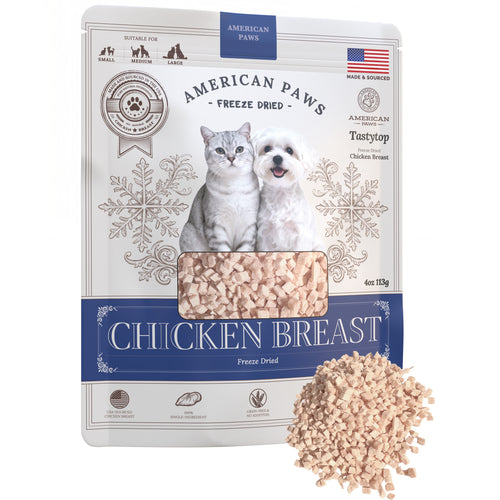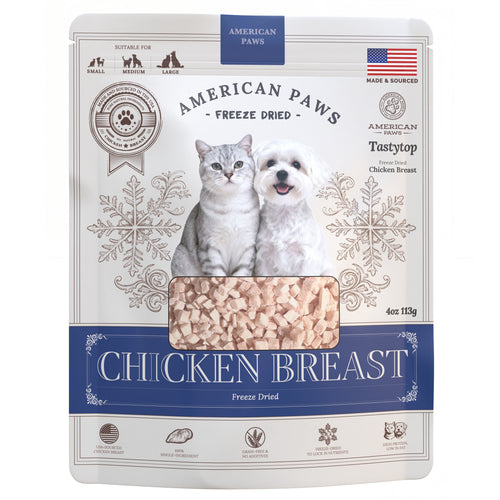

Freeze dried chicken for cats benefits start with simplicity: real chicken aroma, a short ingredient label, and tiny portions that are easy to use as treats, training rewards, or meal toppers. For many cats, that combination is more useful than a complicated snack with flavors, colors, or sweeteners.
The best way to feed freeze-dried chicken is as a small extra alongside complete-and-balanced cat food. It is not a full diet by itself, but it can be a clean, high-interest reward when you choose an unseasoned, single-ingredient option and introduce it slowly.
Freeze dried chicken for cats benefits: quick answer
Freeze-dried chicken can be useful for cats because it is meat-based, dry, shelf-stable, and easy to portion. It gives you the appeal of plain chicken without cooking a fresh batch or opening a wet topper every time your cat needs a small reward.
That matters because cats are small animals. A treat that looks tiny to a person can still be meaningful to a cat. Freeze-dried pieces can be broken smaller, crumbled over food, or used one at a time during short training sessions.
The key is keeping the role clear. Freeze-dried chicken is a treat or topper, not a replacement for complete cat food. Cornell Feline Health Center explains that cats need animal-based nutrients and balanced nutrition, so the everyday diet should still be complete for your cat's age and health.
Why cats respond to real chicken aroma
Cats often make food decisions by smell and texture before anything else. Plain chicken has a familiar meat aroma, and freeze-drying concentrates that aroma without adding sauces, salt, or artificial flavors. That is one reason a small piece can get a cat's attention during training or enrichment.
This is especially helpful for cats that ignore biscuit-style treats. Some cats prefer a dry, light piece they can pick up. Others prefer the same piece crushed into powder over their normal food. Freeze-dried chicken gives you both formats from one simple treat.
Benefit 1: a short, readable ingredient label
A strong cat treat label should be easy to understand. If you are buying chicken treats for cats, the ingredient list should tell you exactly what the treat is. Short labels are useful for pet parents who want to avoid unnecessary colors, sweeteners, grains, or vague meat terms.
American Paws single-ingredient freeze-dried chicken for cats is made from 100% USA chicken breast. The product is freeze-dried in a USDA-inspected facility in Highland, California, and has no grains, fillers, or artificial preservatives.
That single-ingredient claim belongs to this product specifically. It does not mean every treat in every catalog is single-ingredient, and it does not mean your cat should eat chicken as a full diet. It simply means this treat is easy to read and easy to use intentionally.
Benefit 2: easy portions for small cats
Portion control is one of the practical benefits of freeze-dried cat treats. You can offer a tiny piece, split a larger piece, or crumble a few flakes without committing to a large serving. That helps keep treats small enough for a cat's body size.
Small portions also make new-treat introductions easier. If your cat has never had freeze-dried chicken before, start with a crumb or one tiny piece. Watch for normal appetite, normal stool, and normal behavior before making it a regular treat.
If a piece feels too large, break it down. Cats do not need a big chunk to enjoy the reward. Smaller pieces are often better because they are easier to chew and let you reward more than once without overfeeding.
Benefit 3: useful for cat training and enrichment
Training is not only for dogs. Cats can learn recall, carrier comfort, nail-trim cooperation, mat work, and simple cues when the reward is worth their attention. Freeze-dried chicken can work well because it is aromatic, quick to deliver, and easy to keep near a training area.
For training, the best reward is small and fast. A cat should be able to eat it quickly and return to the lesson. If the treat is too big, your cat may walk away to chew, drop crumbs, or lose focus. Break pieces into pea-size or smaller bits for most sessions.
For a deeper method guide, read our article on training treats for cats. The short version is simple: reward the behavior you want immediately, keep sessions brief, and stop before your cat loses interest.
Benefit 4: a clean topper for picky cats
Freeze-dried chicken can also work as a cat food topper. Crush a small amount between your fingers and sprinkle it over regular food to add aroma and texture. This can be useful when a cat is bored with a meal, transitioning under veterinary guidance, or needs a little extra encouragement to approach the bowl.
Use topper amounts carefully. The goal is to add interest, not to create a chicken-only meal or teach your cat to hold out for treats. Start with a light dusting and keep the main food as the nutritional foundation.

Benefit 5: shelf-stable convenience without cooking
Plain cooked chicken can be a good cat treat, but it takes preparation and refrigeration. It also spoils faster once cooked. Freeze-dried chicken is convenient because it stays dry, travels easily, and can be sealed back in the bag after a short session.
That convenience is useful for everyday routines. You can keep a bag near the carrier for calm-entry practice, near the grooming kit for nail-trim rewards, or in a cabinet for meal-topper use. Because the pieces are dry, they are less messy than cooked chicken and easier to portion on the fly.
Freeze-dried also avoids casual raw-chicken handling at home. The FDA warns that raw pet food can carry bacteria risks for pets and people, especially when raw meat contaminates hands, bowls, counters, or storage areas. If you simply want a chicken treat, you do not need to handle raw chicken to get there.
What freeze-dried chicken is not
Freeze-dried chicken is not complete cat food. It is plain chicken, which means it does not provide every nutrient a cat needs in the correct balance. Feeding only chicken can create nutritional gaps even if the ingredient itself is familiar and wholesome.
Think of it as a tool: a training reward, a small snack, or a topper. Your cat's complete-and-balanced food should do the main nutritional work. If your cat is on a prescription diet or has a health condition, ask your veterinarian before adding toppers or treats.
How to choose freeze-dried chicken treats for cats
Look for a clear protein source, an ingredient list you can read, and pieces that can be broken small. For chicken treats, the cleanest version is chicken only. Avoid treats with heavy seasoning, added salt, onion, garlic, artificial colors, or vague flavor systems that do not explain what your cat is eating.
Storage matters too. Choose a package you can reseal, keep it dry, and close it after each use. If a freeze-dried treat smells off, changes texture, or gets damp, do not feed it.
You can also browse our freeze-dried treats if you want a dry, easy-to-portion format for cats and dogs.
How much freeze-dried chicken can a cat have?
There is no single perfect number for every cat, but less is usually enough. Start with one tiny piece or a few crumbs. If you are training, break pieces smaller instead of feeding more total chicken.
Watch total treats across the whole day. Cats are small, and calories add up quickly. A cat that is overweight, diabetic, on a prescription diet, or dealing with kidney disease, digestive issues, or allergies needs individualized advice from a veterinarian.
If your cat begs for more, slow down. Treat value does not come from volume. It comes from timing, aroma, and consistency.
How to introduce freeze-dried chicken to a cat
Introduce it like any new food. Offer one tiny piece on a normal day when your cat is eating well. Do not introduce several new treats at once, because that makes it harder to know what caused a reaction if your cat has an upset stomach.
If your cat is cautious, start with scent. Place a crumb beside the regular food or offer it from your hand without pressure. Some cats need repeated low-pressure exposure before trying a new texture.
If your cat vomits, has diarrhea, scratches more than usual, refuses food, or seems uncomfortable after a new treat, stop feeding it and contact your veterinarian.
When to ask your veterinarian first
Ask your veterinarian before adding freeze-dried chicken if your cat is a kitten, senior, overweight, diabetic, on a prescription diet, pregnant, immunocompromised, or diagnosed with kidney disease, pancreatitis, food allergies, inflammatory bowel disease, or another chronic condition. Older cats with worn teeth often do better with a softer piece; our senior cat treats guide covers soft, low-calorie picks.
This does not mean freeze-dried chicken is unsafe for every cat in those groups. It means the treat should fit the cat's full diet and health plan. Your veterinarian can help you decide whether chicken is appropriate and how much is reasonable.
How freeze-dried chicken compares with cooked chicken
Plain cooked chicken can be a fine treat when it is boneless, unseasoned, and served in tiny pieces. The drawback is convenience. Cooked chicken needs refrigeration, creates dishes, and can be easy to overfeed because the pieces look small to us.
Freeze-dried chicken is better for storage and quick rewards. It is dry, light, and easy to break. Cooked chicken is better when you want a fresh soft texture and are already preparing plain chicken safely. Both should stay unseasoned and both should remain treats.
If your question is broader than freeze-dried treats, see our safety guide: can cats eat chicken.
Frequently asked questions
Is freeze-dried chicken good for cats?
It can be a good treat for many cats when it is plain, single-ingredient, and fed in small amounts. It should not replace complete cat food.
Can cats eat freeze-dried chicken every day?
Some cats may tolerate tiny daily pieces, but daily treats are not required. Keep portions small and ask your veterinarian if your cat has any medical or weight concerns.
Is freeze-dried chicken better than cooked chicken for cats?
It depends on the use. Freeze-dried chicken is more convenient and shelf-stable. Plain cooked chicken can also be fine, but it requires cooking, cooling, storage, and careful portioning.
Can kittens have freeze-dried chicken?
Ask your veterinarian first. Kittens need complete growth nutrition, so treats should be very limited and chosen carefully. See our guide to the best treats for kittens for age-appropriate choices.
Can I crumble freeze-dried chicken over cat food?
Yes, a small crumble can be used as a topper for many cats. Keep the amount light so the regular complete food remains the main meal.
Choose simple chicken, then keep it small
Freeze-dried chicken works best when it stays simple: clear chicken ingredient, tiny portions, slow introduction, and a specific job. Use it to reward training, add light aroma to a meal, or offer an occasional snack. For a clean option made with 100% USA chicken breast, see American Paws freeze-dried chicken and keep a few small pieces ready for the moments when your cat decides the reward is worth it.