
Training treats for cats should be tiny, high-value pieces of real meat. Yes, you can train a cat, and the secret is making the reward worth the effort. Cats are obligate carnivores, so a small piece of single-ingredient chicken can be far more motivating than a large, complicated snack.
With a clicker or a consistent marker word, short sessions, and the right treat, many cats can learn useful behaviors like coming when called, touching a target, entering a carrier, or giving a high-five.
Can you really train a cat?
Yes. Cats respond well to positive reinforcement when the reward is valuable and the session is short. The goal is not to force a cat to act like a dog. The goal is to make the behavior rewarding enough that your cat chooses to repeat it.
What makes great training treats for cats?
Single-ingredient real meat
Cats are obligate carnivores, so meat-based rewards make sense. A simple freeze-dried chicken treat gives you a clear protein source without fillers, artificial flavors, or extra ingredients that distract from the reward.
Tiny pieces
Cat training works best with very small pieces. You want the reward to disappear quickly so your cat can reset and try again. If a piece is too large, break it smaller. A crumb-sized reward is often enough.
Crunchy, low-mess, high-aroma-to-cats
The best cat training treats are easy to handle and interesting to the cat. Freeze-dried chicken is light, crunchy, and aromatic without being greasy. It fits clicker sessions because it is quick to deliver and easy to portion. For comparing cat treats beyond training sessions, see our best cat treats guide.

How to train your cat with treats
Start with a clicker or marker word
Click, then treat. Repeat until your cat understands that the sound predicts a reward. If you do not use a clicker, choose a short marker word like yes and say it the same way every time.
Lure, reward, repeat
For sit, move the treat slightly upward so your cat's head follows and the rear naturally lowers. For a high-five, reward a paw lift. For come, mark the moment your cat moves toward you. For carrier training, reward interest in the carrier before asking your cat to go inside.
Keep sessions short and end on a win
One to three minutes can be enough. Cats do better when training feels like a game. Stop before your cat walks away, and finish with an easy behavior your cat can succeed at.
How many treats should you use?
Treats should generally stay around 10% or less of daily calories. Because cats are smaller than dogs, reward size matters. Use tiny pieces, keep sessions short, and ask your veterinarian for guidance if your cat is a kitten, overweight, diabetic, or on a special diet.
A single-ingredient pick for cats
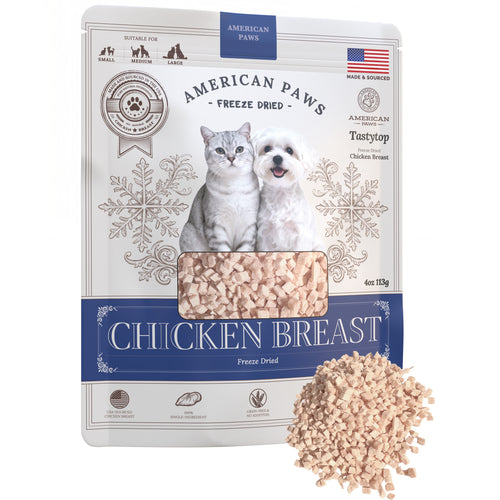
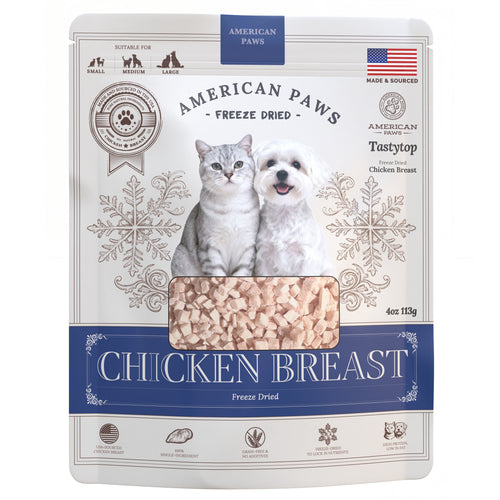
American Paws freeze-dried chicken breast for cats and dogs is made from 100% USA chicken breast. The pieces are naturally small and crunchy, with no additives, and the product is about 70% protein. That makes it a clean fit for cat training and a simple topper.
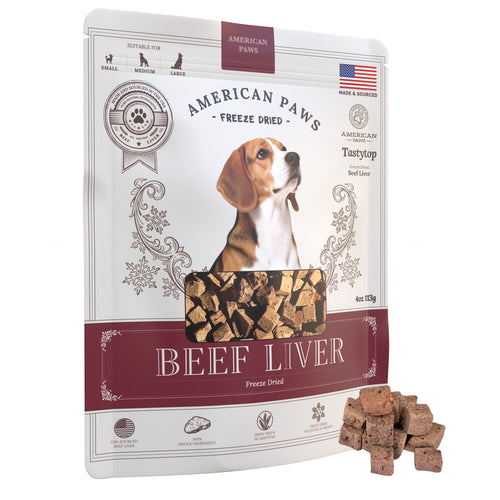
Dog households can also explore our single-ingredient chicken jerky and freeze-dried beef liver training treats. If you want to understand simple labels, read our article on single-ingredient dog treats, then browse the chicken collection.
Beginner cat training plan
Start with the easiest possible win: name response. Say your cat's name once. When your cat looks at you, mark and reward. Repeat a few times, then stop. On the next session, wait for your cat to take one step toward you before marking. Over several sessions, that becomes the foundation for recall.
Next, teach a target. Present a finger or target stick near your cat's nose. When your cat sniffs or touches it, mark and reward. Targeting can later help with carrier training, scale training, grooming cooperation, and moving your cat without picking them up.
Why cats walk away during training
If your cat leaves, the session may be too long, the room may be distracting, or the reward may not be valuable enough. Cats also dislike pressure. Do not chase your cat with a treat or keep asking after interest drops. End the session, make the next one shorter, and try again when your cat is alert but not overexcited.
A good cat session often looks almost too easy. One minute of success beats ten minutes of frustration. When your cat learns that training is voluntary and rewarding, attention usually improves.
Choosing the right training environment
Pick a quiet room for the first sessions. Put away other pets, loud toys, and open food bowls. Work on a surface where your cat feels secure, such as a rug, low table, or familiar floor area. Keep the treats within reach so reward delivery is fast.
As your cat learns, you can practice in new places. Move slowly: same behavior, slightly harder room, same high-value treat. That gradual change helps the behavior become reliable without overwhelming the cat.
Best first behaviors to teach with cat treats
Start with behaviors that help daily life. Name response helps you find your cat in the house. Target training helps you move your cat without stress. Carrier training helps with vet visits. A sit or high-five is fun, but practical behaviors build confidence and make care easier.
Use the same pattern for each one: present the cue, wait for a tiny step in the right direction, mark it, and reward with a small piece. Do not wait for a perfect behavior at first. Reward progress, then shape it cleaner over time.
How to keep cat treats special
Do not leave training treats out all day. If your cat can graze on the same reward whenever they want, the treat may lose value during training. Keep the reward sealed, bring it out for short sessions, and put it away when you finish. That simple habit makes the treat clearer and more exciting.
You can also rotate easy behaviors with practical ones. Ask for a touch, reward, then practice one step toward the carrier, reward again, and stop. Variety keeps the session interesting without overwhelming your cat.
Frequently asked questions
Can all cats be trained?
Most cats can learn something with positive reinforcement, but personality, age, motivation, and environment matter. Start with easy wins.
What treats are best for training cats?
Tiny pieces of real meat are a strong choice. Freeze-dried chicken is clean, high-value, and easy to portion.
How small should cat treats be?
Very small. Think crumb-sized or smaller than a pea, especially if you plan several repetitions.
Can kittens have training treats?
Ask your veterinarian, especially for very young kittens or kittens on a specific diet. If approved, keep pieces tiny. Our guide to the best treats for kittens covers age-appropriate picks.
How often can I give my cat treats?
Use treats sparingly and keep them within daily calorie limits. Training sessions should be short and focused.
Make training worth your cat's attention
Cat training works when the reward is clear, small, and valuable. Start with a tiny piece of real chicken, mark the behavior, and let your cat decide that learning is worth repeating.