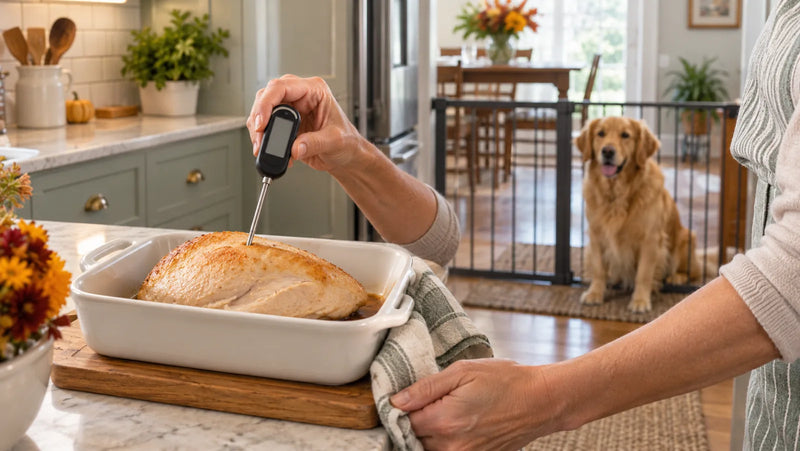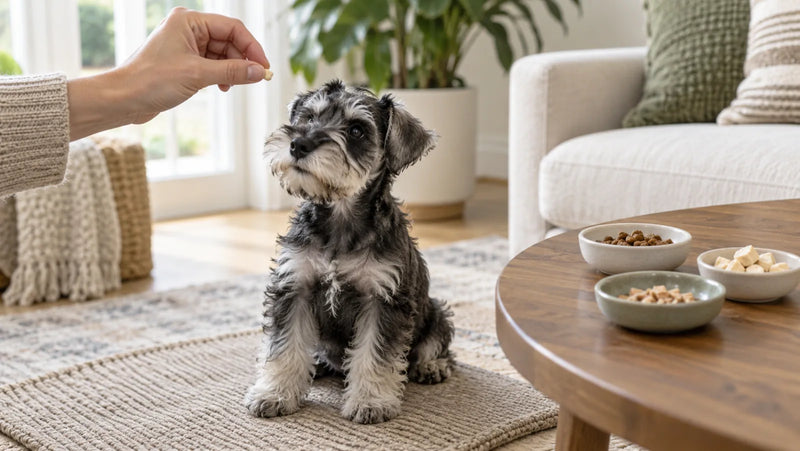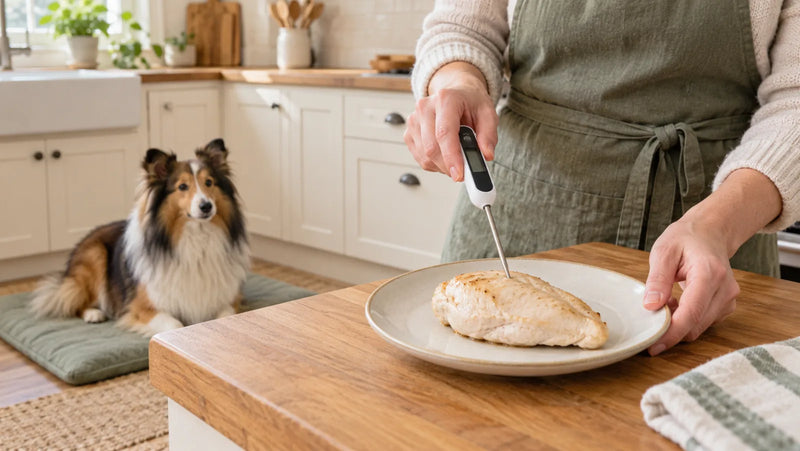

Yes—many healthy adult dogs can eat a small amount of plain potato that is fully cooked, soft, non-green, and unsprouted. If you are asking, “can dogs eat potatoes?” the raw-versus-cooked distinction is only the first gate. The potato must also be sound, peeled for the conservative method, served without butter or seasoning, and small enough to fit the dog's total treat calories.
Do not serve raw potato, green skin or flesh, sprouts, eyes, leaves, or stems. Those forms carry more glycoalkaloid risk, including solanine and chaconine. A green or sprouted potato should be discarded where the dog cannot reach it, not trimmed casually or “fixed” by boiling.
Can dogs eat potatoes? The quick answer
A sound ordinary potato can become an occasional dog-safe taste after it is peeled, cooked all the way through, cooled, and left plain. The American Kennel Club's veterinary-reviewed potato guide makes the same practical distinction: small amounts of plain cooked potato may be offered, while raw or green potato should be avoided.
- Okay for some healthy dogs: a tiny amount of peeled, plain, fully cooked, fork-soft potato from a sound non-green tuber.
- Not a serving: raw or half-cooked potato, green skin or flesh, sprouts, eyes, leaves, stems, or a bitter potato.
- Not plain: fries, chips, hash browns, loaded baked potatoes, potato salad, restaurant mash, gravy, or casserole.
- Not a meal: potato is a starchy extra and cannot replace complete and balanced dog food.
- Not universal: diabetes, obesity, pancreatitis history, gastrointestinal disease, allergies, or a prescription diet can change the answer.
A dog does not need potato for vitamins, fiber, or variety. If it does not fit the dog's calorie plan or medical diet, skipping it is a complete answer.
Raw vs cooked potatoes for dogs at a glance
| Potato form | Decision | Reason |
|---|---|---|
| Sound, peeled, fully cooked, plain flesh | A tiny amount may fit | Soft texture and controlled ingredients; still starchy and optional. |
| Raw or half-cooked potato | Do not serve | Unnecessary glycoalkaloid exposure plus firm, hard-to-chew texture. |
| Green, sprouted, bitter, or heavily eyed potato | Discard the whole potato | Greening and sprouting warn that glycoalkaloids may be elevated. |
| Leaves, shoots, stems, or garden fruit | Keep away | Potato plant parts are a Solanum poisoning concern. |
| Fries, chips, hash browns, or seasoned mash | Skip as dog treats | Fat, salt, dairy, onion, garlic, sauces, or other additions may be present. |
This table describes ordinary feeding choices, not a diagnosis after ingestion. When a dog has already eaten raw, green, sprouted, or plant material, the amount, the dog's size, the exact potato, and symptoms determine the response. Call rather than guessing when those details are uncertain.
Why raw, green, and sprouted potatoes are unsafe
Solanine and chaconine are the real concern
Potatoes are members of the nightshade genus Solanum. They naturally contain glycoalkaloids, especially alpha-solanine and alpha-chaconine. Ordinary sound tubers contain lower levels than the plant's sprouts, eyes, leaves, shoots, and green or damaged areas, but raw potato is still not a useful dog serving.
“Raw” should not be translated into “one ordinary brown bite is always fatal.” Risk changes with greening, sprouting, plant part, amount, dog size, and symptoms. The responsible feeding rule is simpler: do not intentionally offer raw potato, and call the veterinary team when a dog eats a concerning amount or any green, sprouted, bitter, or plant material.
The Merck Veterinary Manual's poisonous-plant reference lists potato among the hazardous Solanum nightshades and identifies leaves and shoots as problem plant parts. Fence garden beds, remove volunteer sprouts, and keep compost and discarded peels inaccessible.
Green color is a warning sign, not the toxin itself
Light exposure can make a potato produce green chlorophyll. Chlorophyll creates the visible color; it is not solanine. The problem is that the same storage conditions that cause greening can also coincide with increased glycoalkaloids, so green skin or flesh is a practical discard signal.
The National Capital Poison Center's green-potato explanation distinguishes harmless chlorophyll from the toxic glycoalkaloids solanine and chaconine and notes that sprouts, eyes, and green skin can have higher concentrations. That food-chemistry point prevents two opposite errors: calling green pigment itself poison, or dismissing green color because chlorophyll is harmless.
For a dog, do not trim a green patch and serve the rest. Discard the whole potato where pets cannot retrieve it. The same rule applies to a potato that is heavily sprouted, bitter, soft, rotting, moldy, or otherwise abnormal.
Cooking does not make a green or sprouted potato a good choice
Boiling, baking, microwaving, or frying is not a reliable household detox method for a green or sprouted potato. Some preparation may change glycoalkaloid levels, but ordinary cooking does not provide a visual test that proves a questionable tuber is safe.
Use cooking to soften a sound, non-green potato—not to rescue an unsafe one. If the ingredient fails the inspection before cooking, it does not enter the dog's bowl afterward.
How to prepare a plain cooked potato for a dog
Start with a sound, firm, non-green potato
Inspect the entire tuber in bright light. It should be firm, clean, fresh-smelling, free of green patches and sprouts, and not bitter. If you cannot inspect it confidently, choose a different potato. Keep the dog out of the prep area so raw pieces and peels do not become floor snacks.
Peel and cook until fork-soft
A sound, fully cooked, non-green skin is not the same as green peel, but peeling is the conservative first-serving method. It simplifies inspection and removes a tougher texture. Cut the flesh into even pieces and choose one plain method:
- Boil: simmer peeled cubes in plain water until a fork slides through the center without resistance, then drain.
- Steam: steam peeled cubes until completely soft, with no oil, broth, or seasoning.
- Bake: bake a sound potato without foil toppings or oil, then remove the skin and use only soft plain flesh.
“Cooked” means fully soft throughout, not browned outside with a firm center. A hard raw or half-cooked chunk adds a choking and physical-obstruction concern, especially for a dog that gulps food.
Cool, resize, and serve with nothing added
Cool the potato completely. Mash a tiny amount with plain water or cut one fork-soft piece smaller than the dog's usual reward. Do not add butter, oil, milk, cream, cheese, salt, gravy, stock, bacon, onion, garlic, chives, seasoning blend, ketchup, or sauce.
Introduce only this one new food that day. Our guide to introducing one new food at a time explains how to keep the trial interpretable. If the dog develops repeated vomiting, diarrhea, itching, facial swelling, appetite loss, or another abnormal response, stop and contact the veterinary team.

How much potato can a dog eat?
Conservative first-taste amounts by size
There is no universal potato maximum that fits every dog. Potato variety, cooking method, water loss, the complete diet, body condition, activity, and health all change the answer. The examples below are deliberately tiny first tastes for a healthy adult dog, not daily allowances or therapeutic doses.
| Dog's body weight | Conservative first taste | How to serve it |
|---|---|---|
| Under 20 lb | About 1/2 teaspoon | Plain soft mash or one smaller fork-soft piece. |
| 20–50 lb | About 1 teaspoon | Plain mash or several tiny soft flecks. |
| Over 50 lb | About 2 teaspoons | Plain mash or a few small fork-soft pieces. |
Start there, observe, and do not increase the same day. A bigger dog does not automatically need more, and a small dog does not need potato at all. If it becomes a repeat extra, the actual amount should be calculated from the dog's daily calories and the rest of the treat plan—not from a human side-dish portion.
Keep every extra inside the shared calorie budget
The World Small Animal Veterinary Association's treat guide recommends that all treats together provide no more than 10% of a dog's daily calories while complete and balanced food supplies at least 90%. Ten percent is the ceiling for every extra, not a potato target.
Training rewards, chews, table tastes, toppers, fruit, vegetables, and potato all share that space. Use the daily dog-treat calorie budget to account for the whole day. A tablespoon of mash may look small, but it still adds starch and calories and can displace more nutritionally complete food if repeated casually.
Dogs that need an individual answer
Ask the veterinary team before routine potato when a dog has diabetes, obesity, pancreatitis history, chronic vomiting or diarrhea, another gastrointestinal disease, a known food allergy, swallowing difficulty, or a prescription, therapeutic, elimination, or veterinarian-formulated homemade diet.
Potato is not a diabetes remedy, weight-loss food, digestive treatment, vitamin supplement, or homemade-diet balancer. A potato appearing in a formulated commercial diet also does not prove that an unmeasured home addition fits the same dog; the complete recipe and its nutrient balance are what matter.
Mashed potatoes, fries, chips, and other forms to skip
“Cooked” does not make every potato dish dog-appropriate. The ingredients added after cooking can be the bigger problem.
- Restaurant or holiday mash: commonly contains butter, cream, milk, cheese, salt, garlic, onion, chives, or gravy.
- French fries and hash browns: bring frying fat, salt, seasoning, and browned hard edges; they are not the same as a plain boiled cube.
- Potato chips: are concentrated salty, fatty snack food and may use onion, garlic, cheese, barbecue, or chile flavoring.
- Loaded baked potatoes: add bacon, sour cream, cheese, butter, chives, and salt.
- Potato salad or casserole: can contain onion, garlic, mayonnaise, dairy, mustard, relish, salt, and other mixed ingredients.
The ASPCA's people-food safety guide explains why excessively salty and fatty foods can cause problems for pets. One stolen plain fry is not automatically solanine poisoning, but a fried or seasoned product is a poor planned reward. Check the exact ingredients and call when the amount, salt, onion, garlic, another toxin, or symptoms create concern.
What to do if a dog ate potato
One small plain cooked piece
If a healthy dog stole one small piece of sound, fully cooked, unseasoned potato and remains normal, remove the rest, note the amount, and monitor. Call the veterinarian sooner when the dog is very small, has a medical diet, has a history of pancreatitis or swallowing problems, or develops any symptoms.
Raw, green, sprouted, bitter, or plant material
Remove access and save a photo of the potato, sprouts, plant, packaging, and missing amount. Call the veterinary clinic or the ASPCA Animal Poison Control Center at 888-426-4435 for case-specific guidance; a consultation fee may apply. Be ready with the dog's weight, time of ingestion, estimated amount, whether the material was green or sprouted, and current symptoms.
Do not induce vomiting or give milk, oil, salt, charcoal, or another home remedy unless a veterinary professional directs it. The right response depends on the exposure and the dog's condition.
Symptoms that need urgent help
Seek prompt veterinary care after a concerning exposure when the dog has:
- repeated vomiting or diarrhea;
- heavy drooling, repeated gagging, or trouble swallowing;
- marked lethargy, depression, weakness, wobbliness, or collapse;
- abdominal pain, swelling, or a tense hunched posture;
- refusal of food or inability to keep water down;
- tremors, unusual pupil size, a slow or irregular heartbeat, or breathing trouble; or
- bloody vomit, bloody stool, or black tarry stool.
Do not wait for the full list. A large green-potato or plant ingestion, an unknown amount, a very small dog, or any rapidly changing signs justifies an early call.
White potatoes and sweet potatoes are different foods
An ordinary potato and a sweet potato are not two colors of the same plant. White, yellow, and red potatoes belong to Solanum tuberosum; sweet potatoes belong to Ipomoea batatas. Their raw-form hazards, texture, cooking, calorie density, and article intent should not be swapped.
This page owns ordinary-potato permission, glycoalkaloid safety, plain preparation, portions, and ingestion response. For the separate nutritional question, use our guide to sweet-potato benefits and limits. Neither food is automatically necessary or appropriate for every dog.
If potato is not a good fit and the veterinarian approves a different plain vegetable taste, the plain green-bean serving guide covers its own preparation and portion rules. Do not treat vegetables as interchangeable “free foods”; introduce one at a time and count the calories.
Frequently asked questions
Can dogs eat raw potatoes?
Do not intentionally feed raw potato. It adds avoidable glycoalkaloid exposure and a firm texture that can be difficult to chew or swallow. One ordinary raw bite is not automatically a fatal poisoning, but call for green, sprouted, bitter, plant-part, large, or symptomatic exposures.
Can dogs eat potato skins?
Green skin is unsafe. A sound, fully cooked, non-green skin is different, but peeling is the conservative choice for a first serving because it improves inspection and removes a tougher texture. Never feed peels from a green, sprouted, or questionable potato.
Can dogs eat mashed potatoes?
Only a tiny amount made from a sound peeled potato mashed completely plain with water may fit some healthy dogs. Skip mash containing butter, milk, cream, cheese, salt, garlic, onion, chives, gravy, or stock. Restaurant and holiday recipes are rarely plain enough to assume.
Can dogs eat french fries or potato chips?
Do not use them as dog treats. Frying fat, salt, seasonings, and hard browned texture make them a poor choice, and flavored products may contain onion or garlic. One stolen plain piece is not automatically a poison emergency, but check ingredients and call for large, seasoned, or symptomatic exposures.
Can puppies eat potatoes?
A growing puppy has less room for extras that displace complete growth food. Ask the veterinarian first. If approved, use only a smaller-than-teaspoon taste of peeled, fully cooked, plain, fork-soft non-green potato and never a raw chunk, peel pile, green tuber, or sprout.
Keep potato soft, plain, non-green, and small
A potato can be an occasional taste for some healthy adult dogs only after it passes every gate: firm and sound, no green or sprouts, peeled, cooked completely soft, cooled, unseasoned, and measured as a tiny extra. Raw, green, sprouted, bitter, half-cooked, fried, and loaded forms do not belong in that plan. For how potato compares with other options, see our overview of which vegetables dogs can eat.
American Paws does not currently sell a potato product, so we will not send you to an imaginary SKU. For purpose-made rewards with clear labels and serving information, browse all current American Paws dog treats. For a concerning potato exposure, use the veterinary or ASPCA poison-control route rather than a home fix.