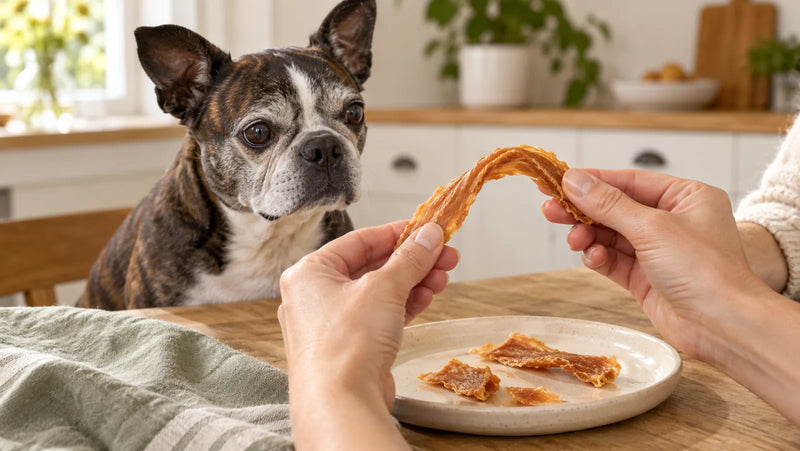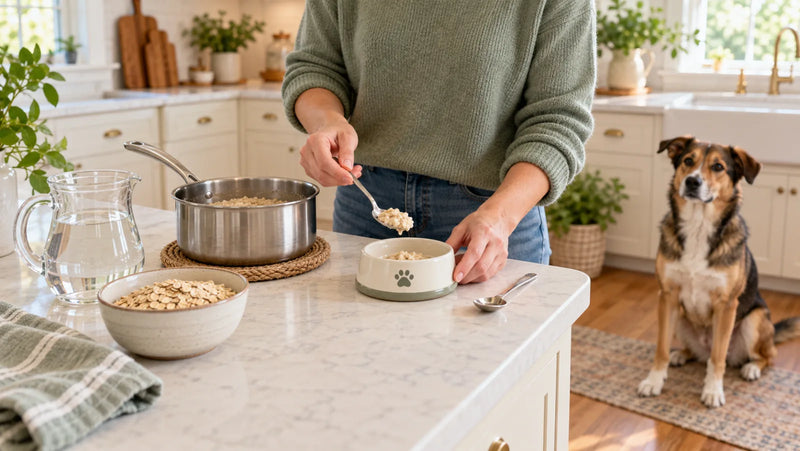

How to cook chicken for dogs: use plain boneless skinless chicken or an unseasoned whole bird, keep raw-poultry tools separate, and simmer or bake until the thickest meat reaches 165°F on a food thermometer. Cool it promptly, discard every piece of skin, cooked bone, cartilage, string, and drippings, then shred or dice only the plain meat. Refrigerate a short working supply and freeze the rest in measured portions.
Chicken made for a dog is not a seasoned family recipe. Leave out salt, oil, butter, broth, onion, garlic, chives, leeks, sauce, stuffing, and gravy. Plain cooked chicken can be an occasional topper or training reward, but it is supplemental food—not a complete meal or a home treatment for stomach trouble.
How to Cook Chicken for Dogs: The Short Method
- Choose plain chicken. Boneless skinless breast is the simplest option. A whole bird can work only if it is unseasoned, unstuffed, and completely deboned after cooking.
- Separate raw tools. Use a dedicated board or plate, knife, tongs, and clean finished-food plate. Do not wash raw chicken.
- Boil or bake. Simmer boneless breast in plain water or bake breast or a whole unstuffed bird with no added ingredients.
- Verify 165°F. Measure the thickest meat with a food thermometer. A clock, color, clear juices, or easy shredding cannot prove doneness.
- Cool and inspect. Move the chicken with clean tools. Remove every bit of skin, cooked bone, cartilage, string, clip, and pooled fat.
- Shred, weigh, and store. Measure the dog’s portion, refrigerate within two hours, and freeze anything not intended for the next three to four days.
Choose the Right Chicken Before You Start
Boneless skinless chicken breast creates the fewest failure points. It has no cooked bone to hunt for, no skin to remove, and a shape that is easy to temperature-check, cool, weigh, and dice. Buy food-grade chicken with an intact package and a normal odor and appearance. Thaw it in the refrigerator, in cold water inside a leak-proof bag, or in the microwave followed by immediate cooking—never on the counter.
A whole chicken requires more work. Choose an unseasoned, unbrined, unstuffed bird without a flavor packet. Remove the giblet bag and any plastic or metal clip before cooking. After cooking, you must strip the plain meat under good light and keep every bone fragment, piece of cartilage, skin fold, string, and drippings away from the dog.
Prepared deli and supermarket birds are a different decision. Brine, seasoning, skin, drippings, cooked bones, string, and packaging all matter; use the rotisserie chicken safety guide rather than treating a ready-to-eat bird as plain cooked chicken.
Set Up a Raw-Poultry-Safe Work Area
CDC chicken-safety guidance says raw chicken does not need washing. Rinsing can spread raw juices around the sink and nearby surfaces. Keep the package, raw board, knife, tongs, and hands away from the clean plate, cooked food, dog bowl, produce, and refrigerator handles.
Wash hands with soap and water for at least 20 seconds after touching raw chicken. Clean the board, utensils, dishes, counter, sink area, and any touched handles before moving cooked meat into the cooling and portioning stage. If you reuse a thermometer during cooking, clean the probe between checks according to its instructions.
Do not let the dog wait under the raw-prep counter. A dropped raw piece, absorbent pad, wrapper, tray, or string can create a separate exposure. The raw chicken guide covers pathogen, household cross-contamination, raw-bone, and accidental-access questions.
Method 1 — How to Boil Chicken for Dogs
Simmer boneless skinless chicken breast
- Place similar-size boneless skinless breast pieces in a clean saucepan. Do not add salt, broth, oil, herbs, vegetables, or seasoning.
- Add enough plain water to cover the chicken. Bring the water to a boil, then reduce it to a steady gentle simmer.
- Keep the pieces separated enough for water to circulate. Turn thick pieces if needed, using the raw-designated tongs until they are fully cooked.
- Start checking near 20 minutes for an average breast half. Insert a clean thermometer through the side of a thin piece so the sensing area reaches the center.
- Continue simmering until every checked thick piece reaches 165°F. Move the cooked chicken to a clean plate with clean tools.
The Food Safety and Inspection Service chicken chart lists roughly 25–30 minutes for simmering a 4-ounce boneless breast half. That is a planning range, not a guarantee. Starting temperature, thickness, number of pieces, pot size, burner, altitude, and water recovery time all change the clock.
Check 165°F instead of trusting the clock
Chicken may look white before the coldest part is ready, and safely cooked chicken can sometimes retain pink color. Measure several thick pieces. The FSIS thermometer guide recommends inserting the probe into the thickest area and using a side approach for thin foods so the sensing zone reaches the center.
Discard the cooking water unless you have a separate, veterinarian-approved use for a fully plain liquid. Do not assume it is a ready-made daily broth or hydration treatment. The chicken broth ingredient and topper guide explains how broth differs and why onion, garlic, seasonings, sodium, and medical context matter.
Method 2 — How to Bake Chicken for Dogs
Bake boneless skinless breast
- Heat the oven to 350°F. Line a clean baking pan with parchment or use a clean baking dish.
- Arrange similar-size boneless skinless breast pieces in one layer. Add no oil, butter, salt, broth, rub, marinade, or garnish.
- Begin checking an average 4-ounce breast half near 20 minutes. The FSIS planning chart gives about 20–30 minutes at 350°F.
- Check the center of several thick pieces and continue cooking until each reaches 165°F.
- Move the cooked pieces to a clean plate or shallow container. Do not return them to the raw-chicken tray.
Baking can make a drier surface that is convenient for dicing, while simmering keeps the meat moist and easy to shred. Neither method is safer when both reach the same verified temperature and avoid recontamination. Choose the texture that fits the intended job.
Roast a whole unstuffed chicken safely
Heat the oven to 350°F and roast the completely plain, unstuffed bird in a clean pan. For planning, FSIS lists about 1¼–1½ hours for a 3–4 lb whole bird. Measure 165°F in the innermost thigh, innermost wing, and thickest breast without touching bone. Larger birds and different ovens take longer.
Let the bird cool only long enough to handle safely, then remove all usable meat before the two-hour refrigeration deadline. Work slowly. Bones can hide in wing joints, the back, ribs, wishbone area, and small cartilage connections. A cooked carcass, skin, drippings, stuffing, neck bone, wing tip, or “soft” bone is not a dog treat.
Remove Skin, Bones, Cartilage, String, and Drippings
Chicken skin and drippings concentrate fat and are not part of the plain lean-meat plan. Cooked bones can splinter or create choking, esophageal, stomach, or intestinal injury. Cartilage and joints can conceal bone fragments. Butcher’s string, elastic ties, absorbent pads, clips, foil, and packaging can become foreign objects.
Use a clean tray with two zones: inspected plain meat and discard material. Pull the meat into small sections with your fingers, then inspect again while shredding or dicing. If you cannot identify a hard or sharp piece, discard it. Do not rely on a blender to make cooked bone safe; grinding an uncertain mixture only makes the fragments harder to see.
Chicken feet are not a shortcut around this rule. Bone-in feet have their own format and preparation considerations; follow the chicken-feet preparation guide instead of applying boneless-breast instructions to them.
Shred or Dice Chicken for Two Different Jobs
Moist topper pieces
For a topper, finely shred cooled breast or dice it into pieces appropriate for the dog’s mouth. Weigh the day’s allowance before it touches the bowl. Scatter the measured amount over the dog’s complete food so it changes aroma and texture without displacing a meaningful portion of balanced nutrition.
A topper is still an extra. If a dog suddenly refuses regular food, repeatedly needs chicken to eat, vomits, has diarrhea, loses weight, or has another change in appetite, ask the veterinarian rather than building a larger chicken layer.
Small training pieces
For training, cool the chicken fully, pat away surface moisture with a clean disposable towel if needed, and cut the measured allowance into many tiny pieces. The reward should be swallowed comfortably without interrupting the session. Pre-portion the entire session before training instead of repeatedly reaching into the refrigerator container.
Moist cooked chicken remains perishable in a treat pouch. Take only what the session needs, keep extra chilled, and discard chicken that has spent more than two hours at room temperature—or one hour when the surrounding temperature is above 90°F. For travel or a dry portable reward, compare the jobs in chicken jerky versus cooked chicken.

Cooked Chicken Portion Table by Dog Weight
WSAVA’s treat guide says all extras together should stay below 10% of an average healthy adult dog’s daily calories. It also lists lean cooked skinless chicken breast at 47 kcal per 1 oz (28 g). The table below combines those two figures so the math is visible.
| Dog weight | WSAVA daily calories from all treats | Approximate cooked chicken weight if chicken is the only extra |
|---|---|---|
| 4.4 lb (2 kg) | 14 kcal | 8 g |
| 8.8 lb (4 kg) | 24 kcal | 14 g |
| 13.2 lb (6 kg) | 32 kcal | 19 g |
| 17.6 lb (8 kg) | 40 kcal | 24 g |
| 22 lb (10 kg) | 47 kcal | 28 g |
| 33 lb (15 kg) | 64 kcal | 38 g |
| 44 lb (20 kg) | 79 kcal | 47 g |
| 55 lb (25 kg) | 94 kcal | 56 g |
| 66 lb (30 kg) | 108 kcal | 64 g |
| 77 lb (35 kg) | 121 kcal | 72 g |
| 88 lb (40 kg) | 134 kcal | 80 g |
| 99 lb (45 kg) | 146 kcal | 87 g |
These chicken weights are upper-bound calorie math, not serving prescriptions or targets. The conversion is treat calories × 28 ÷ 47 and assumes lean cooked skinless breast is the dog’s only extra that day. Subtract every other treat, chew, topper, table bite, pill food, and training reward. Chicken cuts and cooking loss vary, and puppies, seniors, active dogs, small dogs below the first row, dogs above the last row, medical diets, weight plans, and individual energy needs require the veterinary team.
The daily dog-treat calorie guide explains how to start from the dog’s actual calorie target and share one extras budget. Begin with less when chicken is new and stop if it causes vomiting, diarrhea, itching, or another change.
Cool, Refrigerate, Freeze, and Thaw
Divide cooked chicken into shallow portions and refrigerate or freeze it within two hours of cooking, or within one hour when the room or outdoor temperature is above 90°F. Do not leave a whole warm bird or deep container on the counter to “cool overnight.” Rapid cooling protects the batch.
FSIS leftovers guidance gives three to four refrigerated days and three to four frozen months for leftovers. Keep the refrigerator at 40°F or below and freezer at 0°F or below. Label each container with the cook date and measured weight.
- Refrigerator: store only the amount expected within three to four days in a clean covered container.
- Freezer: freeze flat bags, small lidded portions, or silicone cells so one thaw does not expose the full batch.
- Thawing: thaw the next portion in the refrigerator. If microwaved, heat through and cool safely before offering; avoid hot spots.
- Discard: throw away chicken with uncertain time or temperature, slime, mold, off odor, package leakage, or an unclear identity. Do not taste-test it for the dog.
Raw Chicken, Rotisserie Chicken, Chicken Feet, and Jerky Are Separate Decisions
Raw chicken brings pathogen and household cross-contamination questions that cooking instructions do not erase retrospectively. Rotisserie chicken brings brine, seasonings, skin, drippings, string, and cooked-bone questions. Chicken feet are a bone-in format. Chicken jerky is a dry packaged reward whose exact label and storage directions control its use.
For jerky selection, safety, label reading, portions, and storage, use the chicken jerky for dogs guide. The current chicken-jerky collection shows available formats, while the exact product page supplies the ingredient and package facts. None of those forms should be treated as a complete chicken-based diet.
When Plain Chicken Is Not the Right Extra
Ask the veterinary team before adding chicken when a dog eats a prescription or elimination diet, has a known or suspected chicken sensitivity, needs a tightly controlled calorie or fat plan, has pancreatitis history, is a growing puppy, is pregnant or nursing, or has kidney, liver, gastrointestinal, or other medical restrictions. “Plain” does not override the dog’s diet plan.
Do not use chicken and rice as an automatic home treatment for vomiting or diarrhea. Many conditions look similar at home, and a bland diet can be incomplete or inappropriate. Repeated vomiting, bloody stool, marked lethargy, abdominal pain, weakness, breathing trouble, inability to keep water down, or a swallowed bone or foreign object warrants prompt veterinary guidance.
A Ready-Made Chicken Option When You Do Not Want to Cook
For dogs that already tolerate chicken, the current freeze-dried chicken meal topper is a dry dog-labeled crumble made from 100% USA chicken breast. It is supplemental, not complete food; the product page lists approximately 25 kcal per teaspoon, so count each teaspoon inside the same extras ceiling as the cooked-chicken table above.
For a portable reward, whole-cut chicken breast jerky provides a dry single-ingredient format listed at approximately 15 kcal per treat. Break a measured allowance to suit the individual dog rather than counting natural strips as identical units. You can also browse current American Paws dog treats by exact ingredient, texture, and label.
Frequently Asked Questions
How long should I boil chicken for dogs?
For planning, an average 4-ounce boneless breast half may take about 25–30 minutes at a gentle simmer. Thickness, starting temperature, number of pieces, pot, burner, and altitude change the time. Check the center of every thick piece and continue until it reaches 165°F.
What temperature should chicken reach for dogs?
Chicken should reach 165°F in the thickest meat. For a whole bird, check the innermost thigh, innermost wing, and thickest breast without touching bone. Use a clean food thermometer; color and clear juices are not reliable endpoints.
Can I bake chicken for dogs without oil?
Yes. Place plain boneless skinless breast on parchment or in a clean baking dish and bake without oil, butter, salt, seasoning, broth, or sauce. At 350°F, begin checking an average breast half near 20 minutes and cook until the center reaches 165°F.
Can dogs eat chicken skin or cooked chicken bones?
Do not include either. Skin and drippings add concentrated fat, while cooked bones can splinter or cause choking and digestive injury. Remove every bone, cartilage connection, skin piece, string, clip, and fragment before portioning plain meat.
How much cooked chicken can a dog have?
Start from the dog’s veterinarian-confirmed daily calorie need and keep all extras together below 10%. The table above converts one WSAVA reference into a transparent ceiling only when lean cooked skinless chicken is the day’s sole extra. It is not a target or a substitute for individual guidance.
How long does cooked chicken last in the refrigerator?
Refrigerate it promptly in a covered shallow container at 40°F or below and use it within three to four days. Freeze measured portions that will not be used in that window. Discard any batch with uncertain handling or signs of spoilage.
Can I freeze cooked chicken for dogs?
Yes. Cool it promptly, weigh small portions, label the cook date, and freeze in sealed containers, flat bags, or silicone cells. Thaw the next portion in the refrigerator and avoid repeated warm-and-cool cycles.
Cook Plain, Measure the Extras, and Keep the Main Diet in Charge
The reliable process is simple: separate raw tools, cook plain chicken to 165°F, inspect it free of skin and every bone, divide it by weight, chill it on time, and count it with all other dog treats. A measured topper or training piece can add variety without turning plain chicken into a complete diet.
Prefer a ready-made chicken format? Review the current 100% USA chicken-breast topper for a dry at-home topper or the whole-cut chicken-breast jerky for portable rewards. Follow the exact label and keep either inside the same veterinarian-confirmed extras budget.