
Can dogs eat raw chicken? The safest household answer is no: do not intentionally feed it. Raw poultry can carry Salmonella and Campylobacter, and exposure is not limited to the dog that eats it. Raw juices can move through hands, utensils, counters, bowls, saliva, and stool. If the chicken includes bone, there are also choking, obstruction, tooth, and tissue-injury risks.
That does not mean one stolen piece is automatically a poisoning emergency. Raw chicken is not considered a classic dog toxin in the way xylitol or grapes are. The practical response depends on what was swallowed, whether it contained bone or packaging, how much was eaten, the dog's age and health, and whether any symptoms appear. This guide explains that decision without pretending every exposure has the same outcome.
Can Dogs Eat Raw Chicken? The Short Answer
When people ask, “can dogs eat raw chicken,” the important distinction is between can swallow and is a recommended household practice. A dog may eat raw poultry and appear normal. That outcome does not prove the food was pathogen-free, that the dog is not shedding organisms, or that the next exposure will end the same way.
| Chicken format | Main concern | Safer decision |
|---|---|---|
| Raw, boneless chicken | Foodborne pathogens and household cross-contamination | Do not intentionally feed it; cook plain poultry to a measured safe temperature |
| Raw, bone-in chicken | Pathogens plus choking, obstruction, tooth fracture, and internal injury | Avoid; call a veterinarian after accidental access based on the piece, dog, and symptoms |
| Plain, boneless cooked chicken | Portion, fat, dietary balance, and individual tolerance still matter | Use only a small unseasoned amount that fits the dog's complete diet |
| Raw chicken feet | A separate bone-rich format with its own handling and chewing questions | Use the linked chicken-feet safety guides rather than this broad meat answer |
| Labeled packaged chicken treat | Calories, portion, label fit, allergies, and storage | Read the current label and count it as a treat, not a meal |
“Not poisonous” is not the same as “safe to serve raw.” The central issue is infection and spread, with mechanical injury added when bones or packaging are present.
What FDA, CDC, and AVMA Say About Raw Animal Protein
The major U.S. public-health and veterinary sources are aligned on the direction of risk. The CDC does not recommend feeding raw pet food or raw treats to dogs and cats. It notes that uncooked animal protein can carry germs and that raw food can make both pets and families sick when organisms spread around the kitchen and home.
The FDA's raw-pet-food study tested 196 commercially available raw dog and cat food samples in the second year of a broader project. Fifteen were positive for Salmonella and 32 for Listeria monocytogenes. Those results describe that sample set; they do not predict the status of one grocery-store chicken package. They do show why “it looks fresh” is not a microbiological test.
The American Veterinary Medical Association policy on raw or undercooked animal-source protein discourages feeding it when it has not undergone a process that eliminates or reduces pathogen risk. The policy also recognizes that an apparently healthy animal can develop a subclinical infection and pose a risk to other animals and people.
These positions are about risk management, not a claim that every raw meal causes disease. They also do not say that every cooked diet is nutritionally sound. A main diet still needs to be complete and balanced for the individual dog. Pathogen control and nutritional adequacy are two separate questions.
Salmonella and Campylobacter Are the Central Raw-Chicken Risks
The CDC's chicken food-safety guidance says raw chicken can be contaminated with Campylobacter, Salmonella, or Clostridium perfringens. You cannot reliably see, smell, or feel those organisms. A normal color and a current sell-by date do not certify a raw piece for a dog's bowl.
A dog exposed to contaminated raw chicken may develop gastrointestinal illness, but some exposed dogs can appear healthy. That matters because absence of vomiting or diarrhea is not proof that the household has no exposure pathway. FDA materials explain that pets can carry and shed Salmonella through feces and saliva without showing obvious infection.
For people, raw chicken also creates a direct route before the dog takes a bite. A leaking package, reused tongs, a phone touched during prep, or a cutting board used for another food can move raw juices. After feeding, the bowl, mat, muzzle, saliva, stool, and cleanup tools can extend the contact map.
Risk is a chain, not a single moment at the bowl. Breaking one link helps, but feeding the chicken raw creates more links to manage than cooking it and preventing recontamination.
The Risk Does Not Stop at the Dog Bowl
Think through the full path:
- The package touches a cart, refrigerator shelf, sink area, or counter.
- Hands and tools move between the chicken, faucet, cabinet handle, phone, and bowl.
- The dog pushes the food around the bowl and feeding mat, then licks the muzzle, floor, people, or another pet.
- Organisms that pass through the dog may later be present in stool and the potty area.
- A person cleans the bowl, picks up stool, or touches a contaminated surface and then touches food or the face.
CDC identifies children under five, adults 65 and older, pregnant people, and people with weakened immune systems as groups more likely to become seriously ill from foodborne germs. Puppies and pets with weakened immunity or other health conditions may also face higher consequences. In those households, the reason to avoid raw poultry is especially strong.

Do not let a dog lick faces or open skin after raw-food exposure. Wash hands with soap and water, and clean then disinfect items that contacted the food. Washing a bowl while splashing nearby dishes is not a complete control; isolate it from human food-prep items and clean the surrounding sink area too.
Raw Chicken Bones Are Not Made Safe by Being Uncooked
A common claim says raw bones are safe because cooked bones are more brittle. That comparison skips the hazards that remain. Raw chicken bones can still lodge, obstruct, injure tissue, fracture teeth, or carry pathogens. “Less brittle than cooked” is not the same as harmless.
The FDA's list of potentially dangerous items for pets notes that bones can become stuck in the esophagus, stomach, or intestines. The Merck Veterinary Manual identifies bones as the most common esophageal foreign body in small animals and lists signs such as drooling, gagging, difficulty swallowing, regurgitation, and repeated attempts to swallow.
A large dog chewing one piece and a small dog gulping the same piece do not have identical probability, but neither scenario turns the bone into a controlled object. Chicken wing, thigh, neck, and carcass pieces differ in shape and density, while each dog differs in bite force, dental condition, and swallowing behavior. There is no universal household sizing rule that removes the risk.
“Dogs' Ancestors Ate Raw” Does Not Set a Household Safety Standard
An ancestry story cannot answer whether this package carries a pathogen, whether this dog will gulp a bone, or whether someone in the home could become seriously ill. The CDC specifically addresses “natural,” “ancestral,” and “instinctual” arguments: diets suited to wild ancestors are not automatically optimal for pets living in modern homes and living longer lives.
Survival is also a weak nutrition and safety metric. “My dog ate it and seemed fine” does not measure bacterial shedding, cross-contamination, micronutrient balance, dental damage, or cumulative risk across repeated exposures. It records only what was visible after one event.
Raw and cooked diets can each be high or low quality, and each can be balanced or inadequate. If a home-prepared diet supplies a meaningful share of calories, a veterinarian or board-certified veterinary nutritionist should formulate it. Cooking chicken controls a pathogen hazard; it does not by itself make a bowl complete and balanced.
What to Do If Your Dog Ate Raw Chicken
First, prevent a second exposure. Move the remaining chicken, tray, absorbent pad, plastic wrap, and trash out of reach. Then gather facts before calling the veterinary team:
- Was the chicken boneless, or did it include a wing, leg, neck, rib, or other bone?
- How much may be missing, and when did the dog get it?
- Could the dog also have swallowed plastic film, foam tray, absorbent pad, string, clip, or seasoning?
- What is the dog's approximate weight, age, health status, and current diet?
- Is the dog acting normally, swallowing normally, breathing comfortably, and keeping water down?
Call a veterinarian promptly when bone or packaging was swallowed, the amount was large or unknown, the dog is a puppy, senior, immunocompromised, or medically fragile, or any symptom develops. Do not wait for the next day merely because the dog looks normal immediately after the event; obstruction and gastrointestinal signs may be delayed.
Choking, breathing difficulty, blue or pale gums, collapse, or severe distress is an emergency. Repeated gagging or retching, heavy drooling, inability to swallow, repeated vomiting, marked lethargy, bloody diarrhea, a painful or distended abdomen, refusal of food or water, weakness, or collapse also warrants urgent veterinary direction.
Do not induce vomiting, give hydrogen peroxide, feed bread to “cushion” a bone, or use another home remedy unless a veterinarian who knows the exact exposure directs it. Bringing a sharp or awkward object back through the esophagus can create additional harm, and treatment depends on what was swallowed and where it may be.
Clean the exposed area without spreading raw juices. Wash hands, isolate contacted utensils, clean and disinfect the counter or floor, wash the dog's bowl and mat separately from active food prep, and dispose of packaging securely. For the next several days, pick up stool promptly, wash hands afterward, and prevent young children from handling the waste or licking zone.
If You Handle Raw Chicken in a Dog Household
Raw poultry may be in the kitchen for human meals even when it is never intended for the dog. Use a repeatable barrier system:
- Store the package sealed on the bottom refrigerator shelf so juices cannot drip onto ready-to-eat food.
- Use a dedicated raw-poultry cutting board and keep the dog's bowl away from the prep area.
- Do not wash raw chicken; splashing can spread contaminated droplets around the sink and counter.
- Wash hands with soap and water for at least 20 seconds before touching clean handles, dishes, or the dog.
- Wash raw-contact tools with hot soapy water, then clean and disinfect contacted surfaces.
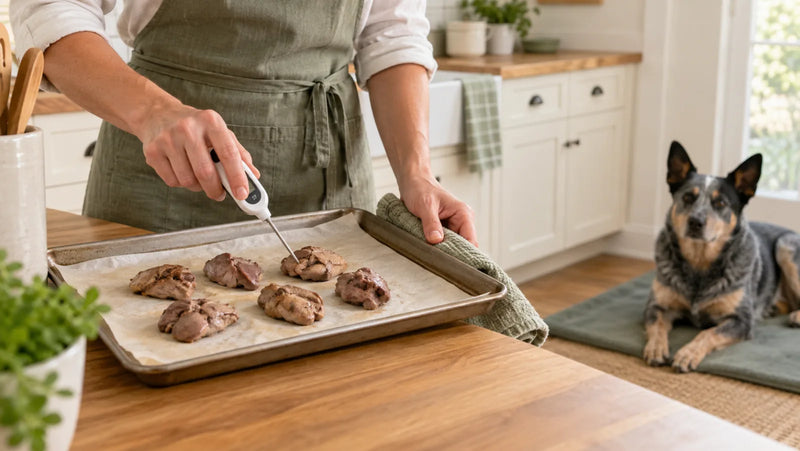
- Use a food thermometer and cook chicken to 165°F (74°C), measured in the thickest part.
- Move cooked food with clean tools to a clean plate that never held it raw.
These steps reduce accidental exposure while preparing a cooked meal. They are not a claim that a carefully cleaned raw-feeding routine has no residual risk. CDC notes that refrigeration and freezing do not reliably eliminate all germs in raw animal protein.
Chicken Feet Are a Separate Decision
This article addresses raw chicken meat broadly. A chicken foot is a distinct bone-rich chew format, so it deserves a narrower analysis rather than a passing yes-or-no sentence here.
Start with whether dogs can eat raw chicken feet for the specific pathogen, bone, supervision, and high-risk-household decision. If the question is how feet fit into a broader raw-feeding plan, use the separate raw chicken feet diet-integration guide. The chicken-feet format overview compares the larger category and keeps the feet intent in one place.
Giblets are separate too. The dog-safe giblets guide covers the heart, gizzard, liver, cooking, and the limits that apply to concentrated organ meat. Do not treat an organ packet as interchangeable with boneless muscle meat or turn a broad raw-chicken answer into an organ-feeding plan.
A Labeled Chicken Treat Is a Different Choice
A packaged treat is not a substitute for a complete meal, but its current label gives you a defined product and a calorie unit to count. The current American Paws Chicken Breast Jerky page lists one ingredient—100% USA chicken breast—and approximately 15 calories per treat. Check the live label at purchase because product facts can change, and break pieces to suit the individual dog's chewing style and calorie budget.
This article makes no claim about that product's raw or cooked status, kill step, pathogen testing, or manufacturing process. Those facts must come from current verified production documentation, not an inference from the word “jerky.” The relevant comparison is simpler: a labeled treat provides ingredient and calorie information, while a random raw piece from dinner prep does not create a controlled feeding plan.
Use the chicken jerky for dogs pillar to compare label evidence, texture, portioning, and shopping questions. You can also browse current American Paws dog treats and choose by the exact ingredient and format shown on each live page. The collection is not uniformly chicken, single-ingredient, or suitable for every dog.
Frequently Asked Questions
Can dogs get Salmonella from raw chicken?
Yes. Raw chicken can carry Salmonella, and dogs can become ill or carry and shed the organism without obvious signs. Exposure does not prove infection, but a normal-looking dog does not erase the household hygiene concern. Call a veterinarian if illness develops or the dog is medically vulnerable.
Can a dog eat one small piece of raw chicken?
A healthy dog that stole one small boneless piece may remain normal, but intentional feeding is still not recommended. Remove access, confirm that no bone, seasoning, absorbent pad, plastic, or tray was swallowed, clean the area, and monitor according to veterinary advice. Call sooner for a puppy, senior, medically fragile dog, large or unknown amount, or any symptoms.
Are raw chicken bones safe for dogs?
No bone can be assumed safe merely because it is raw. Raw chicken bones can choke, lodge in the esophagus or intestines, injure tissue, fracture teeth, and carry pathogens. Contact the veterinary team after accidental bone ingestion and provide the dog's size, type and amount of bone, timing, and symptoms.
Does freezing raw chicken kill Salmonella or Campylobacter?
Do not rely on a home freezer as a kill step. CDC explains that freezing raw animal protein may reduce some germs but does not eliminate all of them. Thawing also recreates a raw-juice handling problem, so separation and sanitation remain necessary.
Should I make my dog vomit after eating raw chicken?
Not unless a veterinarian specifically directs it after reviewing the exposure. Bone or packaging can injure the esophagus on the way back up, and peroxide or another home method has its own risks. Call with the exact item, amount, time, dog details, and symptoms.
Can dogs eat plain cooked chicken instead?
Plain boneless chicken cooked to 165°F can be a lower-pathogen-risk occasional extra for many dogs, provided it contains no onion, garlic, heavy seasoning, sauce, or unsafe bone. It still needs a small counted portion and should not displace a complete and balanced main food. Ask the veterinary team first for dogs on prescription diets or food trials.
Is raw chicken better because wolves eat raw prey?
No. An ancestry analogy does not establish pathogen safety, nutritional completeness, or household suitability. CDC says raw is not necessarily healthier and specifically notes that diets described as ancestral or instinctual are not automatically optimal for modern pet dogs.
Choose the Lower-Risk Chicken Format
The practical answer to “can dogs eat raw chicken” is to separate ability from recommendation. A dog may swallow it, but the raw format adds avoidable pathogen and cross-contamination risk, and bone-in pieces add mechanical hazards. Cook plain boneless poultry to a measured 165°F when preparing it at home, and keep any extra small enough to fit the whole diet.
If you want a countable reward instead of handling raw poultry for the dog, review the current Chicken Breast Jerky label or browse the dog-treat collection. Choose from the live ingredient, calorie, storage, and feeding information, then make the treat a measured extra—not a replacement for a complete meal.