
Can dogs eat chicken feet? Yes, many dogs can eat chicken feet when they are dehydrated or raw, never cooked. Chicken feet are a natural chew, fully digestible for many dogs, and naturally rich in cartilage. The key is serving them safely: supervise your dog, choose the right size, introduce them slowly, and avoid cooked chicken feet because cooked bones can splinter.
For pet parents, the real question is not only whether chicken feet are allowed. It is whether they are useful, how often to give them, which form is safest, and when a dog should take it slow. This guide covers the benefits, the risks to avoid, and how American Paws dehydrated chicken feet fit into a simple chicken-treat routine.
Can dogs eat chicken feet? The short answer
Yes, dogs can eat chicken feet when they are prepared and served appropriately. Dehydrated chicken feet are one of the most practical options because they are dry, shelf-stable, single-ingredient, and easy to keep on hand as a supervised natural chew.
The important rule is simple: do not cook them. Cooked chicken feet can become brittle, and cooked poultry bones can splinter. That risk is why leftover chicken bones and cooked chicken feet should not be used as dog treats.
Raw chicken feet are used by some raw feeders, but they require careful food-safety handling and are not the best fit for every household. The FDA warns that raw pet food and treats are more likely to contain harmful bacteria such as Salmonella and Listeria, so raw handling should be taken seriously. For many families, dehydrated chicken feet are the cleaner and easier choice.
Are chicken feet good for dogs?
Chicken feet can be a good natural chew for dogs who chew calmly and can handle the size. They are not magic, and they are not a medical treatment, but they do offer a few practical benefits that make them popular with pet parents.
Natural joint support from cartilage
Chicken feet naturally contain cartilage, which includes glucosamine and chondroitin. These compounds are often discussed in joint-support conversations for dogs. The AKC notes that glucosamine and chondroitin are commonly used in joint-support contexts, but any dog with arthritis, mobility issues, or a medical condition should be guided by a veterinarian.
That is the right level of expectation: chicken feet can be a cartilage-rich natural chew, not a cure for joint disease. Think of them as part of a thoughtful treat routine, not a replacement for veterinary care.
Dental scraping from chewing
Chewing a dehydrated chicken foot can create a natural scraping action against teeth. That may help reduce some surface buildup as your dog works through the chew. It is not a substitute for brushing, professional dental care, or a veterinarian's dental advice, but it is one reason many dogs find chicken feet satisfying.
Supervision matters here. If your dog tries to gulp chews whole, slow down, choose a different treat, or ask your veterinarian what chew style is safer for your dog.
Single-ingredient and fully digestible for many dogs
American Paws dehydrated chicken feet are a single-ingredient chew: chicken feet, with no additives. That makes the label easy to understand. For dogs who do well with chicken, simple ingredient lists can make treat choices easier.
Still, every dog is different. Introduce any new chew gradually and watch your dog's digestion, stool quality, and chewing behavior. If your dog has allergies, pancreatitis, digestive disease, kidney disease, or another health condition, ask your veterinarian before adding new chews.

Dehydrated vs raw vs cooked: which chicken feet are safe?
The form matters more than many people realize. A chicken foot can be a useful natural chew in one form and a poor choice in another.
Cooked chicken feet: not safe
Cooked chicken feet should be avoided. Cooking can make poultry bones brittle, raising the risk of sharp splinters. If you would not hand your dog cooked chicken bones, do not hand over cooked chicken feet either.
If your dog ate cooked chicken feet and you are worried, call your veterinarian or an emergency vet. Watch for gagging, vomiting, belly pain, lethargy, bloody stool, straining, or refusal to eat.
Dehydrated chicken feet: the easy everyday choice
Dehydrated chicken feet for dogs are dry, convenient, and made specifically to be used as a dog chew. They give dogs a chicken-based chewing experience without asking pet parents to handle raw poultry in the kitchen.
American Paws dehydrated chicken feet are single-ingredient, sourced and made in the USA, and produced with small-batch care in a USDA-inspected facility in Highland, California. They are a strong choice for pet parents who want a natural chicken chew with a simple label.
Raw chicken feet: what raw feeders should know
Raw chicken feet are used in some raw-feeding routines, but raw is not automatically safer or better for every dog. Raw poultry can carry bacteria, and handling raw treats can create risk for people in the home too. Wash hands, clean surfaces, and keep raw items away from children, seniors, and anyone with a weakened immune system.
If you feed raw, talk with your veterinarian about whether raw chicken feet fit your dog's diet, size, chewing behavior, and health history. This article is not raw-feeding medical advice.
How to safely give your dog chicken feet
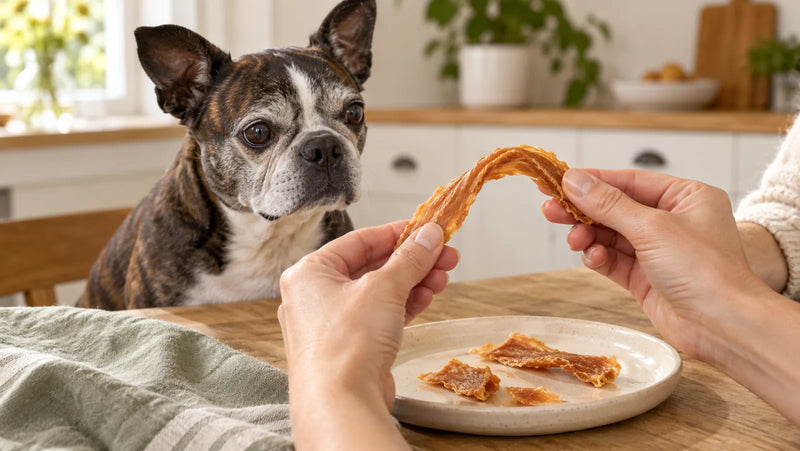
Start with supervision. Give your dog one chicken foot while you are present, and watch how they chew. A steady chewer is different from a fast gulper. If your dog tries to swallow large pieces, chicken feet may not be the right chew style.
- Choose the right size. Match the chew to your dog's mouth size and chewing style.
- Introduce slowly. Start with one chew and watch digestion before making it a routine.
- Provide fresh water. Dry chews should always be served with water nearby.
- Use sensible frequency. Chicken feet are treats, not a meal replacement.
- Remove small pieces. Take away fragments if your dog is trying to gulp them.
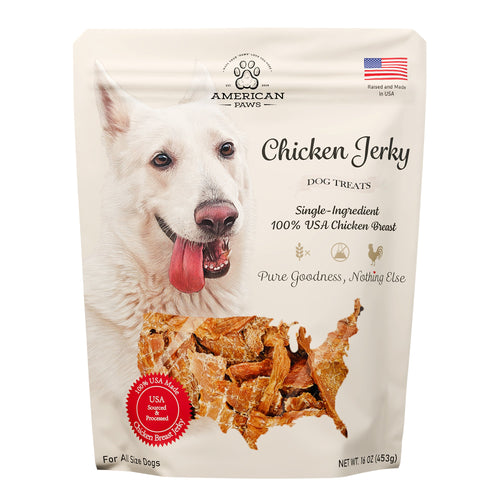
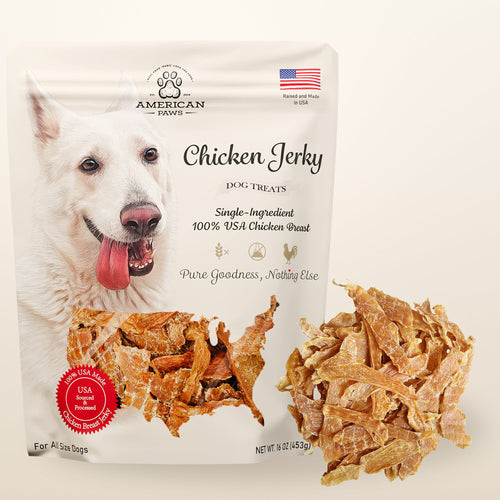
For a softer reward that is easier to break into pieces, pair chicken feet with whole-cut chicken breast jerky. Jerky works well for training and rewarding; chicken feet are better for supervised chew time.
Which dogs should take it slow?
Small dogs, puppies, seniors, dogs with missing teeth, and dogs who gulp chews should take chicken feet slowly. That does not always mean they can never have them, but it does mean supervision and sizing matter more.
Puppies have developing teeth and digestive systems, so ask your veterinarian before giving hard natural chews. Dogs with medical conditions should also get veterinary guidance. If your dog has a history of choking, resource guarding, swallowing chews whole, or serious digestive upset, choose a different treat format.
American Paws dehydrated chicken feet
American Paws makes dehydrated chicken feet for pet parents who want a natural, simple chicken chew without a long ingredient list. They are single-ingredient, made in the USA, and prepared with no additives.
They also fit naturally into the broader American Paws chicken collection. Use chicken feet for supervised chew time, chicken jerky for high-value rewarding, freeze-dried chicken for quick bites, and toppers for mealtime interest.
If you are comparing chicken feet with other poultry bones, read our guide to why cooked chicken bones are not safe for dogs. The short version: dehydrated or raw chicken feet are different from cooked leftovers, and cooked bones are the form to avoid.
Frequently asked questions
Can puppies eat chicken feet?
Some puppies may be able to chew appropriately sized dehydrated chicken feet, but puppy teeth, size, and chewing habits vary. Ask your veterinarian before giving hard natural chews to puppies.
Are dehydrated chicken feet a choking hazard?
Any chew can become a choking hazard if a dog gulps it or swallows large pieces. Give dehydrated chicken feet with supervision and remove pieces that become too small or sharp. For the full safety breakdown, see our guide on whether chicken feet are a choking hazard for dogs.
How often can my dog have chicken feet?
Frequency depends on your dog's size, diet, activity level, and digestion. Start occasionally, monitor your dog, and keep treats as a small part of the overall diet.
Can dogs eat raw chicken feet?
Some raw feeders use raw chicken feet, but raw poultry can carry bacteria and is not ideal for every household. Talk with your veterinarian and follow strict food-safety handling if you choose raw.
Do chicken feet really help joints?
Chicken feet naturally contain cartilage with glucosamine and chondroitin, but they should not be treated as a cure for arthritis or mobility problems. For joint concerns, ask your veterinarian.
Ready to try a natural chicken chew? Shop American Paws dehydrated chicken feet or browse the full chicken treat collection to find the right fit for your dog's routine.
Sources: FDA raw pet food safety guidance; AKC glucosamine and chondroitin overview.