

dental safety
Best Treats for Teething Puppies: Soft, Cold or Chewy?
Choose by purpose: a soft quick reward, a cool flexible outlet, or a supervised chew—then reject anything too hard, gulpable, painful, or untraceable.
Your Cart 0
Item added to your cart

The American Paws Journal
Expert guides, ingredient insights, and care tips from our team — for dogs and the people who love them.
Browse ArticlesBrowse by topic

chew safety
Rabbit ears may suit some supervised dogs, but fur is not a dewormer and “low fat” or “hypoallergenic” must be checked against ...

bully sticks
Learn how to screen a puppy's dental readiness, select an oversized bully stick, control session time, remove the final nub, co...
beef trachea
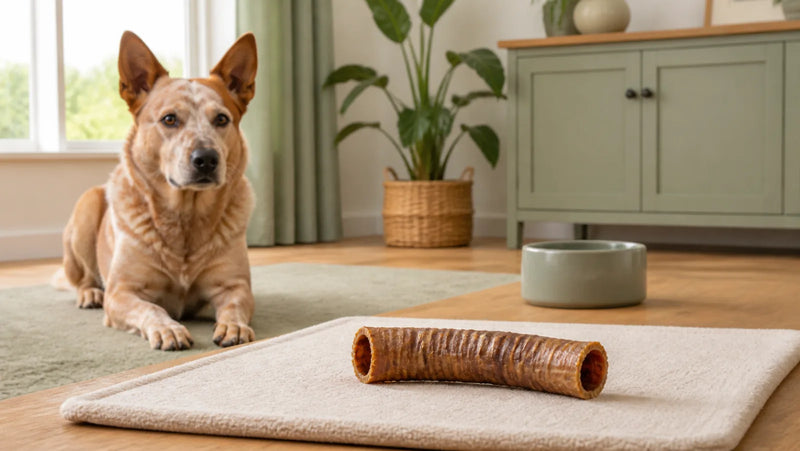
Beef trachea is a soft, hollow cartilage chew, but its breakability makes sizing and close supervision more important than the ...

bully sticks
“Odor-free” bully sticks are best understood as lower-odor chews. Processing, saliva, and storage affect smell, so the claim ne...

buying guide
Compare six common natural dog chews by texture, durability, calories, sizing, and removal cues—then match the finished item to...

chicken feet
Duck feet are often larger and firmer than chicken feet, but actual processing and the dog’s chewing style matter more than spe...

dog treats
Match treat texture and piece size to puppies, adults, seniors, and heavy chewers, then check familiar proteins, labels, and ca...

beef pizzle
Bully sticks are dried beef pizzle—not tendon, rawhide, or jerky. Learn what processing changes, why odor varies, and how to ch...
chicken feet
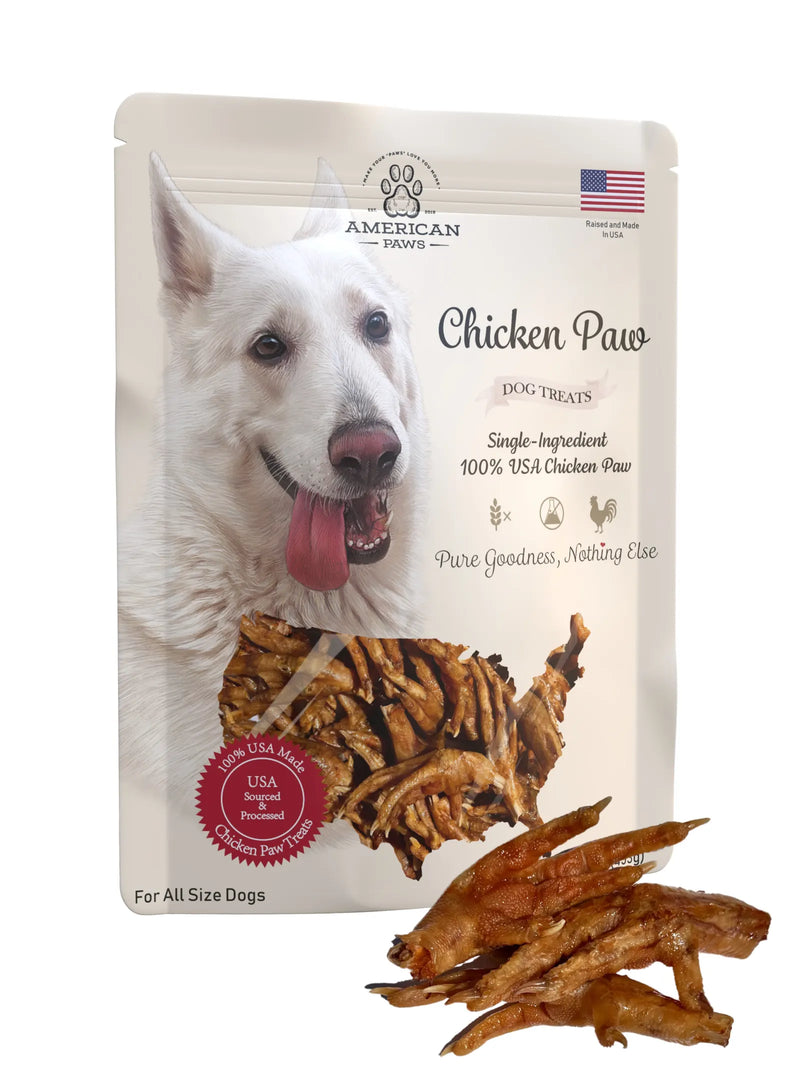
A balanced guide to chicken feet for dogs: benefits, natural chew value, risks, cooked vs dehydrated, and safe serving tips.

chicken
Dogs can eat raw chicken feet, but raw handling matters. Learn the risks, serving tips, and why dehydrated chicken feet are eas...
chicken
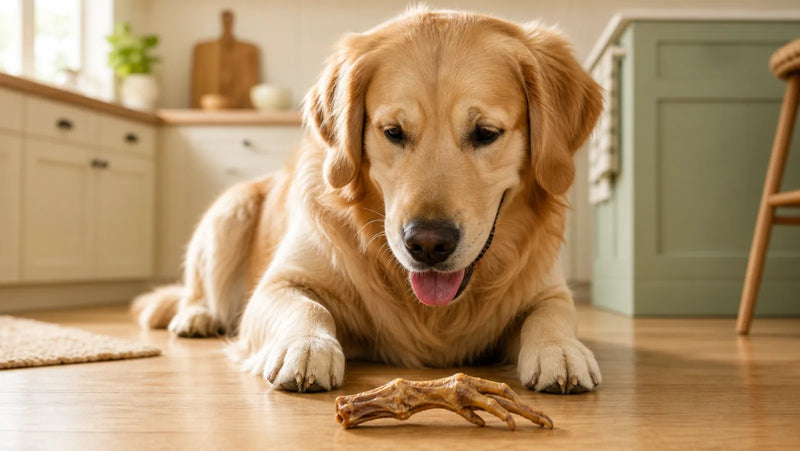
Dogs can eat chicken feet when they are served the right way. Learn the benefits, safety rules, and why cooked chicken feet sho...
No articles in this topic yet.