
The best treats for teething puppies are usually small, quick-to-eat rewards that do not demand forceful biting. For a temporary cool sensation, choose a veterinarian-approved flexible chilled item or an appropriate food that has not been frozen rock-hard. Bully sticks, rabbit ears, and whole dehydrated chicken feet require a separate chew-safety decision; they are not automatic teething remedies. Once teething passes, our best treats for puppies guide covers everyday rewards by age and size.
Puppies often want to chew more while adult teeth replace baby teeth, but that urge does not prove that the mouth can safely handle a hard or long-lasting object. Avoid hard bones, antlers, hooves, ice cubes, and anything the puppy can gulp. No dog treats speed tooth eruption, treat dental pain, or replace an oral examination.
Best Treats for Teething Puppies: Match the Format to the Job
Start by naming the job. A training reward should disappear in seconds. A cool outlet should be flexible enough not to act like a stone against an erupting tooth. A longer edible chew must remain too large to swallow and must suit the puppy's current teeth, chewing style, diet, and ability to trade.
- For quick reinforcement: use part of the measured puppy meal, a tiny amount of familiar moist puppy food, or a small appropriate treat that requires little bite force.
- For a cool sensation: use a chilled, flexible veterinarian-approved puppy item or an approved food setup that remains yielding. Colder and harder are not automatically better.
- For extended chewing: screen the mouth and the entire finished product first. Supervise from the first bite until the item is removed.
Sometimes the best answer is not edible. A suitable flexible puppy toy can provide an outlet without using treat calories, and it may be easier to remove before it becomes damaged. Follow the maker's size and supervision instructions and replace a toy that cracks, tears, or sheds pieces.
What Changes During the 3–7-Month Teething Window?
The visible tooth-replacement stage often becomes noticeable at roughly 3.5–4 months. The VCA guide to deciduous and permanent teeth says replacement begins at about 3.5–4 months and most puppies have their adult teeth by 6–7 months. The Merck Veterinary Manual's dental-development overview places the first permanent teeth at about 4–5 months and all permanent teeth by about 7 months.
During that period, a puppy may have tender gums, a loose baby tooth, a gap where one fell out, or a permanent tooth emerging beside a retained baby tooth. Chewing behavior can intensify. Those changes make today's mouth more important than a birth date printed on a calendar.
A small amount of blood where a tooth has just fallen out can occur, but persistent or heavy bleeding, facial swelling, a broken tooth, pronounced pain, a foul odor, one-sided chewing, or refusal of normal food deserves veterinary attention. Two teeth occupying the same place may indicate a retained baby tooth and should also be examined. Do not test a painful-looking mouth with a harder chew.
Soft, Cold and Chewy Options Compared
The categories below describe typical physical demands, not safety ratings. Recipe, thickness, processing, batch variation, and the individual puppy can change the result.
| Format | Best use | Mouth demand | Main control |
|---|---|---|---|
| Measured puppy food or moist soft reward | Fast training | Low when sized correctly | Use a tiny portion from the planned diet; soft does not mean calorie-free |
| Small freeze-dried chicken piece | High-value quick reward | Light and crunchy, not naturally soft | Break very small or lightly moisten one piece and serve immediately |
| Chilled flexible toy or approved food setup | Short supervised cool outlet | Yielding rather than rock-hard | Check size, material, damage, ingredients, and temperature |
| Bully stick | Longer supervised chew for a selected puppy | Dense at first, then softens | Oversize, secure holder, early nub removal, continuous supervision |
| Rabbit ear | Thin animal-part chew for a selected dog | Variable by product | Traceable label, oversized fit, remove the final piece |
| Dehydrated chicken foot | Later-stage whole chew | Hard, crunchy, bone-containing and irregular | Generally wait until permanent teeth are in; use the dedicated readiness screen |
| Hard bone, antler, hoof, or ice cube | None during teething | Excessively hard | Avoid rather than trying to manage with a timer |
“Natural,” “edible,” and “digestible” are not substitutes for the size and texture screen. A digestible material can still cause choking or obstruction when swallowed as a large piece, while a natural object can still fracture a tooth.
Soft Rewards Use Less Bite Force During Training
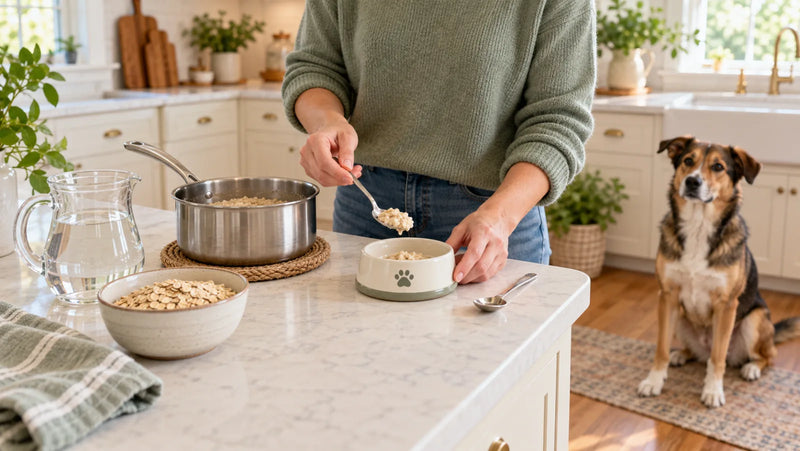
Part of the puppy's measured complete-and-balanced meal is the simplest low-force reward. If the puppy already eats a moist growth food, a tiny amount delivered with a spoon, lick-safe tool, or appropriately designed flexible food toy may also work. Follow the food's storage instructions and clean the delivery item after use. For reward size, timing, and delivery during this stage, use the puppy training treats guide.
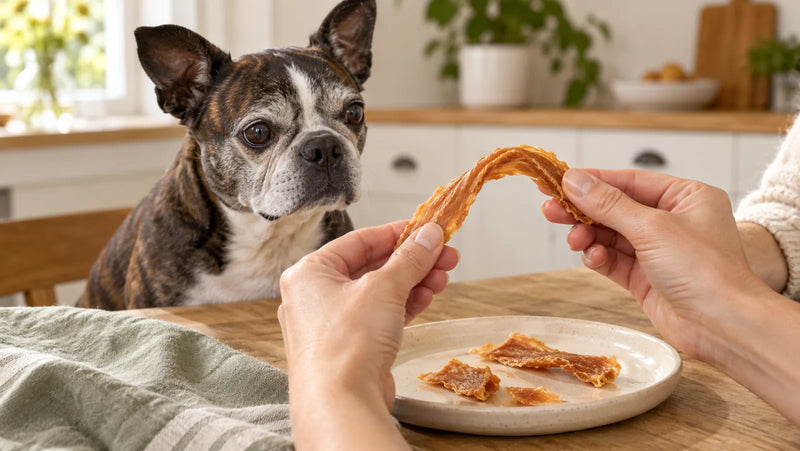
Freeze-dried food needs an honest texture description. American Paws single-ingredient freeze-dried chicken training treats are made from 100% USA chicken breast, and the current product page describes the pieces as light and crunchy—not soft. A full piece is roughly 0.5–1 inch and approximately 5 kcal, so break an approved amount into much smaller quick rewards for a puppy.
If the veterinary team agrees that chicken fits the puppy's diet and a softer texture is needed, one measured piece can be lightly moistened with plain water and offered immediately. Discard anything uneaten; do not return a damp piece to the bag or store it with dry product. Moistening changes texture, not calories, and it does not turn a supplemental treat into complete growth food or a treatment for sore gums.
Stop using even a soft reward when the puppy gulps, coughs, gags, guards food, vomits, develops diarrhea, or shows mouth pain. A soft object can still be the wrong size, ingredient, or calorie load.
Cold Options: Cool and Flexible Beats Frozen Hard
A cool surface may feel pleasant for a short period, but the goal is not maximum cold. A flexible puppy item chilled according to its manufacturer directions is a more conservative starting point than an ice cube or frozen-solid food block. Check it before every use: it should still yield, remain too large to swallow, and have no cracks or loose pieces.
Food inside a flexible enrichment toy still counts as food. Use part of the measured puppy meal or a veterinarian-approved amount, and clean the toy thoroughly afterward. Do not improvise with xylitol-containing peanut butter, seasoned broth, or a mixture of several new ingredients.
Carrot advice needs its own preparation, size, calorie, and dental screen. The guide to frozen and chilled carrots for dogs compares raw, cooked, refrigerated, and frozen texture and explains why some puppies should skip a hard frozen piece. Use that guide rather than copying a social-media photo of a puppy carrying a whole frozen carrot.
Cold is not a treatment for retained teeth, gum disease, a fracture, or unexplained pain. If the puppy avoids food, cries while chewing, has persistent bleeding, or has visible swelling, put the home remedy aside and call the veterinary clinic.

Bully Sticks for Teething Puppies Are Not an Automatic Yes
People often search for bully sticks for teething puppies because the sticks soften with saliva and can occupy a dog longer than a training treat. They still begin dense, require bite force, add calories, and can leave a short slick nub that a puppy tries to swallow.
There is no medically established birthday at which every puppy becomes ready. Defer a bully stick when the puppy has painful gums, active bleeding, a retained or very loose tooth, a broken tooth, forceful crushing, frantic biting, gulping, guarding, or poor trade behavior. A puppy that eagerly grabs the stick has shown desire, not dental readiness.
For a puppy whose mouth and behavior have been cleared, the stick must be too long and thick to fit wholly inside the mouth or slide behind the back teeth. Use a compatible secure holder, tug-test it before the session, stay within reach, and remove the stick while the remainder is still too large to swallow. A holder reduces one risk; it does not make the chew unattended or obstruction-proof.
The dedicated bully-stick guide for puppies covers age versus readiness, fit, holders, session observations, the final nub, calories, and hygiene. Apply that full checklist before treating a bully stick as an option.
Dehydrated Chicken Feet: Generally Wait Through Active Tooth Replacement
A whole dehydrated chicken foot is not a soft teething treat. It is a crunchy, bone-containing chew with several small bones, connective tissue, and natural variation. Cutting it into tiny pieces does not solve the problem; it can create fragments that are easier to swallow without being easier to control.
The current American Paws dehydrated chicken feet for dogs page lists one ingredient—100% USA chicken feet—plus a typical length of about 3–5 inches, natural size variation, and approximately 30 kcal per foot. It also labels the product for intermittent or supplemental feeding. Those facts describe the item; they do not certify it for an actively teething puppy.
The conservative puppy rule is to wait until the permanent teeth are in, then consider one only when the mouth is comfortable, the veterinarian has not restricted bone-containing chews, the finished foot is too large to engulf, the puppy chews deliberately instead of crushing or gulping, and an adult can watch continuously. Stop for sharp breakage, a swallow attempt, bleeding, tooth pain, coughing, gagging, guarding, or a remainder that has become small enough to gulp.
Use the full chicken-feet readiness guide for puppies before offering one. It handles the dental-stage decision, whole-item fit, first supervised session, removal cues, and after-session observation. No collagen, joint, or dental-cleaning claim overrides a failed readiness check.
Rabbit Ears and Other Natural Chews
A rabbit ear may look thin and light, but those features do not make it appropriate for every puppy. Product thickness, fur, coatings, drying method, calories, and size vary. An ear that fits wholly in the mouth or encourages one fast swallow is the wrong fit, even if the ingredient is novel to the dog.
Fur is not a dewormer, and “novel protein” applies only when the individual dog has no meaningful prior rabbit exposure and the veterinary diet plan allows it. American Paws does not sell rabbit ears. The guide to rabbit ears for dogs separates label facts from fur and parasite myths and explains the final-piece removal decision.
For a broader look at poultry feet, tendon, bully sticks, fish skin, and other formats, use the natural dog chew comparison. Its central rule applies here: the best chew is a current fit for a particular mouth and behavior, not a permanent safety badge for a product category.
Why Hard Bones Do Not Belong on the Teething Shortlist
The AAHA canine life-stage dental guidance tells veterinary teams to discuss avoiding hard toys, bones, and chews that could damage teeth. The concern does not disappear because a bone is marketed as natural, smoked, raw, or long-lasting.
Cornell's guidance on fractured teeth in dogs explains that very hard objects commonly contribute to fractures and describes the thumbnail test: if a fingernail cannot make an impression, the item is too hard. Cornell specifically advises avoiding bones, antlers, hooves, and ice cubes and notes that a chew should be sized to the dog.
Do not use a hard object to “help” a loose tooth come out. A fractured permanent tooth can expose sensitive tissue, cause pain, and require veterinary treatment. Hardness is also not proof of dental cleaning. The Veterinary Oral Health Council accepted-products list recognizes specific products for supported plaque or tartar claims; an ordinary chew does not inherit that evidence by resembling one.
Use a Four-Part Screen Before Every Session
- Check the mouth. Skip the item for pain, swelling, a broken or retained tooth, unusual bleeding, one-sided chewing, or uncertain oral health.
- Check the item. Read the exact label and calories. Reject an overly hard, sharp, damaged, contaminated, unlabeled, or easily swallowed object.
- Check the puppy. Look for calm repositioning, controlled chewing, and a reliable trade—not gulping, frantic crushing, running away, or guarding.
- Check the person. An adult must remain close enough to intervene, with a planned trade and removal point. A camera, crate, or the sound of chewing from another room is not supervision.
Recheck during the session. An item can soften, split, shrink, or become slippery; a calm puppy can become frantic when only the final piece remains. End the session as soon as any control changes rather than trying to reach a promised duration.
Stop Signs and Emergency Signs
Remove the item and contact the regular veterinarian for a broken tooth, persistent mouth bleeding, marked drooling, pawing at the mouth, one-sided chewing, refusal of normal food, repeated vomiting or diarrhea, abdominal pain, straining, or a suspected swallowed chunk. Save the package and be ready to describe the item, amount, time, puppy's weight, and symptoms.
Difficulty breathing, blue or pale gums, collapse, active choking, or repeated distressed gagging is urgent. Seek emergency veterinary help. Do not blindly sweep a conscious puppy's mouth or induce vomiting unless a veterinary professional specifically directs you.
Calories Still Count During Teething
The WSAVA treat guide recommends keeping treats below 10% of daily calories. For a growing puppy, complete-and-balanced growth food should supply at least 90% unless the veterinarian directs another plan. Chewing longer does not make a calorie disappear.
One current freeze-dried chicken piece is approximately 5 kcal and one current dehydrated chicken foot is approximately 30 kcal, but labels can change and natural pieces vary. Recheck the live page and count the original amount even when it is divided or partly consumed.
The guide to calculating a puppy's daily treat allowance shows how to use the veterinary calorie target and subtract every chew, topper, training reward, and enrichment food from one shared extras budget. A large chew can quietly displace growth nutrition even when it is offered for teething behavior.
Frequently Asked Questions
What are the best treats for a 3-month-old teething puppy?
At 3 months, favor measured puppy food or another tiny familiar reward that requires little bite force. Use a flexible veterinarian-approved puppy toy for a longer chewing outlet. Do not use the birthday to approve hard or bone-containing chews, especially when the mouth is changing or uncertain.
Are bully sticks safe for teething puppies?
Not automatically. They begin dense, add calories, and can leave a swallowable nub. Defer for mouth pain, loose or retained teeth, bleeding, crushing, gulping, or guarding. If the veterinarian agrees the format fits, use an oversized stick, compatible holder, early removal point, and continuous supervision.
Can a puppy chew a frozen carrot while teething?
Some puppies may be able to use a carefully prepared carrot, but frozen hardness, tooth status, size, and gulping behavior matter. A refrigerated or otherwise yielding format may be more conservative. Follow the dedicated carrot guide and the puppy's veterinary advice rather than offering an uncut frozen whole carrot by default.
Are freeze-dried treats soft enough for teething puppies?
Not necessarily. The American Paws chicken pieces are light and crunchy. Break a measured amount into very small quick rewards. If chicken fits the puppy's diet and a softer texture is needed, lightly moisten one piece, serve it immediately, and discard any remainder.
Can teething puppies have dehydrated chicken feet?
A whole dehydrated foot is a hard, crunchy, bone-containing chew, not a default active-teething treat. The conservative approach is to wait until permanent teeth are in and then require comfortable teeth, deliberate chewing, whole-item fit, continuous supervision, and veterinary approval where needed.
Do chews clean a puppy's teeth?
Do not treat an ordinary chew as dental care. Some specific products have evidence for plaque or tartar claims and carry the VOHC seal. Daily home care and veterinary dental assessment remain separate, and an overly hard chew can damage a tooth instead of helping it.
Choose the Lowest-Force Option That Does the Job
For active teething, start with the lowest-force format that serves the real purpose: measured meal food or a tiny quick reward for training, and a chilled flexible item for a short supervised cool outlet. Reserve longer edible chews for a puppy whose current teeth, behavior, diet, item fit, and supervision plan all pass.
Compare the current American Paws breakable freeze-dried chicken rewards for quick reinforcement. Consider whole dehydrated chicken feet only later, after the dedicated puppy readiness screen—not as a default solution for sore gums. You can also browse all American Paws dog treats by live ingredient, calorie, texture, size, and storage information once the puppy's safest role and format are clear.