
Puppy training treats work best when they are tiny, soft, high-value, and easy for a puppy to chew quickly. The goal is not to fill your puppy up; it is to reward the exact moment your puppy makes the right choice, then keep the lesson moving.
A practical starting point is pea-sized pieces of a simple, all-natural treat. Keep treats to a small share of daily calories, introduce new foods slowly, and ask your veterinarian for guidance if your puppy is very young, has a sensitive stomach, or has any health concern.
What makes a good puppy training treat?
A good puppy training treat has five traits: small, soft, low-calorie, high-value, and simple. Small pieces prevent overfeeding. Soft texture is easier on young teeth and gums. Low-calorie portions let you repeat rewards often. High value keeps a distracted puppy interested. Simple ingredients make it easier to understand what your puppy is eating.
For puppies, the best treat is often the one you can make smaller. A big chewy strip can become an excellent training reward if you snip it into tiny pieces. A hard biscuit that cannot be broken small is usually less useful for early training.
How small should puppy training treats be?
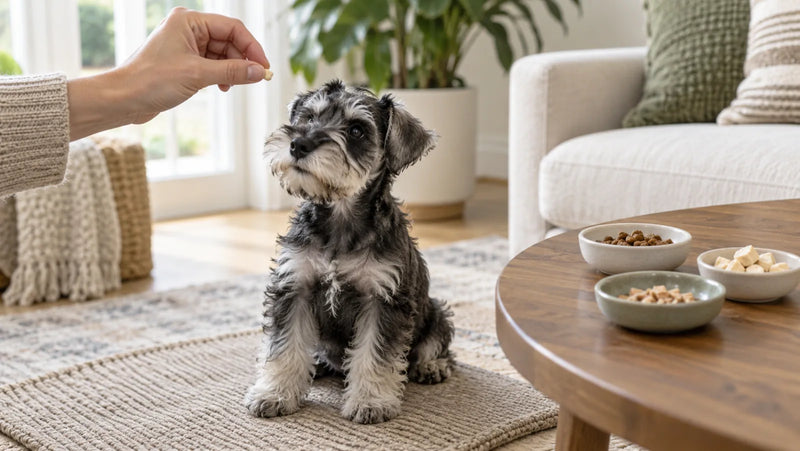
Puppy treats should be very small: think pea-sized or even smaller for tiny breeds. A puppy does not need a full snack to understand the reward. One tiny piece given at the right second is more useful than a large treat that takes ten seconds to chew.
Small pieces also protect the training session. If your puppy has to stop, crunch, chew, and search for crumbs, the lesson slows down. Fast rewards help your puppy connect the behavior with the payoff.
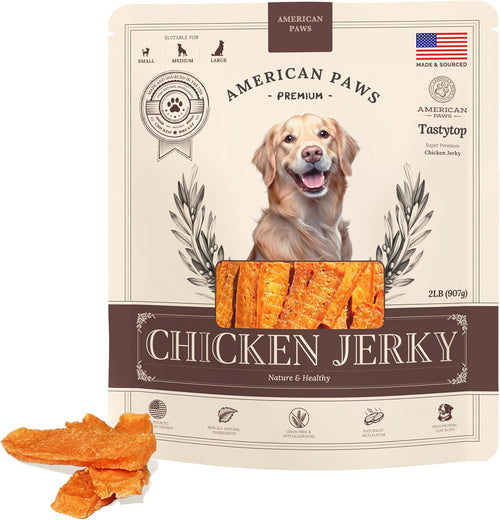
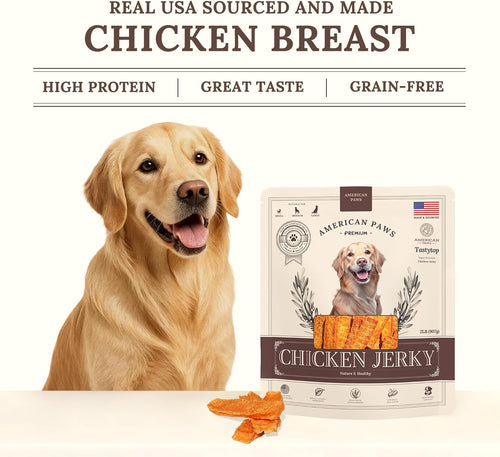
Soft treats are helpful here because you can cut them with kitchen scissors. American Paws soft, snip-to-size chicken treats are all-natural chicken training treats made for high-value rewarding. They are soft and chewy, so you can cut them into puppy-tiny pieces before a session.

When can you start training a puppy with treats?
Most puppies can begin simple reward-based training when they come home, often around 8 weeks old. Keep sessions short and gentle. At this age, training is not about formal obedience; it is about building attention, trust, and habits.
The AKC recommends starting with simple puppy lessons and using positive reinforcement. That matches how young puppies learn best. Reward what you want, keep the lesson upbeat, and stop before your puppy gets tired.
If your puppy is younger than 8 weeks, underweight, newly adopted, recovering from illness, or not eating normally, ask your veterinarian before adding new treats.
How many treats can a puppy have?
A common guideline is to keep treats under about 10% of daily calories. That matters even more for puppies because their main food needs to provide complete growth nutrition. Treats are for learning, not for balancing the diet.
There are two ways to keep portions under control. First, cut every reward smaller than you think you need. Second, use part of your puppy's regular food for easy repetitions, and save higher-value treats for harder moments like recall, crate confidence, or outdoor distractions.
Introduce any new treat slowly. Give one small piece first, then watch for normal appetite, normal stool, and normal energy. If your puppy has vomiting, diarrhea, itching, or anything that worries you, stop the new treat and call your veterinarian.
Soft vs crunchy treats for puppies
Soft treats usually win for early puppy training. They are easier to chew, easier to cut, and easier to swallow quickly. That makes them useful for tiny mouths and short attention spans. Soft treats are also easier to portion because you can snip one strip into many rewards.
Crunchy treats can be fine for some puppies, but they often take longer to eat and may crumble. Very hard chews are a different category and should be chosen carefully. Puppies are teething, learning how to chew, and often still figuring out what fits in their mouth.
The American Paws 2 lb soft chicken jerky is all-natural, made with chicken and natural glycerin, and made in the USA. It is not a single-ingredient treat, and that distinction matters. Its strength for puppy training is texture: soft, chewy, aromatic, and easy to cut into training-size pieces.
How to use treats for a puppy's first lessons
Name, sit, and recall
Start with your puppy's name. Say the name once. When your puppy looks at you, mark the moment with a cheerful yes and give a tiny treat. Keep repetitions short. You are teaching your puppy that paying attention to you is worth it.
For sit, hold a tiny treat near your puppy's nose and slowly lift it upward. When the rear touches the floor, reward. For recall, use an excited voice, move backward a step, and reward when your puppy comes to you. Early recall should feel easy and fun.
Potty and crate training
Timing matters. For potty training, reward right after your puppy finishes in the correct place, not after you walk back inside. The reward tells your puppy exactly which behavior paid off.
For crate training, toss a tiny treat near the crate entrance, then inside, then farther back as your puppy gets comfortable. Do not rush the door closing. The goal is to make the crate feel predictable and positive.
Treats to avoid for puppies
Avoid treats that are too large, too hard, greasy, heavily dyed, or filled with artificial extras. Rawhide and hard chews can be poor fits for young puppies, especially without close supervision. Also avoid rich table scraps, cooked bones, and anything your veterinarian has told you to skip.
Puppies are small, and their stomachs can be sensitive. A treat that seems modest for an adult dog can be too much for a puppy. When in doubt, choose smaller and softer.
Why simple made-in-USA treats matter
With puppy treats, clarity matters. You want to know what the treat is made from, where it is made, and how it fits your training routine. American Paws soft chicken training treats are made in the USA in a USDA-inspected facility in Highland, California. The brand was founded in 2019 with a focus on practical, real-meat rewards for pets.
If you are comparing options, start with the American Paws chicken collection. For the broader adult-dog guide, read our article on dog training treats. If you also train cats, our training treats for cats guide explains why tiny high-value pieces matter across species.
A simple puppy training treat routine
Before a session, cut a small pile of treats into pea-sized pieces. Put the rest away so you do not accidentally overfeed. Train for one to three minutes, reward the behavior you want, then pause. Several tiny sessions across the day are usually better than one long session.
Use higher-value treats for harder jobs. Name response in the kitchen may only need kibble. Coming when called away from a smell outside may need soft chicken. Matching the reward to the difficulty helps your puppy succeed without feeding more than needed.
Frequently asked questions
What treats are best for training a puppy?
The best puppy training treats are tiny, soft, easy to chew, and high-value. Simple all-natural meat treats cut into small pieces work well for many puppies.
How small should puppy training treats be?
Pea-sized is a good general target, and very small puppies may need even smaller pieces. The reward should be quick to eat.
How many training treats can a puppy have a day?
Keep treats under about 10% of daily calories and ask your veterinarian for puppy-specific guidance. Cut pieces smaller if you train often.
Can an 8-week-old puppy have training treats?
Many 8-week-old puppies can have tiny training treats, but introduce them slowly and ask your veterinarian if your puppy is very small, sick, or on a special diet.
Are soft or crunchy treats better for puppies?
Soft treats are usually easier for young puppies because they can be cut small and eaten quickly. Crunchy treats may work later if they are small and easy to chew.
Choose tiny rewards and train often
Puppy training is built on timing, repetition, and rewards your puppy cares about. Choose soft treats you can cut small, keep portions modest, and use each reward to teach one clear behavior. That is how treats become training tools instead of extra snacks.