
The best dog gift is a clearly labeled treat whose protein, texture, piece size, and calories fit the individual dog—not the biggest bag or hardest chew. This dog gift guide starts with the recipient: tiny breakable rewards may suit a small dog or puppy, easy-to-chew or no-chew formats may be more comfortable for many seniors, and a properly sized chew belongs only with a dog whose teeth and chewing behavior fit it.
Before buying, ask the dog's person about familiar proteins, allergies, prescription or elimination diets, dental concerns, swallowing habits, and the daily treat allowance. One well-matched item in its original package is more thoughtful than an impressive-looking selection the dog cannot safely use.
Dog gift guide: the five-question shortcut
Use these five questions before comparing flavors or formats. If any answer is unknown, ask rather than turning novelty into a surprise.
- How large is the dog? Body size affects useful piece size, calorie impact, and whether a chew can be swallowed whole.
- What life stage is the dog in? Puppies, healthy adults, and seniors may need different textures, but age alone never tells the whole story.
- How does the dog chew? A careful nibbler, a fast gulper, and a determined power chewer should not receive the same format.
- Are the dog's teeth and mouth comfortable? Dropping food, chewing on one side, bad breath, bleeding, or a sudden texture preference needs veterinary attention, not a harder present.
- Which proteins and diets are already approved? Chicken or beef may be familiar for one dog and specifically excluded for another.
Those answers turn a broad list of dog treat gift ideas into a short, defensible choice. They also make it easier to say no when a product looks charming but does not fit.
Choose by the dog, not the gift packaging
Body size and calorie budget
A reward that looks tiny to a person can consume meaningful calories for a ten-pound dog. Large pieces can also encourage gulping or require awkward breaking. Look for a format that can be divided cleanly, then count the amount actually eaten—not the number of pieces handed over.
For small dogs, a light freeze-dried piece that breaks into several crumbs can be more useful than a large strip. For a large dog, small pieces can still work well for training because the reward is immediate and the calories remain easier to manage. Size is a fit question, not a reason to supersize.
Age and dental comfort
Puppies may be changing teeth and still learning how to take food gently. Seniors vary enormously: some chew comfortably, while others have worn, fractured, missing, or painful teeth. The American Animal Hospital Association's dental guidance notes that softer options may be appropriate for puppies, seniors, and dogs with dental pain.
Do not diagnose a mouth by watching one meal. A new reluctance to crunch, food falling from the mouth, facial swelling, one-sided chewing, or changed eating behavior calls for a veterinary exam. A no-chew topper can change aroma and texture, but it cannot treat dental disease.
Chewing style and supervision
“Loves to chew” is not enough information. Ask whether the dog nibbles, shears, crushes, or tries to swallow large pieces. Every chew should be larger than the dog can gulp, offered under active supervision, and removed when it becomes small, sharp, splintered, or otherwise unsafe.
The AAHA chew-safety guide warns that extremely hard items can fracture teeth. Its practical thumbnail and flex checks are useful screens: an item that will not indent at all or has no give may be too hard. No edible chew is universally safe or guaranteed to last.
Familiar proteins and medical diets
A familiar protein is a feature, not a boring choice. If chicken is already tolerated, a plainly labeled chicken item is easier to evaluate than an exotic mixed recipe. If the dog is on a prescription diet, food trial, or veterinarian-directed plan, get approval for the exact product before purchasing it. “Single ingredient” describes label simplicity; it does not mean hypoallergenic or suitable for every medical diet.
Quick gift matrix by size, age, and chewing style
| Dog profile | Format to consider | Check before choosing | Usually skip |
|---|---|---|---|
| Small adult dog | Tiny freeze-dried pieces that break cleanly | Calories per piece, familiar protein, swallowing style | Oversized pieces or a chew small enough to gulp |
| Puppy | Soft or easily divided reward approved for that puppy | Age guidance, current diet, teething, piece size | Very hard animal parts or large unfamiliar servings |
| Healthy adult dog | Breakable training pieces or snippable jerky | Job, calorie budget, protein history, chewing behavior | A format chosen only because the package looks festive |
| Senior dog | Easy-to-divide pieces or no-chew topper crumbles | Dental comfort, appetite change, medical diet | Assuming all older dogs can or cannot handle crunch |
| Determined chewer | Properly sized supervised chew if teeth and diet fit | Hardness, gulping, natural variation, removal point | Anything described as indestructible or left unattended |
This matrix is a starting screen, not a prescription. Two dogs of the same weight and age can need different choices because their teeth, digestion, training goals, and chewing behavior differ.
Small dogs and puppies: tiny, breakable, familiar
For a small dog, prioritize control. A piece should be easy for the person to divide and easy for the dog to take without stretching, guarding, or gulping. Light freeze-dried pieces can work because one piece may become several rewards. Crumbly liver can also be divided, but its richness is a reason to keep amounts modest rather than treating every fragment as calorie-free.
Puppies need an extra check with their veterinarian or breeder's feeding plan. Growth food should remain the nutritional foundation, and teething can make a previously comfortable texture unpleasant. Use a very small approved reward, introduce one item at a time, and supervise the first sessions. Do not hand an adult-sized animal-part chew to a puppy simply because the puppy is enthusiastic.
If the goal is training, several tiny rewards are usually more functional than one large bite. Break the treat before the session, place the day's allowance in a separate cup, and stop when it is empty. That prevents generous hands from quietly multiplying the amount.
Adult dogs: match the format to the job
A healthy adult dog may have the widest range of possible formats, but “can eat” still does not mean “best match.” Decide what the item is for.
- Training: choose small, quick-to-eat pieces that do not interrupt the next repetition.
- Quiet one-on-one reward: use a strip that can be cut into measured bites before serving.
- Meal aroma: use a measured topper over the dog's normal complete food when chewing is not the point.
- Supervised chewing: consider an appropriately sized chew only after checking teeth, diet, and gulping behavior.
Do not make the format do a job it was not designed to do. A topper is not a chew. A strip snipped into ten rewards still contains the calories of the original strip. A chew does not become dental treatment because the dog works on it.
Senior dogs: comfortable texture before crunch
The most useful gifts for senior dogs respect the individual mouth. Some older dogs comfortably eat crunchy pieces; others do better when a freeze-dried piece is crumbled, jerky is snipped very small, or a measured topper is added to the usual meal. Ask the dog's person what texture is already successful.
For a dog with known dental disease, recent dental work, swallowing difficulty, or a history of choking, do not improvise. Get veterinary approval for the exact texture. Finely ground chicken topper can provide aroma without requiring a chew, but it remains a supplemental extra. It should sit on the regular meal rather than replace it.
Changed appetite is not an invitation to keep escalating flavors. Pain, nausea, medication effects, kidney disease, and other conditions can change eating behavior. A present can be kind and still wait until the veterinary team has explained the change.
Heavy chewers: size and tooth safety before durability
Power chewers need careful selection, not the hardest possible object. Check the dog's mouth history, choose a piece too large to swallow whole, watch the entire session, and remove the item before it becomes a gulpable end. Natural animal parts vary in thickness and shape, so inspect each individual piece rather than relying only on the bag name.
A whole dehydrated chicken foot may be considered for a suitable adult dog whose veterinarian, teeth, diet, size, and chewing style fit it. It is not appropriate by default for puppies changing teeth, seniors with dental disease, dogs recovering from dental work, gulpers, or dogs with a previous obstruction. It should never be sold in conversation as an indestructible chew, a tooth cleaner, or a joint treatment.
If the dog tries to crack every item immediately or swallow large fragments, a food puzzle used with tiny regular treats may be a better enrichment route than a harder edible object. The safe choice can be a different activity, not a tougher chew.

Read the treat label before you wrap it
Ingredient list and familiar protein
The AAFCO guide to reading pet-food labels explains that ingredients are listed in descending order by weight. Read every line, even when the front emphasizes one protein. Flavors, mixed proteins, binders, and other ingredients may matter to a sensitive dog.
Our complete dog-treat label guide walks through the ingredient list, calorie statement, intended use, and manufacturer information. For another household's dog, send the product link or a clear label photo and get approval before ordering.
Calories and piece size
Find calories per treat, per piece, or per familiar unit. Then decide how the physical piece will be served. Cutting one strip into smaller rewards improves portion handling during training, but it does not erase calories. When the label gives calories per ounce rather than per piece, weigh the intended serving or ask the manufacturer for help translating it.
Treat versus complete-and-balanced food
Treats, snacks, chews, and toppers are usually intended for intermittent or supplemental feeding. They are not designed to supply every required nutrient as the sole diet. The FDA explanation of complete-and-balanced pet food describes how nutritional adequacy statements distinguish a dietary foundation from a supplemental product.
Keep the dog's complete food in charge. Do not replace a meal with a bag of treats or dramatically cut the normal ration to compensate for a generous present.
Original package, lot, storage, and best-by information
Keep edible gifts sealed in their original package. That preserves ingredients, calorie information, feeding directions, lot code, best-by date, storage instructions, and the contact details needed if there is a question or recall. A decorative jar without its source label looks tidy but strips away useful safety information.
If you want a personal touch, attach a note outside the sealed bag with the dog's name and the owner's approved serving plan. Do not pour mixed treats together, because the owner may no longer be able to identify which item caused a reaction.
Current American Paws options by dog profile
These are individual current products, not a preselected set. Choose only after confirming the protein and format with the dog's person. Prices and promotions can change, so the live product pages carry current details.
| Current product | Verified format | Dog profile it may fit | Important limit |
|---|---|---|---|
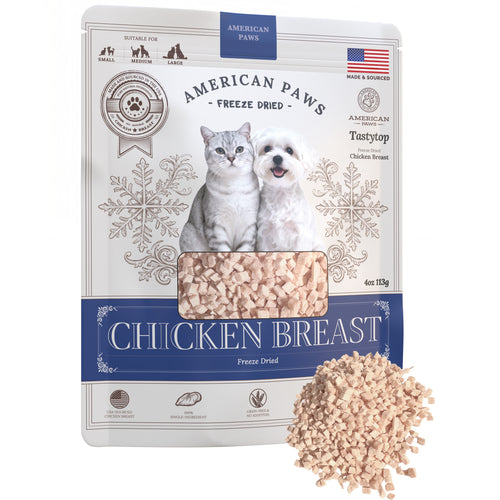
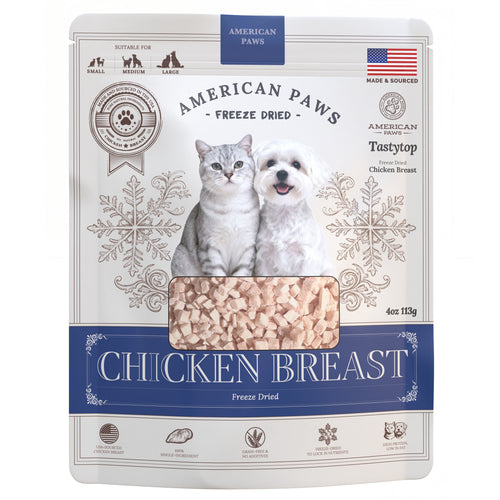
| Freeze-dried chicken breast | Single-ingredient 100% USA chicken breast; light pieces that break smaller | Small dogs, puppies with approval, or training sessions when chicken is familiar | Crunch may not suit every mouth; broken pieces still count toward calories |
| Freeze-dried beef liver | Single-ingredient 100% USA beef liver; small crunchy pieces that crumble | Dogs already known to tolerate beef; tiny high-interest training rewards | Keep portions small and do not assume beef is allergy-safe |
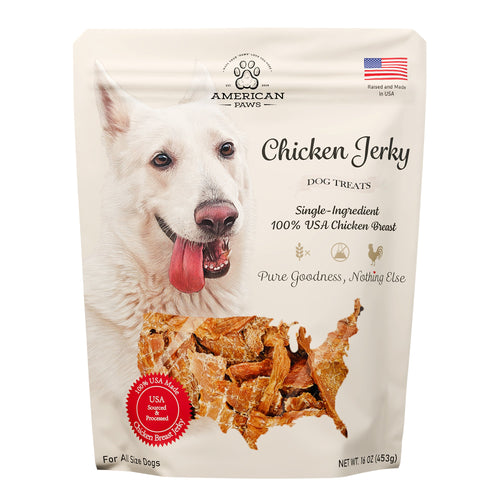
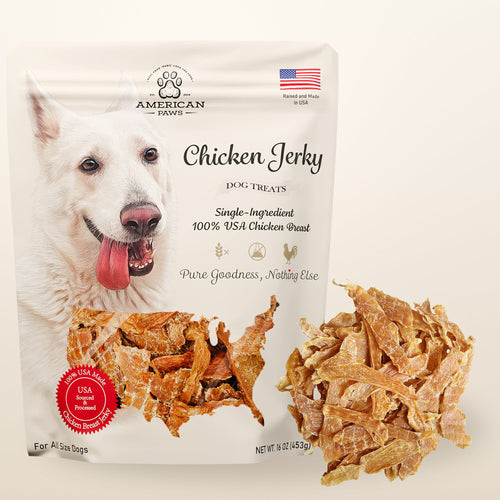
| Whole-cut chicken breast jerky | Single-ingredient 100% USA chicken breast strips with nothing added | Adult dogs that do well with a strip snipped to an appropriate reward size | Cut before serving; snipping changes piece size, not total calories |
| Chicken meal topper | Single-ingredient 100% USA freeze-dried chicken-breast crumbles | Dogs that benefit from a measured no-chew format over their regular meal | Supplemental topper only; it is not a complete meal or chew |
| Dehydrated chicken feet | Whole single-ingredient 100% USA chicken feet; natural pieces vary | A suitable adult supervised chewer after size, teeth, diet, and behavior checks | Never universal, unattended, or presented as dental or joint therapy |
Do not interpret this table as a ranking. The best choice is the one that survives every fit check. For example, the topper may be more useful than a chew for one senior, while a few broken chicken pieces may be more practical than jerky for a tiny training dog.
Do not turn a new protein into a surprise
When the recipient is not your dog, ask for explicit approval of the exact ingredient and format. Chicken, beef, and other animal proteins can be excluded because of a known reaction, an elimination trial, a prescription diet, or simple digestive history. Even a single-ingredient product can contain the one ingredient that dog must avoid.
If you cannot get an answer, choose a non-food item approved by the owner or wait. If the owner wants to assemble a seasonal presentation themselves, our build-your-own Christmas stocking guide covers construction and seasonal household hazards without changing the label and calorie checks here.
Keep the gift inside the daily treat budget
The World Small Animal Veterinary Association's treat guide recommends keeping all treats combined below 10% of daily calories so complete and balanced food supplies at least 90%. That is a ceiling for every extra together, not a target for a new bag.
Training rewards, table tastes, toppers, dental products, and chews all share the same allowance. Use our daily dog-treat calorie budget to estimate the available space. Give the owner the unopened package so they can read calories and decide how the item fits with everything else the dog receives.
Portion the food before the fun starts. Break freeze-dried pieces, snip jerky, or measure topper into a small daily cup. Cutting or crumbling can produce more reward moments, but the entire original amount still counts. Do not slash a balanced meal to make room for a large edible present without veterinary guidance.
American Paws sells individual products, not a ready-made set
As of August 5, 2026, American Paws offers these treats as individual products and does not list a ready-made gift box, bundle, sampler, or kit. We will not imply that one exists. You can select one fitting product, or compare several individual listings with the dog's owner and assemble your own presentation while keeping every bag sealed and labeled.
One item is often enough. A familiar chicken reward sized for a small dog can be more useful than five unrelated proteins. A measured topper for a senior can be more considerate than an oversized chew. Thoughtfulness comes from fit, not product count.
Frequently asked questions
What is a good treat gift for a small dog?
Look for a familiar protein in a light, breakable format with clear calorie information. Freeze-dried chicken or beef-liver pieces may work when the dog already tolerates that protein and the pieces can be divided safely. Confirm the dog's diet and swallowing style with the owner first.
What is a good gift for a senior dog with dental concerns?
Ask what texture the dog currently eats comfortably and whether a veterinarian has set restrictions. A measured no-chew topper or an easily crumbled approved treat may be more comfortable than a hard chew. New pain, dropping food, one-sided chewing, or changed appetite needs a veterinary exam.
What should I choose for a heavy chewer?
Do not automatically choose the hardest item. Check tooth history, gulping behavior, suitable size, and the thumbnail or flex test; supervise continuously and remove small or damaged remnants. If the dog cracks or swallows pieces aggressively, choose a different enrichment format.
Can I give a puppy an adult dog treat?
Only after confirming the product, age guidance, ingredient, texture, and amount with the puppy's owner or veterinary team. Use tiny pieces and protect the complete puppy diet. Avoid extremely hard or easily gulped animal parts during teething.
Does single-ingredient mean allergy-safe?
No. It makes the ingredient list simple, but a dog can react to that exact protein. Chicken-only and beef-only treats are not appropriate when chicken or beef is excluded, and they may interfere with a prescription or elimination diet.
Does American Paws sell a ready-made gift box?
No. The current store sells individual products, not a preselected box, bundle, sampler, or kit. Use the live product pages to compare individual options, keep selected food in its original packaging, and confirm each one with the dog's owner.
Let fit—not novelty—make the gift feel thoughtful
Start with the dog: size, age, teeth, chewing style, familiar proteins, medical diet, and calorie plan. Then choose the texture and piece size that fit those answers. Keep the package sealed, preserve its label, and give the owner control over the first serving.
Ready to compare individual options? Browse all current American Paws dog treats, check the live label details, and choose one fitting item instead of an oversized surprise assortment.