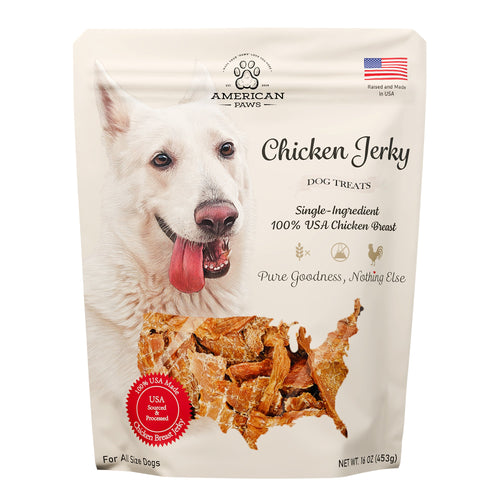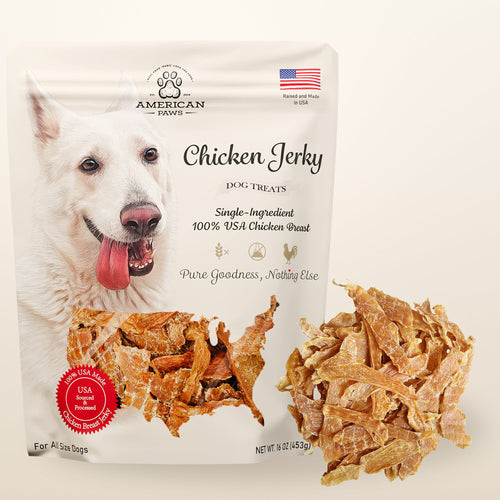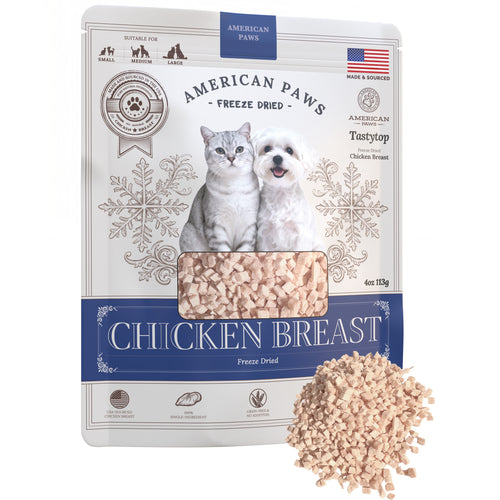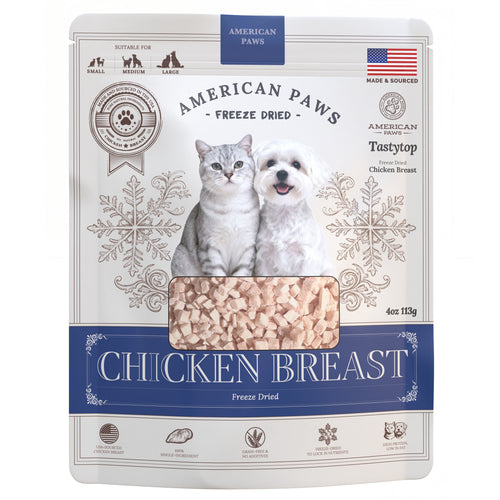

The best dog stocking stuffers are small, clearly labeled treats that can be portioned one at a time. Good examples include freeze-dried chicken bites, freeze-dried beef-liver training pieces, or whole-cut chicken jerky snipped into dog-size rewards. Build the stocking yourself from real products, keep food sealed and supervised, and leave chocolate, xylitol, raisins, and cooked bones out completely.
A Christmas stocking is a presentation method, not an extra meal. Match every item to the dog's size, age, chewing behavior, known protein tolerances, and usual calorie plan. Then set aside the amount the dog may actually receive that day before the stocking ever comes into the room.
Dog stocking stuffers: the quick list
If you want an easy, food-first stocking, start with three formats that are simple to divide:
- Light freeze-dried chicken: crunchy pieces that can be broken into smaller rewards.
- Freeze-dried beef liver: aromatic, high-value pieces that work best in tiny amounts.
- Whole-cut chicken jerky: chewy strips that can be snipped before serving rather than handed over whole.
These are ideas for assembling your own stocking. American Paws does not currently sell a Christmas stocking, gift box, sampler, holiday bundle, or ready-made treat kit. The products are sold individually, which lets you choose only the proteins and textures that fit your own dog.
Keep each food in its original sealed and labeled bag when practical. If you portion a little food into a clean food-safe pouch for a same-household celebration, retain the original package with its ingredients, calories, lot code, best-by information, and storage directions. Do not present a home-filled pouch as factory packaging.
What makes a treat work inside a stocking?
Small enough to portion, not small enough to gulp
A stocking-friendly treat should be easy for the person to divide. That does not mean every small piece is automatically safe. A fast eater may swallow a bite whole, while a toy dog may need a piece broken much smaller than the same product served to a large, careful chewer.
Prepare the size before the dog becomes excited. Freeze-dried pieces can often be crumbled or broken. Jerky can be cut with clean kitchen scissors. Hand one piece at a time and supervise. If a piece becomes an awkward plug shape, is too firm for the dog's teeth, or is likely to be gulped, choose another format.
Clearly labeled and kept sealed
The ingredient list matters more during the holidays, not less. Guests may bring unfamiliar snacks, human stockings may hold candy, and homemade pouches can lose the product information that an owner needs. Keep food away from fabric dye, glitter, fragrance, dust, small decorations, ribbon, and curious noses until serving time.
Never scatter loose treats directly into a knit stocking. Food can pick up fibers or decoration, moisture can affect the fabric, and the dog may learn that chewing and swallowing the stocking is part of the game. Put sealed food beside or inside the stocking only while an adult controls the entire setup.
A familiar protein and texture
Christmas morning is a poor time to surprise a sensitive dog with a new protein and several new textures at once. A familiar ingredient makes digestive or allergy responses less likely to become a holiday mystery. If you do introduce one new treat, start with a crumb-sized taste on a quiet day before the celebration.
Single-ingredient can make a label easier to understand, but it does not make a protein hypoallergenic or suitable for every dog. A dog can react to chicken or beef itself. Dogs on prescription or elimination diets should receive only the foods the veterinary plan allows.
Choose by dog size, age, and chewing style
Small dogs and puppies
Small bodies have small calorie budgets. Even a treat that looks tiny to a person can be a meaningful share of a toy dog's day. Break freeze-dried pieces into several micro-rewards and snip jerky into narrow, short pieces. Use the product label and the puppy's feeding plan rather than a festive handful.
Puppies also learn quickly from repetition. Hand-deliver each piece for a calm behavior instead of letting a puppy tear into a stocking. That protects the puppy from ribbon, fabric, plastic, and overfeeding while turning the moment into a short training game.
Adult medium and large dogs
A larger mouth can handle a larger piece, but body size does not justify an overflowing stocking. Medium and large dogs may eat quickly when several treats are visible, so pre-count the day's portion and keep the remaining bags out of reach. A whole strip can still add more calories than several small training pieces.
Choose based on the dog's actual chewing behavior. A large gentle dog may take small rewards carefully; a medium dog may gulp anything. The individual in front of you is more useful than the breed stereotype.
Senior dogs and dental-sensitive dogs
Older dogs may have worn teeth, missing teeth, periodontal disease, or pain that is not obvious from the outside. Light freeze-dried pieces that crumble easily—or a softer treat already approved for that dog—may be more comfortable than a firm strip. Do not assume “crunchy” cleans teeth or that a dog who wants the treat can chew it safely.
Ask the veterinarian about texture after a dental procedure or when the dog drops food, chews on one side, paws at the mouth, has bad breath, or suddenly refuses a familiar format. A stocking should not become a test of a painful mouth.
Fast gulpers and dogs on special diets
Fast gulpers need hand delivery, very small prepared pieces, and an adult who controls the bag. Dogs with pancreatitis history, obesity, chronic digestive disease, food allergy, kidney or heart disease, or a prescription diet need a planned choice rather than a surprise assortment.
When the safest answer is “no extra food,” the stocking can hold a favorite non-edible activity chosen for that dog, while the regular meal provides the reward. Food is not required for a dog to be included in the celebration.
Three real-meat stocking ideas from the current catalog
The following are current individual products, not components of a prebuilt holiday set:
| Treat | Verified format | Stocking use | Calorie reminder |
|---|---|---|---|
| Single-ingredient freeze-dried chicken training treats | 100% USA chicken breast; light, crunchy pieces about 0.5–1 inch | Break into smaller bites for small dogs or a short training game | Approximately 5 kcal per piece |
| Single-ingredient freeze-dried beef-liver training treats | 100% USA beef liver; small crunchy pieces that break smaller | Use as a tiny high-value reward, not a large snack | Approximately 5 kcal per piece |
| Whole-cut single-ingredient chicken jerky | 100% USA chicken breast; irregular whole-cut strips about 2–5 inches | Snip a strip into dog-size pieces before the celebration | Approximately 15 kcal per treat |
All three are treats for intermittent or supplemental feeding, not complete meals. Natural pieces vary. Breaking one five-calorie piece into five crumbs creates smaller rewards, but the crumbs together still contain the original piece's calories. The same is true when a jerky strip is cut into training-size bits.
How to build your own dog stocking safely
- Choose one or two familiar products. More variety is not automatically better, especially for a sensitive dog.
- Read the labels again. Confirm ingredients, calories, storage, best-by information, and the dog's current restrictions.
- Calculate the day's allowance. Include breakfast rewards, chews, toppers, guest-given bites, and planned dinner extras.
- Prepare the pieces. Break or snip only the amount the dog may receive; keep the remainder sealed elsewhere.
- Protect the food. Leave it in the original bag or use a clean sealed food-safe pouch while retaining the original label.
- Keep the stocking under adult control. Bring it out for the moment, hand the rewards one at a time, and remove the fabric and wrappers immediately.
- Save some fun for later. The dog does not have to consume every item on Christmas morning.
This method creates a stocking experience without suggesting that the stocking itself is edible, a toy, or one serving. It also makes it easier to stop when the planned portion is finished.

Keep Christmas treats inside the daily calorie budget
Treats should generally stay under 10% of daily calories, with at least 90% coming from complete and balanced food. That ceiling covers every extra combined. A dental chew, training rewards, a food topper, a bite from a guest, and the stocking all draw from the same small account.
Our daily dog-treat calorie guide explains why body condition and the dog's actual food matter more than a universal count. Use the calorie information on each product and ask the veterinary team for the dog's daily energy target when weight or health is a concern.
A simple holiday tactic is to reserve part of the normal daily treat allowance several days in advance—not by underfeeding the main meal, but by avoiding unplanned extras. On Christmas, put only that measured allowance in the serving pouch. The larger retail bag stays closed and out of reach.
Do not “make room” for treats by cutting a balanced meal dramatically without veterinary advice. The stocking is optional. The main diet still does the nutritional work.
Never put these holiday foods in a dog's stocking
The ASPCA's people-food hazard guide identifies several common holiday ingredients that can seriously harm pets. Keep human stockings, dessert plates, gift bags, purses, and trash secure as well as the dog's own stocking.
Chocolate and caffeinated sweets
Chocolate contains methylxanthines; darker chocolate and cocoa powder are generally more concentrated than milk or white chocolate, but no form belongs in a dog stocking. Coffee, espresso candy, and caffeinated products add similar concerns. Do not publish or rely on a home “safe dose” because risk depends on the product, concentration, amount, and dog.
Xylitol-sweetened candy and baked goods
Xylitol may appear in sugar-free gum, candy, baked goods, peanut butter, dental products, and other items. In dogs it can cause a rapid drop in blood sugar and may cause liver injury. “Sugar-free” is therefore a reason to inspect an ingredient list, not a safe gift label.
Xylitol may also be labeled birch sugar or wood sugar. If a dog may have eaten it, call a veterinarian or poison-control professional immediately rather than waiting for symptoms.
Grapes and raisins
Grapes and raisins can cause kidney injury in dogs, and individual sensitivity is unpredictable. Raisins hide in fruitcake, trail mix, cookies, breads, chocolate fillings, and small snack boxes that fit easily into human stockings. Treat any possible exposure as urgent advice territory.
Cooked bones and fatty table scraps
Cooked turkey and chicken bones can splinter, choke, injure the digestive tract, or obstruct it. The ASPCA's holiday safety guidance also warns about fatty, sweet, and spicy foods and recommends keeping a pet's diet stable through the celebration.
Skin, gravy, buttery side dishes, sausage, and rich leftovers can trigger digestive distress and may be dangerous for a dog with pancreatitis risk. A bone is not made safe by being large, festive, “natural,” or wrapped as a gift.
The stocking, ribbon, and wrapper are not chew toys
A dog should never be left alone with a filled stocking. Knit fabric, yarn, ribbon, bows, plastic pouches, paper, small clips, bells, batteries, and decorations can become choking, obstruction, or injury hazards. Keep the stocking loop from catching around a neck or leg, and avoid glitter, tinsel, or glass ornaments near food.
Bring the stocking down from its hook, place it on a stable surface, and let an adult remove each sealed item. Hand the prepared food directly to the dog. When the planned serving is finished, put the food bags and the stocking away before attention moves to another gift.
If more than one dog is present, serve them separately when food guarding or competition is possible. A festive group photo is not worth a fight over an open bag.
What to do if a dog raids the wrong stocking
- Remove access and separate pets. Prevent a second ingestion and collect the remaining items.
- Save every package. Ingredient lists, product weight, cocoa percentage, sweetener names, and lot information help professionals assess risk.
- Estimate what is missing. Note the item, amount, time, and the dog's weight and medical conditions.
- Call promptly. Contact the veterinarian or the ASPCA Animal Poison Control Center at (888) 426-4435.
- Follow professional directions. Do not induce vomiting or give a home remedy unless a veterinarian or poison-control professional specifically tells you to do so.
Breathing difficulty, collapse, seizures, severe weakness, repeated vomiting, a swollen or painful abdomen, repeated retching, or choking signs require emergency care. Do not wait for a holiday gathering to end.
Frequently asked questions
What can I put in my dog's Christmas stocking?
Use a small amount of familiar, clearly labeled dog treats that can be portioned for the dog's size and chewing style. Freeze-dried chicken, freeze-dried beef liver, and jerky snipped small are practical examples. Keep food sealed and give each piece by hand.
Can I put loose dog treats directly in a stocking?
No. Loose food can contact fibers, dye, fragrance, glitter, dust, or decorations, and it teaches the dog to dig into or chew the fabric. Keep treats in their original labeled bag or a clean sealed food-safe pouch while retaining the original package information.
How many stocking treats can a dog have on Christmas?
There is no universal count. Use the product's calories and the dog's daily energy plan, and keep all extras combined under 10% of daily calories. Pre-count the Christmas portion before guests or excitement make tracking difficult.
Are single-ingredient treats good stocking stuffers?
They can be because the ingredient list is easy to understand, but single-ingredient does not mean safe for every dog or free of allergy risk. Choose a protein the dog already tolerates and keep the portion appropriate.
Does American Paws sell a ready-made dog stocking or gift set?
No. American Paws does not currently sell a stocking, gift box, sampler, or holiday bundle. You can build your own from individual live products and choose only what fits your dog. Do not assume a bundle exists because this article explains the idea.
Build a small stocking, not an oversized serving
A good dog stocking feels generous because the choices are thoughtful, not because it overflows. Pick a familiar protein, prepare dog-size pieces, keep them labeled and sealed, set the calorie limit first, and let the dog earn one reward at a time. Chocolate, xylitol, raisins, cooked bones, fabric, and wrappers stay entirely out of reach.
To build your own version from products that actually exist, browse all current American Paws dog treats and compare ingredients, calories, texture, and piece size. Choose one or two bags that suit your dog, keep most of each bag for later, and make the stocking moment small enough to enjoy safely.