
Raw dog food chicken feet can be one bone-containing ingredient in a professionally formulated diet, but a foot is not a complete meal, a universal calcium dose, or a proven joint treatment. The CDC and FDA do not recommend raw pet food because uncooked animal protein can expose dogs and people to disease-causing bacteria. Anyone who still chooses raw feeding needs a veterinary nutrition plan and strict controls from freezer to bowl to final cleanup.
This guide is for that operational decision. It explains where a chicken foot may fit in an already balanced recipe, which households should decline raw poultry, and how to contain exposure. If the first question is whether this chew suits an individual dog's mouth and health, start with our guide to whether raw chicken feet are appropriate at all.
Raw dog food chicken feet: an ingredient, not a recipe
A chicken foot contains bone, cartilage, skin, and connective tissue. That makes it different from boneless muscle meat, but it does not make it a self-balancing food. A dog's complete recipe must supply energy, amino acids, fatty acids, vitamins, and minerals in the right relationships for that dog's life stage and condition.
Bone brings minerals, but one foot is not a calcium formula
Bone contributes calcium and phosphorus, yet feet vary in size and composition. Without a nutritional analysis, “one foot” is not a measured mineral dose. Adding feet to a recipe because it seems short on calcium can create a new imbalance instead of correcting the old one.
The Merck Veterinary Manual's small-animal nutrition guidance explains why calcium and phosphorus must be considered together and why age, size, and life stage matter. Growing large- and giant-breed puppies are especially sensitive to inappropriate mineral supply. A veterinarian or board-certified veterinary nutritionist should formulate the whole diet; the foot should fill only the place assigned in that formula.
Cartilage is not a proven joint treatment
Chicken feet contain cartilage and connective tissue, which is why they are often marketed around glucosamine, chondroitin, or “joint support.” That physical description is not evidence of a clinically effective dose. A foot has not been standardized as arthritis medicine, and it should not replace a diagnosis, weight plan, complete diet, rehabilitation, or a veterinary joint protocol.
Think of it as a cartilage-bearing animal food, not a supplement with a guaranteed therapeutic amount. The complete chicken-feet safety and benefits guide covers the broader nutrition and chew questions without turning this page into another general chicken-feet overview.
First decide whether raw feeding fits the dog and household
Good kitchen habits can reduce exposure; they cannot make raw poultry germ-free. The CDC does not recommend raw pet food or treats. That recommendation deserves particular weight when one household member or the dog has a higher chance of severe illness.
People at higher risk of serious foodborne illness
A household should choose a non-raw option if it cannot reliably separate raw-pet-food prep from human food. CDC specifically identifies children under five, adults 65 and older, pregnant people, and people with weakened immune systems as higher-risk groups. Risk is not limited to the person who fills the bowl: organisms may move on hands, tools, counters, floors, saliva, fur around the mouth, or feces.
A healthy-looking dog can still carry and shed organisms. That makes “my dog has never been sick” an incomplete household safety test. Families with crawling children, shared food-prep space, or a high-risk caregiver should discuss the exposure route with their physician and veterinarian before bringing raw poultry home.
Dogs at higher risk and diets needing specialist input
Puppies and dogs with weakened immunity or other health conditions are among the pets for whom CDC urges extra caution. Growing dogs, especially large and giant breeds, as well as pregnant or lactating dogs, also need precise nutrient formulation; an improvised bone addition is not appropriate.
Dogs that gulp, have broken or diseased teeth, a history of constipation or obstruction, or relevant gastrointestinal disease need an individual veterinary assessment before any whole bone-containing item. If a dog cannot safely manage the object's size and texture, careful sourcing does not solve the mechanical problem.
Salmonella and Campylobacter risk extends beyond the bowl
Raw poultry can carry Salmonella, Campylobacter, and other pathogens. A dog may develop illness, remain apparently well while shedding organisms, or spread contamination from the eating area. People can be exposed while preparing the food, cleaning the bowl, touching the dog near its mouth, or picking up stool.
In one FDA study of 196 commercial raw dog- and cat-food samples, 15 tested positive for Salmonella and 32 for Listeria monocytogenes. Those figures describe that study—not the prevalence in every chicken foot—but they help explain the agency's warning that raw pet food can endanger pets and people.
Freezing is storage, not sterilization. The same is true of freeze-drying and dehydration: these processes may reduce some germs but do not guarantee that every pathogen is gone. No handling checklist can justify calling a raw product risk-free.
Buy, freeze, and thaw raw chicken feet safely
Keep the cold chain and contain drips
Buy from a supplier that keeps the product frozen, provides intact packaging and handling directions, and can answer sourcing questions. Reject torn, leaking, warm, foul-smelling, or discolored packages. Put the pack in a separate washable bag or bin for transport, then move it promptly to the freezer.
Store raw feet sealed and separated from ready-to-eat food. A rigid container or rimmed tray adds protection if packaging leaks. Label the container clearly for pet food, and do not let it share a loose drawer with ice, produce, or family meals.
Thaw in the refrigerator, not the counter or sink
Move only the recipe amount into a covered, leak-resistant container on the lowest refrigerator shelf or a contained tray. Let it thaw there. Do not thaw it on the counter or leave it loose in the sink, where drips and splashes can contaminate nearby surfaces.
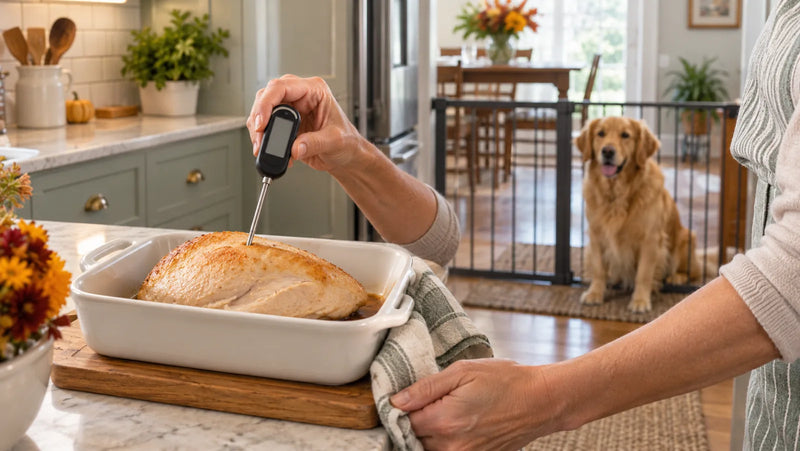
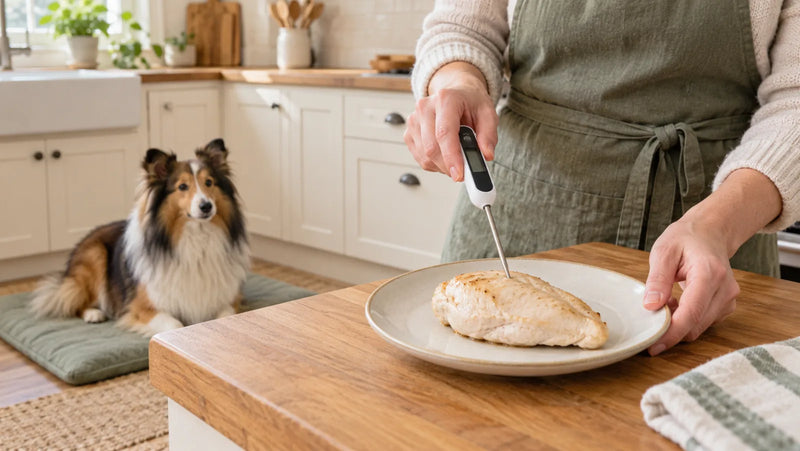
FDA lists refrigeration or microwave thawing for raw pet food generally. For a bone-in foot, refrigerator thawing is the simpler house rule because a microwave may heat unevenly and begin cooking portions of bone. Keep the rest frozen until needed, follow the supplier's storage label, and discard material left out rather than returning a saliva-exposed remnant to the supply.
Set up a separate raw-prep workflow
Do not rinse raw poultry
Rinsing cannot make a foot sterile. It can splash contaminated droplets around the sink, faucet, counter, clothing, and nearby dishes. Move the foot from its container with dedicated tongs; do not wash it with water, vinegar, lemon, salt, or another home soak.
Use clean dedicated tools and prevent cross-contamination
Before opening the container, clear away human ingredients, dishes, towels, and phones. Use a nonporous board, tongs, bowl, and tray reserved for pet food. Keep the dog behind a boundary so it cannot lick the package, your hands, or the prep surface.
Wash hands with soap and running water for at least 20 seconds after touching the food, packaging, bowl, dog saliva, or waste. Cleaning and disinfecting are two steps: first remove food and grease with hot soapy water, then apply an appropriate disinfectant exactly as its label directs. Never mix cleaning chemicals.

Serve only the amount in the formulated plan
Use the weight or quantity specified for that particular recipe. Do not add a whole foot “for calcium” or copy a count based only on body weight. The correct amount depends on the analyzed food, the rest of the recipe, life stage, energy needs, and the individual foot—not a universal feet-per-day chart.
If the foot is an occasional extra rather than a formulated ingredient, its calories and nutrients still count against the dog's whole daily intake. It should not displace complete-and-balanced food. Confirm the role with the veterinarian who manages the diet.
Whole-foot mechanical risks still require supervision
Raw does not mean mechanically harmless. Bones can contribute to tooth fractures, choking, constipation, and esophageal or intestinal obstruction or injury. Supervise from start to finish on an easy-to-clean surface. If the dog tries to swallow the item whole, guards food, or breaks off pieces it cannot manage, end the session safely and ask the veterinarian about another format.
Do not rely on claims that raw bones never splinter or are completely digestible. The World Small Animal Veterinary Association's raw-diet guidance identifies both pathogen and bone-related hazards and notes that home-prepared diets can contain nutrient deficiencies or excesses.
Ground form changes chewing risk, not pathogen or balance risk
Grinding changes the size and chewing mechanics of bone; it does not sterilize chicken or convert an unbalanced mix into a complete diet. A grinder and its parts also become raw-poultry contact surfaces that must be disassembled, cleaned, and disinfected. Do not grind a foot unless a qualified formulator has specified that ingredient and your equipment can process it safely.
Clean, disinfect, and manage leftovers and stool
- Remove leftovers promptly. Discard material that has been at room temperature or in the dog's mouth; do not return it to the refrigerator container.
- Contain the bowl and tools. Carry them on the tray so raw residue does not drip through the home.
- Clean, then disinfect. Wash bowl, tongs, board, container, tray, mat, and every contacted surface before using a label-approved disinfectant.
- Wash hands for at least 20 seconds. Do this after food prep, bowl cleanup, touching the eating area, and picking up stool.
- Prevent licking and close contact. Do not let the dog lick faces, mouths, wounds, or broken skin after eating. Clean visible residue around the mouth without spreading it to shared towels.
- Pick up feces promptly. Bag waste, clean soiled areas, and wash hands afterward because pathogens may leave the dog in stool.
Food-safety discipline continues after the empty bowl. If the workflow cannot be repeated every meal by every caregiver, a raw ingredient is a poor fit for that household.
Signs the dog or a person may be ill
Call the veterinarian if a dog develops repeated vomiting or diarrhea, blood in stool, fever, marked lethargy, abdominal pain, loss of appetite, or dehydration after raw food. Retching, trouble breathing, repeated attempts to swallow, a swollen or painful abdomen, collapse, or inability to keep water down warrants urgent veterinary care. Mention the raw poultry exposure and keep the package or lot information.
Household members with diarrhea, fever, significant abdominal pain, vomiting, or other concerning symptoms should contact a medical professional and report the raw-pet-food exposure, especially if they are in a higher-risk group. Do not wait for the dog to look ill before mentioning the shared exposure.
A dehydrated chicken foot avoids raw-poultry prep at home
For households that choose not to thaw and portion raw poultry, American Paws single-ingredient dehydrated chicken feet provide a ready-to-feed alternative made from whole USA-sourced feet with no added ingredients. They remove the freezer-to-counter raw-prep workflow; they do not become sterile, nutritionally complete, or suitable for every chewer.
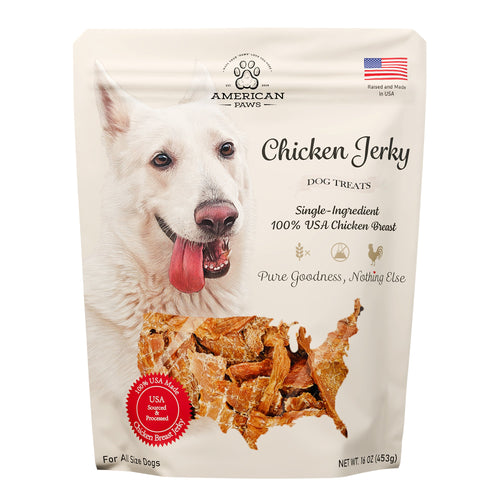
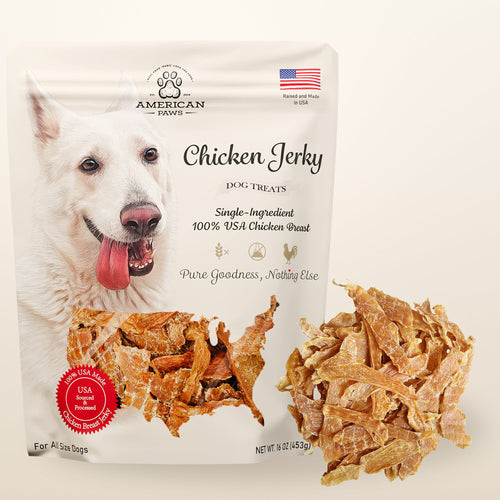
Follow the product label, wash hands, supervise the entire chew, and count it as an intermittent or supplemental food. Dogs with dental, swallowing, calorie, fat, or gastrointestinal restrictions still need veterinary approval. For boneless textures, compare boneless chicken jerky dog treats, or browse all American Paws dog treats by ingredient and chew style.
Conventional cooking is not a shortcut for a bone-in foot. Cooking changes bone properties and creates a separate safety question; our guide to chicken-foot cooking and preparation limits explains why cooked bones should not be fed.
Frequently asked questions
Are raw chicken feet a complete calcium source for a raw diet?
No. A foot contains bone and contributes minerals, but its calcium and phosphorus are not a standardized dose and it does not make a diet complete. Use it only in the amount specified by a veterinarian-formulated recipe.
Does freezing kill Salmonella or Campylobacter?
No. Freezing is a storage control, not a sterilization step. It may reduce some organisms but does not reliably eliminate all pathogens, so separation, handwashing, cleaning, disinfecting, and waste controls still apply.
Should I wash raw chicken feet before feeding?
No. Rinsing raw poultry can spread contaminated droplets around the sink and counter. Keep the item contained and move it with dedicated tongs instead.
Can a household with young children feed raw chicken feet?
CDC lists children under five among people at higher risk from foodborne germs and does not recommend raw pet food. A non-raw alternative avoids bringing the raw-poultry preparation workflow into the home.
Is a dehydrated chicken foot sterile?
No. Dehydration removes the need to thaw and portion raw poultry, but it does not guarantee elimination of every germ. Handle it as an animal-based treat, wash hands, store it as labeled, and supervise chewing.
Make the household decision before opening the package
The useful question is not whether one raw foot looks natural. It is whether a credentialed professional has assigned it a measured role, the dog can manage the physical form, and every person in the home can maintain the same containment routine. If any part fails, decline the raw ingredient.
If the plan does include chicken feet, keep them sealed and cold, thaw only a contained portion in the refrigerator, never rinse, separate every tool, supervise the dog, and clean and disinfect the full path afterward. That workflow reduces avoidable exposure; it does not override the CDC and FDA recommendation against raw pet food or make the meal risk-free.