
If you are searching for how to cook chicken feet for dogs, the safest answer is not to boil, roast, grill, air-fry, or fry whole bone-in feet. Those methods create cooked poultry bones, which can become brittle and splinter. A chicken foot is not boneless chicken meat, so ordinary cook-and-serve advice does not apply.
Fresh feet can be handled as a raw item in a veterinarian-approved raw-feeding routine, or dried through a controlled dehydration process. However, low-and-slow home dehydration is not automatically a pathogen-kill step. For most pet parents, a professionally prepared dehydrated chicken foot is the simpler choice because it avoids both conventional cooked bone and raw-poultry work in the kitchen.
How to cook chicken feet for dogs: the short answer
Do not conventionally cook bone-in chicken feet for a dog. Here is the practical decision:
- Boiling, baking, roasting, grilling, smoking, pressure-cooking, air-frying, or frying: do not feed the finished bone-in foot.
- Raw serving: this is not cooking; it requires cold storage, strict sanitation, careful supervision, and veterinary fit.
- Low-and-slow dehydration: physically possible, but drying alone does not prove that poultry pathogens were controlled.
- Ready-made dehydrated dog chews: the practical route for households that do not have a validated animal-food process.
This distinction is the center of the guide. “Cooked,” “raw,” and “dehydrated” are not interchangeable words, even when the starting ingredient looks the same.
Compare four chicken-foot preparation paths
| Preparation | What it means | Practical guidance |
|---|---|---|
| Raw | Uncooked poultry kept refrigerated or frozen | Requires raw-food hygiene, supervision, and veterinary guidance |
| Home dehydrated | Moisture removed slowly with warm moving air | Technically possible, but needs validated pathogen controls; appearance is not proof |
| Boiled, baked, grilled, or fried | Bone-in foot cooked by conventional heat | Do not serve it to a dog |
| Commercially dehydrated for dogs | A finished dog chew sold with handling and storage directions | Follow its label, inspect every piece, and supervise |
Raw: uncooked, cold-chain handling required
Raw chicken feet are used in some raw-feeding plans. Their preparation is mainly about sourcing, cold storage, preventing cross-contamination, and matching the chew to the dog. It is not a shortcut for every household, and raw poultry can carry bacteria that affect pets and people.
If raw feeding is the intent, use our separate raw chicken feet safety guide. That article owns the raw-feeding question; the hygiene section below covers only the kitchen controls relevant to preparation.
Low-and-slow dehydration: technically possible, not automatically pathogen-safe
A dehydrator can remove moisture from a chicken foot and produce a dry texture. That makes low-and-slow dehydration a real physical preparation method. It does not mean every home process produces a microbiologically safe or shelf-stable dog chew.
Time, air flow, foot size, starting contamination, equipment accuracy, final water activity, cooling, and packaging all matter. A foot that looks dry outside can still contain more moisture than expected, and a consumer dehydrator’s dial is not a test for Salmonella control.
Boiled, baked, grilled, air-fried, or fried: do not serve bone-in
These are conventional cooking methods. Once a bone-in chicken foot has been cooked this way, treat it like any other cooked poultry bone and keep it away from the dog. Adding broth, seasoning, oil, or a crisp coating does not improve the answer.
Plain boneless cooked chicken can be a different food when a dog’s diet permits it. This article is specifically about whole feet, which contain many small bones.
Commercially dehydrated dog chews: practical for most homes
A finished dehydrated chew removes the need to thaw raw poultry, sanitize a raw-prep area, interpret a consumer dehydrator, and decide whether an improvised batch is dry enough to store. It still requires label reading, clean hands, sensible storage, piece inspection, and supervision.
Why conventional cooking changes the risk
A chicken foot contains many small bones
Chicken feet are made of skin, tendons, cartilage, and numerous small bones. They are not a strip of boneless meat that can simply be simmered until tender. The structure that gives the foot its shape remains present after boiling, baking, or frying.
That is why a soft-looking exterior can be misleading. A boiled foot may feel flexible at the surface while still containing cooked bones inside. A fried or air-fried foot may look crunchy while being even less appropriate as a dog treat.
Cooked-bone fragments can choke or injure
The American Kennel Club’s cooked chicken bone guidance warns that cooked poultry bones can become brittle, splinter, lodge in the throat, or injure the digestive tract. No recipe can turn a conventionally cooked whole chicken foot into a risk-free chew.
For the broader cooked-bone question and warning signs, read what to do about cooked chicken bones. Keeping that intent in one dedicated guide prevents a preparation article from becoming incomplete emergency advice.
If you handle raw chicken feet, clean the kitchen—not the poultry
Buy cold, thaw in the refrigerator, and keep it separate
Start with feet from a source you trust. Reject leaking, damaged, swollen, or unexpectedly warm packaging. Keep raw poultry refrigerated or frozen and thaw it in the refrigerator inside a covered container that can catch drips—not on the counter and not loose above ready-to-eat food.
Use dedicated or freshly cleaned tongs, a tray, and a work surface. Keep children, other pets, and anyone at higher risk of foodborne illness away from the prep area. If your household cannot maintain that separation, raw preparation is not a practical fit.
Do not rinse raw poultry in the sink
“Cleaning the feet” should not mean spraying raw poultry with water. The FDA’s raw pet food safety guidance says not to rinse raw meat or poultry because contaminated droplets and juices can spread to sinks, counters, utensils, and other food.
Vinegar, salt water, lemon juice, and a quick rinse are not validated pathogen controls. Keep the raw feet contained. If visible debris or the source condition makes you uncomfortable, discard the item instead of trying to wash uncertainty away.
Wash hands and clean, then disinfect, food-contact surfaces
Wash hands with soap and water for at least 20 seconds before and after handling raw pet food. First clean trays, utensils, counters, and any contaminated surface with hot soapy water to remove residue; then use an appropriate disinfectant according to its label. Do not return cleaned tools to a contaminated towel or tray.
Immediately refrigerate unused raw items in a covered container or discard them safely. Wash the dog’s bowl and clean the floor if the raw foot touched it. Raw-food hygiene continues after the dog finishes because saliva and leftovers can spread contamination.

Home-dehydrating chicken feet: the food-safety gap to understand
Drying removes moisture, but low heat may not kill pathogens
Many online recipes treat dryness as the only goal: arrange feet on trays, set a low temperature, and wait until they feel crisp. That describes moisture removal, not a complete safety validation. Pathogenic bacteria can survive warm, dry conditions that are too cool to function as a kill step.
Sun drying is not appropriate. An oven or dehydrator also needs steady, verified heat and air movement, but equipment performance alone does not answer how to control pathogens on bone-in poultry.
USDA jerky guidance requires poultry to reach 165°F before drying
The USDA Food Safety and Inspection Service’s home jerky guidance says poultry should reach 165°F before dehydration because bacteria can survive ordinary dehydrator temperatures. That guidance is designed for food safety, but applying it to a whole chicken foot means the bones have been heated to a cooked-poultry temperature.
This creates a real conflict for a home dog-chew recipe: the standard home-jerky pathogen step cooks the poultry, while cooked bone is the form dog parents are trying to avoid. We will not solve that conflict by pretending a lower temperature is automatically safe.
Why there is no universal home bone-in-foot recipe we can certify
Controlled dehydration of chicken feet is technically feasible, and commercial animal-food operations can build validated processes around equipment, sanitation, testing, and packaging. A short household recipe cannot reproduce or verify those controls from appearance alone.
If you already have professional food-preservation expertise and validated instructions specific to bone-in poultry animal treats, follow that controlled process. Otherwise, do not improvise with a generic fruit-dehydrator setting or copy a time-and-temperature number from an unverified post. Choose a ready-made product or discuss raw-feeding options with your veterinarian.
How to tell whether chicken feet have spoiled
Raw warning signs and broken cold-chain clues
Discard raw feet if the package leaked, swelled, lost refrigeration for an uncertain period, or passed its use-by guidance. A putrid or sharply sour odor, sticky or slimy film, gray-green discoloration, or unexpected gas are reasons to throw them away in a secured trash container.
Color and smell are not perfect safety tests. Dangerous bacteria may be present without an obvious odor, and normal raw poultry can vary slightly in color. When the source, temperature history, or condition is uncertain, discard rather than rinsing, trimming, cooking, or dehydrating the problem away.
Dehydrated warning signs: moisture, mold, pests, or off odor
A dry chicken foot should match the product’s normal texture and smell. Discard it if you see fuzzy growth, dark or unusual spreading spots, insects, webbing, condensation, an unexpectedly soft or wet center, rancid or musty odor, or a damaged package that allowed moisture inside.
Do not scrape mold off and serve the rest. Do not taste a pet chew to test it. Store commercial dehydrated feet in their original packaging, sealed in a cool, dry place according to the label, and keep the lot and best-by information available in case of a recall.
What if your dog ate a cooked chicken foot?
Remove any remaining feet and contact your veterinarian or an emergency clinic for individualized advice. Tell them the dog’s size, how the foot was cooked, how much may have been swallowed, when it happened, and what symptoms you see.
Do not induce vomiting or give bread, oil, or another home remedy unless a veterinarian specifically directs you. Seek urgent help for difficulty breathing, collapse, severe distress, repeated vomiting, a painful or swollen abdomen, bloody stool, straining, or refusal to eat. The detailed next-step guide is our article on cooked chicken bone safety.
A ready-made dehydrated option
Verified product facts and supervision
American Paws single-ingredient dehydrated chicken feet contain whole USA-sourced chicken feet and no additives. They are slowly dehydrated and made in the USA. Those are verified product facts; they are not a promise that every chew suits every dog.
Inspect each natural piece, supervise the full chew, provide fresh water, and choose another format for dogs that gulp, guard, have painful teeth, or struggle to swallow. The complete chicken-feet benefits and safety guide covers fit, supervision, and broader serving questions without repeating the preparation steps here.
Chew-time chicken feet vs training-time chicken jerky
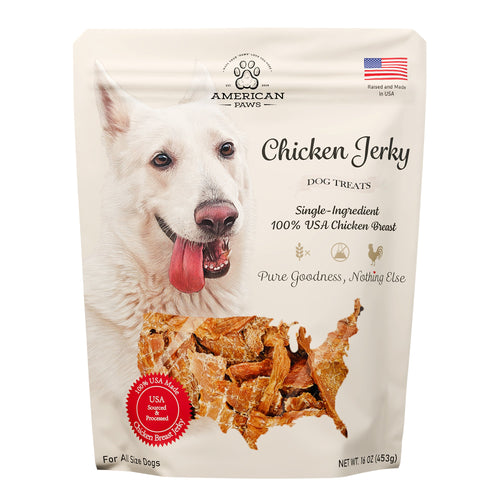
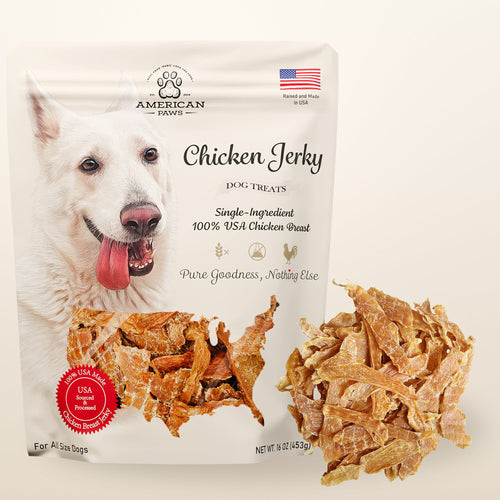
A chicken foot is a supervised chew. A small piece of boneless jerky serves a different job: quick rewarding during walks or training. If a dog does not handle bone-in chews well, consider single-ingredient whole-cut chicken jerky and break it into appropriate rewards.
Browse the American Paws chicken jerky collection for boneless chicken formats, or compare all American Paws dog treats when another protein or texture better matches the dog.
Frequently asked questions
Should I boil chicken feet for my dog?
No. Boiling cooks the small bones inside the foot. Do not serve a whole boiled chicken foot as a dog chew, even if the skin and cartilage feel soft.
Can I bake or air-fry chicken feet for my dog?
No. Baking, roasting, grilling, frying, and air-frying create cooked bone-in feet. Crisp texture does not make cooked poultry bones safe for dogs.
Can I dehydrate chicken feet at home?
Dehydration is technically possible, but a dry appearance does not validate pathogen control. USDA home-jerky guidance calls for poultry to reach 165°F before drying, which creates cooked bone. Without a validated animal-food process, choose a commercial dehydrated chew rather than improvising.
Should I wash raw chicken feet first?
No. FDA guidance says not to rinse raw poultry because splashes can spread bacteria. Keep it contained, then wash hands and clean and disinfect everything that contacted the raw item.
How do I know dehydrated chicken feet are bad?
Discard them for mold, condensation, unexpected softness or moisture, insects, rancid or musty odor, or damaged packaging. When in doubt, throw the chew away rather than trying to redry or trim it.
Choose a preparation method you can manage safely
The safest response to “cook chicken feet for dogs” is to avoid conventional cooking altogether. Raw handling demands serious sanitation, and home dehydration needs more validation than a temperature dial and a visual dryness check can provide.
For a straightforward option, choose American Paws dehydrated chicken feet, follow the package directions, inspect each piece, and supervise. If bone-in chews do not fit your dog, explore other American Paws dog treats rather than forcing the format. Preparation should reduce uncertainty—not create a new cooked-bone or food-safety problem.