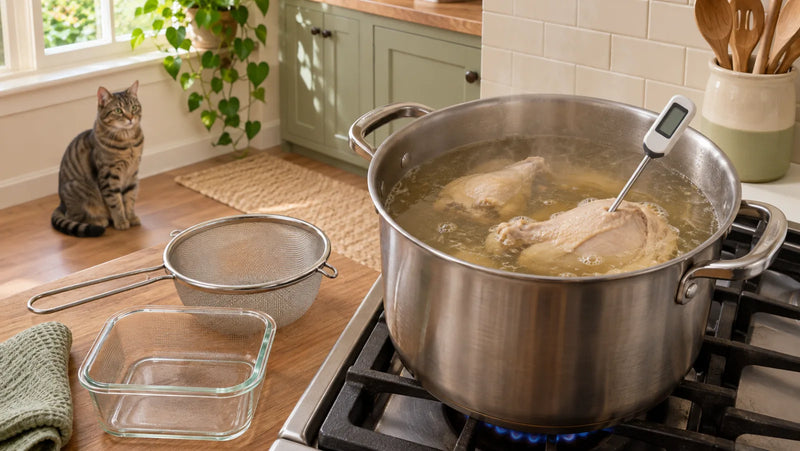
Can puppies eat tuna? Some fully weaned puppies may try one tiny flake of plain fully cooked tuna or water-packed, no-salt-added canned light tuna if their veterinary feeding plan allows it. Make the first flake no larger than one piece of the puppy's usual kibble, and make it smaller for a toy-size mouth.
Tuna should not become a regular puppy treat. Predator fish can accumulate mercury, a human-size bite is proportionally large for a small growing body, and every tuna snack displaces part of the complete-and-balanced growth diet. A trivial plain flake is usually a portion question, not a poisoning emergency; repeated servings, large amounts and unsafe tuna forms are different decisions.
Can Puppies Eat Tuna? The Short Answer
| Tuna form | Puppy answer | Main reason |
|---|---|---|
| Water-packed, no-salt-added canned light tuna | One tiny drained flake may fit an eligible puppy | It is the lowest-error tuna form, but still not a routine reward |
| Plain fresh tuna cooked to 145°F | One tiny boneless flake may fit | Cooking and bone inspection reduce food-safety and physical risks |
| Albacore or white tuna; yellowfin tuna | Skip for a puppy treat | These types generally carry more mercury than canned light tuna |
| Bigeye tuna | Skip | It appears in FDA's highest-mercury human category |
| Oil-packed, brined, salted or flavored tuna | Skip | Added fat, sodium and ingredients create avoidable variables |
| Raw tuna, sushi, poke or tuna tartare | Do not deliberately offer | Raw animal protein adds pathogen and handling risk |
| Tuna salad, melt, casserole or seasoned pouch | Skip | May contain mayonnaise, onion, garlic, salt, dairy or other unsuitable ingredients |
For a mature dog's broader form and accidental-exposure decisions, use the adult-dog tuna guide. Cats have different nutritional risks, covered in the cat-specific tuna guide. A puppy needs a growth-stage answer rather than a smaller copy of either one.
Pass the Four Puppy Gates Before Any Taste
- Fully weaned: the puppy is no longer relying on milk or formula and reliably eats a complete-and-balanced growth food.
- Veterinary fit: there is no fish reaction, medical restriction, elimination trial or prescription diet that excludes tuna or people food.
- Safe form: the tuna is plain, fully cooked and boneless, or canned light tuna packed in water with no salt added.
- Puppy-size portion: one soft flake no larger than one normal piece of the puppy's kibble, with direct supervision.
A newly weaned puppy does not need tuna exposure. Measured pieces of the puppy's own growth food are usually the most predictable first training rewards. The puppy-treat selection guide explains how readiness, texture, piece size and calories change through growth.
Which Tuna Form Is the Lowest-Error Choice?
If a veterinary professional has not restricted tuna and you choose to offer one taste, look for a can that says light tuna, packed in water and no salt added. Read the ingredient list rather than relying on the front. The simplest candidate lists tuna and water, with no broth, oil, vegetable ingredients, flavoring or seasoning.
“Light” is not the same as “white.” White tuna normally means albacore. The FDA's fish-advice questions and answers place canned light tuna, albacore or white tuna, yellowfin and bigeye in different mercury categories for people. That is useful evidence that the word tuna does not describe one mercury profile. It is not a puppy feeding schedule, and human serving sizes must not be converted into canine portions.
Drain the water completely. Do not “fix” brined or oil-packed tuna by rinsing it; start with the correct can. Skip any pouch with flavors, spicy sauce, lemon pepper, garlic, onion or an ingredient list you cannot fully verify.
Why Mercury Makes Tuna a Poor Routine Puppy Treat
The Merck Veterinary Manual mercury review explains that predatory species can bioaccumulate mercury and that exposure reduction is central to prevention. Tuna sits higher in the food chain than many smaller fish. Species, size, age and harvest location all affect the concentration.
Mercury concern is mainly about accumulated exposure, not a single kibble-size flake. That distinction matters. There is no reason to panic after a healthy puppy steals one tiny plain piece, but there is also no reason to turn tuna into a daily topper or a training jar.
A puppy's current body is small and growing. The same human spoonful represents more food relative to that body and takes a larger share of the day's nutritional space than it would for an adult person. This article does not publish a mercury dose or “safe cans per week” number because no authoritative puppy schedule supports one.
How Much Tuna Can a Puppy Try?
Start and stop with one soft flake no larger than one piece of the puppy's usual kibble. For a toy-size puppy, tear that flake smaller. Place it separately or hand it calmly; do not mix a spoonful into the whole meal, where the real amount becomes hard to see.
Then observe. Do not introduce tuna on the same day as another new food. Watch for vomiting, diarrhea, itching, facial swelling, coughing, gagging or a sudden behavior change. Stop and call the veterinary team for a reaction.
If tuna is ever offered again with veterinary approval, it still shares one extras budget with chews, toppers, table tastes and training treats. The puppy extras-budget guide explains why complete growth food should supply at least 90% of calories and all extras together stay within the remaining small share. One flake “now and then” is not permission for a weekly routine.

Why Raw Tuna Is Not a Puppy Treat
Raw tuna adds risk without improving the puppy decision. The CDC pet-food safety guidance does not recommend raw pet food or treats for dogs and cats because raw animal protein can carry germs such as Salmonella and Listeria. WSAVA's current dog-treat guide likewise identifies pathogen transmission from unprocessed raw animal treats.
Raw sushi-grade marketing does not make tuna a puppy treat. Skip sashimi, poke, tartare, seared tuna with a raw center and any raw-fish scrap. These products may also include soy sauce, sesame oil, scallion, wasabi, spicy mayonnaise or other ingredients that create a separate exposure.
If using fresh tuna, follow the FDA's seafood handling guidance: keep raw seafood separate and cook finfish to 145°F. Cool the plain piece and inspect it carefully for bone before tearing off one tiny flake.
How to Prepare One Plain Tuna Flake
From a can
- Confirm canned light tuna, water-packed, no salt added.
- Read every ingredient and reject added broth, oil, seasoning or uncertain flavoring.
- Drain the tuna through a clean strainer; do not save the can liquid for the puppy.
- Spread a small amount with a clean fork and inspect it for hard or sharp material.
- Tear off one soft flake no larger than the puppy's ordinary kibble.
- Serve once, supervise and refrigerate the human leftovers promptly.
From fresh tuna
- Keep the raw fish and tools away from ready-to-eat food.
- Cook without salt, oil, butter, garlic, onion, sauce or spice to 145°F.
- Cool on a clean surface and remove skin, connective tissue and every bone.
- Take one kibble-size flake from the plain center; do not offer the seared or seasoned family portion.
The puppy's separate salmon guide uses the same plain, cooked and boneless gates but addresses salmon-specific hazards. For adult dogs, the salmon safety guide covers a different life stage. Use the broader dog fish safety overview when comparing species rather than assuming every fish has the same mercury, bone or raw-fish profile.
Tuna Is Not a Growth Food or Training Plan
Tuna flesh contains protein, but “contains protein” does not mean “complete for puppy growth.” A growing dog needs the right total balance of energy, amino acids, fatty acids, vitamins and minerals. Tuna from the human-food aisle is not formulated to provide that balance.
AAHA's nutrition-guideline table on nutritional risks and solutions treats table food, toppers and snacks as extras that can dilute the primary diet. Tuna also makes a poor repeat training reward: it is wet, hard to portion consistently, aromatic enough to crowd out other rewards and unnecessary when the puppy's own kibble can do the job.
For a different protein and texture decision, see the plain chicken-gizzard guide for puppies. Gizzard still requires full cooking, small cutting and veterinary fit, but it does not turn tuna into a routine option.
If Your Puppy Already Ate Tuna
If a healthy puppy ate one tiny flake of plain water-packed tuna and is acting normally, remove the rest, check the label and monitor. Do not induce vomiting or give a home remedy simply because the food was tuna.
Call the veterinary team or an emergency clinic promptly when:
- the amount was large relative to the puppy;
- the type, ingredients or amount are unknown;
- the tuna was raw, spoiled, heavily salted, oil-packed, brined or seasoned;
- the dish contained onion, garlic or another hazardous ingredient;
- the puppy swallowed part of a can, lid, pouch, skewer, bone or packaging;
- there has been repeated tuna feeding and the puppy now has weakness, tremors, incoordination or another neurologic change; or
- there is choking, trouble breathing, repeated vomiting, collapse, marked lethargy or another severe sign.
Bring the container or a clear photo of the label and report the puppy's current weight, amount, tuna form, ingredients, time and signs. That evidence is more useful than guessing from the smell or color.
Frequently Asked Questions
Can puppies eat canned tuna in water?
A fully weaned puppy may be able to try one drained kibble-size flake of canned light tuna packed in water with no salt added, if the veterinary feeding plan allows it. Read the complete ingredient list and keep tuna out of the regular reward schedule.
Can puppies eat albacore or white tuna?
Skip it as a puppy treat. Albacore or white tuna generally contains more mercury than canned light tuna. There is no benefit that requires exposing a puppy to the higher-mercury form.
Can puppies eat raw tuna or sushi?
No deliberate serving. Raw seafood can carry pathogens, and sushi or poke may add soy sauce, scallion, spicy mayonnaise, sesame oil or other ingredients. Choose a tiny fully cooked plain flake or skip tuna.
Can puppies eat tuna every week?
Tuna is a poor scheduled puppy treat because mercury exposure accumulates and tuna can displace balanced growth food. If a veterinarian has a specific reason to include fish, ask for the species, preparation and amount rather than creating a weekly tuna routine.
Is tuna or salmon a better puppy choice?
They are different decisions. Tuna raises a stronger repeated-mercury concern; salmon has raw-fish, bone and preparation hazards. A puppy does not need either as a treat, and the veterinary team can recommend an appropriate fish, if any, for the individual growth plan.
Keep Tuna an Exception, Not a Habit
The practical answer is narrow: fully weaned, medically eligible puppy; one tiny flake; canned light tuna in water with no salt added or plain fresh tuna cooked to 145°F; no bone, raw fish, oil, brine or seasoning; and no regular schedule. Complete growth food remains the meal and the most useful repeat reward.
American Paws does not make a tuna treat. For repeat training, browse the American Paws training-treat collection or all American Paws dog treats, then verify the exact live label, ingredients, piece size and puppy fit with the veterinary team before choosing one.