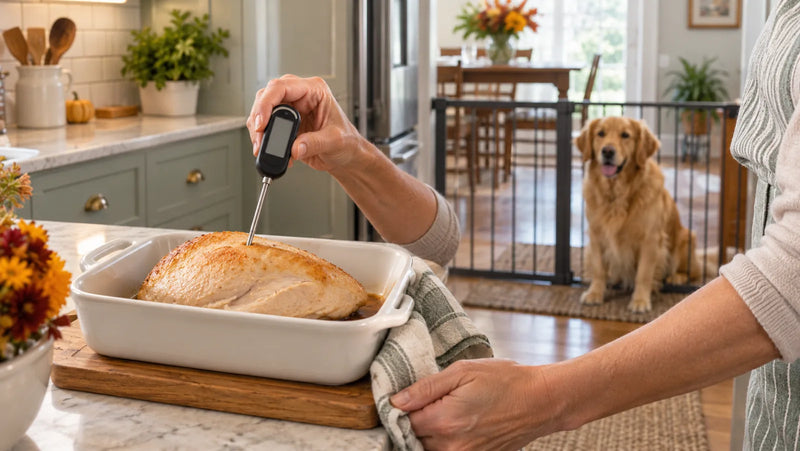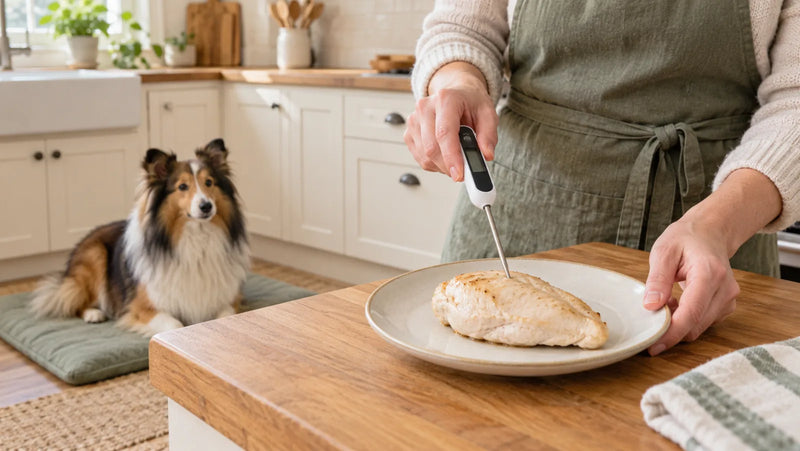

Yes—for many healthy dogs, a small amount of plain, peeled, fully cooked sweet potato can be a good occasional treat. If you are asking, “are sweet potatoes good for dogs?” the balanced answer is that they contribute dietary fiber and, especially in orange-fleshed varieties, beta-carotene. When cooked until fork-soft, the flesh is also easier to chew and portion than a dense raw piece.
Those benefits have clear limits. Sweet potato is a starchy, calorie-containing extra, not a medicine, vitamin-A dose, weight-loss food, or complete meal. A dog with diabetes, a veterinary weight plan, chronic digestive disease, or a prescription diet should receive it only when the veterinary team approves the exact form and amount.
Are sweet potatoes good for dogs? The balanced answer
Plain cooked sweet potato can add variety, fiber, beta-carotene, and a soft texture to a healthy dog's small treat allowance. It is naturally very low in fat when nothing is added, and a tiny orange cube can be divided into several tastes. Those are reasonable reasons to use it.
“Good” does not mean necessary. Complete and balanced dog food should already supply the essential nutrients for the dog's life stage. Sweet potato should not replace the main diet, correct a suspected deficiency, or be added freely because it is a vegetable.
Preparation also changes the answer. The useful form is peeled flesh cooked completely soft, cooled, and served plain in a dog-size piece. Raw chunks, skin, fries, chips, casseroles, and candied dishes bring different texture or ingredient questions. This page owns the benefits-and-limits decision; focused guides linked below own those forms.
What benefits can plain cooked sweet potato offer?
It contributes dietary fiber
Sweet potato contains dietary fiber. Fiber is part of the carbohydrate fraction that is not digested in the same way as starch, and different fibers interact with the gastrointestinal tract differently. A modest food portion can contribute some fiber without pretending to be a therapeutic dose.
That distinction matters because “contains fiber” is not the same as “treats diarrhea” or “cures constipation.” Fiber response depends on the type, amount, the dog's current diet, hydration, health, and individual tolerance. Adding too much too quickly can cause gas, bloating, loose stool, vomiting, or reduced interest in the regular food.
Introduce one tiny plain taste while the main diet stays unchanged. Our guide to introduce a new food slowly explains how to keep the first trial simple enough to interpret. Ongoing stool trouble, pain, blood, repeated vomiting, poor appetite, or lethargy needs veterinary assessment rather than more sweet potato.
Orange flesh supplies beta-carotene
The orange color comes largely from carotenoids, especially beta-carotene. The USDA Agricultural Research Service's sweet-potato overview describes orange-fleshed varieties as rich in beta-carotene and also notes their fiber content. White, cream, yellow, orange, and purple varieties do not have identical carotenoid profiles, so one orange-flesh number should not be assigned to every root.
Beta-carotene is a provitamin A carotenoid: it can serve as material from which a dog's body obtains vitamin A. The veterinary review by Green and Fascetti explains that dogs can absorb and use beta-carotene, while the quantitative conversion efficiency in dogs has not been established and can be affected by the food matrix and other factors.
That makes beta-carotene a real component, not a treatment promise. A few orange cubes should not be marketed as an eye remedy, immune booster, skin-and-coat cure, or measured vitamin-A supplement. The Merck Veterinary Manual's nutrition guidance keeps the distinction clear: dogs can use plant beta-carotene as a vitamin-A precursor, but complete and balanced food is what reliably covers life-stage nutrient requirements.
Fully cooked flesh is softer and easier to portion
Cooking until the flesh mashes easily with a fork changes a hard root into a soft food that can be resized for the dog. That improves chewability and makes a measured amount easier to see. It is the honest version of the common “easy to digest” claim.
It is not a universal digestive guarantee. A dog may still react to a new fiber and starch source, and a soft texture does not make a large serving appropriate. The benefit is relative: plain fork-soft flesh is easier to chew and handle than a dense raw chunk, not automatically gentle for every stomach.
Where the benefits stop
Sweet potato can contribute useful food components, but a treat-size amount is not designed to change a disease outcome. It should not be used to treat constipation, diarrhea, inflammation, diabetes, obesity, vitamin deficiency, or food allergy. It is not inherently hypoallergenic, and adding it during an elimination trial can make the result harder to interpret.
Likewise, finding sweet potato in a commercial dog food does not mean a home-added root balances a meal. A complete diet is formulated around nutrient amounts, ratios, calorie density, digestibility, and life stage. One wholesome-sounding ingredient cannot perform that formulation work by itself.
The same boundary applies to whole-diet debates. An occasional plain piece does not prove or disprove the suitability of a grain-free food, and it should not be used to diagnose or prevent diet-associated heart disease. Evaluate the complete diet with the veterinary team, not one ingredient in isolation.
Sweet potato is still a starchy, calorie-containing extra
The sweetness in the name can distract from the practical point: this is a starch-rich root. It contains carbohydrate and calories, and cooking or drying changes water content and calorie density. A larger scoop can consume a meaningful share of a small dog's daily extras even when it contains no butter or sugar.
A composition reference is not a dog serving
The USDA FoodData Central reference for plain baked sweet-potato flesh lists, per 100 grams, about 90 calories, 20.71 grams of carbohydrate, 7.05 grams of starch, and 3.3 grams of dietary fiber. It also records a substantial beta-carotene value for that orange-fleshed reference food.
Those numbers describe human food composition; 100 grams is not a recommended dog portion. Cultivar, flesh color, cooking method, and water loss can change the result. The purpose of the reference is to show that sweet potato has both benefits and energy—not to build a one-size-fits-all feeding chart.
Fresh cooked mash and a dry chewy slice also should not be compared spoon for spoon. Dehydration removes water and concentrates the remaining food by weight, while added oil, butter, syrup, or sugar increases energy further.
Count every extra in the same calorie budget
The World Small Animal Veterinary Association's treat guide recommends keeping all treats below 10% of a dog's daily calories while complete and balanced food supplies at least 90%. Ten percent is a ceiling for a typical healthy dog, not a target and not a sweet-potato allowance.
Training treats, chews, dental products, toppers, table bites, fruit, and sweet potato all share that small space. Our daily dog-treat calorie guide shows how to think about the total. When the day's extras are already assigned, the vegetable is not free.

Is sweet potato good for a dog with diabetes?
Do not add it casually. Sweet potato contributes carbohydrate, starch, and calories, and diabetes management depends on a consistent relationship among food amount, meal timing, activity, medication, and the individual dog's response. A generic “high glycemic” or “low glycemic” label cannot choose a safe portion.
The AAHA diabetes dietary guidance emphasizes a complete and balanced diet, consistent timing and quantity, and management of post-meal glucose. Every treat belongs in that plan. Give sweet potato only when the veterinarian includes the exact preparation, amount, and timing; do not swap it in based on an internet serving table.
Some diabetic dogs may have other needs—weight loss, pancreatitis management, kidney disease, or a prescribed fiber level—that change the decision again. “Vegetable” is not a medical exemption.
Can sweet potato fit a weight-loss plan?
It can fit some plans, but it does not cause weight loss. The useful question is whether a measured piece replaces another planned reward inside the dog's calorie target. Adding it on top of the regular ration and existing treats adds calories, even when the ingredient itself is plain.
The AAHA healthy-weight feeding guidance uses the complete-diet-versus-extras split to protect nutrition while controlling energy. A veterinary weight plan may use an even smaller extras allowance. Reserving part of the dog's measured kibble for rewards is often easier to calculate than adding a new food.
Do not compare sweet potato with pumpkin by reputation. Their water, calories, fiber, and serving formats differ. Our sweet potato vs pumpkin comparison uses same-weight references and chooses by job instead of declaring one vegetable universally healthier.
The serving form decides whether the benefit stays simple
Keep this gate short and consistent:
- Use peeled flesh. Removing the skin is the conservative routine because the peel can be tougher to chew and digest. The sweet-potato skin safety guide owns the full peel question.
- Cook until completely soft. Dense raw pieces are difficult to chew and can become physical hazards. Use the raw sweet-potato safety guide for the non-toxic-versus-safe distinction and accidental-ingestion response.
- Cool and resize. Mash or cut the flesh for the dog's mouth and chewing style. Our plain sweet-potato preparation guide owns the steam, boil, bake, doneness, and sizing details.
- Serve it plain. Skip butter, oil, salt, sugar, syrup, molasses, honey, marshmallow, seasoning blends, onion, garlic, and chives.
Restaurant fries, frozen fries, chips, pies, casseroles, and candied yams are different foods after oil, salt, coatings, sugar, and seasonings enter the picture. The sweet-potato fries safety guide handles that format without pretending it equals plain fork-soft flesh.
Which dogs should skip it or ask a veterinarian first?
Sweet potato is optional, and “healthy food” does not override an individual care plan. Ask before offering it—or use an already approved reward—when a dog has:
- diabetes or another condition requiring consistent carbohydrate and meal timing;
- obesity or an active veterinary weight-loss plan;
- chronic vomiting, diarrhea, constipation, pancreatitis, or another gastrointestinal condition;
- kidney disease or another prescribed nutrient restriction;
- a prescription, therapeutic, hydrolyzed, novel-protein, or elimination diet;
- a known sweet-potato reaction or an unresolved food sensitivity; or
- trouble chewing, swallowing, or a history of gastrointestinal obstruction.
The Tufts veterinary nutrition guidance on therapeutic diets explains why extra treats and table foods can undermine the purpose of a carefully selected diet. “Only a little” can still add an unapproved ingredient or nutrient load.
Sweet potato or pumpkin depends on the job
Both can be plain cooked extras, but they are not interchangeable by volume or weight. Sweet potato is starchier and more energy-dense than many pumpkin preparations, while pumpkin's water and concentration vary between fresh flesh and canned puree. Texture and intended use matter as much as a headline nutrient.
Keep the decision modest: choose one food, one plain form, and one measured trial. Do not combine vegetables to treat a stool problem or add volume to a weight-loss diet without veterinary direction. The dedicated comparison linked above keeps the full nutrient table and use-case decision out of this benefits page.
Frequently asked questions
Can dogs have sweet potato every day?
Most dogs do not need it every day. Occasional small portions are easier to fit around training rewards and other extras. If it appears routinely, the veterinary team should confirm the amount fits the dog's calories, complete diet, stool quality, and health plan.
Does sweet potato help a dog's digestion?
It contributes dietary fiber, and some dogs tolerate a tiny cooked portion well. That does not make it a digestive treatment. Too much or a sudden change can cause gas, loose stool, vomiting, or appetite changes. Ask a veterinarian about persistent digestive signs instead of increasing the portion.
Is sweet potato good for puppies?
A weaned puppy eating an appropriate complete growth diet may try one tiny peeled, fork-soft, cooled piece if the veterinarian has not restricted extras. Growth nutrition has less room for displacement, so keep the taste small and do not use sweet potato to balance a homemade puppy diet.
How much sweet potato can a dog eat?
There is no universal spoonful by body size. The answer depends on the prepared food's calories, the dog's daily energy target, health, and every other extra. Start with one tiny piece for tolerance, then use the amount approved inside the full treat budget rather than treating 10% as a goal.
Does beta-carotene make sweet potato a vitamin-A supplement?
No. Orange sweet potato supplies beta-carotene, a vitamin-A precursor that dogs can use, but conversion and food composition vary. A grocery-food portion is not a standardized supplement dose, and a complete and balanced diet should already meet the dog's vitamin-A requirement.
Keep the benefit modest and the limits visible
Plain cooked sweet potato can be good for many healthy dogs as an occasional extra: it contributes fiber and beta-carotene, and fork-soft flesh is easier to chew and portion than a dense raw piece. It remains a starchy food with calories, individual tolerance varies, and none of those nutrients turns it into medicine or a complete diet. For the wider produce picture, see our overview of which vegetables dogs can eat.
American Paws does not currently sell a sweet-potato product, so we will not point you to an imaginary SKU or imply that our catalog contains one. If a vegetable is not the right fit, browse all current American Paws dog treats and compare real ingredient lists, calorie information, texture, and purpose. When diabetes, weight loss, digestive disease, or a prescription diet changes the rules, let the veterinary plan make the final decision.