
Can dogs eat sweet potato fries? Restaurant and packaged fries should stay off the dog menu because oil, salt, coatings, dips, and seasonings make the finished food unpredictable. A few plain homemade strips may fit as an occasional treat when the sweet potato is peeled, baked without oil or seasoning until completely soft, cooled, resized, and portioned conservatively.
The word “homemade” is not a health halo. A home recipe loaded with oil, salt, garlic powder, maple syrup, or spicy seasoning is still human food, not a dog treat. The useful exception in this guide is closer to plain baked sweet potato cut into a fry shape—not a crisp restaurant fry.
Can dogs eat sweet potato fries? The quick answer
Use this simple decision rule:
- Restaurant fries: do not offer them intentionally. The full oil, salt, seasoning, and cross-contact history is usually unknown.
- Frozen human fries: usually skip them. Many are pre-oiled, salted, coated, sweetened, or seasoned before they reach your freezer.
- Plain homemade strips: a small amount may be suitable for a healthy dog when made from peeled sweet potato with no added ingredients and cooked until soft.
- Stolen fries: check the ingredients, amount, dog, and symptoms before deciding whether observation or a veterinary call is appropriate.
The AKC's sweet-potato guidance recommends cooked sweet potato with the skin removed and a small first amount. It warns against dense raw pieces because they are difficult to chew and may upset the stomach or obstruct. Our separate raw sweet-potato safety guide owns that raw-form question.
Why restaurant sweet potato fries are not dog treats
Sweet potato is only one part of a restaurant fry. By the time it reaches the table, the strip may also contain frying oil, batter or starch coating, salt, sugar, spice blends, garlic or onion powder, and residue from a shared fryer. Dips add another unknown recipe.
One ordinary stolen fry is not automatically a poisoning emergency. The problem is that “sweet potato fry” does not describe a consistent food, and intentionally sharing it adds avoidable variables with no benefit to the dog's complete diet.
Frying oil and concentrated fat
Deep-fried food holds more fat and calories than plain cooked sweet potato. A rich snack can cause vomiting or diarrhea, and a large fatty meal can contribute to pancreatitis in susceptible dogs. Dogs with a pancreatitis history or a prescribed low-fat plan should not be used to test how much restaurant oil they tolerate.
The ASPCA's people-food sharing guidance keeps most nutrition in the regular diet and warns that too much fat or sugar can lead to pancreatic inflammation. A crisp, greasy strip is therefore the wrong model for homemade sweet potato fries for dogs.
Salt, coatings, sugar, and sauces
Salt may be applied before cooking, after cooking, or in a seasoning blend. Batter can add flour, starch, sugar, or milk ingredients. Ketchup, aioli, ranch, barbecue sauce, honey mustard, and spicy dips add their own salt, sugar, fat, and seasonings.
A small lick of ordinary ketchup is a different exposure from drinking a cup of sauce, but there is no reason to turn a simple root into a recipe audit every time the dog begs. The AKC's human-food safety guidance recommends small, plain portions without seasoning, salt, sugar, oil, or butter.
Onion and garlic powder can hide in seasoning
Seasoned fries and dips may contain onion or garlic in powdered form even when no pieces are visible. The ASPCA people-food safety list explains that onion, garlic, and chives can irritate the gastrointestinal tract and damage red blood cells. Risk depends on the ingredient, amount, dog size, and repeated exposure; do not assume one speck is fatal, and do not assume an unknown order is harmless.
If the menu, package, or restaurant cannot confirm the ingredients, treat the recipe as unknown. Keep the receipt or ingredient panel if the dog steals more than a trivial amount, because the veterinary team will need specifics.
When homemade sweet potato fries can be dog-safe
A dog-shareable version meets every condition below:
- The sweet potato is firm and free from mold, leaking areas, and rot.
- It is washed, peeled, and cut into even strips.
- The pan, knife, and work surface are clean.
- No oil, butter, salt, sugar, syrup, flour, starch coating, spice, onion, garlic, or dip is added.
- The strips are baked until the centers are completely soft, not left dense for crunch.
- They cool fully and are recut into pieces the individual dog can manage.
- The portion stays small and counts with every other extra that day.
Removing the peel is the conservative routine. The peel is not being called poisonous, but it can be tougher to chew and digest. If you need the form-specific explanation, read our sweet-potato skin safety guide.
How to make plain baked sweet potato strips for a dog
- Wash the whole sweet potato under running water, then peel it.
- Cut even narrow batons, about 1/4 inch thick. That is a cooking shape, not the final serving size.
- Arrange them in one layer on clean parchment paper. Add nothing.
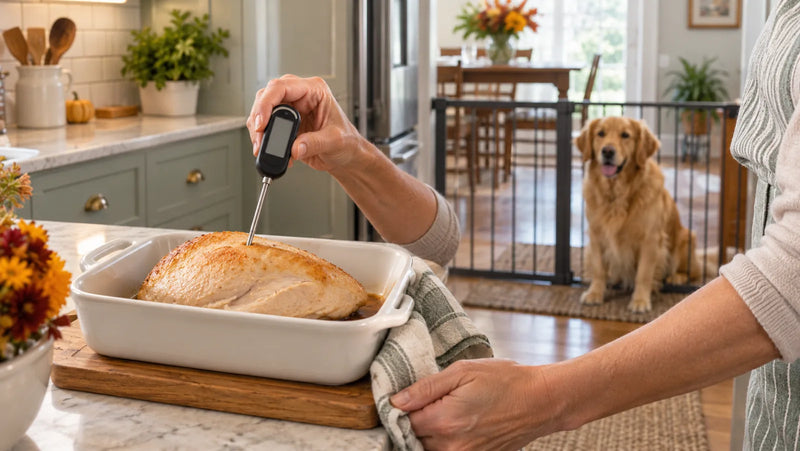
- Bake in a 400°F oven. Begin checking around 15 minutes, turn the strips if needed for even cooking, and continue until several centers mash easily with a fork.
- Cool the strips completely.
- Re-cut one small serving into soft, dog-size bites; refrigerate the rest promptly in a covered container.
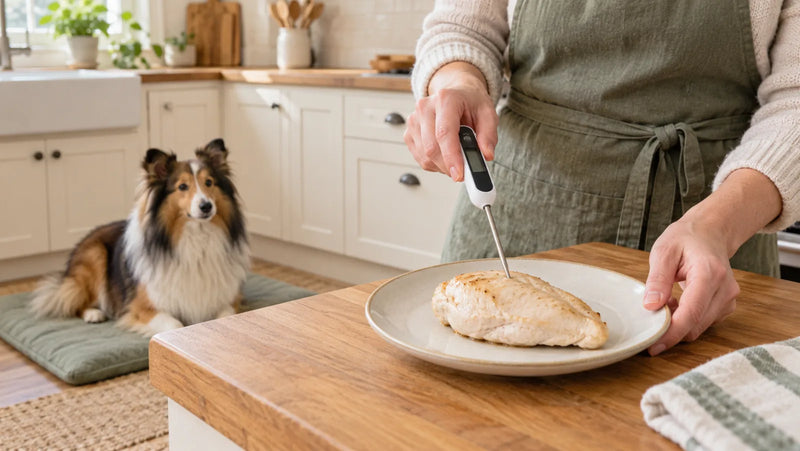
Oven performance and strip thickness vary, so a timer cannot declare them safe. The center—not the browned edge—must be soft. If the outside is dry but the inside remains firm, continue cooking or mash the finished flesh instead of giving the dog a dense chew.

An air fryer can cook plain strips, but use a clean basket with no oily or seasoned residue and the same soft-center standard. A conventional parchment-lined pan is easier to inspect and avoids residue from wings, garlic fries, or other seasoned foods.
This article gives only the narrow fries-format method. For steaming, boiling, whole-root baking, kitchen hygiene, and broader sizing context, use the complete plain sweet-potato preparation guide.
How much homemade sweet potato fry can a dog have?
Start with less than a normal human serving. The amounts below are conservative first tastes of plain, fully cooked sweet-potato flesh for a healthy adult dog, not daily prescriptions:
| Dog size | Conservative first taste | Serving form |
|---|---|---|
| Under 10 lb | 1/2 teaspoon total | Mashed or two pea-size soft pieces |
| 10–25 lb | 1 teaspoon total | Several small soft bites |
| 26–50 lb | 2 teaspoons total | Re-cut from one strip |
| 51–75 lb | 1 tablespoon total | Several soft pieces, not a handful |
| Over 75 lb | 1–2 tablespoons total | Begin at one tablespoon |
Wait and watch before offering more on another day. A dog's main complete food should supply the nutrition; sweet potato is an optional extra. Dogs with diabetes, weight-management plans, chronic gastrointestinal disease, or prescription diets need veterinary guidance rather than a generic table.
All treats, chews, toppers, and table tastes together should generally stay within about 10% of daily calories. Our daily dog-treat calorie guide explains why a calorie budget is more useful than counting fries.
What to do if your dog ate sweet potato fries
Check the order and estimate the amount
Remove the remaining fries and dips. Then record:
- the restaurant, brand, or recipe;
- the complete ingredients or menu description, including seasoning and dip;
- the number and approximate size of missing fries;
- when the dog ate them;
- the dog's weight, age, health conditions, and medications; and
- any vomiting, diarrhea, drooling, weakness, pain, or behavior change.
Take a photo of a similar fry and keep the package or receipt. “A few” is not precise enough when the veterinary team is comparing a toy breed with a 70-pound dog.
When observation may be reasonable
One small plain or lightly salted fry stolen by a symptom-free healthy medium or large dog is lower concern than a whole seasoned order eaten by a small dog. A veterinarian may advise home observation after reviewing the recipe, amount, and dog.
Do not turn that example into a universal guarantee. Check for onion or garlic powder, rich sauce, heavy grease, and other missing objects such as packaging or skewers. Call your veterinarian if the recipe or amount is uncertain, the dog has a relevant medical condition, or any symptoms begin.
When to call a veterinarian promptly
Contact a veterinarian or emergency clinic promptly for an unknown or large amount; seasoning that contains onion or garlic; a rich or unknown dip; a dog with pancreatitis history or a prescribed low-fat or low-sodium plan; or repeated vomiting, diarrhea, marked lethargy, abdominal pain, a swollen abdomen, weakness, pale gums, tremors, trouble breathing, or collapse.
Some problems appear later. Onion-family ingredients can affect red blood cells after the meal, while a large fatty exposure may cause digestive signs over time. Follow the monitoring window given by the veterinary professional instead of assuming that one normal hour ends the concern.
What not to do after a fry theft
- Do not induce vomiting unless a veterinarian specifically directs it.
- Do not give oil, milk, bread, pumpkin, or another home remedy to “absorb” seasoning or fat.
- Do not feed a large meal to dilute the fries without professional guidance.
- Do not guess at a restaurant recipe when the business or package can provide the actual ingredients.
- Do not wait on emergency signs such as breathing difficulty, collapse, severe weakness, or repeated unproductive retching.
Dogs that should skip sweet potato fries
Even the plain homemade version may not fit a dog with a pancreatitis history, prescribed fat or sodium restriction, diabetes, kidney or heart disease, chronic gastrointestinal disease, an active weight-loss plan, swallowing difficulty, or a prescription diet. A dog in a food-allergy elimination trial must eat only items approved for that trial.
Puppies, toy breeds, seniors with dental trouble, and fast gulpers need especially small soft pieces. If “fries” encourages you to leave long firm strips, mash the sweet potato instead or choose a different reward.
Frequently asked questions
Can dogs eat air-fried sweet potato fries?
Only if they are peeled, completely plain, cooked in a clean basket, and soft in the center. No oil, salt, coating, seasoning, or dip belongs in the dog portion. Because air fryers are often used for seasoned foods, inspect and clean the basket before use.
Can dogs eat frozen sweet potato fries?
Do not offer them straight from the freezer, and do not assume the bag contains plain sweet potato. Human frozen fries may be pre-oiled, salted, coated, or seasoned. Read every ingredient; it is usually simpler to bake a plain peeled root yourself.
Can puppies eat homemade sweet potato fries?
A weaned puppy may be able to try a tiny soft plain piece after veterinary approval, but puppy food must remain the nutritional priority. Re-cut the strip, supervise, and do not use a long chewy piece as a teething toy.
Is one restaurant sweet potato fry an emergency?
Not automatically. One small ordinary fry in a healthy dog is different from a large amount, a heavily seasoned order, or fries covered in an unsafe dip. Check ingredients and monitor, then call the veterinarian when the recipe, amount, dog, or symptoms create uncertainty.
Keep the sweet potato plain and the portion small
Restaurant-style sweet potato fries solve a human craving for crispness; a dog does not need the oil, salt, coating, or seasoning that creates it. If you share sweet potato, make a separate plain batch, cook it fully soft, cool it, re-cut it, and serve a measured amount.
Sweet potato is one optional extra among many dog treats, not a meal or a health treatment. American Paws does not currently sell a sweet-potato product, so we will not link you to an imaginary SKU; browse all our dog treats for the real rewards currently available and choose a size and ingredient list that fit your dog.