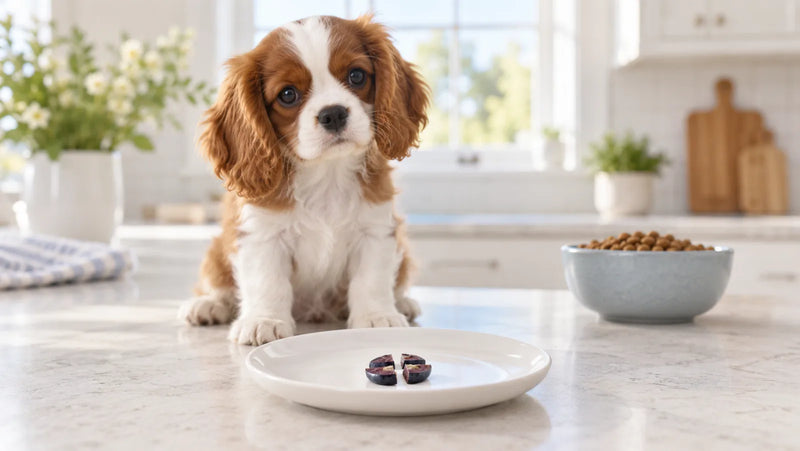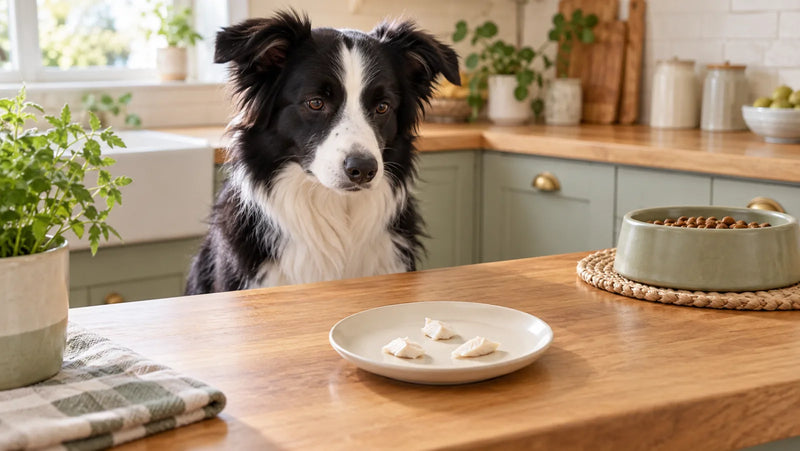

Can dogs eat raw sweet potatoes? Raw sweet potato is not considered poisonous to dogs, but it is not a safe treat to serve intentionally. Dense raw pieces are difficult to chew, may upset the stomach, and can become a choking or intestinal-blockage hazard.
If you want to share sweet potato, the conservative approach is to peel it, cook it completely until soft, let it cool, and mash it or cut it into pieces that fit your dog. Keep it plain. If your dog has already swallowed a raw chunk, the size of the piece, the size of the dog, and any symptoms determine how quickly to call a veterinarian.
Can dogs eat raw sweet potatoes? The short answer
Do not offer a dog a raw sweet potato as a chew, snack, or food-prep sample. The concern is not that one tiny bite automatically poisons a dog. It is that a firm, starchy root can be swallowed in a piece too large to pass safely or can cause digestive upset.
The American Kennel Club's sweet-potato guidance recommends serving sweet potato cooked and peeled. It specifically warns that raw sweet potato is difficult to chew, may upset a dog's stomach, and can potentially cause an intestinal blockage. Soft consistency also reduces the risk for dogs that tend to gulp food.
That leads to a useful distinction:
- Toxicity question: sweet potato itself is not classified as poisonous to dogs.
- Serving-safety question: a dense raw piece is still the wrong texture to hand over intentionally.
- Accident question: a tiny well-chewed bite is a different event from a whole slice or large chunk swallowed by a small dog.
Raw sweet potato is not a solanine problem
Sweet potato is not the same plant as white potato
The shared word potato causes a lot of bad advice online. The USDA Agricultural Research Service explains that sweet potato is not related to white potato. Sweet potato is Ipomoea batatas, a storage root related to morning glory. White potato is Solanum tuberosum, a tuber in the nightshade family.
Because they are different plants, warnings about solanine in green or sprouted white potatoes should not be copied onto sweet potatoes. This article does not call raw sweet potato toxic, and it does not use white-potato chemistry to explain the risk.
Non-toxic does not mean safe in every form
The ASPCA lists Ipomoea batatas as non-toxic to dogs. That is reassuring about classic poison risk. It does not mean a dog can safely swallow any amount, any size, or any preparation.
A non-toxic object can still choke a dog or block the digestive tract. A non-toxic food can still cause vomiting or diarrhea when eaten raw or in excess. “Not poisonous” is therefore only the first safety check, not permission to use a whole raw root as a dog treat.
Why raw sweet potato is risky for dogs
Dense pieces are difficult to chew
Raw sweet potato is much firmer than a fully cooked piece. A dog that bites off a chunk may not grind it into small fragments before swallowing. That matters most for small dogs, puppies, seniors with dental problems, dogs that gulp food, and any dog offered a thick round or wedge.
A piece can lodge in the mouth, throat, or esophagus before it ever reaches the stomach. Sudden gagging, panic, pawing at the mouth, heavy drooling, repeated swallowing, or trouble breathing after the bite is not a wait-and-see situation.
Raw starch and fiber may upset the stomach
Even when a piece reaches the stomach, raw sweet potato can be harder to digest than a soft cooked portion. A dog may develop gas, vomiting, loose stool, abdominal discomfort, or appetite changes. The more a dog eats, the greater the chance that simple curiosity becomes a digestive problem.
Do not assume that a dog with a strong stomach can handle a large raw serving. Individual tolerance varies, and a dog on a prescription diet or with diabetes, gastrointestinal disease, pancreatitis history, or a prior obstruction needs veterinary guidance before any new extra.
A swallowed chunk can obstruct
The obstruction risk comes from geometry: a firm piece may be too large to pass through a narrowing part of the gastrointestinal tract. It is a possibility, not a promise that every bite will block.
Cornell University College of Veterinary Medicine describes gastrointestinal foreign-body obstruction as an emergency. Warning signs can include vomiting, loss of appetite, abdominal pain, diarrhea, dehydration, and lethargy. Earlier veterinary assessment generally gives a dog more options than waiting for severe illness.
Why cooked sweet potato is safer
Cook until soft, peel, cool, and resize
Cooking changes the physical problem. A fully cooked sweet potato can be mashed with a fork and divided into a dog-size portion instead of remaining a dense raw chunk. Peel it first as the conservative choice: the skin is not the toxin issue, but it can be tougher to chew and digest, especially when left in a large strip.
Serve the cooked flesh plain. Skip butter, oil, salt, sugar, syrup, marshmallows, and seasonings. Onion and garlic mixtures make a kitchen side dish very different from plain sweet potato. Let it cool completely, then mash it or cut it small enough for the dog to chew without gulping.
This article is not a recipe and does not occupy the broader preparation query. The safety standard is simple: fully soft, plain, cooled, and sized to the dog.
For the step-by-step kitchen method, compare steaming, boiling, and baking in our guide to how to prepare sweet potatoes for dogs.
Dehydrated is a different texture—not an automatic safety guarantee
A properly processed thin dehydrated sweet-potato treat avoids handing over a dense raw chunk, but dehydration does not automatically make a treat soft or easy to digest. Some dried slices are flexible; others become firm or chewy. Thickness, moisture, and processing vary.
Choose a finished piece made for dogs, match it to the dog's mouth and chewing style, and supervise. Break or cut it only if the product directions permit. A gulper, a dog with weak teeth, or a dog that swallows chews in sections may need a different treat format entirely.

What to do if your dog ate raw sweet potato
Record the amount, size, time, and ingredients
Remove the remaining sweet potato so the dog cannot take another bite. Then collect the facts a veterinarian will need:
- your dog's weight, age, and known health conditions;
- the approximate number and dimensions of pieces missing;
- whether the dog chewed or swallowed a piece whole;
- when the ingestion happened;
- whether skin, packaging, a skewer, or another object is missing; and
- whether the sweet potato was plain or mixed with seasonings or sweeteners.
Take a photo of a similar piece or keep the remaining food. Do not rely on “one chunk” as a useful measurement; one person's chunk may be a crumb, while another's may be wider than a small dog's intestine.
Know when a small bite may be monitored
A tiny, well-chewed raw bite in a symptom-free medium or large dog is a lower mechanical risk than a large swallowed wedge. Because sweet potato itself is not classified as poisonous, a veterinarian may advise home observation after reviewing the dog, amount, and piece size.
That is not a blanket guarantee. Call your veterinarian if you are unsure what was swallowed, if your dog has a medical condition, or if any vomiting, diarrhea, drooling, appetite change, discomfort, or behavior change appears. Follow the professional's monitoring window rather than assuming that one normal hour ends the risk.
Call now for a large chunk, a gulper, or uncertainty
Contact your veterinarian or an emergency clinic promptly if a whole round, thick wedge, long strip of skin, or unknown amount is missing; if the dog is small relative to the piece; or if the dog tends to swallow food without chewing. You do not need to wait for repeated vomiting before asking whether imaging or examination is appropriate.
For a swallowed raw chunk, the primary concern is a possible choke or obstruction, so a veterinarian or emergency clinic is the first call. Poison control is most relevant when the food also contained a potentially toxic ingredient or the plant or preparation is uncertain.
Emergency signs after swallowing a raw piece
Choking or esophageal signs need immediate help
Go to the nearest emergency veterinary hospital immediately for trouble breathing, blue or very pale gums, collapse, unresponsiveness, or severe distress. Gagging, repeated swallowing, heavy drooling, regurgitating undigested material, or stretching the neck can mean a piece is caught in the throat or esophagus and also warrants urgent veterinary guidance.
The ASPCA's accidental-ingestion advice says trouble breathing, seizures, collapse, or unresponsiveness require immediate hospital care. Bring a sample or photo of what the dog ate when it is safe to do so.
Obstruction signs can appear later
A piece that passed through the throat can still cause trouble farther along. Watch for repeated vomiting or retching, loss of appetite, unusual drooling, lethargy, a painful or swollen abdomen, whining, restlessness, diarrhea, straining to defecate, or producing very little stool. More than one sign together, severe pain, bloody material, or persistent vomiting raises the urgency.
Do not wait several days for a suspected obstruction to resolve on its own. Call your veterinarian as soon as concerning signs appear and explain that a firm raw sweet-potato piece may have been swallowed.
If the sweet potato was mixed with an unknown or potentially toxic ingredient, contact your veterinarian, an emergency clinic, or ASPCA Animal Poison Control at (888) 426-4435. The hotline is not a substitute for emergency care when a dog cannot breathe.
What not to do at home
- Do not induce vomiting unless a veterinarian or poison specialist specifically directs it. Bringing a large firm piece back up can create another choking risk.
- Do not give bread, oil, milk, pumpkin, or extra food in an attempt to push a chunk through. There is no reliable home remedy for an obstruction.
- Do not give anti-vomiting medicine without veterinary direction. Suppressing a sign can delay recognition of a blockage.
- Do not pull blindly from the throat. If an object is not clearly visible and easily removable, you can push it deeper or be bitten by a panicked dog.
- Do not substitute poison-control reassurance for an obstruction exam. Non-toxic describes chemistry, not whether a piece can pass.
How to introduce plain cooked sweet potato
Once your veterinarian agrees that sweet potato fits the dog, introduce it like any new food: one small amount on an otherwise normal day, then watch digestion before offering more. Our guide explains how to introduce any new dog treat slowly without stacking several dietary changes at once.
Keep the dog's complete and balanced food unchanged. Sweet potato is an extra, not a meal replacement or a medical treatment. Count it with every other reward, topper, chew, and table sample in the daily dog-treat calorie budget.
If home preparation adds uncertainty, choose a ready-made reward whose size, ingredients, and feeding directions you can verify. You can compare all American Paws dog treats; this general collection link is not a claim that a sweet-potato product is currently listed.
Frequently asked questions
Are raw sweet potatoes toxic to dogs?
No. The ASPCA identifies sweet potato, Ipomoea batatas, as non-toxic to dogs. Raw pieces are still not recommended because they are difficult to chew, may upset the stomach, and can choke or obstruct when swallowed in a large piece.
Can dogs eat sweet potato skin?
The skin is not the poison concern, but AKC guidance recommends removing it because it can be harder to digest. Peel before cooking, especially for small dogs, gulpers, puppies, seniors, or dogs with digestive issues.
Can puppies eat raw sweet potato?
Do not give a puppy raw sweet potato. Puppies have small mouths and may gulp unfamiliar food. Ask the veterinarian whether plain cooked sweet potato fits the puppy's complete growth diet, then start with a tiny soft portion only if approved.
Is dehydrated sweet potato the same as cooked sweet potato?
No. A fully cooked piece is soft enough to mash, while a dehydrated slice has moisture removed and may be flexible, chewy, or hard. A thin properly processed dog treat can avoid the dense raw-chunk problem, but it still needs appropriate sizing and supervision.
Should I call a veterinarian after one small bite?
If the bite was truly tiny, well chewed, plain, and the dog is completely normal, the veterinarian may recommend observation. Call anyway if the size or amount is uncertain, the dog is small or has a medical condition, the piece was swallowed whole, or any gagging, vomiting, pain, appetite change, or lethargy occurs.
Choose soft, plain, dog-size pieces
Raw sweet potato is not a poison, but a non-toxic food can still be the wrong texture. Keep whole raw roots and cut chunks out of reach, and respond to accidental swallowing based on the piece size, the dog, and the symptoms—not on toxicity alone.
When sweet potato fits your dog's diet, use it peeled, fully cooked until soft, cooled, plain, and carefully portioned. For other ready-made reward options, browse American Paws dog treats and choose the size and texture your dog can handle safely.