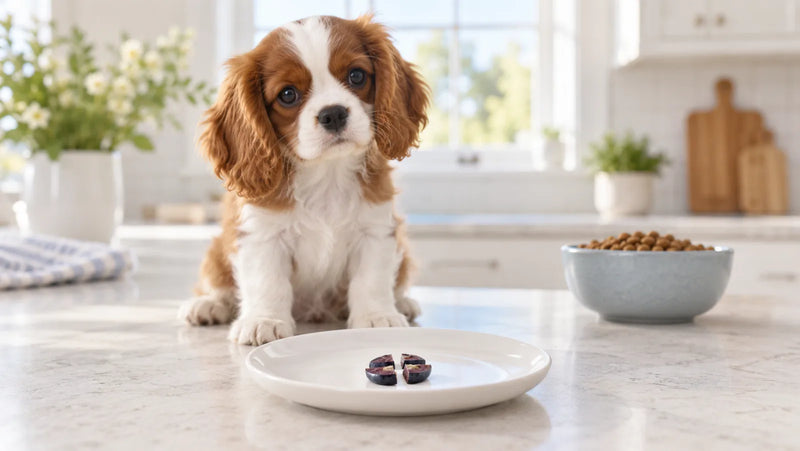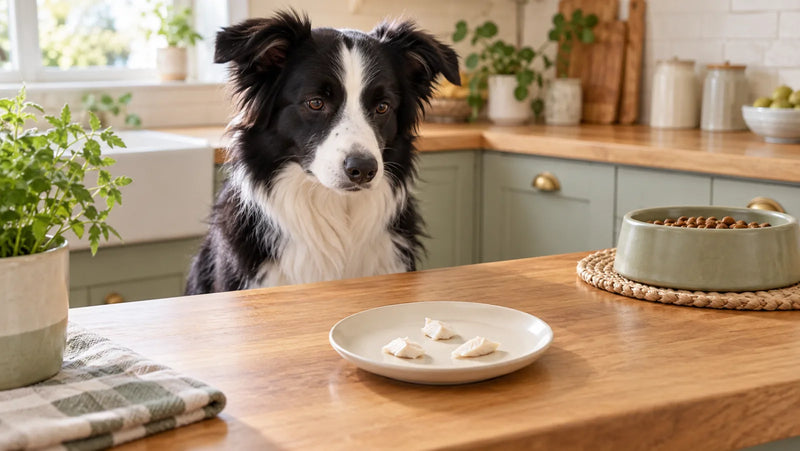

Can dogs eat yams? Yes—with an important identification step. If “yam” means the orange-fleshed sweet potato commonly sold under that name in U.S. supermarkets, most healthy dogs can have a small amount cooked plain. A true yam is a different plant, and published canine-specific guidance is limited, so use only a known edible grocery variety, peel it, cook it fully, leave it unseasoned, and offer one small soft bite.
Do not give a dog a raw, wild-foraged, ornamental, bitter, or unidentified yam. The Dioscorea genus contains many species with different preparation requirements, so cooking is a conservative minimum—not a promise that heat makes every unknown tuber safe.
Can dogs eat yams? Yes, after you identify and cook them
The practical answer follows two paths:
- Orange “yam” labeled as sweet potato: treat it as a sweet potato. Peel it, cook it until soft, serve it plain, and keep the amount small.
- True yam from an international or specialty market: confirm that it is a culinary edible species sold for human food. Follow its normal human-food preparation, cook it fully, and offer only a tiny amount—or skip it and ask your veterinarian when the species or the dog's diet is uncertain.
Neither food is necessary for a complete canine diet. Yam is a starchy extra, not a replacement for complete-and-balanced food and not a treatment for digestive, metabolic, or skin conditions.
Is your “yam” actually a sweet potato?
Why U.S. grocery labels cause confusion
In an ordinary U.S. produce aisle, the word yam usually refers to a soft, moist, orange-fleshed sweet potato. The USDA Agricultural Research Service explains the U.S. yam label as marketing terminology that was used to distinguish orange-fleshed sweet potatoes from earlier white- and cream-fleshed varieties. It also notes that true yams are uncommon in standard U.S. stores.
The USDA National Agricultural Library states that a U.S. label using “yam” for this crop must also identify it as a sweet potato. Check the produce sign, sticker, can, or ingredient list for the secondary wording. Do not extend that shortcut to every international market or every country; genuine imported yams are available.
How true yams and sweet potatoes look different
| Clue | Sweet potato often called “yam” | True yam |
|---|---|---|
| Botanical identity | Ipomoea batatas, in the morning-glory family | Dioscorea species, in the yam family |
| Plant part | Enlarged storage root | Underground tuber |
| Skin | Relatively thin and smooth | Rough, scaly, or bark-like |
| Shape | Usually shorter with tapered ends | Often longer and more cylindrical |
| Flesh | May be orange, white, yellow, or purple | Often white or pale, though edible varieties vary |
| Cooked texture | Often moist and sweet | Usually drier, starchier, and less sweet |
The Library of Congress guide to sweet potatoes and yams confirms that the two are botanically unrelated. Color alone is not enough: there are purple and white sweet potatoes as well as multiple true-yam colors.
Why the distinction changes the advice
Sweet-potato preparation has direct veterinary guidance. The AKC recommends cooked, peeled, soft sweet potato and warns that raw pieces are difficult to chew and may cause stomach upset or an intestinal blockage. For the broader nutrition and portion question, use our guide to the benefits and limits of sweet potatoes for dogs.
True yams require more caution because Dioscorea is a large genus and dog-specific evidence for its many edible species is thin. Do not transfer every orange sweet potato's nutrient claim to a true yam, and do not treat one edible yam species as proof that every wild or ornamental relative is food.

Can dogs eat true yams?
A cautious answer is yes for a tiny amount of plain, fully cooked flesh from a known edible grocery variety, when the individual dog's veterinarian has not restricted extra foods. This is an occasional-food decision, not a claim that all Dioscorea species have been proven safe for dogs.
Human cultures prepare culinary yams by species-specific methods that may include peeling, boiling, baking, roasting, soaking, or other processing. Buy a product clearly sold for human consumption, use its recognized preparation method, and never improvise with a tuber found outdoors or sold as an ornamental plant.
True yam is primarily a starch source. It does not need to be added for vitamins, fiber, or “variety” when the dog already eats complete-and-balanced food. A familiar, labeled dog treat may be a simpler choice for a dog with a sensitive history.
Can dogs eat raw yams? Use a conservative no
Dioscorea species do not all have the same chemistry
Raw-yam risk varies across the large Dioscorea genus. Some species contain irritating or potentially toxic compounds, while at least some cultivated Chinese yam is eaten raw by people. A peer-reviewed review of the Dioscorea genus describes species-dependent alkaloids, oxalates, and other compounds, as well as traditional processing methods used to reduce them.
That variability is exactly why “all raw yams are toxic” is too broad—and why raw yam is still a bad experiment for a dog. Dogs do not benefit from testing a species-specific exception. Use a known edible product and cook it until the center is completely soft.
Wild, ornamental, bitter, or unidentified tubers are off limits
Do not feed any yam-like tuber gathered from a yard, trail, vacant lot, or ornamental vine. Common names are unreliable, and some plants called yams are unpalatable or toxic. Bitter taste is a warning, not a challenge to cover it with seasoning. Discard an uncertain tuber where pets cannot retrieve it.
Cooking does not convert an unknown plant into a known food. When the product cannot be identified from its package, produce label, seller, or culinary source, do not serve it.
How to prepare a yam for a dog
1. Confirm it is a culinary edible species
Start with a yam sold for human food by a reputable grocer. If the sticker says both “yam” and “sweet potato,” follow sweet-potato guidance. If it is a true yam, retain the label until after preparation so you can identify it if a question arises.
2. Wash, peel, fully cook, and cool it
- Wash the outside before cutting so the knife does not drag surface soil into the flesh.
- Peel away the entire rough skin.
- Cut the yam into even pieces.
- Boil, steam, or bake it according to the recognized method for that edible variety.
- Cook until the center mashes easily with a fork; do not offer crunchy or undercooked pieces.
- Cool completely, then cut one bite to suit the dog's mouth and chewing style.
3. Leave out butter, salt, sugar, and seasoning
Serve only plain flesh. Skip butter, oil, salt, syrup, brown sugar, marshmallows, nutmeg, onion, garlic, and seasoning blends. “Candied yams” and holiday casseroles are human dishes, even when the vegetable underneath is safe when plain.
Avoid hard, dried chunks unless a product was specifically formulated and sized as a dog chew. Soft bite-size pieces reduce chewing and gulping risk, but supervision still matters.
How much cooked yam can a dog have?
Start with one small soft bite
There is no evidence-based tablespoon chart that fits every true-yam species and every dog. For a first exposure, offer one small, soft bite no larger than the dog's usual treat. Introduce no other new food that day. Stop if vomiting, diarrhea, gas, itching, or another change appears, and contact a veterinarian for persistent or concerning signs.
The calorie density is not zero. The USDA generic entry for plain cooked yam lists about 116 calories and 27.5 grams of carbohydrate per 100 grams. That makes a 10-gram bite roughly 12 calories, though variety, cooking method, and water content change the number. Count yam as a starchy treat, not a “free” vegetable.
Count yam inside the total treat-calorie budget
UC Davis veterinary treat guidance recommends that at least 90% of a dog's daily calories come from complete-and-balanced food, leaving less than 10% for all treats and extras combined. That is a ceiling for every treat together, not a target amount of yam.
Use the dog's known daily calories and the actual food weight when precision matters. Our daily dog-treat calorie budget explains the calculation without turning one ingredient into a universal serving prescription.
Which dogs need veterinary guidance first?
Ask the dog's veterinarian before adding yam when any of these applies:
- diabetes or another condition managed with fixed meal timing and calories;
- overweight, obesity, or an active weight-loss plan;
- recurrent vomiting, diarrhea, gas, or abdominal discomfort;
- a previous food reaction or an elimination-diet trial;
- pancreatitis, kidney disease, or another condition with a therapeutic diet;
- a prescription food that is meant to be fed without unapproved extras; or
- puppy growth, pregnancy, or another life stage in which nutritional balance needs special care.
Diabetes does not make every starch universally forbidden, but it does make unplanned extras inappropriate. Consistent food amount and timing are part of glucose management. The veterinarian can decide whether and how a yam bite fits the established plan.
What if my dog ate raw yam or a yam dish?
First identify the food. Save the label, receipt, recipe, plant photo, or remaining tuber. Note the dog's weight, amount eaten, time, whether the skin was swallowed, and whether the yam was raw, fully cooked, candied, canned in syrup, or mixed into a casserole.
- Raw orange sweet potato: call for a large piece, a small dog, swallowing difficulty, repeated vomiting, abdominal pain, or concern for blockage. The dedicated raw sweet-potato ingestion guide covers that specific food.
- Raw true yam: contact the veterinarian or an animal poison-control service, especially when the species, amount, or source is uncertain. Do not assume another yam species' preparation applies.
- Candied, canned, or casserole yam: check every ingredient. Butter, sugar, syrup, and marshmallow increase richness and calories; onion, garlic, raisins, chocolate, or a xylitol-containing sugar substitute create separate hazards.
- Any symptoms: seek prompt care for repeated vomiting, severe drooling or mouth irritation, trouble swallowing or breathing, a painful or swollen abdomen, marked weakness, wobbliness, tremors, collapse, or seizures.
Do not induce vomiting or give a home remedy unless a veterinarian or poison-control professional directs it for this exact exposure.
Yam vs. sweet potato vs. pumpkin for dogs
All three words can describe plain plant foods, but they are not interchangeable. A true yam is a starchy Dioscorea tuber with species-dependent preparation. A sweet potato is an Ipomoea batatas storage root with established cooked-plain veterinary guidance. Pumpkin is a squash and has its own forms and portions.
If you are choosing between the two more common U.S. options, our sweet potato versus pumpkin for dogs comparison uses like-for-like cooked portions and keeps each food's claims separate. The best choice is the one that is correctly identified, simply prepared, tolerated by the individual dog, and small enough to remain an extra.
Frequently asked questions
Are canned yams safe for dogs?
Most U.S. canned “yams” are sweet potatoes, but many are packed with syrup or prepared for a casserole. Read the ingredient list. A plain, no-salt product with only sweet potato is different from a sweetened can, but rinsing does not reliably turn a syrup-packed dessert ingredient into a measured plain food. Fresh cooked flesh is easier to control.
Can dogs eat candied yams?
No. Candied yams commonly combine sweet potato with sugar, syrup, butter, marshmallows, and spices. A small accidental taste is not automatically toxic, but the dish is unnecessarily rich. Check the recipe for separate hazards and call if the dog ate a large amount or develops symptoms.
Can dogs eat purple yams or ube?
Ube is a true purple yam, commonly Dioscorea alata; purple sweet potato is a different plant. For a dog, use only a known edible grocery product, fully cooked and plain, in one tiny bite—and skip sweetened ube jam, condensed-milk desserts, cakes, and flavored powders. Ask a veterinarian when the identity or individual diet is uncertain.
Are yams and sweet potatoes the same thing?
No. U.S. stores often use “yam” for a soft orange sweet potato, but botanically sweet potatoes and true yams are unrelated. Check for the word “sweet potato,” look at the skin and flesh, and keep the produce label until you know which guidance to follow.
Can puppies eat cooked yam?
A fully weaned puppy does not need yam, and complete-and-balanced growth food must stay in charge of nutrition. Ask the puppy's veterinarian before adding it. If approved, use only one very small, soft, plain bite from a known edible, fully cooked product and supervise closely.
Identify the tuber, cook it plain, and keep the portion small
The label is the first safety tool. A U.S. supermarket “yam” is usually a sweet potato; a rough-skinned true yam belongs to a different botanical group and deserves a more conservative approach. Never feed an unidentified tuber, never use a raw-yam experiment, and never mistake a candied holiday dish for plain cooked food.
If a starchy table-food extra does not suit your dog, there is no nutritional reason to force it. Browse all current American Paws dog treats for labeled, portionable alternatives, and choose an ingredient and texture that fit the dog's established diet. A treat should stay small, familiar, and subordinate to complete-and-balanced food.