
Can cats eat chicken? Yes, cats can eat plain chicken in moderation. Cats are obligate carnivores, so animal protein is a natural fit, but chicken treats should stay simple: boneless, unseasoned, and served in small amounts alongside complete-and-balanced cat food.
The safest everyday options are plain cooked chicken or freeze-dried single-ingredient chicken. Avoid onion, garlic, salt, sauces, oil, cooked bones, and casual raw feeding. If your cat is a kitten, has a sensitive stomach, or has a medical condition, ask your veterinarian first.
Can cats eat chicken?
Yes. Chicken is a familiar animal protein, and many cats love the smell and texture. The important part is how the chicken is prepared. A tiny piece of plain chicken is very different from seasoned chicken from your dinner plate.
Cornell Feline Health Center explains that cats need animal-based nutrients and complete nutrition. Treat chicken as an extra, not as the main diet. Your cat's regular food should do the nutritional heavy lifting.
Why chicken suits cats
Cats are obligate carnivores, which means their bodies are built around animal protein. Chicken can be a simple, high-value treat because it smells like real meat and is easy for many cats to recognize as food.
That does not mean chicken alone is a balanced diet. Cats need specific nutrients such as taurine in the right amounts, and a homemade chicken-only routine can become unbalanced quickly. Keep chicken as a treat, topper, or training reward. Our guide to the best cat treats explains how to compare ingredients, calories, and texture.
Can cats eat cooked chicken?
Cats can eat cooked chicken if it is plain, boneless, and unseasoned. Boiled, baked, or gently cooked chicken without salt, onion, garlic, oil, butter, sauces, or spices is the safer route.
Never feed cooked chicken bones. Cooked bones can become brittle and dangerous. Remove skin if it is greasy or seasoned, and cut the meat into tiny pieces so your cat can eat comfortably.
Can cats eat raw chicken?
Raw chicken carries bacteria risk, including Salmonella and other pathogens. The FDA warns that raw pet food can be risky for both pets and people because contamination can spread through bowls, counters, hands, and household surfaces.
Some households choose raw feeding under veterinary guidance, but it is not necessary for giving a cat a chicken treat. For most pet parents, plain cooked chicken or freeze-dried chicken is easier and lower-mess.
Freeze-dried chicken is the easy safe option
Freeze-dried chicken gives cats the appeal of real chicken without cooking a batch or handling raw meat. The pieces are dry, shelf-stable, lightweight, and naturally small enough for many cats.
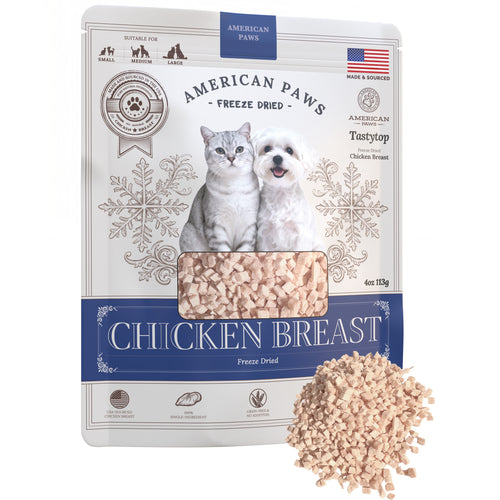
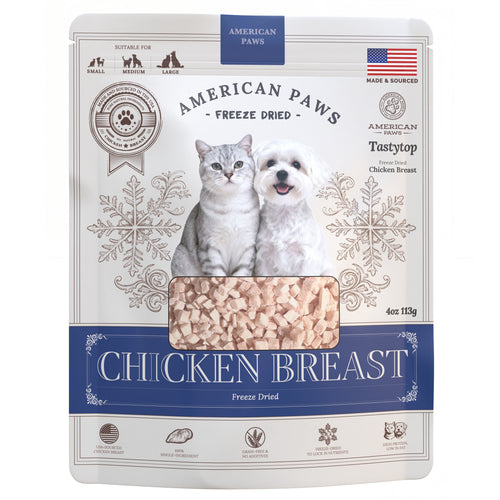
American Paws freeze-dried chicken for cats is made from 100% USA chicken breast only. It is single-ingredient, made in a USDA-inspected facility in Highland, California, and contains no grains, fillers, or artificial preservatives.

How much chicken can a cat eat?
Chicken treats should be a small part of the diet. A few tiny pieces are enough for most cats. If you are using chicken for training, break pieces smaller rather than feeding more total chicken.
Watch your cat's total calories. Treats can add up quickly because cats are small. If your cat is overweight, diabetic, on a prescription diet, or has kidney disease or another health condition, ask your veterinarian about treats.
Chicken as a treat, not a complete meal
This distinction matters. Chicken is a useful protein treat, but it does not provide every nutrient a cat needs in the right balance. Feeding only chicken can miss critical nutrients and create long-term problems, even if the food seems wholesome.
Use chicken to reward, enrich, or add interest to a routine your veterinarian already approves. The daily foundation should still be complete-and-balanced cat food appropriate for your cat's age and health.
Chicken foods cats should not eat
Do not feed seasoned chicken, fried chicken, chicken with garlic or onion, salty deli chicken, chicken skin covered in sauce, or cooked chicken bones. These are common human-food problems, not chicken itself. The safer rule is plain meat only.
Avoid giving your cat scraps from a mixed dish because it is easy to miss hidden ingredients. Broths, marinades, gravies, and spice blends may contain onion or garlic. If you did not cook it plain for your cat, skip it.
Which cats should go easy?
Kittens, senior cats, cats with sensitive stomachs, cats with allergies, and cats with medical conditions should have new treats introduced carefully. Start with one tiny piece and watch for vomiting, diarrhea, itching, or appetite changes.
If your cat already eats a chicken-based diet, a chicken treat may still be fine, but it is not required. Variety is useful only when it fits your cat's stomach and nutrition plan.
How to serve chicken treats to a cat
Offer tiny pieces. Cats often prefer small crunchy bits or soft shreds, not large chunks. Supervise the first few times, keep water available, and store freeze-dried pieces sealed so they stay fresh.
Chicken treats can also be useful for training. If you are teaching recall, carrier comfort, nail-trim cooperation, or simple clicker work, see our guide to training treats for cats. You can also browse the freeze-dried collection.
Why freeze-dried pieces work well for cats
Cats can be texture-sensitive. Some prefer a small crunchy piece they can pick up easily, while others like a piece crumbled over food. Freeze-dried chicken gives you both options. You can serve a piece whole, break it smaller, or crush a small amount as a topper.
This is useful for picky cats because the aroma is concentrated without adding sauces or salt. It is also useful for training because the pieces are small enough to reward quickly without interrupting the lesson.
What to look for on a cat chicken treat label
The cleanest label is short and specific. Look for chicken breast or chicken as the ingredient, with no vague meat terms, no artificial colors, and no sweeteners. If a treat is meant to be simple, the ingredient list should prove it.
American Paws freeze-dried chicken is chicken only. That makes it easy to understand what your cat is eating and easy to avoid unnecessary extras.
How to introduce chicken to a cautious cat
Start with scent before serving a full piece. Put one tiny piece near your cat's regular food or offer it from your hand if your cat is comfortable. If your cat walks away, do not force it. Some cats need repeated low-pressure exposure before trying a new texture.
Once your cat eats a tiny piece, wait and watch. Normal appetite, normal stool, and normal behavior are good signs. If your cat vomits, has diarrhea, scratches more than usual, or seems uncomfortable, stop the treat and ask your veterinarian.
Frequently asked questions
Can cats eat chicken every day?
A tiny piece may be fine for some cats, but chicken treats should not replace complete-and-balanced cat food. Ask your veterinarian if you want to feed it daily.
Is cooked or freeze-dried chicken better for cats?
Both can work if plain and unseasoned. Freeze-dried chicken is often easier because it is shelf-stable, single-ingredient, and already small.
Can kittens eat chicken?
Ask your veterinarian first. Kittens need complete growth nutrition, so treats should be very limited. When you do treat a kitten, our guide to the best treats for kittens covers safe, tiny options.
Can cats eat chicken bones?
No cooked chicken bones. They can splinter and cause injury. For treats, choose boneless chicken or freeze-dried chicken pieces.
Are freeze-dried chicken treats safe for cats?
They can be safe when properly made, single-ingredient, and fed in small amounts. Introduce slowly and supervise.
Keep chicken plain and small
Chicken can be a great treat for cats when it is simple. Choose plain cooked or freeze-dried chicken, keep pieces tiny, avoid bones and seasoning, and let complete cat food remain the foundation of the diet. Simple portions keep treating clear.