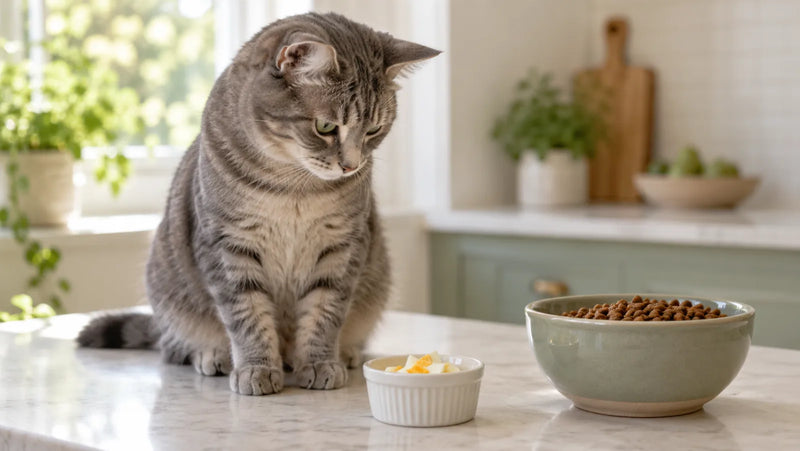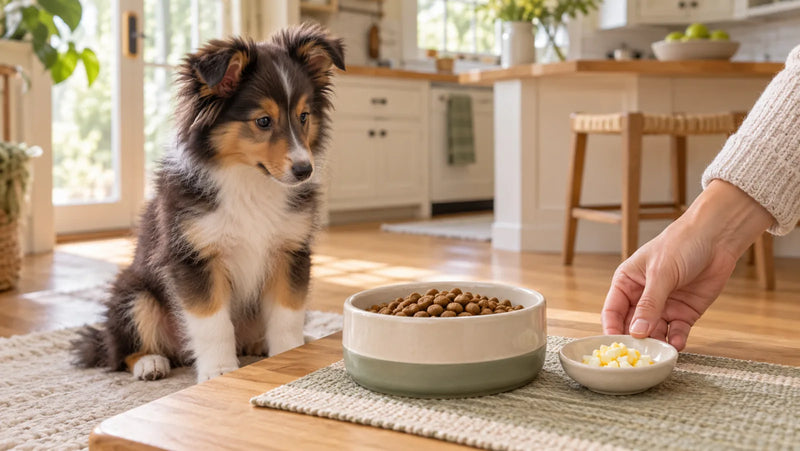

Can kittens have treats? Yes, once they are reliably eating complete kitten food, treats can be introduced in very small amounts. Start with crumb-size pieces, keep treats supplemental, and ask your veterinarian first if your kitten is very young, underweight, sick, recovering from parasites, or has a sensitive stomach.
The safest kitten treat routine is boring in a good way: wait until solid food is normal, use tiny pieces, choose simple ingredients, and do not let treats crowd out the food that supports growth. Kittens are growing fast, so the main bowl matters more than any snack.
Can kittens have treats? The short answer
Kittens can have treats after they are settled on age-appropriate kitten food and chewing comfortably. Treats should be used for training, bonding, carrier practice, or a small food crumble, not as a second meal.
The American Society for the Prevention of Cruelty to Animals says treats should make up no more than 5-10% of a cat's diet. For kittens, staying near the low end is the cleaner choice because their complete kitten food needs room to do the nutritional work.
That means a kitten does not need a handful of treats. One tiny reward can be enough to teach a name, encourage a carrier step, or make gentle handling feel positive.
When can kittens have treats?
The best time to start is after your kitten is eating kitten food reliably. The ASPCA's kitten nutrition guidance notes that by eight to 10 weeks, kittens should be accustomed to unmoistened kitten food. That is a practical reference point for many healthy kittens, although individual kittens vary.
If your kitten is still bottle-feeding, just beginning gruel, dealing with diarrhea, refusing food, or still adjusting after adoption, hold off on treats. Keep the routine simple until normal kitten food is stable.
For a healthy older kitten, introduce treats slowly. Offer one tiny piece, then watch appetite, stool, energy, and vomiting over the next day. If everything looks normal, you can use a few tiny rewards during short training sessions.
How many treats can a kitten have?
Keep the amount small enough that your kitten still eats the regular food enthusiastically. The AVMA's healthy-weight guidance says it is a good practice to limit treats to less than 10% of daily calorie needs. For kittens, many pet parents do better by thinking in tiny pieces rather than full treats.
A good starting routine is one to three crumb-size pieces in a day, especially when you are testing a new food. If you are training more often, make each reward smaller. A single freeze-dried chicken piece can often be broken into many kitten-sized rewards.
Watch the whole day. Treats, toppers, table scraps, and samples all count as extras. If your kitten eats less kitten food after treat sessions, reduce the extras and keep the main diet first.
What kinds of treats are safest for kittens?
Safe kitten treats are easy to chew, easy to identify, and easy to limit. The front of the package matters less than the piece size and ingredient list.
Tiny pieces that are easy to chew
Kittens have small mouths and can be clumsy with new textures. Break treats into pea-size pieces or smaller. For small or younger kittens, crumble them even finer.
A treat should be quick to chew and swallow so the kitten can return to the training moment. Very hard chews, large jerky pieces, bones, and dog chews are not appropriate kitten rewards.
Simple meat-forward ingredients
Cats are obligate carnivores, so a simple meat-based treat usually makes more sense than a sweet or starch-heavy snack. A single-protein treat also makes it easier to tell whether your kitten handles that protein well.
Simple does not mean unlimited. Even a clean chicken treat is still an extra. The goal is a small reward, not a nutritional shortcut.
Avoid seasoned, sugary, or hard foods
Avoid onion, garlic, heavy salt, sugar, sauces, fried foods, bones, and rich table scraps. Baby food can also be risky if it contains onion or garlic powder, which the ASPCA flags as a poisoning concern for cats.
Raw chicken is not a casual kitten treat. The FDA warns that raw pet foods can carry bacteria such as Salmonella and Listeria, creating risk for pets and for people handling the food.
Are freeze-dried chicken treats good for kittens?
Freeze-dried chicken treats can work well for kittens when the pieces are tiny, the product is made for pets, and the amount stays modest. Freeze-dried pieces are light, aromatic, and easy to break down, which makes them useful for short training sessions.
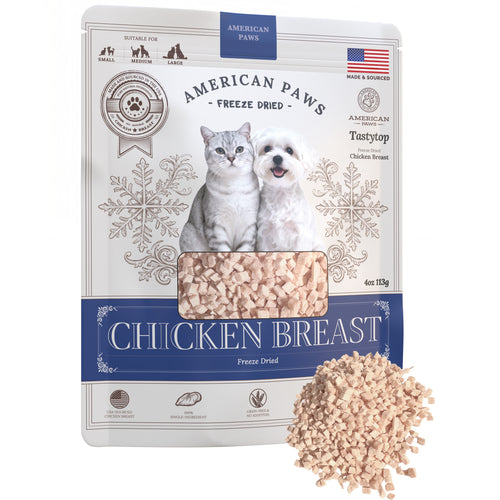
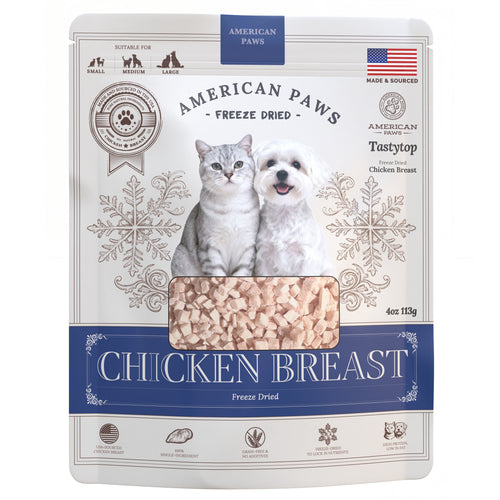
American Paws freeze-dried chicken treats for cats and kittens are made from USA chicken breast in a USDA-inspected facility in Highland, California. Because the pieces can be broken into small bits, they fit the kitten rule: reward the behavior without making the reward too large.
If you are comparing choices, our buyer-focused guide to the best treats for kittens covers how to evaluate ingredients and formats. This article stays focused on when to start and how much to use.

How to introduce treats without upsetting your kitten's stomach
Introduce one new treat at a time. Do not change the main food, add a topper, test a new treat, and offer table scraps in the same week. If your kitten gets soft stool or vomits, you will not know which change caused it.
Use this simple routine:
- Offer one crumb-size piece after a normal meal or during a calm training moment.
- Wait and watch stool, appetite, vomiting, scratching, and energy.
- If all looks normal, use a few tiny pieces the next day.
- Keep the amount steady instead of increasing every time your kitten asks.
If your kitten reacts poorly, stop the treat and return to the normal food routine. Call your veterinarian if symptoms are strong, repeated, or paired with low energy, dehydration, blood in stool, or appetite loss.
Smart ways to use kitten treats
Treats are most useful when they teach something that makes life easier. Tiny rewards can help your kitten build confidence without turning snack time into a habit of begging.
Training and name recognition
Say your kitten's name once, then reward when the kitten looks at you or comes closer. Keep sessions short. One or two minutes is plenty for a young kitten.
For more technique, our guide to training treats for cats explains how reward timing works for cats of different ages.
Carrier and handling practice
Place a tiny treat near the carrier, then inside the entrance, then farther back over several sessions. The same approach can help with gentle paw touches, brushing, and being picked up briefly. Reward calm cooperation and stop before your kitten gets frustrated.
Picky eating support
A few crumbs over kitten food can add aroma, but do not let treats become the meal. Sudden picky eating, weight loss, or repeated food refusal is a veterinary issue, not a reason to keep upgrading snacks.
If your household also has dogs, keep cat rewards and dog treats portioned separately. The full American Paws treat collection includes different formats for different pets and use cases, but each treat still needs to match the animal in front of you.
When to pause treats and call your veterinarian
Pause treats if your kitten has vomiting, diarrhea, low energy, rapid weight change, appetite loss, coughing while eating, repeated gagging, or signs of pain. Kittens can decline quickly, so do not use tastier treats to cover up a health concern.
Also ask your veterinarian before treats if your kitten is on a prescription diet, has a known food sensitivity, is recovering from illness, or is much smaller than expected for age. A simple chicken treat may still be the wrong choice for a kitten with a specific medical plan.
Frequently asked questions
Can 6-week-old kittens have treats?
Some 6-week-old kittens are still transitioning foods, so treats are not the priority. Focus on complete kitten food and ask your veterinarian or rescue coordinator before adding extras.
Can kittens have adult cat treats?
Sometimes, if the treat is safe for cats, easy to chew, and broken very small. Still, choose simple treats and keep the amount tiny because kittens need complete kitten food for growth.
How small should kitten treats be?
Pea-size or smaller is a good rule. For younger kittens, crumble treats even smaller so the reward is quick to chew and unlikely to be gulped whole.
Can kittens have chicken treats?
Many kittens can have plain chicken treats if they tolerate chicken well. Avoid seasoned chicken, raw chicken, fatty scraps, bones, and pieces too large for a kitten to chew comfortably.
Can treats replace kitten food?
No. Treats are supplemental. Complete kitten food should remain the main diet because growth requires balanced nutrition, not just protein or flavor.
Keep kitten treats tiny, simple, and supplemental
Kittens can enjoy treats, but the routine should stay small and intentional. Wait until kitten food is reliable, start with crumb-size pieces, keep treats under the 5-10% range, and use rewards for short moments that build confidence.
When you want a simple chicken option, try American Paws freeze-dried chicken broken into tiny kitten-sized pieces. Keep the main food first, and let treats support training, bonding, and gentle everyday handling.