
Safe dog treats usually share three things: a short label you can read, a named whole-meat protein, and clear sourcing, ideally made in the USA with no added fillers, sugars, or artificial preservatives. That does not mean a treat is risk-free for every dog, but it gives you a practical way to judge what belongs in your pantry.
This guide gives you a buyer's checklist, the red flags to avoid, and a simple way to match treats to your dog's size, chewing style, and daily routine.
What makes safe dog treats?
The short answer is simplicity plus fit. A safe treat should be made from recognizable ingredients, come from a source you can identify, and be the right size and texture for the dog eating it. A single-ingredient meat treat is often easier to evaluate than a long recipe because there are fewer places for hidden fillers or vague proteins to hide.
Safety is also about how you serve the treat. Even a clean recipe should be portioned sensibly, fed under supervision, and matched to your dog's mouth size and chewing habits. If your dog has allergies, pancreatitis, kidney disease, diabetes, or any medical condition, your veterinarian should guide treat choices.
The green flags: what safe treats have
A short, single-ingredient label you can read
The simplest label is the easiest label to trust. If a bag says chicken breast, beef liver, or dehydrated chicken feet and nothing else, you know exactly what your dog is eating. Short labels are also useful for dogs with sensitive stomachs because it is easier to identify what agrees with them.
For deeper label education, read our guide to single-ingredient dog treats and simple labels.
A named whole-meat protein
Look for a named protein such as chicken breast or beef liver instead of vague terms like animal by-product or meat meal. Named whole-meat proteins give you a clearer picture of quality, texture, and protein source. They also make it easier to avoid ingredients your dog cannot tolerate.
Clear sourcing and made in the USA
Country of origin matters because it tells you where the treat was made and, ideally, where the ingredient was sourced. American Paws treats are sourced and made in the USA in a USDA-inspected facility in Highland, California. That is the kind of traceability we like to see on a treat label.
The right size and texture for your dog
Small dogs, senior dogs, and dogs that gulp food may need softer, smaller pieces. Larger dogs can handle bigger pieces, but they still need supervision. Hard chews and odd shapes can be useful for some dogs and wrong for others. Safe means appropriate for the dog in front of you.

The red flags: what to avoid
Long additive lists, added sugars, fats, and artificial preservatives
A long ingredient list is not automatically bad, but it deserves a closer look. Added sugars, artificial colors, artificial preservatives, and unnecessary fats can turn a treat into something more complicated than it needs to be. If the label reads more like a snack food than a pet treat, keep comparing.
Mystery proteins and vague sourcing
Vague language is a warning sign. If you cannot tell what animal protein is inside or where the treat was made, you have less information for judging quality. That matters even more if your dog has food sensitivities.
Choking-risk shapes or too-hard chews
Safety is not only about ingredients. A treat can be clean and still be a poor fit if it is too large, too hard, or likely to splinter for your dog. Always supervise, offer the right size, and remove pieces that become small enough to gulp.
A recall history
Before trying a new brand, it is reasonable to check recall history. The FDA keeps a public page for pet food and treat recalls. A recall does not always mean a company is permanently unsafe, but it is information worth knowing.
Matching the treat to your dog
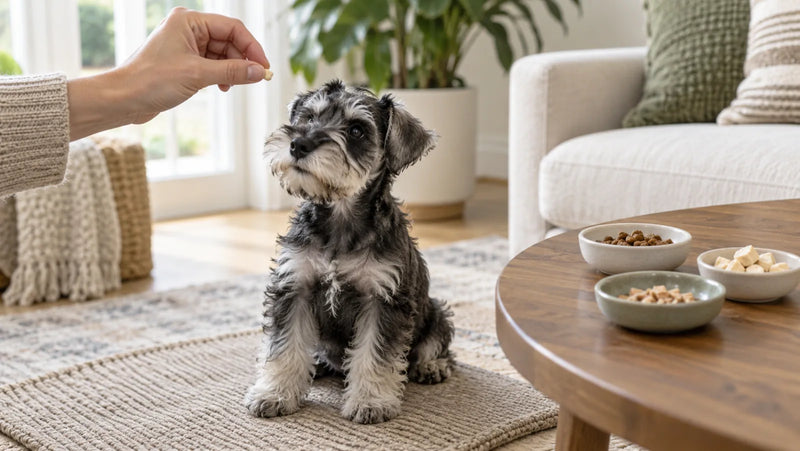
Puppies need tiny pieces and short sessions. Seniors may prefer softer textures. Dogs that gulp need smaller, supervised portions. Dogs with sensitive stomachs often do best when you introduce one new treat at a time and wait to see how they respond.
Treats should generally stay around 10% or less of daily calories. If you train often, break treats into very small pieces and reduce meal portions if your veterinarian recommends it.
How American Paws makes safe treats
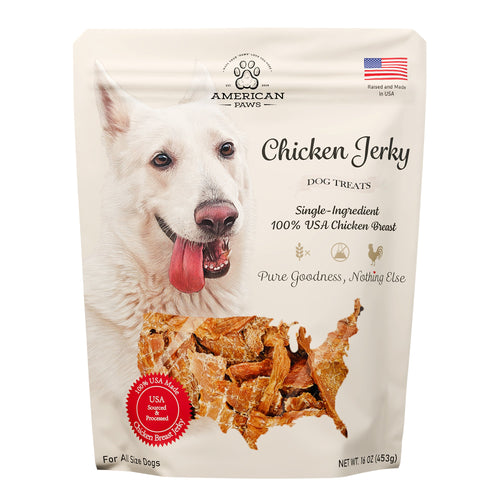
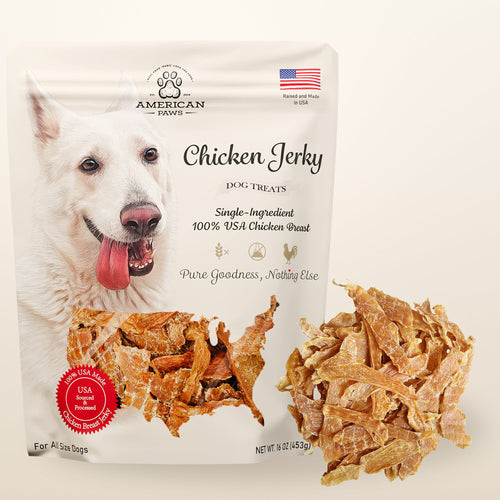
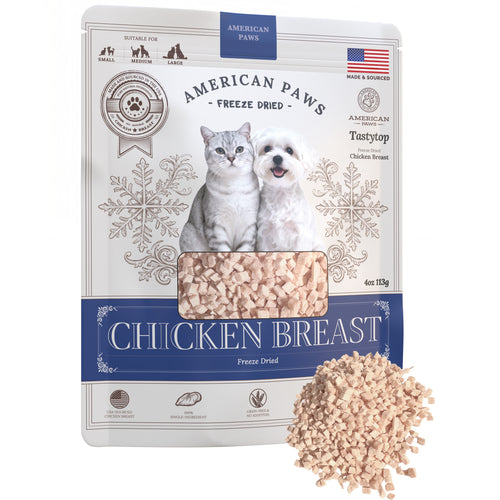
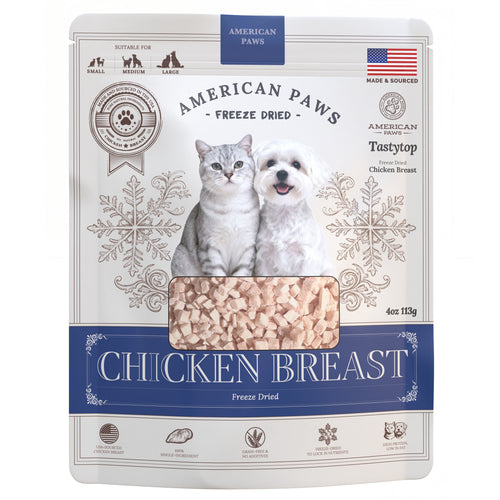
American Paws focuses on simple, USA-made treats with no added fillers or artificial preservatives. Our single-ingredient chicken jerky is whole-cut USA chicken breast. Our freeze-dried chicken breast is made for dogs and cats from chicken breast. Our freeze-dried beef liver gives dogs a high-value training reward, and our dehydrated chicken feet are a simple chew option for dogs that fit that texture.
If you want to compare chicken-based options in one place, start with the American Paws chicken collection. For safety-specific reading, see our guides on whether chicken jerky is safe for dogs, why chicken bones are risky, and how dogs can eat chicken feet safely.
A simple buyer checklist for safe dog treats
Before you buy a new bag, run through a quick checklist. First, can you identify the main ingredient in two seconds? Second, is the protein named clearly, such as chicken breast or beef liver? Third, does the label tell you where the product is made? Fourth, is the treat shape reasonable for your dog's mouth and chewing style? Fifth, can you feed it in small portions without turning snack time into a second meal?
This checklist helps because it separates useful information from marketing noise. A pretty package can say natural, premium, or healthy, but the ingredient list and sourcing tell the real story. The more specific the label is, the easier it is to decide whether the treat fits your dog.
How to introduce a new treat safely
Introduce any new treat slowly. Give one small piece first, then watch your dog over the next day. Look for normal appetite, normal stool, and normal energy. If everything looks good, you can use the treat more regularly. If your dog vomits, has diarrhea, seems uncomfortable, or reacts in a way that worries you, stop feeding the treat and call your veterinarian.
Do not test several new treats at once. If you introduce three new products in the same week, you will not know which one caused a problem. One treat at a time is slower, but it gives you cleaner information.
Safe treats still need supervision
Even the cleanest treat should be fed with common sense. Sit nearby when your dog tries a new texture. Break large pieces smaller. Remove any piece that becomes sharp, too small, or hard to manage. Keep the bag sealed and stored away from dogs who might steal and overeat it. Ingredient safety and serving safety work together.
Frequently asked questions
What are the safest dog treats?
The safest dog treats are usually simple, appropriately sized treats made from named ingredients with clear sourcing. Single-ingredient USA-made meat treats are a strong place to start.
Are single-ingredient treats better?
They are easier to evaluate because there are fewer ingredients. That can be especially helpful for dogs with sensitive stomachs or pet parents who want a clean label.
How many treats a day is safe?
A common guideline is to keep treats at 10% or less of daily calories. Ask your veterinarian for advice if your dog needs weight control or has a health condition.
Are made-in-USA treats safer?
Made-in-USA is not a guarantee by itself, but it gives you clearer sourcing and manufacturing information. Pair it with a short label and a named protein.
How do I check for recalls?
Check the FDA recall page and search the brand name plus the word recall. If a product seems questionable, skip it and choose a simpler option.
Choose simple, clear treats
Safe treating starts with clear information. Choose named proteins, short labels, and a size your dog can enjoy under supervision. American Paws keeps that standard at the center of our treat line.