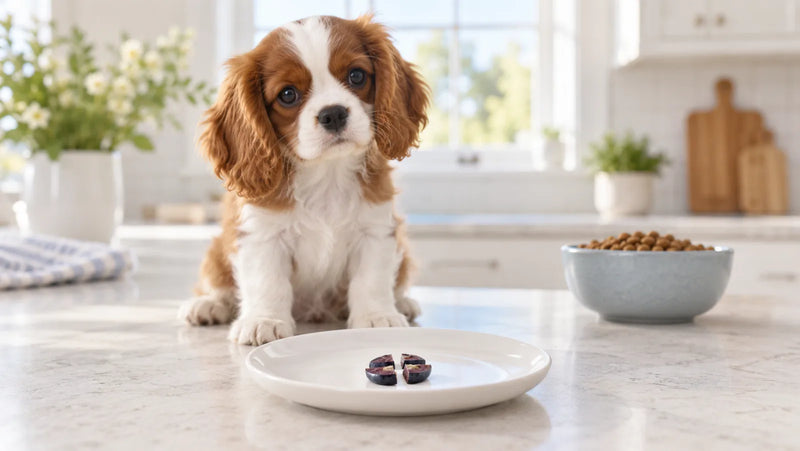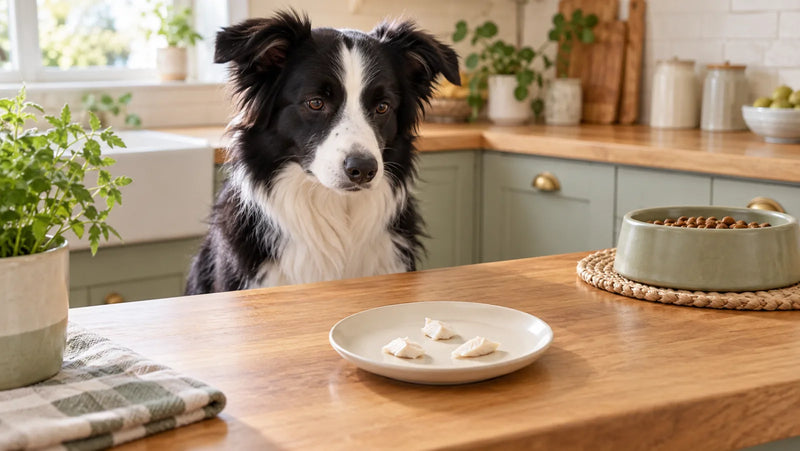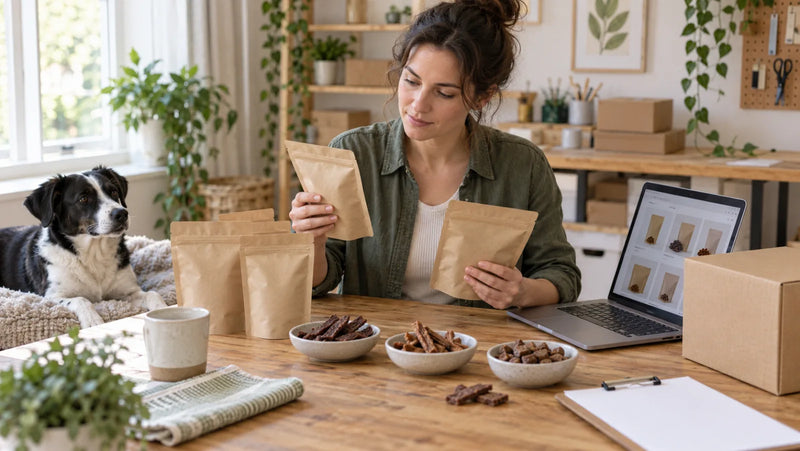

The best holiday dog treats are familiar, clearly labeled rewards that you portion before guests arrive. Make the moment festive through timing and presentation—not chocolate, xylitol, raisins, seasoned leftovers, cooked bones, or a day-long stream of extras. One measured treat bank and one designated feeder let a dog participate without anyone losing count.
Keep the dog's normal complete-and-balanced food at the center of the day. Choose a treat the dog already tolerates, check its calorie information, and include every piece, topper, chew, and accidental “just one” in the same daily allowance. A holiday is an occasion, not a reason to replace a known diet or test several new ingredients at once.
Holiday dog treats: the five-part plan
- Choose one or two familiar treats. Use ingredients and textures the dog has eaten comfortably before.
- Measure the entire event allowance. Put it in one bowl or jar before the doorbell starts ringing.
- Name one feeder. Guests ask that person before giving anything, and no food comes from the table.
- Protect a quiet retreat. Water, the dog's bed, and distance from children or other pets are part of the plan.
- Secure food and trash. Push serving dishes back, clear low tables, close bags, and use a lidded bin.
“Festive” can mean a reward after calm greetings, a small sniff game, or a measured topper on the regular meal. It does not require novelty, food coloring, frosting, an oversized chew, or a human holiday recipe.
Make the moment special without changing the dog's diet
Keep proteins and textures familiar
A crowded gathering is a poor time to find out that a new protein, rich biscuit, or homemade recipe does not agree with the dog. Read the ingredient list, calorie statement, intended purpose, storage directions, and lot information before the event. Our guide to reading a dog-treat label explains what each of those details tells you.
Dogs with food allergies, pancreatitis history, diabetes, kidney disease, gastrointestinal disease, or a prescription diet may need a stricter plan. Ask the veterinarian before adding extras rather than assuming a “natural” or single-ingredient label makes a treat appropriate for that dog.
Use timing and presentation—not people food
Serve a few approved pieces from a small dish after arrivals settle, hide several in an easy sniff game away from the dining room, or crumble a measured amount onto the dog's usual food. The celebration comes from a predictable shared ritual. The ingredient and calorie rules stay the same as on an ordinary day.
Choose a treat format for each holiday moment
Tiny rewards for calm arrivals and photos
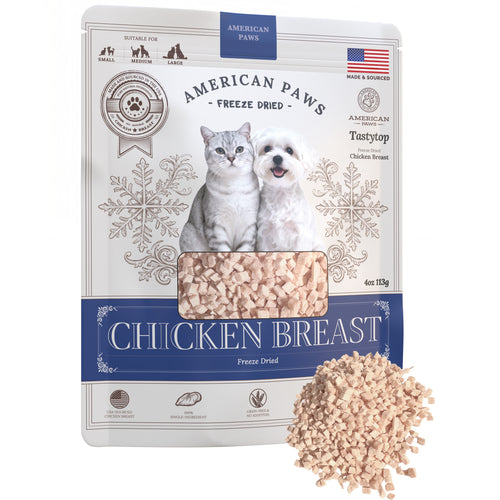
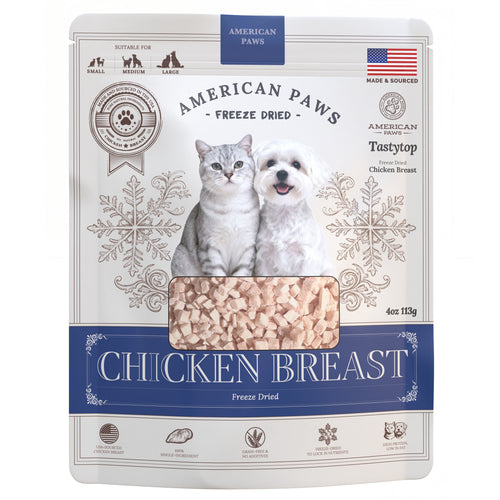
Small pieces are easier to count and useful when several calm behaviors will be rewarded. American Paws' single-ingredient freeze-dried chicken and single-ingredient freeze-dried beef liver are two current options. Use the product's actual calorie information and only break a piece when its texture allows it safely.
Snippable jerky for a longer gathering
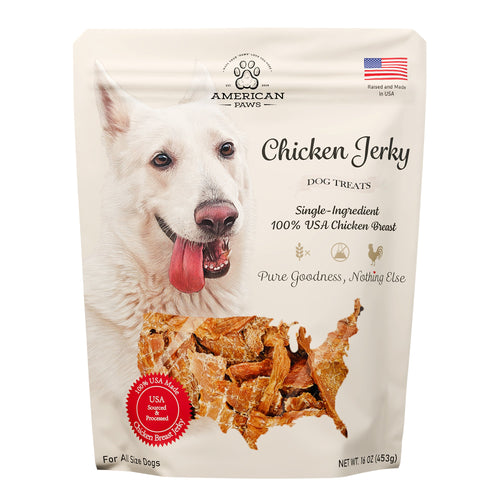
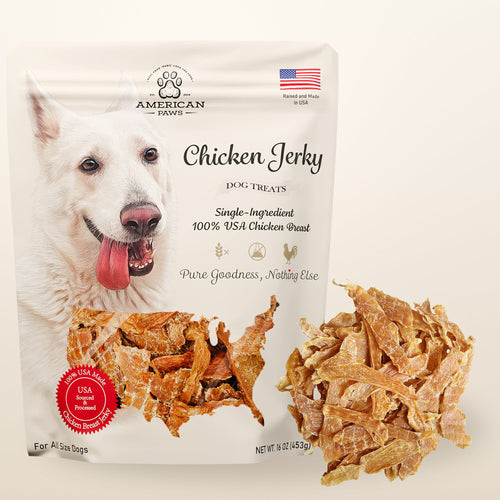
A plain whole-cut strip can be portioned into dog-size rewards before guests arrive. The current chicken breast jerky is an individual product, not a holiday bundle. Keep its original bag available for the ingredient list, lot code, storage directions, and calories; do not pour an unknown mix into an unlabeled communal jar.
A measured topper on the normal meal
A small amount of chicken meal topper can change the aroma of the usual bowl without replacing the meal. Measure it, count it as an extra, and avoid letting several guests each add another spoon. A topper is not a nutritionally complete holiday dinner.
Bone-in chews do not belong on a crowded party floor. Bones can create choking, obstruction, and dental-injury risks, and supervision reduces rather than removes those risks. For a busy gathering, a small, portionable reward is the simpler choice.
Pre-portion one treat bank before guests arrive
The World Small Animal Veterinary Association's treat guidance says treats should provide less than 10% of a dog's daily calories; at least 90% should come from complete-and-balanced food. That is a general ceiling, not a target and not 10% for each guest, each product, or each course.
Start with the dog's veterinarian-recommended daily calories. Keep the combined calories from training rewards, party pieces, toppers, chews, and any other extras below that treat ceiling. If the package does not give useful calorie information, ask the manufacturer rather than guessing by visual size. Our daily treat calculator guide shows the same budget outside the holiday context.
Place the approved pieces in one visible container. When it is empty, holiday treats are finished. Tiny pieces make a measured bank last through several behaviors, but cutting a treat smaller does not erase its total calories. Do not skip or sharply reduce the dog's regular meal to “make room” unless the veterinarian has given that instruction.
For a long event, divide that bank into labeled rounds for arrivals, the meal, and the evening rather than putting everything out at once. Keep the later portions behind a closed door so an overturned bowl or enthusiastic guest cannot spend the whole allowance early. If the dog attends more than one household gathering that day, the same budget travels with the dog; it does not restart at each address. Write the starting piece count on a note when several family members need to hand off feeding responsibility.

Stop guest overfeeding before it starts
The ASPCA's holiday guest guidance recommends telling visitors not to feed table scraps and providing a safe place where the pet can retreat. Turn that advice into a simple house rule: only the named feeder gives treats, only from the measured bowl, and only after asking.
- Tell guests about allergies, a prescription diet, guarding behavior, or “no treats” instructions before food appears.
- Keep children from carrying the treat bowl or following the dog into its quiet space.
- Move handbags, gum, medication, snack bags, and edible gifts out of reach.
- Separate the dog during serving and cleanup if counters, low tables, or trash cannot be watched continuously.
- Remove the bowl if the dog becomes frantic, crowded, or protective; participation is optional.
A designated feeder is also the observer. That person can notice whether the dog is taking treats gently, retreating, showing stress, or losing interest. A dog that walks away, hides, stiffens, guards the bowl, or develops stomach upset does not need encouragement to continue. Put the treats away and give the dog space.
Keep these holiday foods away from dogs
A short rule is easier for guests to follow: no plate food, no kitchen scraps, and no “just a taste.” These common holiday hazards need a veterinary or poison-control call after suspected ingestion rather than a homemade safe-dose calculation.
| Food or ingredient | Why it is a problem | What to remember |
|---|---|---|
| Chocolate and cocoa | Theobromine and caffeine can affect the gastrointestinal tract, heart rhythm, and nervous system. Risk varies by chocolate type, amount, and dog. | Cocoa powder, baking chocolate, and dark chocolate are generally more concentrated; do not wait for symptoms. |
| Xylitol | This sweetener can cause rapid low blood sugar and, at higher exposures, liver injury. | Check for “xylitol,” “birch sugar,” or “wood sugar” in gum, candy, baked goods, and some nut butters. |
| Grapes and raisins | Exposure is associated with acute kidney injury in some dogs, and individual response is unpredictable. | There is no reliable “one is safe” reassurance. |
| Onion, garlic, leeks, and chives | Allium ingredients can irritate the gut and damage red blood cells. | Raw, cooked, dried, and powdered forms count, including seasoning in gravy, stuffing, and dips. |
| Cooked bones | Bones may choke, obstruct, fracture teeth, or injure the mouth and digestive tract. | Keep poultry carcasses, steak bones, skewers, foil, and string out of the trash raid. |
| Fatty or rich scraps | Skin, drippings, gravy, and fried foods can cause gastrointestinal upset and may trigger pancreatitis, especially in susceptible dogs. | One rich bite does not diagnose pancreatitis; concerning signs require veterinary assessment. |
| Alcohol and raw yeast dough | Alcohol can cause severe poisoning; rising dough can expand in the stomach and produce ethanol. | Secure unattended drinks and dough while it rises. |
The FDA's holiday hazard guide covers fatty table scraps, xylitol, chocolate, alcohol, and cooked bones. The ASPCA holiday safety checklist also emphasizes keeping pets on their regular diet and securing food and trash.
What to do if the dog raids the holiday table
- Remove access. Move the dog to safety and stop other pets from reaching the same food or trash.
- Identify the exposure. Save the package, recipe, ingredient label, or a photo. Estimate the amount and time, and note the dog's weight and symptoms.
- Call promptly. Contact the veterinarian, an emergency veterinary clinic, or the ASPCA Animal Poison Control Center at 888-426-4435. A consultation fee may apply.
- Follow professional directions. Do not induce vomiting or give a home remedy unless a veterinarian or animal poison professional specifically tells you to do so.
Breathing trouble, collapse, seizures, severe weakness, repeated vomiting, a painful or swollen abdomen, or inability to keep water down warrants urgent veterinary care. Do not wait for a dog to “look sick” after suspected xylitol, grape or raisin, chocolate, alcohol, raw dough, or allium exposure.
How this differs from a holiday gift or stocking
This guide manages feeding during a live gathering. If the job is choosing small items that physically fit, use our dog stocking-stuffer guide. If the job is matching a present to size, age, dental comfort, or chewing behavior, use the dog gift guide. Those pages own the shopping-list questions; this one owns the bowl, feeder, table, trash, and calorie plan on the day.
Frequently asked questions
What are safe holiday dog treats?
A safer choice is a clearly labeled dog treat with familiar ingredients and an appropriate texture, measured into the dog's total daily allowance. “Holiday” should describe the occasion, not imply that a human dessert, seasoned leftover, or unfamiliar recipe is safe.
How many treats can a dog have during a holiday party?
There is no universal piece count because treats differ in calories and dogs differ in daily needs. Keep all treats and extras together below 10% of the dog's daily calories, use the package's calorie information, and follow stricter veterinary instructions when applicable.
Can guests give my dog table scraps?
No. Ask guests to give only owner-approved pieces from the pre-measured bowl. Table food may contain hidden allium powder, raisins, xylitol, chocolate, alcohol, excessive fat, cooked bones, skewers, or wrappers, and multiple guests can unknowingly multiply the portion.
Are homemade holiday dog treats safer?
Not automatically. A homemade recipe still needs dog-appropriate ingredients, known portions, clean handling, and a calorie estimate. It can also introduce several new foods at once. When uncertainty matters, a familiar commercial treat with a complete label is easier to verify and track.
Can dogs have turkey or chicken bones during the holidays?
Do not give cooked poultry bones or a cooked carcass. They can choke, obstruct, damage teeth, or injure the digestive tract. Raw bones also carry mechanical and microbial risks, so they should not be presented as a risk-free substitute.
Does American Paws sell a holiday gift box?
American Paws currently sells individual products, not a ready-made holiday gift box, bundle, sampler, or wrapping service. Choose only a format that already suits the dog, keep the original label, and pre-portion it yourself. You can compare current chicken jerky options or browse all American Paws dog treats.
Keep the celebration, lose the guesswork
A good holiday treat plan is intentionally ordinary: familiar food, a measured bank, one feeder, no table scraps, and a quiet place to opt out. That structure lets the dog share the rhythm of the gathering without turning every guest or plate into a new feeding decision.
Choose a current individual product that fits the dog's established diet, check its label and calories, and portion the entire event allowance before anyone arrives. When the bowl is empty, the treats are done—and the celebration can continue without guesswork.