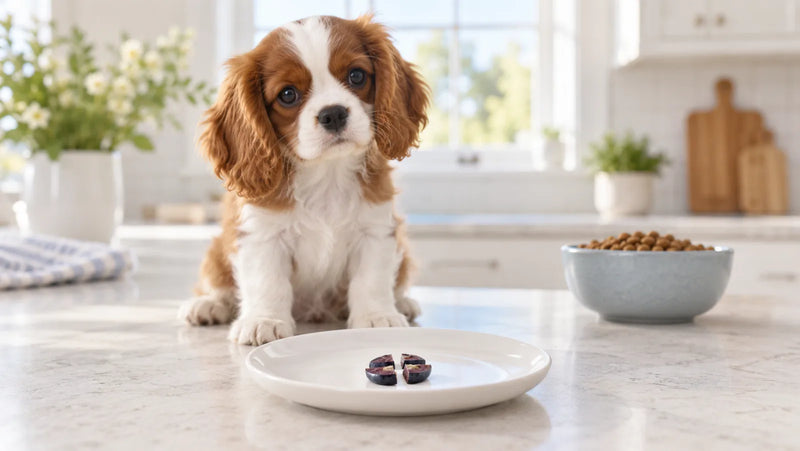

Can dogs eat ice cream? Better not. Ice cream is high in sugar and fat, many adult dogs do not digest lactose well, and flavors or mix-ins can introduce chocolate, macadamia nuts, raisins, coffee, alcohol, or xylitol.
Check any “sugar-free,” “skinny,” keto, or low-sugar ice cream label for xylitol immediately. The U.S. Food and Drug Administration's xylitol warning specifically includes sugar-free desserts such as “skinny” ice cream. Xylitol may also appear as birch sugar or wood sugar and can cause a rapid, life-threatening blood-sugar drop in dogs.
Can Dogs Eat Ice Cream? The Safer Answer Is No
The American Kennel Club's ice-cream guidance gives the same practical answer: it is best to avoid giving ice cream to dogs. Dairy tolerance varies, the product is calorie-dense, and one hazardous ingredient can matter more than the ice cream base.
“Better not” does not mean that every accidental lick of regular vanilla ice cream is a poisoning emergency. A small lick of a standard product with no toxic ingredient in an otherwise healthy dog is more often a digestive-tolerance and calorie question. The label, amount, dog's size and health, and any symptoms determine what to do next.
It also does not mean that vanilla is universally safe. Some vanilla products contain rich mix-ins, sugar substitutes, alcohol-containing flavorings, or ingredients that conflict with a dog's medical diet. Check the actual package instead of relying on the flavor name.
Ice Cream Risks at a Glance
| Frozen product | Default decision | Main concern |
|---|---|---|
| Regular plain vanilla ice cream | Do not intentionally share | Lactose, sugar, fat, calories, and recipe variation |
| Sugar-free, “skinny,” keto, or low-sugar ice cream | Check the label immediately | May contain xylitol; a possible exposure needs an urgent call |
| Chocolate or coffee ice cream | Keep inaccessible | Methylxanthines from chocolate or coffee add toxic risk |
| Macadamia, raisin, or mixed-cookie flavors | Keep inaccessible | A toxic mix-in may be hidden among several ingredients |
| Rum, bourbon, liqueur, or other alcohol flavor | Keep inaccessible | Alcohol is unsafe for dogs; recipe and residual amount vary |
| Rich premium ice cream or gelato | Skip it | Concentrated fat, sugar, dairy, and calories |
| Dairy-free ice cream | Read every ingredient; do not assume safe | May still contain high fat, sugar, xylitol, chocolate, coffee, or nuts |
| Dog-formulated frozen product | Label- and diet-check first | Still an extra whose ingredients, portion, and calories must fit the dog |
Marketing words are not safety tests. “Natural,” “plant-based,” “dairy-free,” “no added sugar,” and “keto” answer human shopping questions; they do not confirm that a product is appropriate for a dog.
Why Regular Ice Cream Is a Poor Dog Treat
Many Adult Dogs Handle Lactose Poorly
After weaning, many dogs produce less lactase, the enzyme that helps digest milk sugar. The ASPCA's people-food guidance notes that pets do not possess significant amounts of lactase and that milk and other dairy products can cause diarrhea or other digestive upset.
Tolerance is individual. One dog may show gas or loose stool after a small dairy serving while another appears unaffected. Neither result makes ice cream nutritionally necessary. Lactose intolerance is also different from an allergy to milk proteins; vomiting, diarrhea, or itchy skin can have many causes and should not be self-diagnosed from one snack.
Sugar and Calories Add Up Quickly
Ice cream concentrates sugar and calories into a small volume that is easy to underestimate. A “small” spoonful to a person can consume a meaningful share of a small dog's daily extra-calorie budget, especially when it is added after training treats, chews, and table scraps.
Our daily treat-calorie guide explains why all extras must share one allowance. The common no-more-than-10%-of-daily-calories ceiling is not permission to fill that entire allowance with ice cream, and it is never a universal scoop size.
High Fat Can Be More Than a Stomach-Upset Issue
Rich dairy and mix-ins may trigger vomiting or diarrhea. The AKC also warns that high-fat dairy products can be associated with pancreatitis in dogs. Risk is not identical for every dog or every lick, so do not diagnose pancreatitis from the ingredient list alone—but do take repeated vomiting, abdominal pain, marked lethargy, poor appetite, or a hunched or “prayer” posture seriously.
Dogs with a history of pancreatitis, obesity, diabetes, high blood lipids, chronic digestive disease, or a veterinarian-prescribed low-fat diet should not receive an internet serving suggestion. Their individual plan takes priority.
Sugar-Free Ice Cream Can Be the Most Dangerous Kind
Xylitol changes this from a general “skip the dessert” article into an urgent toxicology decision. FDA says xylitol can be present in sugar-free desserts, including “skinny” ice cream, and advises calling a veterinarian, emergency clinic, or animal poison center right away after a possible exposure.
In dogs, xylitol can prompt a powerful insulin release and a rapid fall in blood glucose. The Merck Veterinary Manual's xylitol review describes vomiting, weakness, lethargy, incoordination, seizures, and coma as possible hypoglycemia signs; some dogs can also develop severe liver injury. A dog does not need to show every sign, and apparent normality immediately after eating the product is not permission to wait.
Read the entire ingredient list for xylitol and its alternate names birch sugar or wood sugar. If the label is missing, unclear, or unavailable, treat that uncertainty as information for the veterinary professional rather than guessing. Do not try to calculate a home “safe amount”: product concentrations and actual amounts eaten vary.
Do not give syrup, sugar, honey, food, activated charcoal, or another home antidote, and do not induce vomiting unless the treating professional directs it. Those actions can delay appropriate glucose monitoring and care or create additional risk. Our toxic-food safety guide provides the broader emergency framework, while this page owns the frozen-dessert label decision.

Flavors and Mix-Ins Change the Risk
Chocolate and Coffee
Chocolate and coffee contain methylxanthines, including theobromine and caffeine, that dogs process poorly. The type and amount of chocolate, coffee concentration, dog's weight, and time since exposure all matter. Dark chocolate pieces, brownie chunks, chocolate-covered espresso beans, mocha sauce, and coffee concentrate can be more concerning than a flavor name suggests.
If a dog ate chocolate or coffee ice cream, save the package and call for case-specific advice. Do not use the color of the dessert or “only one scoop” as a risk calculator. Our chocolate safety guide covers chocolate-specific identification, signs, and response.
Macadamia Nuts, Raisins, Alcohol, and Unknown Baked Pieces
Macadamia nuts are toxic to dogs; grapes and raisins can cause acute kidney injury; and alcohol can depress the nervous system and disturb blood chemistry. Cookie dough, cake, candy, or trail-mix pieces may combine several hazards at once. An ice-cream shop may not publish every ingredient or prevent cross-contact, so an unknown mix-in deserves a call rather than a confident online guess.
Even non-toxic toppings can add problems: hard candy, sticks, wrappers, wooden spoons, or container pieces may create choking or foreign-body risks. Report everything swallowed—not just the ice cream—to the professional.
What About Vanilla, Soft Serve, Frozen Yogurt, Gelato, Sorbet, and Dairy-Free Ice Cream?
Vanilla: Regular plain vanilla lacks an obvious chocolate or nut hazard, but it still contains dairy, sugar, fat, and calories. Read the label; do not call the flavor automatically safe.
Soft serve: The same rules apply. Restaurant ingredient information may be incomplete, portion sizes are large, and cones or toppings add more ingredients. Do not assume the machine's product is only milk and vanilla.
Frozen yogurt: Fermentation may make some yogurt easier for some dogs to digest, but frozen yogurt is often sweetened and may contain the same hazardous flavors or sugar substitutes as ice cream. Plain, unsweetened yogurt is a different choice from a commercial frozen dessert.
Gelato: Its recipe differs from ice cream, but it remains a concentrated human dessert. Dairy, sugar, fat, chocolate, coffee, nuts, and serving size still matter.
Sorbet and fruit ice: Dairy-free does not mean sugar-free, low-calorie, or xylitol-free. Some products contain fruit, sweeteners, alcohol, chocolate, or other ingredients that are unsafe or unsuitable.
Plant-based or dairy-free ice cream: Coconut fat, nuts, chocolate, coffee, and sugar substitutes can all appear. Check the whole label rather than assuming that removing milk solves the problem.
Dog-formulated frozen treats: Choose a complete label, an appropriate portion, and a product compatible with medical or allergy restrictions. “Made for dogs” does not remove its calories from the daily treat budget.
What to Do If Your Dog Ate Ice Cream
- Secure the product and packaging. Prevent a second exposure and keep the container, lid, wrapper, stick, cone, or spoon for identification.
- Check the exact name and ingredient list. Identify regular versus sugar-free and look for xylitol/birch sugar/wood sugar, chocolate, coffee, macadamia nuts, grapes or raisins, alcohol, and unknown baked or candy pieces.
- Record the facts. Note the dog's weight, amount eaten, time, current behavior, and whether any packaging or utensil is missing.
- Call urgently for the high-risk cases. Known or possible xylitol, another toxic ingredient, an unclear sugar-free label, a large or uncertain amount, swallowed packaging, or symptoms such as weakness, wobbliness, collapse, seizures, repeated vomiting, abdominal pain, or breathing change need prompt professional advice.
- For a small lick of regular plain ice cream with no toxic ingredient, stop access, keep water available, and follow your veterinarian's monitoring advice. Call if symptoms develop, persist, or worsen.
Do not rely on online dose calculators or wait for a dog to “act sick” after a credible toxic exposure. The product label and timing are most useful when shared promptly with a professional.
Safer Frozen Alternatives
If your healthy dog is allowed occasional fruit or dairy, a simpler homemade frozen bite can avoid the long ingredient list and oversized scoop. Keep every piece small enough for the dog's mouth, supervise, and count it within the same total treat allowance.
- Frozen banana: Peel first, cut into small pieces before freezing, and offer only a little because banana contains natural sugar. Do not freeze a whole banana or a large slippery chunk for a small dog.
- Frozen watermelon: Remove all rind and seeds, cut the flesh into small pieces, and freeze those pieces separately. Our watermelon preparation guide owns the complete rind, seed, portion, and frozen-format rules.
- Plain unsweetened yogurt: Use only a product with no xylitol or hazardous mix-ins, and offer a tiny amount only if the dog already tolerates dairy. The plain-yogurt safety guide explains lactose, fat, label, and portion decisions.
These are still treats, not heatstroke treatment, hydration therapy, probiotic medicine, or a necessary source of vitamins. A dog showing overheating signs needs cooling and urgent veterinary guidance, not a frozen snack experiment.
Frequently Asked Questions
Can Dogs Eat Vanilla Ice Cream?
It is better not to share it. A tiny accidental lick of regular vanilla with no toxic ingredient is usually a dairy, fat, sugar, and calorie question, but recipes vary and dogs with medical or dietary restrictions may be more vulnerable.
Can Dogs Eat Sugar-Free Ice Cream?
Do not offer it. Check the label immediately for xylitol, birch sugar, or wood sugar. FDA specifically warns that sugar-free “skinny” ice cream may contain xylitol; a known, possible, or unclear exposure calls for immediate professional advice.
Can Dogs Eat Chocolate Ice Cream?
No. Chocolate adds methylxanthine toxicity to the dairy, fat, and sugar concerns. Save the package and call a veterinarian or poison service with the product, amount, time, and dog's weight.
Can Dogs Eat Soft Serve?
It is best skipped. Soft serve still contains sugar and dairy, may be high in fat, and can include unsafe flavors, toppings, cones, or sugar substitutes. Restaurant recipes may be harder to verify than packaged products.
Can Dogs Eat Frozen Yogurt?
Commercial frozen yogurt is not the same as a tiny amount of plain unsweetened yogurt. It may contain substantial sugar, xylitol, chocolate, or other mix-ins, so read the label and choose a simpler alternative.
Can Dogs Eat Dairy-Free Ice Cream?
Do not assume it is safe. Coconut fat, nuts, chocolate, coffee, sugar, or xylitol can still be present. “Dairy-free” answers only the milk question.
Can Puppies Eat Ice Cream?
Puppies do not need ice cream. Their limited calorie allowance is better used for complete growth food and appropriately sized training treats. Small bodies also leave less room for dosing uncertainty after a toxic ingredient, so call promptly after a possible exposure.
What Signs Matter After a Dog Eats Ice Cream?
Repeated vomiting, diarrhea, abdominal pain, marked lethargy, weakness, wobbliness, tremors, collapse, seizures, breathing difficulty, or a swallowed container or stick warrant veterinary attention. With possible xylitol or another toxin, call immediately rather than waiting for any sign.
Skip the Scoop and Choose a Label You Can Trust
Ice cream is best left as a human dessert. Regular kinds bring lactose, sugar, fat, and excess calories; hazardous flavors add separate risks; and sugar-free products can become urgent if xylitol is present.
For everyday rewards, choose a portion you can measure and an ingredient list you can understand. Explore current American Paws dog treats, introduce any new treat gradually, and ask your veterinarian what fits your dog's health and complete diet.