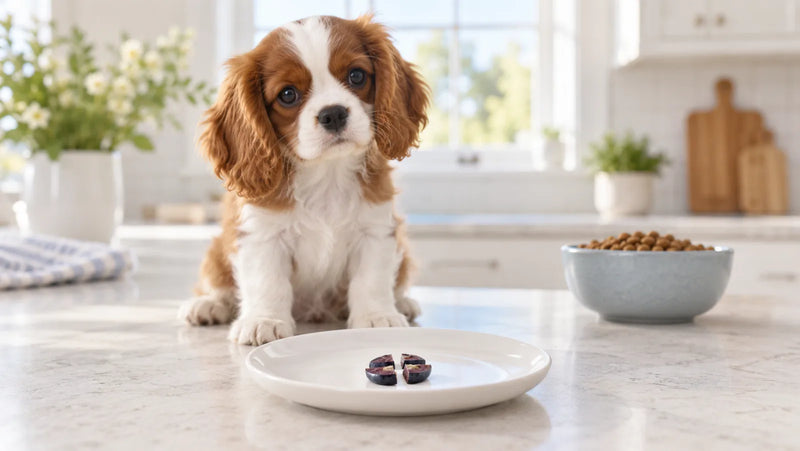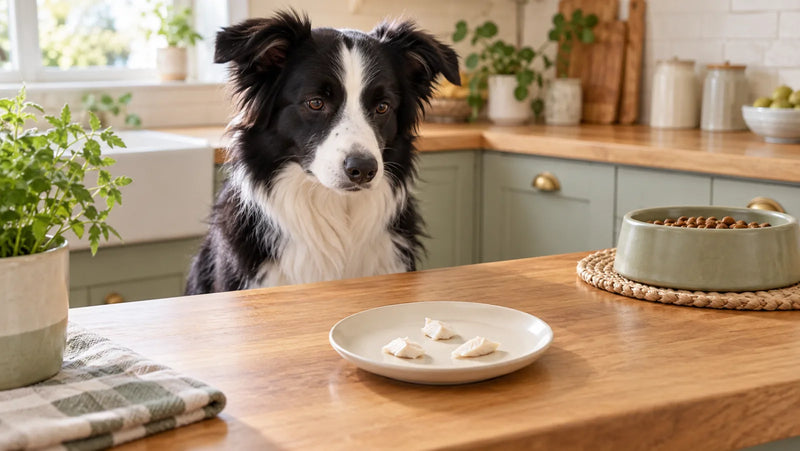

Can dogs eat yogurt? Sometimes—many healthy adult dogs can try a tiny amount of plain, unsweetened yogurt after you confirm that the complete ingredient list contains no xylitol. That label check comes before the first lick. Some sugar-free products may contain xylitol, a sweetener that is toxic to dogs, and an exposure needs an immediate professional call.
Even xylitol-free yogurt is not a universal yes. Many dogs digest lactose poorly, flavored products introduce more ingredients, and full-fat yogurt may be unsuitable for a dog with fat restrictions. Yogurt is an optional extra, not a balanced meal, calcium prescription, or proven probiotic treatment.
Can Dogs Eat Yogurt? The Quick Answer
- Plain, unsweetened, xylitol-free yogurt: a tiny first taste may be reasonable for some healthy adult dogs.
- Sugar-free or low-sugar yogurt: do not feed it until every ingredient has been checked. The front label cannot rule out xylitol.
- Flavored, fruit-on-the-bottom, dessert, or frozen yogurt: skip it. Sugar, sweeteners, chocolate, raisins, syrups, fat, and mixed add-ins change the decision.
- A dog that reacts to dairy: stop. Gas, loose stool, diarrhea, vomiting, or abdominal discomfort can signal poor lactose tolerance.
- Yogurt for diarrhea or another health problem: ask the veterinarian. A food with live cultures is not automatically a tested canine probiotic or a treatment.
The American Kennel Club's yogurt guidance also gives a qualified answer: yogurt itself is not toxic, but lactose may be difficult for dogs to digest, xylitol must be avoided, and too much fat can cause problems. The specific container in your refrigerator still needs its own ingredient and nutrition-panel review.
Check for Xylitol Before Any Taste
Do not rely on the words plain, natural, light, low-sugar, no added sugar, or unsweetened. Turn the container around and read the entire ingredient list. Formulas can differ by flavor, product line, package size, and reformulation, so a yogurt that passed a previous check does not give every future tub permanent approval.
The FDA's xylitol warning for dogs lists three alternate names that belong in this check: wood sugar, birch sugar, and birch bark extract. Look for the actual ingredient xylitol or one of those listed aliases. Do not assume every sugar alcohol, every natural sweetener, or every birch-related phrase is xylitol; identify what the label actually says.
| What the package says | What it means for the dog | Decision |
|---|---|---|
| Xylitol, wood sugar, birch sugar, or birch bark extract | The FDA identifies these names with a sweetener that is toxic to dogs | Do not feed; ingestion is an immediate call |
| Sugar-free, low-sugar, light, or keto | A marketing description does not identify every sweetener | Inspect the complete ingredient list; skip if uncertain |
| Plain and unsweetened | A better starting category, but not proof of xylitol-free status or tolerance | Check ingredients, fat, calories, and the dog's needs |
| Fruit, dessert, chocolate, granola, syrup, or mixed flavor | Multiple add-ins create extra hazard, calorie, and tolerance questions | Do not share; choose a separate plain product if appropriate |
If the ingredient list is missing, smudged, unfamiliar, or hidden on an individual cup, the answer is no for that serving. There is no nutritional need to gamble on an unknown yogurt.
Xylitol in Yogurt Is an Emergency
If a dog may have eaten yogurt or another product containing xylitol, contact a veterinarian, emergency animal clinic, or animal poison-control center immediately. Do not wait to see whether the dog looks normal. FDA warns that xylitol can trigger a rapid insulin release in dogs, leading to a dangerous fall in blood sugar; serious liver injury can also occur.
Possible signs listed by FDA include vomiting, reduced activity, weakness, difficulty standing or walking, collapse, shaking, seizures, coma, liver failure, and bleeding problems. Signs do not need to appear before the call. The product concentration, amount eaten, time, dog's weight, and current condition all affect case-specific advice.
- Prevent more access. Secure the tub, cup, spoon, wrapper, trash, and any spilled product.
- Keep the evidence. Bring the full package or photograph the ingredient panel, product name, lot information, and remaining amount.
- Record what is known. Note the estimated amount, earliest possible time, dog's weight, current signs, and any other foods eaten.
- Call now. Contact the veterinarian, emergency clinic, or ASPCA Animal Poison Control at (888) 426-4435. ASPCA states that a consultation fee may apply.
- Follow the professional's instructions. Do not induce vomiting or give hydrogen peroxide, salt, charcoal, syrup, food, or a forced drink unless the clinician handling this case directs it.
This article cannot calculate a home-safe amount of xylitol. Treat a confirmed or suspected exposure as time-sensitive, even when the dog has no visible symptoms.
Which Yogurt Can Dogs Eat?
Plain unsweetened yogurt
A plain, unsweetened product with no xylitol is the only yogurt category covered by the cautious sometimes answer. The shorter ingredient list makes review easier, but it does not erase lactose, milk-protein, fat, calorie, or individual medical concerns. Choose an unflavored product and offer it by measured spoon, not by handing over the tub.
Flavored, fruit-on-the-bottom, dessert, and frozen yogurt
These are human desserts or snacks, not cleaner versions of plain yogurt. They may contain substantial sugar, syrup, chocolate or cocoa, raisins or grapes, cookie pieces, granola, artificial flavor blends, nuts, or several toppings at once. Frozen yogurt can also be rich and easy to over-serve. Removing a visible topping does not remove ingredients already mixed through the base.
Vanilla-flavored yogurt is still flavored yogurt. The concern is not that the word vanilla alone proves poisoning; it is that the complete product contains more ingredients and usually more sugar than the plain option. There is no benefit that requires sharing it.
Sugar-free and low-sugar yogurt
Not every sugar-free yogurt contains xylitol, and the article should not pretend otherwise. The category is a warning to inspect, not a diagnosis. Read every ingredient and reject any product listing xylitol, wood sugar, birch sugar, or birch bark extract. When a sweetener cannot be identified confidently, keep the product away from the dog.
Lactose Intolerance: Watch the Individual Dog
Yogurt can pass the ingredient check and still fail the tolerance check. Lactose is the natural milk sugar. A dog that does not digest enough of it may develop gas, abdominal discomfort, loose stool or diarrhea, or vomiting after dairy. The amount tolerated varies, so another dog's reaction and a previous uneventful lick do not guarantee this serving will be comfortable.
Lactose intolerance is not the same as xylitol poisoning. A possible xylitol exposure requires an immediate call without waiting for signs. A mild digestive response after a confirmed xylitol-free taste calls for stopping the yogurt, offering no more new food, monitoring closely, and contacting the veterinarian if signs persist, worsen, become painful, or occur with weakness, dehydration, blood, repeated vomiting, or appetite loss.
Intolerance is also not automatically a milk-protein allergy. Skin, ear, and gastrointestinal signs have many possible causes. Do not diagnose an allergy from one episode or start an improvised restrictive diet; a veterinarian can decide whether a controlled diet trial is appropriate.
Can Dogs Eat Greek Yogurt?
Some plain Greek-style yogurts may contain less lactose than regular yogurt because straining removes part of the liquid whey. AKC notes plain Greek-style yogurt as a potentially better choice for that reason. It is still not lactose-free by definition, and an individual dog can still react.
Greek does not mean low-fat. Nonfat, reduced-fat, and full-fat products have very different calorie and fat profiles, and flavoring changes the ingredient list again. A full-fat Greek yogurt can be calorie-dense; AKC warns that too much fat can cause stomach upset and may contribute to pancreatitis risk. A dog with previous pancreatitis, a prescribed fat restriction, obesity, diabetes, or another nutrition-sensitive condition should not be tested without veterinary approval.
Use the actual panels, not the product style, as the decision tool: confirm no xylitol, choose plain and unsweetened, compare fat and calories per serving, then decide whether even a tiny amount fits this dog. Greek yogurt is an option within the same cautious framework, not a health upgrade.
How Much Yogurt Can a Dog Eat?
There is no universal veterinary dose of yogurt. Body weight matters, but so do calories, body condition, lactose tolerance, eating speed, current diet, medications, and medical history. For a healthy adult dog whose veterinarian has not restricted dairy or extras, the amounts below are conservative first-taste ceilings, not targets or daily allowances.
| Dog size | Cautious first-taste ceiling | How to use it |
|---|---|---|
| Under 20 lb | Up to 1/4 teaspoon | Start with a lick smaller than the ceiling |
| 20–49 lb | Up to 1/2 teaspoon | Do not combine with another new food |
| 50–79 lb | Up to 1 teaspoon | Measure instead of estimating from the tub |
| 80 lb and over | Up to 2 teaspoons | Still an extra, not a bowl or meal |
Start below the ceiling when the dog has never tried dairy. A toy dog, gulper, calorie-restricted dog, or dog with an uncertain history may need none. Do not increase the amount merely because no immediate sign appeared; tolerance can be dose-dependent, and yogurt provides no nutrient a complete and balanced dog food needs added by default.
The WSAVA treat guide recommends that all treats and extras together provide less than 10% of daily calories, leaving at least 90% for complete and balanced food. Yogurt, toppers, table scraps, chews, biscuits, and training rewards share that one budget. Our daily dog-treat calorie guide explains the framework; each extra does not receive a separate 10%.
How to Offer a Tiny Plain-Yogurt Taste
- Check the dog's plan. Do not interrupt a prescription, elimination, fat-restricted, diabetic, kidney, gastrointestinal, or weight-management diet.
- Select the product. Choose plain, unsweetened yogurt and read the complete ingredient list for xylitol and its FDA-listed aliases.
- Review fat and calories. Confirm that the product and tiny serving fit the dog's individual restrictions.
- Use a clean measuring spoon. Separate the dog's taste before fruit, syrup, granola, chocolate, sweetener, or another human topping touches the yogurt.
- Offer less than the first-taste ceiling. Let the dog lick it from a shallow clean dish or use a tiny smear with regular food; do not hand over the container.
- Refrigerate the human portion promptly. Follow the package's storage and discard directions rather than leaving dairy at room temperature.

Does Yogurt Give Dogs Useful Probiotics?
Yogurt is fermented with live cultures, but that fact alone does not prove that a spoonful will produce a useful clinical effect in a dog. The organisms used to make a food, the amount still alive when it is eaten, the dose studied for a particular purpose, storage conditions, and the dog's health all matter.
Cornell's veterinary guidance on canine diets says to use canine probiotics rather than assuming a human probiotic is equivalent, because human products are geared toward different gut bacteria. Cornell's separate overview of canine probiotics emphasizes identifying the exact microorganisms, the quantity, a guarantee that they remain alive through shelf life, and research supporting the product. A yogurt label that simply says live cultures does not answer all of those questions.
That is why this article does not promise that yogurt will improve immunity, cure diarrhea, prevent digestive disease, treat allergies, fix skin, or rebalance the microbiome. If a veterinarian thinks a probiotic fits a particular dog and problem, ask for a canine product, organism, amount, duration, storage method, and monitoring plan. Use yogurt only as an optional food the dog tolerates, not as a substitute for that plan.
Which Dogs Should Skip Yogurt or Ask a Veterinarian?
- Dogs with a known dairy reaction, repeated gas or diarrhea after dairy, or a suspected milk-protein allergy under evaluation.
- Dogs with previous pancreatitis, prescribed fat restriction, obesity, diabetes, or another condition affected by calories, fat, or carbohydrate.
- Dogs on prescription, elimination, hydrolyzed, kidney, urinary, gastrointestinal, or weight-management diets.
- Dogs with active vomiting, persistent diarrhea, belly pain, bloating, dehydration, weakness, or appetite loss.
- Immunocompromised or medically fragile dogs when an unneeded live-culture food could complicate care.
- Puppies whose growth diet should not be displaced by extras.
- Any dog after suspected xylitol exposure. The next step is an immediate professional call, not a tolerance test.
Yogurt is easy to omit. When the medical or label question is unresolved, complete dog food and veterinarian-approved rewards are the safer default.
How to Introduce Yogurt and Watch Tolerance
- Confirm that the product is plain, unsweetened, xylitol-free, and compatible with the dog's health plan.
- Offer less than the size-based first-taste ceiling on a day with no other new food.
- Watch the dog while eating so the cup, foil lid, or spoon cannot be swallowed.
- Over the next day or two, note appetite, energy, comfort, gas, vomiting, and stool.
- Stop yogurt if any digestive sign appears. Contact the veterinarian when signs persist, recur, worsen, or come with pain, weakness, dehydration, blood, repeated vomiting, or appetite loss.
A successful first taste means only that this dog appeared to tolerate this product in this tiny amount. It does not prove a probiotic benefit or establish a daily serving.
Yogurt vs Cheese and Non-Dairy Toppers
This page owns the yogurt decision: xylitol label screening, lactose tolerance, Greek-style nuance, cautious portions, and the limits of probiotic claims. Cheese is a separate food with its own sodium, fat, lactose, and serving questions. Use our dog-safe cheese guide rather than transferring the yogurt answer to every cheese.
A dog does not need a dairy topper. If dairy tolerance is the problem, our bone-broth label and serving guide explains a separate non-dairy route. Broth is not automatically safe either: onion, garlic, sodium, fat, calories, and preparation all need review. The right comparison is label against label, not yogurt bad and broth good.
Frequently Asked Questions
Can dogs eat yogurt every day?
Daily yogurt is not necessary. It would need to remain xylitol-free, be well tolerated, fit the shared extras budget, and not conflict with the dog's health plan. An occasional tiny serving is easier to justify than turning yogurt into a routine supplement without veterinary guidance.
Can puppies eat yogurt?
A puppy may tolerate a tiny amount of plain, xylitol-free yogurt, but growth diets require precise nutrient balance and small bodies have little calorie room for extras. Do not use yogurt to treat puppy diarrhea or replace puppy food. Ask the veterinarian before making it routine.
Can dogs eat vanilla yogurt?
Skip it. Vanilla yogurt is a flavored product that commonly includes more sugar or sweeteners and may include other additives. Vanilla itself is not enough information to declare poisoning, but there is no reason to choose it when a separately checked plain product is the only form covered here.
Can dogs eat frozen yogurt?
Human frozen yogurt is a dessert and may contain sugar, sweeteners, chocolate, raisins, syrups, cookie pieces, nuts, or high-fat add-ins. Do not share it. Freezing plain yogurt does not remove lactose, fat, calories, or a hazardous ingredient already present.
Is yogurt good for a dog with diarrhea?
Do not use yogurt as an automatic diarrhea remedy. Dairy can worsen digestive signs in a lactose-intolerant dog, and live cultures on a food label are not proof of a tested treatment. Persistent, recurrent, bloody, painful, or worsening diarrhea—or diarrhea with vomiting, weakness, dehydration, or appetite loss—needs veterinary care.
Keep Yogurt Plain, Tiny, and Optional
The safe decision order is label first, dog second, portion third. Confirm that a yogurt is plain, unsweetened, and free of xylitol and its FDA-listed aliases; make sure dairy and fat fit the dog's health; then offer only a tiny measured first taste. Stop if tolerance signs appear.
American Paws does not currently claim a yogurt product. If you prefer a purpose-made reward with a defined label, browse all current American Paws dog treats and compare ingredients, calories, size, and texture with the dog's needs. Yogurt can remain an occasional optional taste—never a reason to take a label risk or replace complete food.