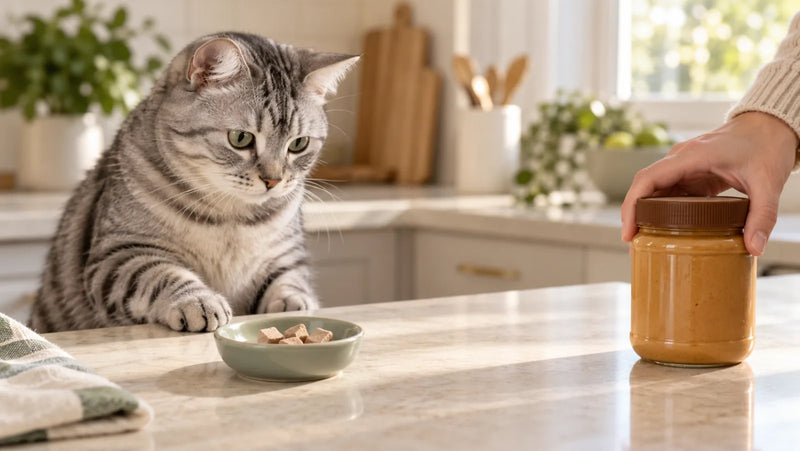
Can puppies eat blueberries? Yes—some healthy, fully weaned puppies can try a small amount of plain ripe blueberry after their veterinarian has cleared ordinary food treats. Wash the fruit, remove every stem and leaf, flatten or cut it for a small mouth, and offer one soft piece at a time under direct supervision. A hard round berry can become a choking hazard, and frozen berries should be thawed and softened before a puppy gets them.
Begin with less than “a few”: one prepared piece is enough to test chewing, swallowing, and tolerance. Blueberries are optional extras, not puppy food. The complete-and-balanced growth diet must continue to provide nearly all daily calories and nutrients.
Can Puppies Eat Blueberries Safely?
A blueberry can fit only after five gates are open. The puppy must be fully weaned and eating an established growth diet, feel well today, have veterinary clearance for people-food treats, receive a sound plain berry, and be able to manage the prepared texture comfortably. A birthday alone cannot answer those questions.
| Blueberry form | Puppy decision | Preparation |
|---|---|---|
| Fresh, ripe, plain | Possible first taste after all five gates | Rinse, remove plant parts, flatten or cut, and measure |
| Frozen, unsweetened | Only after it is fully thawed and soft | Drain, flatten or cut, then offer one piece at a time |
| Dried or sweetened | Skip | Concentrated sugar, additions, and chewy texture defeat the simple test |
| Muffin, jam, syrup, pie filling, yogurt coating | Skip | These are recipes with separate fat, sugar, sweetener, dairy, and ingredient risks |
| Stems, leaves, moldy fruit, or unidentified wild berries | Do not feed | Use only positively identified, sound cultivated blueberries |
The ASPCA Animal Poison Control Center's pet-safe snack guidance includes blueberries among fruits that pets can eat, while emphasizing small portions and a regular diet as the main nutrition source. That general safety statement does not remove the puppy-specific questions about weaning, texture, growth nutrition, or an individual medical plan.
Use the adult and general blueberry safety article for broad dog portions, routine use, nutrition language, and blueberry-food comparisons. The puppy decision remains narrower: readiness, airway-aware preparation, one measured exposure, and protection of the growth diet.
Whole Blueberries Can Be a Choking Risk for Puppies
A fresh blueberry is small, but it is also round, firm, smooth, and able to roll. Those properties matter in a tiny mouth. A puppy that gulps, grabs during an exciting training session, has a short muzzle, or has not developed a steady chew-and-swallow pattern may send a whole berry toward the back of the mouth before breaking it.
The WSAVA treat-safety handout recommends choosing an appropriate treat size and shape to reduce choking risk and supervising treats. For a toy or small puppy, press the washed berry flat with a fork or the back of a spoon, then divide the soft disk into tiny pieces. For a larger puppy, flattening or quartering still makes the piece easier to control and observe.
- Place the prepared piece on a stable plate or offer it calmly at floor level.
- Give one piece, wait for a complete swallow, and only then decide whether to continue.
- Do not toss whole berries for a puppy to catch or scatter them where excited littermates compete.
- Keep children from feeding unmeasured berries or pushing fruit into the puppy's mouth.
- End the trial if the puppy coughs, gags, repeatedly spits the piece out, or cannot settle into comfortable chewing.
Coughing, drooling, gagging, pawing at the mouth, holding the mouth open, or sudden agitation can signal choking. Noisy or difficult breathing, blue or gray gums, weakness, or collapse is an emergency. The Merck Veterinary Manual's pet emergency guidance warns against putting fingers blindly into an animal's mouth because the person can be bitten and the object can be mishandled. Call the nearest emergency veterinary hospital immediately and follow its live instructions while arranging transport.
Fresh or Frozen Blueberries for a Puppy?
Prepare fresh berries from inspection to tiny pieces
- Identify: use ordinary cultivated blueberries from a known package or source, not an unknown berry from a yard or trail.
- Inspect: discard soft-leaking, fermented-smelling, shriveled, or moldy fruit and any berry from a questionable container.
- Rinse: wash the berries under cool running water; do not use soap, detergent, or a flavored produce wash.
- Strip: remove stems, leaves, and debris, then dry the fruit on a clean towel.
- Reshape: flatten or cut the berry according to the puppy's current mouth and chewing skill.
- Measure: separate the complete first-taste amount before the puppy sees the container.
A large berry needs more preparation than a small berry. Do not assume that “natural” or “bite-size” means puppy-size. The useful endpoint is a soft piece that cannot roll like a marble and that the puppy can swallow without gulping.
Thaw frozen berries until soft
Plain unsweetened frozen blueberries begin as the same fruit, but the serving decision changes while they are hard. An ice-hard berry can be slippery and difficult for a tiny or fast-eating puppy to control. It should not be promoted as a teething chew.
Move the measured berry to the refrigerator or a clean covered dish until it is fully thawed and soft through the center. Drain excess juice, press it flat, divide it if needed, and serve it cool rather than ice-hard. Do not refreeze a saliva-touched portion or leave thawed fruit at room temperature for a long training session.

Keep blueberry recipes out of the first trial
Blueberry muffins, pancakes, doughnuts, jam, pie filling, syrup, sweetened dried berries, yogurt-coated fruit, and mixed smoothies are not plain blueberries. Their recipes may include concentrated sugar, fat, dairy, salt, chocolate, raisins, macadamia nuts, or a sweetener that requires its own urgent ingredient check. “Blueberry flavored” does not establish how much fruit is present or whether the whole product is suitable.
Do not scrape fruit out of a pastry and call it plain. If a puppy ate a packaged blueberry food, keep the label, record the puppy's current weight, estimate the amount and time, and call the veterinarian or animal poison service when an unsafe or unknown ingredient may be involved.
How Many Blueberries Can a Puppy Eat?
There is no validated universal blueberry-per-pound dose for puppies. Current weight helps keep an optional first taste small, while age, weaning status, mouth size, chewing skill, health, complete diet, and the veterinarian's plan determine whether the trial should happen at all. The amounts below are deliberately conservative single-exposure ceilings, not daily servings.
| Current puppy weight | Conservative first-taste ceiling | How to offer it |
|---|---|---|
| Under 10 lb | Up to 1/2 of one small blueberry | Flatten, divide into at least four tiny pieces, and begin with one piece |
| 10–24 lb | Up to 1 small blueberry | Flatten or quarter; offer one piece at a time |
| 25–49 lb | Up to 2 small blueberries | Flatten or cut both before the container reaches the puppy |
| 50 lb and over | Up to 3 small blueberries | Prepare each berry and supervise every swallow |
Start with the first tiny piece rather than automatically finishing the row. Stop when the puppy loses interest, gulps, coughs, or struggles with the texture. Do not use a projected adult weight; use the puppy's current measured weight. A large-breed puppy is still a growing puppy, and a larger body does not cancel a chewing or medical restriction.
Wait before repeating the food. Keep the rest of the day's diet familiar so that stool, appetite, skin, face, breathing, and energy changes are easier to interpret. The daily puppy treat-calorie method explains how training rewards, chews, table foods, supplements, and fruit must share one extras budget rather than receiving separate allowances.
WSAVA advises that all treats together remain below 10% of a dog's daily calories. The AAHA feeding-plan guidance similarly keeps complete-and-balanced nutrition at 90% or more of total intake and extras at 10% or less, with the plan verified by the veterinary team. A puppy's veterinarian may choose a lower limit, especially during rapid growth or when many repetitions are used in training.
Protect the Complete Puppy Diet During Growth
Blueberries supply water, fiber, naturally occurring sugar, and plant compounds, but that does not make them necessary puppy nutrition. They do not provide the complete protein, fat, minerals, vitamins, energy density, and nutrient ratios a growing dog needs. More fruit is not a shortcut to better growth.
AAHA life-stage nutrition guidance says puppies should receive a diet appropriate for growth until skeletal maturity. Large and giant breeds can remain in that growth stage longer, so their veterinarian may manage energy and mineral intake especially carefully. Replacing part of a measured meal with handfuls of fruit can dilute that deliberate plan.
Claims that a berry prevents cancer, treats urinary disease, controls inflammation, “boosts” immunity, improves vision, or extends a puppy's life go beyond what an occasional food can establish. Blueberries can be optional variety for a suitable puppy; they are not a medicine, supplement dose, or reason to reduce prescribed food.
The puppy reward selection framework compares readiness, texture, delivery size, calories, ingredients, and growth stage. It can help decide whether a wet fruit piece, part of the puppy's own kibble, or a purpose-made reward is the more controllable choice for a particular session.
A Safe First-Blueberry Trial
- Ask first: confirm with the veterinarian that ordinary food treats fit the puppy's life stage, health, and current diet.
- Choose a normal day: wait until appetite, stool, skin, breathing, and energy are normal and no other new food is being introduced.
- Prepare before presenting: rinse, strip, soften, flatten, cut, and separate the entire measured amount.
- Offer one piece: watch the mouth and throat area until the puppy chews and swallows comfortably.
- Record the exposure: note the time, exact amount, preparation, and any response.
- Observe before repeating: keep later meals and rewards familiar while tolerance becomes clear.
A puppy may develop loose stool, gas, vomiting, appetite change, or discomfort after an unfamiliar food even when the ingredient is not toxic. Stop blueberries and contact the veterinarian for repeated vomiting or diarrhea, blood or black stool, abdominal pain, dehydration concerns, marked tiredness, refusal to eat, or symptoms that persist. Young and toy-breed puppies have less reserve, so do not wait for a mild problem to become severe.
Hives, facial swelling, repeated vomiting with weakness, breathing trouble, pale or blue gums, or collapse needs emergency veterinary care. Do not run a larger at-home challenge to prove whether blueberries caused the reaction.
Which Puppies Should Skip Blueberries or Ask First?
- Not fully weaned: stay with the veterinarian-approved milk-replacement or weaning plan.
- Active illness: vomiting, diarrhea, poor appetite, abdominal pain, lethargy, fever, or dehydration calls for veterinary advice rather than a food experiment.
- Chewing or swallowing trouble: prior choking, airway disease, dental pain, neurologic problems, a short muzzle, or habitual gulping needs an individual texture decision.
- Prescription or elimination diet: an unapproved fruit can break the diagnostic or treatment plan even when the fruit is usually considered safe.
- Diabetes, weight plan, or another medical condition: sugar, calories, timing, and ingredient exposure belong in the assigned plan.
- Known fruit reaction: do not repeat the food without veterinary direction.
- Large- or giant-breed growth plan: protect the veterinarian's calorie and nutrient targets rather than adding extras casually.
A veterinarian-led decision is especially important when several risk factors overlap. Cutting a berry smaller can reduce one shape hazard; it cannot make an unsuitable ingredient or an unstable puppy medically appropriate.
Blueberries, Blackberries, and Other Fruit Have Separate Rules
The fruit-safety overview for dogs separates fruit flesh from pits, seeds, cores, rinds, plant parts, sweetened products, and truly hazardous fruits. A puppy should not inherit permission for every fruit after tolerating one blueberry.
Blackberries look related but have their own identification, wild-foraging, preparation, natural-xylitol context, and portion questions. Use the blackberry safety and serving decision before offering that fruit. Never let a puppy graze freely from a yard, hedgerow, or trail where the plant and any chemical exposure are uncertain.
For general adult-dog blueberry questions, return to the blueberry portion and preparation information for dogs. The smaller puppy trial does not become the adult serving rule, and an adult table should not be scaled down mechanically for a newly weaned puppy.
Training Rewards Need a Repeatable Size and Calorie Plan
A softened berry can work as an occasional calm food exposure, but wet fruit is awkward for rapid repetitions. It can stain fingers and pouches, roll away before preparation, become warm and messy, and make each reward an inconsistent size. The sugar and calories also count even when the piece is called a “healthy” reward.
For structured practice, compare the live labels in the American Paws training-treat collection. Check the exact ingredient list, calorie statement, piece texture, feeding guidance, and current package rather than assuming every item fits every puppy. Ask the veterinarian to approve the specific product and decide whether a piece needs to be divided for the puppy's mouth and daily allowance.
American Paws does not sell blueberries or a blueberry treat. Pet parents can browse the full American Paws dog treats collection by actual protein, texture, and label information. A packaged reward is still an extra, never a replacement for complete puppy food and never automatic permission for a puppy with a dietary restriction.
Frequently Asked Questions
Can an 8-week-old puppy eat blueberries?
Age alone is not enough. Some puppies are fully weaned and established on complete growth food around that time, while readiness, breed size, health, chewing skill, and veterinary plans differ. Ask the veterinarian before introducing people food; if approved, use a tiny piece of one washed, flattened berry rather than a whole berry.
Can puppies eat frozen blueberries?
Do not give an ice-hard round berry to a puppy. Fully thaw it until the center is soft, drain it, flatten or cut it, measure the amount, and supervise one piece at a time. Skip frozen blueberries for a puppy with chewing, swallowing, airway, or dental concerns unless the veterinarian specifically approves the texture.
Can puppies eat blueberry muffins?
No blueberry muffin should be used as a puppy treat. It is a multi-ingredient baked food that can be high in sugar and fat and may contain unsafe or unknown ingredients. If a puppy steals one, keep the recipe or package, determine the amount and time, and contact the veterinarian promptly when chocolate, raisins, macadamia nuts, xylitol or another sweetener, or an unknown ingredient may be present.
Can puppies eat blueberries every day?
Do not turn a successful first taste into an automatic daily habit. Complete growth food stays primary, and all extras share one veterinarian-approved calorie allowance. Ask whether blueberries add useful variety or merely displace calories that could support consistent training and balanced growth.
What if my puppy ate a lot of blueberries?
Remove access, estimate the amount, check whether the fruit was plain or part of another product, record the time and current puppy weight, and call the veterinarian. A large fruit load can cause digestive upset, and a very young, tiny, ill, or symptomatic puppy deserves prompt individual advice. Breathing difficulty or choking signs need emergency care.
Are blueberry stems and leaves safe for puppies?
Do not deliberately feed them. Remove stems and leaves so the exposure is a measured amount of identifiable fruit flesh. A plant part from an unknown or treated plant also creates identification and chemical-exposure questions that an ordinary store-bought berry does not answer.
One Softened, Prepared Berry Is Enough to Learn From
- Wait until the puppy is fully weaned, healthy, and cleared for ordinary food treats.
- Use a sound ripe blueberry with no sweetener, recipe, stem, or leaf.
- Rinse it, soften it, and flatten or cut it so it cannot roll whole into a small mouth.
- Begin with one tiny piece and supervise chewing and swallowing.
- Keep the total within the veterinarian-approved extras budget and observe before repeating.
- Leave complete-and-balanced growth food in charge of the puppy's nutrition.
If a repeatable dry reward fits the training plan better than fruit, compare the exact labels in the American Paws training-treat collection with the veterinarian. Choose for the puppy in front of you: current size, mouth, growth stage, health, established proteins, and daily calorie plan.