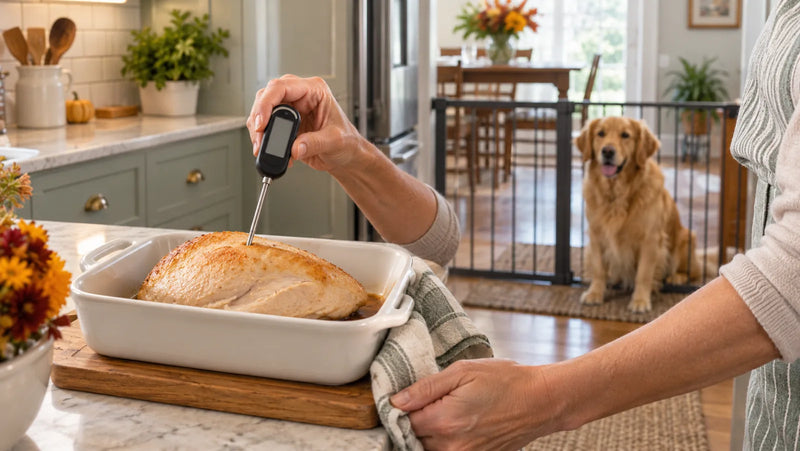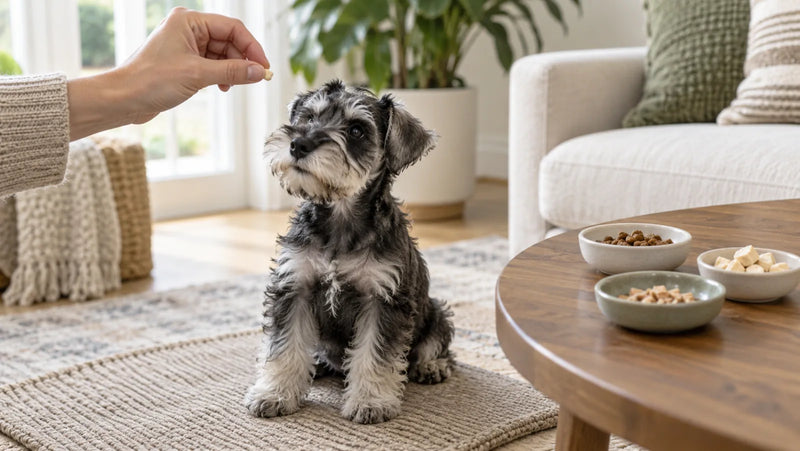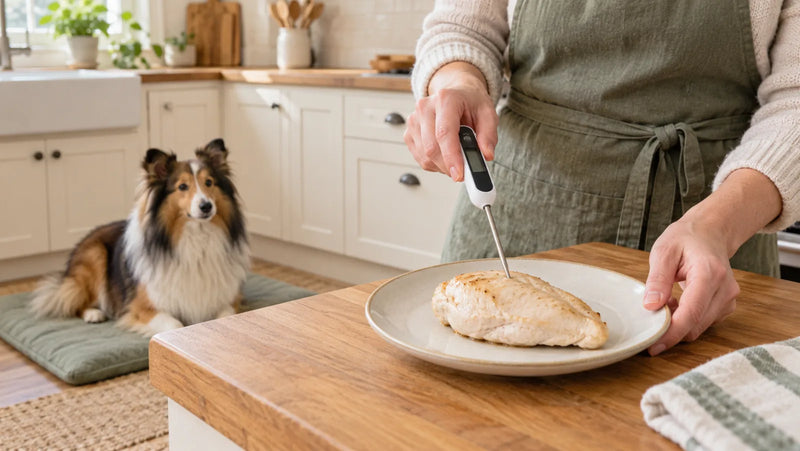

Yes—most healthy dogs can eat a few small pieces of ripe, plain pear flesh. So, can dogs eat pears safely? Wash the fruit, remove the stem, core, and every seed, then cut the flesh into pieces sized for your dog. Pear is an occasional extra, not a meal replacement; canned pears in syrup and a whole pear core should stay off the menu.
The useful distinction is not simply “pear or no pear.” Prepared flesh, crushed seeds, and a fibrous core create different decisions. The flesh is the shareable part. Seeds contain trace cyanogenic compounds, while a swallowed core can become a choking or digestive-tract foreign body. Preparation prevents all three questions from arriving at once.
Can Dogs Eat Pears? The Short Answer
The AKC pear-safety guide gives a qualified yes: offer bite-size pear pieces in moderation, supervise eating, and leave out the seeds and core. Fresh, ripe fruit is the straightforward choice because you control every ingredient and can see that the seed channel is gone.
Pear is optional. It does not balance a diet, treat a medical condition, or supply anything a complete dog food must obtain from fruit. Think of it as one possible taste inside the same calorie allowance used by training rewards, chews, toppers, table tastes, and other dog treats.
This page owns the pear-specific decision. For apples, bananas, berries, melons, grapes, and the larger risk categories, use our complete fruit-safety overview.
Pear Flesh, Seeds, and Core Are Different Decisions
Ripe pear flesh: plain and prepared
Soft, ripe pear flesh can be cut into a small supervised reward. The thin skin is not inherently toxic, but it should be washed, and peeling may make sense for a dog with limited chewing ability or a veterinary plan that restricts fiber. A hard unripe pear is not a better chew: firmness can make pieces harder to bite and swallow.
Serve the fruit plain. Butter, syrup, honey, sugar, alcohol, chocolate, raisins, xylitol, pie filling, and spice blends turn a simple piece of fruit into a different—and sometimes dangerous—food.
Pear seeds: trace cyanogenic compounds, not a reason to feed the core
The AKC advises removing pear seeds because they contain traces of cyanide. More precisely, fruit seeds can contain cyanogenic compounds that may release cyanide after the seed material is damaged. The MSD Veterinary Manual’s explanation of cyanogenic fruit-seed hazards notes that chewing or grinding compromises a seed, while an intact swallowed seed is not expected to release cyanide; it also says severe toxicity from the low levels in common grocery fruit seeds is uncommon.
That nuance should prevent panic, not justify feeding seeds. Remove all of them every time. There is no useful “safe number” because seed damage, amount, dog size, and individual circumstances differ. A dog that chewed many seeds, ate an unknown amount, or develops signs needs case-specific veterinary advice.
Pear core and stem: the more immediate choking or obstruction concern
The dense central core and stem do not break down like a small cube of ripe flesh. A large piece can lodge in the throat, and swallowed material that is too large to pass can act as a foreign body. That physical problem is separate from seed chemistry.
The Merck Veterinary Manual’s gastrointestinal-obstruction guidance treats obstruction as an emergency and lists vomiting, poor appetite, lethargy, diarrhea, and abdominal pain among possible signs. A small dog, a gulper, or a dog with a prior foreign-body history deserves particular caution, but every dog gets a fully cored pear.
How to Prepare Pear for a Dog
- Choose one sound, ripe pear. Discard fruit with mold, fermentation, leaking flesh, or an off odor. “Soft” should mean ripe, not spoiled.
- Wash it under running water. Rub the surface and dry it with a clean towel before your knife carries anything from the skin into the flesh.
- Remove the stem and quarter the pear. Quarters make the entire seed channel visible.
- Cut away the whole core. Remove the fibrous center, blossom end, and every seed rather than merely flicking out the seeds you can see.
- Inspect both sides. A dark seed can hide against the wet flesh. If you cannot confirm that a piece is seed-free, it goes in the discard bowl.
- Cut for the individual dog. Make pieces smaller than the dog’s usual supervised treat bite. A Dachshund and a Great Dane do not need the same geometry.
- Offer one first piece by hand. Do not toss a slippery cube for a dog to gulp, and do not leave the cutting board or core within reach.

If you prepare pieces ahead, refrigerate them in a clean closed container and use normal food-safety judgment. Browning alone is a quality change, but slime, fermentation, mold, leakage, or an unusual odor means discard. Do not use citrus juice, sugar syrup, or a sweetener to keep the pieces looking fresh.
How Much Pear Can a Dog Eat?
Start with one tiny piece, even for a large dog. That first taste answers the most important individual question: does this dog chew it comfortably and tolerate it without vomiting, diarrhea, itching, facial swelling, or another concerning change?
The WSAVA treat guide recommends keeping treats below 10% of daily calories so at least 90% comes from complete food. The 10% covers all extras together. Pear does not receive a separate fruit allowance on top of training treats, chews, toppers, and medication foods.
For a small dog, one thin bite-size slice may already be enough for an occasional serving; the AKC specifically uses one slice as its small-dog example and says a whole pear is too much. A larger dog may have room for a few small pieces, but body size alone does not set the portion. The dog’s established calorie target, health plan, other treats that day, and the actual weight of the pear pieces matter.
Use our daily dog-treat calorie guide when you need the full calculation. Treat 10% as a ceiling, not a goal. A dog does not need pear every day, and “fruit” does not make unlimited sugar or fiber disappear.
Can Dogs Eat Canned, Frozen, Dried, or Cooked Pears?
Canned or jarred pears: skip syrup and sweetened formats
The AKC recommends fresh pear rather than canned pear because canned fruit commonly brings too much sugar. Heavy syrup, light syrup, juice-packed fruit, and “no sugar added” are not interchangeable claims. Read the complete ingredient list; a sugar-free product can contain sweeteners that were never present in the fresh pear.
There is little reason to solve that label puzzle when a washed, cored fresh slice is available. Never serve pear pie filling, cocktail fruit, a leaking or swollen can, or any product containing xylitol, grapes, raisins, alcohol, chocolate, or unknown sweeteners.
Frozen pear: prepare it before freezing
Plain frozen pear can be cored, seeded, and cut first, but freezing does not correct unsafe preparation. A hard frozen cube can also be a poor match for a puppy, senior dog, dental pain, or a dog that swallows without chewing. Thaw it or resize it for the dog’s current chewing ability, and supervise.
Dried pear: concentrated and easy to overcount
Removing water shrinks the piece without removing its sugar or calories. Dried pear may also be sticky or leathery, and commercial versions can contain added sugar, oil, sulfites, or other ingredients. Fresh pear is easier to portion and inspect. If a veterinarian approves a dried format, use the actual label and weight rather than treating one shrunken piece like one fresh cube.
Cooked pear and pear products: plain is the dividing line
A little plain cooked pear flesh has the same core-and-seed preparation rule. Dessert pear is different. Poached pears can contain wine and sugar; baked pears can contain butter, nutmeg, raisins, or sweeteners; jam and puree are concentrated and may combine several ingredients. Do not extract a pear from a mixed dessert and assume the absorbed sauce no longer matters.
Which Dogs Need More Caution with Pear?
Ask the veterinary team before adding pear when a dog has diabetes, an active weight-loss plan, recurring gastrointestinal disease, swallowing difficulty, a history of pancreatitis, a prescription diet, or a veterinarian-directed elimination trial. The issue is not that pear automatically harms every dog with one of these conditions; it is that an unplanned sweet, fibrous extra can interfere with an individualized plan.
Puppies need most of their calorie space for complete growth food and may gulp unfamiliar textures. A puppy-specific approval and a piece smaller than its normal training reward are more useful than copying an adult-dog portion. Dogs with missing or painful teeth may need the skin removed and the flesh softened, but apparent mouth pain, dropping food, or sudden chewing changes call for an examination—not a softer snack workaround.
What to Do If a Dog Ate Pear Seeds or a Whole Core
First, remove the remaining pear and preserve it. Note the dog’s weight, the part eaten, an estimated amount, whether seeds were chewed, the time, and any current signs. Those details help a professional distinguish a tiny seed exposure from a large foreign body.
- Breathing trouble, collapse, blue or pale gums, frantic gagging, or inability to swallow is an emergency. Go to the nearest emergency veterinary service now.
- A swallowed whole core or large core section deserves a prompt veterinary call even before signs. Size and shape matter, and waiting for a blockage to become obvious can reduce options.
- A small accidental seed exposure is not automatically cyanide poisoning. Still, call for advice if seeds were chewed, many or an unknown number were eaten, the dog is small, or anything seems abnormal.
- Repeated vomiting or retching, refusal of food or water, abdominal pain, marked lethargy, diarrhea, or trouble passing stool requires veterinary assessment.
The ASPCA Poison Control food-hazard resource advises recording the amount eaten and contacting a veterinarian or poison control after a concerning exposure. ASPCA Animal Poison Control is available at 888-426-4435; a consultation fee may apply. Do not induce vomiting or give hydrogen peroxide, salt, oil, bread, or another home remedy unless the veterinary professional handling the case directs you.
Pears vs Apples for Dogs
Pears and apples are both pome fruits with shareable flesh around a core that should not be fed. Both need washing, full core-and-seed removal, small pieces, and an occasional portion counted with other treats. Their size, firmness, skin, and sugar per piece vary, so a slice is not a standardized unit.
Keep each fruit’s details with its owner page. This guide handles pear forms and pear-core decisions; our apple core, seed, and serving guide handles apple varieties, skin, preparation, and apple-specific portions.
Frequently Asked Questions
Can dogs eat pear skin?
Most healthy dogs can have a small piece with washed thin skin attached. Peel it when the skin is tough, the dog has chewing difficulty, or the veterinarian wants a lower-fiber approach. Skin does not make the core or seeds safe.
Can puppies eat pears?
A veterinarian may approve one very small, soft, seed-free piece for a weaned puppy already doing well on complete growth food. Keep extras minimal, cut smaller than an adult-dog bite, and stop if swallowing or digestion is not comfortable.
Can dogs eat Asian pears?
The same preparation rule applies: wash, remove the stem, full core, and every seed, then cut a tiny plain piece. Asian pears are often crisper and larger than some European varieties, so adjust for texture and actual piece size rather than treating the fruit name as a portion.
Can dogs eat canned pears in juice instead of syrup?
Juice-packed is not the same as plain fresh fruit and can still add concentrated sugar. Check every ingredient, but the simplest recommendation is to skip canned pear and use a small fresh, cored piece. Never use a sugar-free canned product without confirming every sweetener is dog-safe.
Are pears good for dogs every day?
Pear does not need a daily slot. Even when tolerated, it is an optional extra whose sugar, fiber, and calories must fit alongside all other rewards. Rotate only when variety helps the household plan; consistency is often easier for tracking portions and reactions.
Keep Pear Pieces Fresh, Small, Plain, and Seed-Free
Can dogs eat pears safely? For most healthy dogs, the repeatable method is simple: choose ripe fruit, wash it, remove the entire stem-and-core channel with every seed, cut one supervised bite, and count it inside the normal treat budget. Skip syrup-packed fruit and mixed desserts, and call early when a whole core, chewed seeds, choking signs, or digestive symptoms change the situation.
For everyday rewards, choose a verified ingredient list, a texture your dog can handle, and a portion you can count. You can browse all current American Paws dog treats without assuming that any one format fits every dog; use the product label and your dog’s remaining daily treat allowance to make the final choice.