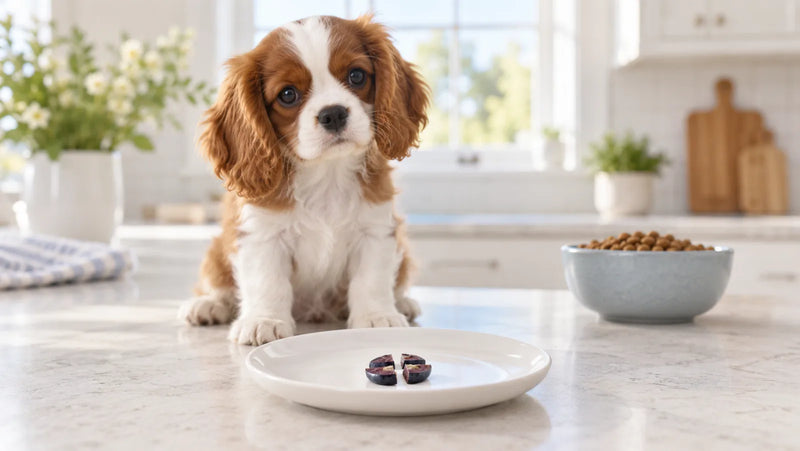

Can dogs eat applesauce? Many healthy adult dogs can have a tiny amount of plain, unsweetened applesauce if the complete ingredient list contains no xylitol or other unsuitable additions. Read the label every time. “Sugar-free,” “no sugar added,” “natural,” and “cinnamon” are front-label descriptions, not proof that a recipe is dog-safe.
If xylitol appears anywhere on the label—or the product is sugar-free and you cannot confirm its sweetener—do not wait for symptoms. Call your veterinarian, an emergency veterinary clinic, or animal poison control immediately. Xylitol may also be listed as birch sugar, wood sugar, or birch bark extract.
Can dogs eat applesauce? The quick answer
Applesauce is an optional people-food extra, not something a dog needs. Its smooth texture can make a large spoonful look harmless even though it contains fruit sugar and calories. The safest candidate has a short, completely understood ingredient list and is served in a deliberately small amount.
| Applesauce type | Decision | Why |
|---|---|---|
| Plain, unsweetened applesauce; no unsuitable additives | A tiny taste may fit | Simple recipe, but it still adds fruit sugar, calories, and a new food exposure. |
| Sweetened applesauce | Skip | Added sugar or syrup adds calories without making the food more useful. |
| Sugar-free applesauce | Inspect every ingredient | The claim does not identify the sweetener; any xylitol makes it unsafe. |
| Cinnamon, spiced, dessert, or mixed-fruit applesauce | Choose plain instead | More ingredients create more allergy, calorie, spice, and toxin questions. |
| Homemade applesauce with unknown recipe | Ask what went in it | “Homemade” does not rule out sugar, xylitol, nutmeg, raisins, or other additions. |
Do not judge by color or texture. A pale smooth sauce can contain added sweetener, while a darker homemade batch may simply use a different apple. The ingredient list and recipe—not appearance—determine the first decision.
Read the ingredient list in this order
First, rule out xylitol and its other names
The FDA's xylitol warning for dog owners explains that this sweetener can make dogs severely ill and may also appear as birch sugar or wood sugar. The FDA's consumer xylitol poster also lists birch bark extract.
Scan the entire ingredient panel for:
- xylitol;
- birch sugar;
- wood sugar; and
- birch bark extract.
Do this even when the front says “unsweetened” or “no sugar added.” Those terms do not guarantee that no sweetener was used, and recipes can change between purchases. Conversely, do not claim every sugar-free product contains xylitol. The correct rule is to identify the actual sweetener before the food goes near the dog.
Then check for added sugars and syrups
Look for sugar, cane sugar, corn syrup, honey, maple syrup, molasses, and concentrated fruit sweeteners. These are not equivalent to xylitol poisoning, but they make applesauce a less useful choice. Added sweetness increases calories, makes portions easier to overdo, and may not fit a dog with diabetes, obesity, pancreatitis history, or a therapeutic diet.
“Unsweetened” does not mean free of naturally occurring fruit sugar or calories. It means you still need a small portion. “No sugar added” does not turn a fruit puree into a free food. If the label makes the sweetener or calorie information hard to understand, choose a simpler product or skip it.
Check spices and flavor blends
A small culinary trace of cinnamon is not the same hazard as xylitol. The AKC's veterinary-reviewed cinnamon guide notes that cinnamon is not considered fatal to dogs, while larger amounts, powder inhalation, and concentrated oil can cause irritation or other problems. Cinnamon-flavored foods can also carry sugar, xylitol, nutmeg, raisins, or mixed “spices.”
There is no benefit to adding that complexity. Choose a plain sauce without cinnamon oil, nutmeg, pie spice, caramel, raisin, or unidentified flavor blends. If a dog already ate a spiced product, save the package and call about the exact ingredients and amount rather than treating every spice as identical.
Identify preservatives and other additives instead of fearing the category
A preservative is not automatically a poison. Some plain applesauces use ascorbic acid or citric acid to manage color or acidity. Other recipes may contain color, flavor, salt, starch, gums, or preservatives. Read each name and consider the individual dog's restrictions; do not reject or approve a product based only on the length of the list.
A dog on a prescription, elimination, kidney, heart, diabetic, low-fat, or gastrointestinal diet needs the veterinary team's answer for the exact product. Our complete dog-treat label guide shows how to move from front-of-package language to the ingredient list, calorie statement, intended use, and manufacturer details.
Why xylitol is an emergency for dogs
In dogs, xylitol can trigger a rapid insulin release and a dangerous drop in blood glucose. Some exposures are also associated with liver injury or failure. The Merck Veterinary Manual's xylitol toxicosis reference describes vomiting, weakness, lethargy, poor coordination, seizures, and coma among possible low-blood-sugar signs; liver-related signs can emerge later.
Do not wait for shaking, collapse, or another symptom before calling. Absorption can be rapid, the ingredient concentration may be unknown, and a dog can look normal early. Contact the veterinarian, emergency clinic, or the ASPCA Animal Poison Control Center at 888-426-4435; a consultation fee may apply.
Bring or photograph the package. Be ready with the dog's weight, time of exposure, product name, complete ingredient list, estimated amount missing, and current signs. Do not induce vomiting, give sugar, food, oil, milk, charcoal, or another home treatment unless a veterinary professional directs it. Merck notes that decontamination decisions require veterinary supervision because low blood sugar can increase aspiration risk and activated charcoal does not appreciably bind xylitol.
How much applesauce can a dog eat?
There is no universal safe maximum. Recipes differ in calories and concentration, and dogs differ in size, complete diet, health, and tolerance. The examples below are deliberately conservative first tastes for a healthy adult dog after the label has passed every check. They are not daily allowances or treatment doses.
| Dog's body weight | Conservative first taste | Serving method |
|---|---|---|
| Under 20 lb | About 1/4 teaspoon | A thin lick on a clean spoon or food surface. |
| 20-50 lb | About 1/2 teaspoon | A level, measured amount—not a heaped spoon. |
| Over 50 lb | About 1 teaspoon | A level spoonful, with no automatic increase. |
Offer no other new food that day. Stop if the dog develops vomiting, diarrhea, gas, itching, facial swelling, unusual lethargy, or appetite change. A bigger dog does not need a bigger applesauce habit, and a small dog does not need applesauce at all.
Applesauce shares the same calorie space as training rewards, chews, toppers, table tastes, and every other extra. Use our guide to the dog's total daily treat allowance rather than assigning fruit a separate budget. Complete-and-balanced dog food should remain the nutritional foundation.
Safe ways to use plain applesauce
A tiny lick or meal accent
Measure the sauce before offering it. A thin smear on a lick mat or a level first-taste amount over the normal meal is easier to control than letting the dog lick from a jar, pouch, bowl, or cooking spoon. Never share a container that may later receive a xylitol-containing product.
Applesauce is not a hydration treatment, probiotic, vitamin supplement, or digestive remedy. If a dog is refusing food, vomiting, dehydrated, painful, or unusually tired, adding a sweet puree can delay the evaluation the dog actually needs.
Mixing medication—only with veterinary or pharmacy approval
Ask whether the exact medicine may be given with food and whether it may be split, opened, crushed, or mixed. Some tablets need to remain intact, some medicines must be given on an empty stomach, and an incomplete serving can mean an incomplete dose. Human and compounded liquid products can also contain xylitol, so check the medication itself.
If the veterinary team approves applesauce, use only enough that the dog will finish the entire medicated portion immediately. Watch the dog swallow it before offering the rest of the meal. Do not prepare multiple unlabeled doses in advance or assume a food-hiding method is appropriate for every medication.
Freeze tiny dots, not large hard cubes
The AKC apple guide allows plain unsweetened applesauce in moderation and suggests freezing it. Keep the format proportionate: place measured shallow dots on a clean tray or use a thin smear in an enrichment toy, then count the original sauce amount before freezing.
A large hard cube can be too much fruit at once and may not suit a dog with dental pain, missing teeth, a gulping habit, or cold sensitivity. Let a portion soften when appropriate, supervise, and discard a thawed serving that has been left out or contaminated.

Store-bought vs homemade applesauce
Store-bought: repeat the label check every time
Choose a sealed, in-date product with apples, water, and only ingredients you understand and have cleared for the dog. Inspect the safety seal, refrigerate after opening when directed, use a clean spoon, and follow the package's storage instructions. Discard a container that is swollen, leaking, moldy, fermented, oddly pressurized, or smells abnormal.
Do not assume the recipe is unchanged because the brand and front label look familiar. Ingredient sourcing, sweeteners, flavor varieties, and serving information can change. The back label makes the current decision.
Homemade: keep the recipe genuinely plain
For a dog-approved homemade batch, core and seed washed apples, cook the flesh with plain water until soft, blend or mash, cool completely, and portion. Peeling is the simpler texture choice for a sensitive first trial. Do not add sugar, honey, syrup, xylitol, cinnamon oil, nutmeg, pie spice, butter, salt, or sweetened juice.
Make a small amount, refrigerate promptly in a clean closed container, and freeze extra measured portions rather than guessing at a long refrigerator life. Label it clearly so nobody confuses it with a human sugar-free or spiced recipe.
This page owns the puree-label decision. For whole-fruit benefits and sugar limits, use our guide to whether apples are good for dogs. For fresh-apple washing, seed, core, skin, cutting, and ingestion questions, see the complete fresh-apple safety guide.
What to do if a dog ate applesauce
Known plain product, small amount, dog remains normal
Remove the rest, save the label, estimate the missing amount, and monitor. Resume the normal complete diet and do not add other new foods. Call sooner for a puppy, very small dog, large amount, medical condition, prescription diet, allergy, or any abnormal sign.
Xylitol or an unknown sugar-free product
Call immediately. Do not wait to calculate a dose on your own and do not wait for vomiting, weakness, wobbliness, collapse, or seizures. The veterinary team or poison-control toxicologist can use the product concentration, amount, time, and dog weight to decide the response.
Large quantity, mixed recipe, or symptoms
Call about a large amount even when xylitol is absent, especially if the sauce was sweetened, spiced, moldy, fermented, mixed with medication, or part of a dessert. Repeated vomiting or diarrhea, painful or swollen abdomen, breathing trouble, facial swelling, marked lethargy, tremors, weakness, collapse, or inability to keep water down needs prompt veterinary care.
Frequently asked questions
Can puppies eat applesauce?
A puppy has little room for extras that displace complete growth food. Ask the veterinarian first. If approved, use less than the adult first-taste example, choose a plain unsweetened xylitol-free product, and monitor. Never use applesauce as puppy food or a weaning diet.
Can dogs eat cinnamon applesauce?
Choose plain instead. A culinary trace of cinnamon is not automatically a poisoning emergency, but cinnamon-flavored sauce may include added sugar, xylitol, nutmeg, mixed spices, or concentrated flavor. Check the exact recipe and call for a large, concentrated, unknown, or symptomatic exposure.
Can dogs eat sugar-free applesauce?
Only an exact ingredient check can answer. Sugar-free does not always mean xylitol, but any xylitol, birch sugar, wood sugar, or birch bark extract makes the product unsafe for dogs. If the sweetener is unclear, do not serve it.
Can dogs eat applesauce every day?
There is no need. Regular use adds fruit sugar and calories and can make medications or meals dependent on sweetness. Keep it occasional unless the veterinary team has built the exact product and amount into an individualized plan.
Can applesauce help constipation or diarrhea?
Do not use it as a treatment. Constipation and diarrhea have many causes, and sugar, fruit acids, additives, or an abrupt new food can worsen gastrointestinal signs. Call the veterinarian for repeated episodes, pain, blood, vomiting, dehydration, lethargy, a puppy, or a medically fragile dog.
Choose the shortest label and the smallest portion
Plain unsweetened applesauce can be a tiny optional extra for some healthy adult dogs, but the permission comes after the label check. Rule out xylitol and its aliases first, then assess added sweeteners, spices, preservatives, calories, and the dog's individual diet.
American Paws does not currently sell applesauce or an apple product, so we will not point you to an imaginary flavor. When a fruit puree adds no useful function, compare all current American Paws dog treats by their real labels and choose a purpose-made reward that fits the dog.