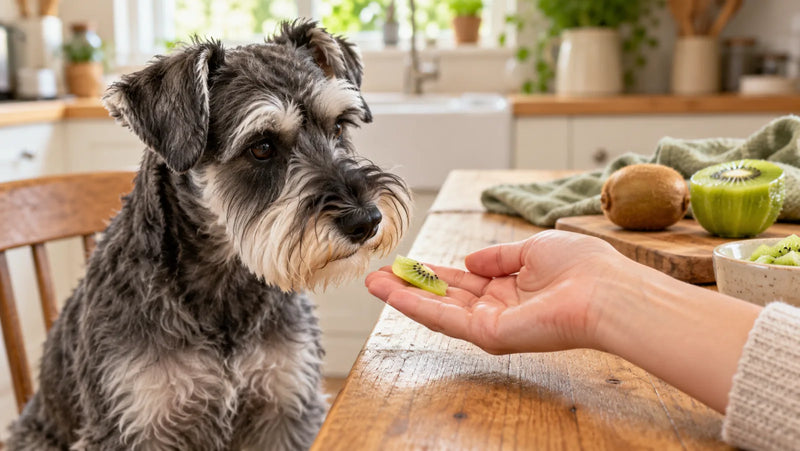
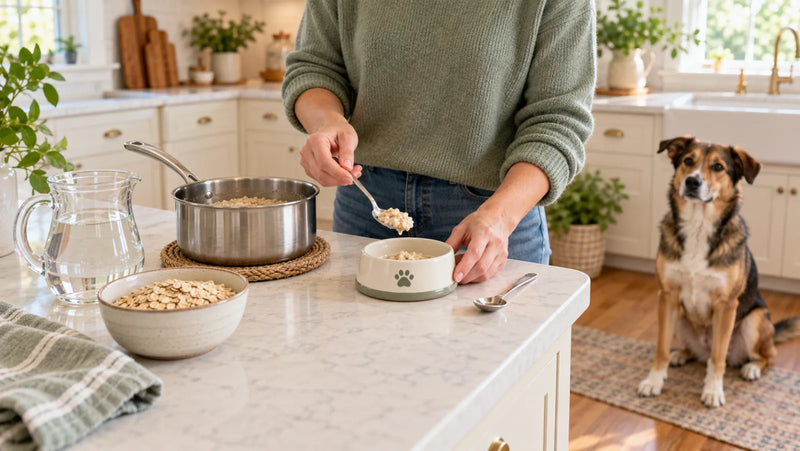
Glycerin in dog treats is usually a functional ingredient: as a humectant, it helps retain moisture and can support a soft, flexible texture. Glycerin, glycerine, and glycerol are names for the same substance. A source term such as “vegetable glycerin” adds origin information, but the word “glycerin” alone does not tell you whether the starting material was plant oil, animal fat, fermentation feedstock, or another compliant route.
The ingredient is neither an automatic quality badge nor an automatic red flag. The exact product, complete formula, amount used, manufacturing controls, feeding directions, and individual dog all matter. A chicken-and-glycerin treat is also not single-ingredient: a functional second ingredient still counts as an ingredient.
The useful question is therefore not “Is every glycerin treat good or bad?” It is “What job does glycerin perform in this exact treat, what does the label actually disclose, and does that format fit this dog?”
Glycerin in Dog Treats: The Short Answer
| Label clue | What it can tell you | What it cannot prove by itself |
|---|---|---|
| Glycerin / glycerine / glycerol | Different names for the same substance | Exact source, amount, grade, or product quality |
| Humectant | A technical function related to retaining moisture | That glycerin is the only safety or shelf-life control |
| Vegetable glycerin | A plant-source claim | That the finished treat is healthier, safer, or single-ingredient |
| Natural glycerin | The wording a manufacturer chose for that ingredient | A specific plant, animal, fermentation, supplier, or percentage unless separately disclosed |
| Second in the ingredient list | It follows the first ingredient by weight under label-order rules | Its absolute percentage or calorie contribution |
| Chicken + glycerin | At least two listed ingredients | A single-ingredient claim |
That final distinction is simple but important. “A touch of” may describe a small-sounding role in marketing copy; it is not a quantified amount, and it does not erase the second ingredient from the formula.
Glycerin, Glycerine, Glycerol, and Humectant Mean Different Things
The FDA's Substances Added to Food inventory for glycerin lists “glycerin,” “glycerine,” and “glycerol” among the names for the same substance. Those three words identify the ingredient; they are not three separate additives.
“Humectant” describes a job rather than a different substance. The same FDA inventory lists humectant and texturizer among glycerin's recognized technical effects in food. The USDA Food Safety and Inspection Service additives glossary defines a humectant as a substance added to help retain moisture and soft texture and names glycerine used in dried meat snacks as an example.
“Vegetable,” “natural,” or another source description answers a separate origin question. It does not change glycerol into a different molecule, disclose the amount in the finished treat, or establish whether the full product fits a dog's diet.
What Does Glycerin Do in a Dog Treat?
It helps retain moisture and a soft texture
Glycerin attracts and holds water in a food system. In a soft or semi-moist treat, that humectant function can help the product stay pliable instead of becoming as dry and firm as a traditional whole-cut jerky strip. Texture is the consumer-visible result: a softer strip may bend, tear, or cut into smaller rewards more readily.
Use the word “helps.” A finished texture comes from the entire formula and process, not from one ingredient name in isolation. The label does not reveal how much each ingredient contributes, how the batch was processed, or what finished texture every piece will have.
It can contribute to water-activity control
Water activity and moisture percentage are related but not interchangeable. Moisture describes how much water is present. Water activity describes how available that water is to participate in microbial growth and other changes. Two foods can contain similar total moisture yet behave differently because their water is bound differently.
The FDA's technical guide to water activity explains that water can be strongly bound at sites in food and that ingredients affect water-binding capacity. It also stresses that a formulation used to control water activity must be supported by sufficient data and appropriate measurement. In other words, a humectant can be part of the system; seeing “glycerin” on a label is not a substitute for validated formulation, processing, sanitation, packaging, storage, and finished-product controls.
Do not read a glycerin listing as proof that the treat is pathogen-free, needs no other controls, will stay soft forever, or has a particular shelf life. Follow the exact package's storage and use directions.
Softness is not the same as safety or nutrition
A softer texture may be convenient for tearing into training pieces or for a dog whose veterinarian has approved that texture. It does not prove protein quality, calorie density, digestibility, allergy fit, microbial safety, dental suitability, or medical benefit.
A firm single-ingredient strip is not automatically better either. It may meet a strict short-label goal, while a softer multi-ingredient format may better fit another owner's portioning preference. The individual dog still needs an appropriate size, supervised delivery, and a treat allowance that protects the complete diet.
Vegetable Glycerin vs Other Sources
Glycerin can be produced through more than one route. A USDA Agricultural Marketing Service technical review of glycerin describes general routes involving vegetable oils, animal fats, fermentation feedstocks, and synthetic production. That document explains the range of possible sources in the market; it does not identify the source used in any American Paws product.
“Vegetable glycerin” is a source claim: it says the feedstock was plant-derived. Plain “glycerin” or “glycerol” may identify the substance without identifying the feedstock. “Natural glycerin” should not be silently translated into “vegetable glycerin” unless the manufacturer makes that exact source disclosure.
Source may matter to a shopper for plant-based purchasing, religious observance, ethical preferences, supplier traceability, or another personal requirement. In that case, look for an explicit source statement or contact the manufacturer. Do not try to infer origin from color, softness, sweetness, the position in the ingredient list, a product photograph, or the word “natural.”
A plant-source label is also not a universal nutrition or safety ranking. FDA's consumer overview of food-ingredient types notes that food ingredients must meet the same safety standard whether naturally or artificially derived. For a dog-treat decision, the finished product and its intended use matter more than a simplistic natural-versus-chemical slogan.
Is Glycerin Safe for Dogs?
Federal animal-food rules provide a useful baseline. 21 CFR 582.1320 states that glycerin is generally recognized as safe when used in accordance with good manufacturing or feeding practice.
That does not mean unlimited glycerin is appropriate, every glycerin-containing treat is well made, or every dog should eat every product. The rule concerns appropriate ingredient use. A consumer still needs to evaluate the complete ingredient list, calories, feeding directions, texture, storage instructions, manufacturer information, and the individual dog's health plan.
Ask the veterinary team before using a new treat for a dog on a prescription or elimination diet, a dog with diabetes or another medically managed diet, chronic vomiting or diarrhea, prior food reactions, swallowing trouble, or a calorie restriction. Do not use a blog post to add an unapproved ingredient to a diagnostic diet.
For an ordinary new treat that the veterinarian has not restricted, begin with a small measured piece on a normal day and introduce only one new product at a time. Stop and call for repeated vomiting or diarrhea, facial swelling, trouble breathing, marked lethargy, a painful or swollen abdomen, poor appetite, or any persistent or worsening change. Those signs require case-specific assessment; they do not prove that glycerin was the cause.
What an Ingredient List Can—and Cannot—Tell You
The Association of American Feed Control Officials' pet-food label guide explains that ingredients are listed individually in descending order by weight. It also says the ingredient list does not quantify each ingredient's absolute amount.
That yields three practical rules:
- Presence is knowable. If glycerin appears in the ingredient list, it is part of the product.
- Order is knowable. A first ingredient contributes more by weight than ingredients that follow it at the time relevant to labeling.
- Percentage is not knowable from order alone. Second place does not mean a fixed percentage, and “a touch” is not a numerical disclosure.
The list also cannot, by itself, reveal the ingredient's exact feedstock, supplier, finished-product water activity, calorie contribution, manufacturing controls, or suitability for a medical diet. A front-of-pack phrase such as “soft,” “all-natural,” or “simple ingredients” does not replace the back-label facts.
Use the complete dog-treat label guide for the wider job: product identity, net quantity, ingredient list, guaranteed analysis, calorie statement, nutritional-adequacy statement, feeding directions, manufacturer contact, and lot or date information. This page stays focused on the glycerin line.
Glycerin and the Single-Ingredient Question
A single-ingredient treat has one ingredient. If the list says chicken and glycerin, the product has at least two ingredients. It does not become single-ingredient because the second ingredient has a technical purpose, appears later in the list, or is described as a touch.
That does not make glycerin a meaningless “filler.” A humectant has a real texture and moisture-management function. It simply means the product belongs in the multi-ingredient column.
The reverse is also important: “single-ingredient” is a structural label attribute, not a promise that the treat is suitable for every dog. A dog may still have a reaction to the one protein, struggle with the texture, receive too many calories, or need a veterinarian-directed diet. The single-ingredient treat guide owns that broader selection decision.
How American Paws Uses the Label Distinction
American Paws offers two chicken-jerky formats with different documented labels and textures. They should not be described as if they have the same ingredient count.
| Product | Public ingredient disclosure | Documented format |
|---|---|---|
| 2 lb soft chicken training treats | USA chicken breast with natural glycerin | Soft, chewy, and tearable; a multi-ingredient product |
| Classic chicken jerky | 100% USA chicken breast | Firmer whole-cut strips; a single-ingredient product |
This article does not state the percentage, feedstock, supplier, recipe ratio, manufacturing step, or water-activity role of the natural glycerin in the 2 lb product. Those details are not established by the assigned public ingredient disclosure, so they should not be invented.
The choice is functional, not a universal ranking. An owner may prefer the soft product for a strip that is easy to tear into small training rewards. Another may prefer the classic product because a one-item ingredient list is the primary shopping goal. The chicken-jerky guide for dogs explains the wider category, while the exact product pages control the current label and feeding information.

When Does Glycerin Matter to a Shopper?
When the dog has a veterinarian-directed diet
An elimination diet, prescription diet, or medically managed calorie plan depends on controlling every extra. Do not decide that a small-sounding second ingredient is irrelevant. Give the veterinary team the complete product label and wait for case-specific approval.
When “single ingredient” is the shopping requirement
If the goal is exactly one listed ingredient, a chicken-and-glycerin label does not meet it. Choose the one-ingredient product and still verify the protein, texture, calories, and feeding direction for the dog.
When a softer, tearable texture is useful
A humectant-containing format may be relevant when the owner wants a pliable strip that can be torn into smaller rewards. Texture needs remain individual, especially for a dog with dental disease or swallowing concerns. The soft-treat texture guide for senior dogs keeps age, chewing, calories, and veterinary screening together instead of treating softness as a medical guarantee.
When source matters to the buyer
Look for “vegetable glycerin” or another explicit source claim, or ask the manufacturer. Do not treat “natural glycerin” as a synonym for vegetable source. A source preference is legitimate; an unsupported assumption is not evidence.
When calories, portions, or storage are the concern
Use the exact product's calorie statement, feeding directions, and storage instructions. Ingredient order cannot calculate calories per piece, and glycerin's presence cannot establish a shelf life. Compare like-for-like serving sizes rather than assuming every soft strip or firm strip weighs the same.
A Seven-Point Dog-Treat Label Check
- Read the complete ingredient list. Count every listed ingredient and note any explicit source wording.
- Keep order in perspective. Descending weight order is useful, but it is not a percentage chart.
- Find the calorie statement. Portion planning needs the exact product, not a guess based on texture.
- Check the guaranteed analysis. Do not confuse the maximum moisture line with finished water activity.
- Inspect texture and size. Soft, firm, whole-cut, formed, thick, and tearable are practical delivery differences.
- Follow feeding and storage directions. They belong to that product and package.
- Keep the maker and lot information. A reachable company and identifiable batch matter if a question or problem arises.
For a wider comparison across proteins and formats, use the jerky format and protein comparison. It keeps label clarity, source, texture, calories, and dog fit in one buying screen without declaring one ingredient style universally best.
Frequently Asked Questions
Is glycerin the same as glycerol?
Yes. Glycerin, glycerine, and glycerol are common names for the same substance. “Humectant” describes one technical job it can perform in food rather than a separate ingredient.
Is vegetable glycerin different from glycerin?
Vegetable glycerin identifies a plant-source feedstock. The core substance is still glycerol. Plain “glycerin” may identify the ingredient without identifying its source, so ask the manufacturer when plant origin is a requirement.
Is natural glycerin always vegetable glycerin?
Do not assume so from those words alone. “Natural glycerin” does not give this article enough evidence to name a plant, animal, fermentation, supplier, or production route. Use the exact manufacturer statement or ask directly.
Is glycerin a preservative?
Glycerin is commonly discussed here as a humectant and texturizer. By binding water, it can contribute to a formulation's water-activity control, but its appearance on a label does not prove a standalone antimicrobial effect, validated shelf life, or absence of other controls.
Is glycerin a sugar?
It is not table sugar. FDA's food-substance inventory lists nutritive sweetener among glycerin's possible technical effects, along with humectant and texturizer. A dog-treat ingredient list still does not reveal the amount used or its calorie contribution; use the finished product's calorie statement.
Does glycerin make a dog treat low quality?
No automatic verdict follows from the word. Glycerin has a technical function. Judge the full ingredient list, calorie and feeding information, product controls, company transparency, intended texture, and fit for the individual dog.
Is a chicken-and-glycerin treat single-ingredient?
No. Chicken and glycerin are two ingredients. A functional second ingredient still counts, regardless of its position or a phrase such as “a touch.” Choose a chicken-only label when one ingredient is the requirement.
Should every dog avoid glycerin?
No blanket rule is supported. Evaluate the exact product and the dog's health, diet, calorie plan, texture needs, and prior tolerance. A veterinarian-directed restriction overrides general ingredient education.
Choose the Function and Label You Actually Need
Glycerin helps explain why some dog treats stay soft and pliable, but the label must remain literal. Vegetable glycerin is a source claim; natural glycerin does not let a reader invent a feedstock; ingredient order is not a percentage; and chicken plus glycerin is not single-ingredient.
Compare the soft chicken training-treat format with the single-ingredient classic chicken jerky, then choose by the exact label, texture, portion information, and your dog's veterinary needs. The right answer may be a soft multi-ingredient reward, a firmer one-ingredient strip, or no new treat at all.