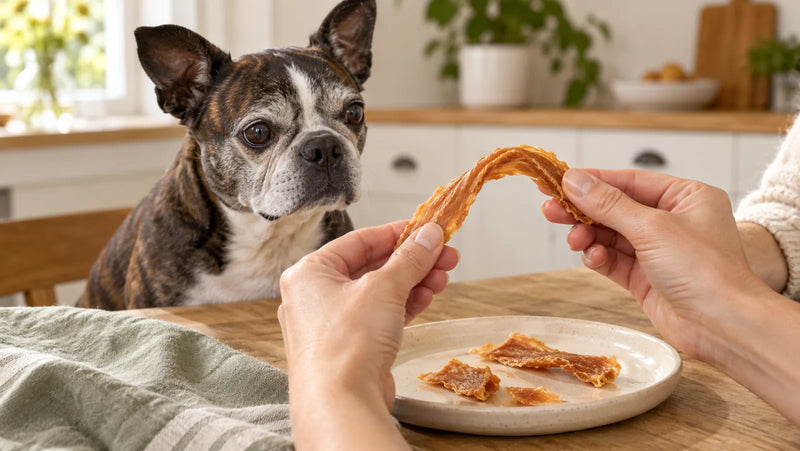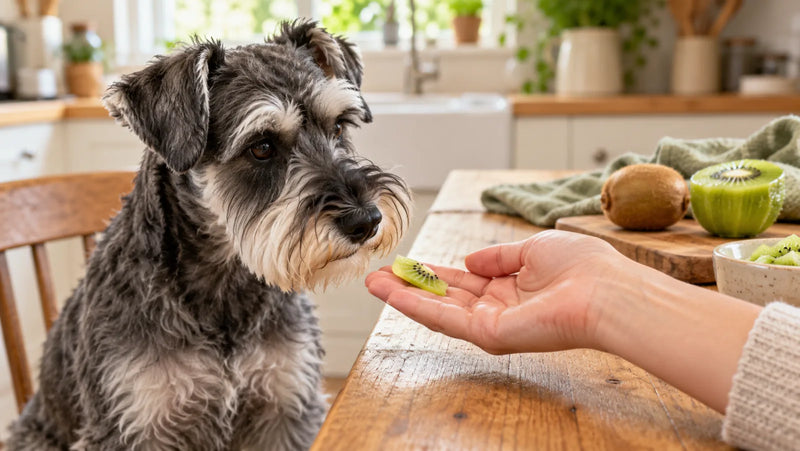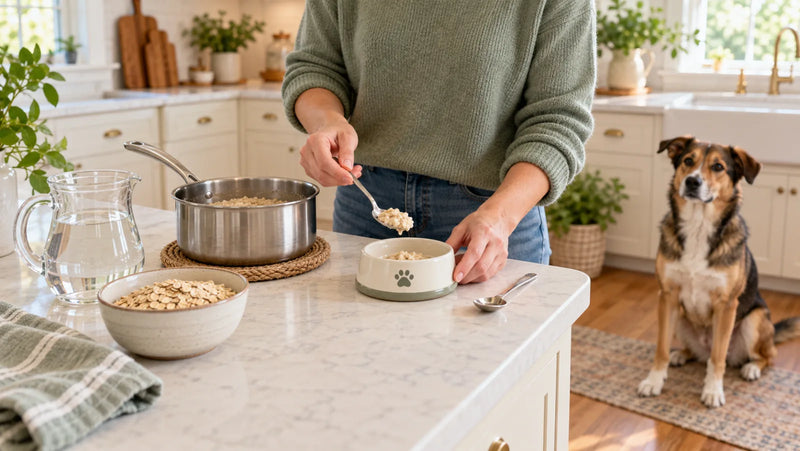

Soft dog treats for senior dogs can reduce chewing effort, but the right option must also fit the dog's swallowing ability, calorie allowance, ingredients, and medical diet. Flexible strips cut into tiny pieces, small freeze-dried crumbles, or a veterinarian-approved treat softened immediately before serving may help. New trouble chewing, dropping food, coughing, gagging, or mouth pain needs a veterinary exam rather than a softer snack alone.
Softness is one physical property, not a safety guarantee. A soft treat can still be too large, too rich, incompatible with kidney or pancreas care, or easy for a gulper to swallow whole. Use texture, portion, label, and the individual dog's behavior together.
Soft Dog Treats for Senior Dogs: The Quick Answer
| If your senior dog... | A format to discuss or test | Do this first |
|---|---|---|
| Chews comfortably but tires on hard treats | A flexible strip cut into tiny pieces | Bend, cut, and supervise one small test piece |
| Prefers crumbly textures | A small freeze-dried piece broken into crumbs | Count the original piece's calories and watch for gulping |
| Needs a softer presentation approved by the veterinarian | One measured treat moistened immediately before serving | Serve promptly and discard the wet remainder |
| Drops food, chews on one side, coughs, gags, or struggles to swallow | No new treat experiment | Pause and contact the veterinary team |
| Has kidney disease, pancreatitis, or a prescribed diet | Only a veterinarian-approved reward | Fit the exact ingredient and nutrient profile into the treatment plan |
The table is a decision aid, not a diagnosis. The broader question—how to compare the best treats for senior dogs across proteins, formats, and needs—belongs to our senior buyer guide. This article stays narrowly focused on soft texture, safe preparation, and portion fit.
Why a Senior Dog May Need a Softer Treat
Some older dogs continue to crunch firm rewards comfortably. Others have worn, missing, fractured, loose, or painful teeth; inflamed gums; reduced jaw comfort; or a new eating pattern that makes a flexible or crumbly reward easier to manage. Age itself does not tell you which dog is which.
The 2023 AAHA Senior Care Guidelines recommend a good oral assessment when a senior pet has difficulty grasping, chewing, or swallowing food or shows discomfort. That distinction matters: switching to a softer treat may lower effort, but it does not identify or treat the cause.
Teeth and mouth comfort
Watch the whole eating sequence. Dropping a favorite treat, chewing only on one side, pawing at the mouth, excess drooling, blood, bad breath with an eating change, head shyness, or refusing a previously manageable texture can point to oral discomfort. Stop the experiment and arrange an exam instead of repeatedly making the snack softer.
Do not use a hard treat as a “tooth test.” If dental status is uncertain, the veterinarian—not the dog's willingness to bite once—should decide whether firm chews are appropriate.
Jaw effort, piece control, and swallowing are different issues
A treat that bends easily can require less chewing, but it may still form a long strip that a dog tries to gulp. A crumbly cube can break easily yet scatter dry fragments. A moistened piece may feel softer but still be the wrong shape for a dog with a swallowing disorder.
Think in three separate questions: Can the dog break the piece down? Can the dog control it in the mouth? Can the dog swallow it without coughing, gagging, repeated attempts, or distress? Trouble with the third question is not a do-it-yourself texture problem.
Three Useful Soft-Treat Formats
Choose the least complicated format that the dog can handle and the health plan permits. A highly scented tiny piece can be rewarding without becoming a large snack.
Flexible soft chicken-jerky strips
A flexible strip is useful when clean scissors can turn one long treat into many small, controllable rewards. American Paws soft all-natural chicken jerky strips contain USA chicken breast plus a touch of natural glycerin, a plant-based humectant used for softness. They are not single-ingredient. The current product page describes soft, chewy strips approximately 2–5 inches long and about 15 kcal per full treat.
That combination creates both an advantage and a responsibility. The strip is easy to snip, but the full piece is far larger than a training bite and carries the calories of every piece cut from it. Pre-cut the measured allowance before the dog sees the strip.
Freeze-dried pieces broken into crumbs
Some freeze-dried meat treats break into small fragments under finger pressure. Crumbling can reduce the work needed for one bite and make a tiny amount useful as a food topper or scent reward. It does not erase the original calories, ingredient, mineral content, or supplemental status.
Choose a piece that breaks rather than splinters. Do not blow loose dust toward the dog, toss dry crumbs for a dog that inhales food, or assume every freeze-dried recipe is identical. Read the exact label and ask before use with a therapeutic diet.
A measured treat softened immediately before serving
When the product directions and veterinary plan allow it, a small measured dry piece can sometimes be moistened with clean water just before serving. This is presentation, not preservation: water changes texture but does not lower calories, remove an ingredient, or make an unsuitable treat medically appropriate.
Prepare only the portion that will be eaten now. Once wet, it no longer belongs in the dry bag. Keep damp leftovers out of the storage container and discard them promptly rather than inventing a room-temperature or refrigerated holding time.

How to Test Texture Before Giving the Treat
- Read the label first. Confirm the ingredients, calories, guaranteed analysis, supplemental purpose, storage directions, and whether the item conflicts with the dog's known diet.
- Bend or press it. A flexible strip should yield without great force. A crumbly piece should break into dull, manageable fragments rather than sharp shards.
- Cut before serving. Make the test piece smaller than the dog's normal bite. Long ribbons and big soft chunks are still gulping hazards.
- Offer one piece while the dog is settled and upright. Do not throw it toward a dog that catches and swallows without chewing.
- Watch from pickup through swallow. Comfortable chewing, one easy swallow, and normal breathing matter more than how eagerly the dog wants another piece.
- Stop on a change. Repeated dropping, one-sided chewing, coughing, gagging, retching, excessive drooling, distress, or a changed voice or breathing pattern needs veterinary attention.
Repeat the physical check when opening a new bag because naturally shaped meat pieces can vary. “Same product” does not mean every strip has the same thickness or flexibility.
How to Soften a Dog Treat Safely
First ask whether softening is appropriate. It can help a dog that merely prefers less resistance, but it is not a home treatment for dental pain or impaired swallowing. If the veterinarian approves the exact treat, use this simple serving-only method:
- Wash your hands and use a clean dish and utensil.
- Measure the dog's entire treat allowance while the food is still dry.
- Cut or crumble that allowance into manageable pieces.
- Add only enough clean water to soften the piece in its own small dish.
- Let the temperature become comfortable and test the texture with a clean utensil.
- Serve the portion immediately under supervision.
- Discard wet leftovers and wash the dish; never return damp food to the package.
Do not add broth, gravy, milk, oil, peanut butter, or seasoning just to make the treat softer. Those additions change calories and ingredients and may introduce salt, fat, dairy intolerance, onion, garlic, xylitol, or another conflict. Plain water keeps the test interpretable.
Portion Soft Treats by Calories, Not Softness
Soft food can feel light and harmless, but the mouthfeel says nothing about energy density. The WSAVA treat guide says treats should make up no more than 10% of a dog's daily calorie intake. It also warns that conventional treats may not be appropriate for a dog with a medical condition or veterinary-prescribed diet.
Treat 10% as a ceiling for all extras combined, not a daily target for one product. Chews, training rewards, toppers, table tastes, pill foods, and snacks from every caregiver share the same allowance. The veterinary team should set or confirm the individual dog's daily calorie target.
Use the label's kcal per whole treat
The current American Paws soft-strip page lists approximately 15 kcal per full treat. Cutting one strip into 15 tiny rewards still delivers about 15 kcal if every piece is fed. Cutting changes reward frequency and chewing size, not the total energy.
| Veterinarian-set daily calories | 10% ceiling for all extras | One approximately 15-kcal strip would use |
|---|---|---|
| 200 kcal/day | No more than 20 kcal | About 75% of the entire ceiling |
| 300 kcal/day | No more than 30 kcal | About 50% of the entire ceiling |
| 500 kcal/day | No more than 50 kcal | About 30% of the entire ceiling |
These rows demonstrate arithmetic; they are not calorie prescriptions or daily strip recommendations. A dog may need less than 10%, and the page value is approximate. Use the current package information and the veterinarian's actual target. Our daily dog-treat calorie guide explains the shared-budget method in more depth.
Apply the shared 10% ceiling without inventing a strip count
Use four steps: multiply the veterinarian-set daily calories by 0.10, subtract every other extra, divide what remains by the exact treat's calories, and choose an amount below the mathematical ceiling. If one full strip would use most of the allowance, cut part of one strip and save the dry remainder according to package directions.
Do not convert a generic body-weight table into a feeding prescription for a senior with weight loss, obesity, low activity, medication changes, or disease. Those dogs need individual calorie decisions.
Kidney Disease and Pancreatitis: Stop Before Choosing
“Soft” does not describe phosphorus, sodium, protein, fat per calorie, or compatibility with a therapeutic diet. Those questions outrank texture for a dog whose kidneys or pancreas are being medically managed.
Kidney-disease diets are individualized therapeutic plans
The Merck Veterinary Manual's renal-dysfunction guidance describes therapeutic renal diets and phosphorus management as parts of chronic kidney disease care. The appropriate protein, phosphorus, sodium, calories, and other nutrients depend on disease stage, laboratory results, body condition, appetite, and treatment plan.
A meat treat should therefore never be declared “kidney friendly” because it is soft, natural, or short-labeled. Ask the veterinarian to approve the exact product and amount. If it does not fit, a measured portion of the prescribed food may be the better reward.
Pancreatitis history requires veterinarian-approved fat control
The Merck Veterinary Manual's pancreatitis guidance emphasizes dietary fat control in dogs being treated for pancreatitis. A front-label word such as “soft” or “chicken” cannot answer whether a treat fits that plan.
The American Paws soft strip lists a crude-fat minimum of 8%. That number is not a maximum, and an as-fed guaranteed-analysis percentage is not the same unit as grams of fat per 1,000 kcal. It would be wrong to use “8% minimum” to certify the strip as low fat or pancreatitis-safe. A dog with current or past pancreatitis needs the treating veterinarian's approval before receiving it.
When “Soft” Is Not Safe Enough
- Swallowing changes: coughing, gagging, repeated swallowing, regurgitation, food returning through the nose, or distress needs veterinary assessment.
- Breathing trouble: blue or pale gums, collapse, severe weakness, noisy or labored breathing, or a suspected airway obstruction is urgent.
- Dental pain: dropping food, one-sided chewing, oral bleeding, facial swelling, or reluctance to open the mouth is not solved by a softer flavor.
- Gulping: a dog that swallows flexible strips whole needs smaller controlled pieces or another veterinarian-approved format.
- Ingredient conflict: chicken allergy or an elimination diet can rule out a chicken treat regardless of texture.
- Medical diet conflict: kidney disease, pancreatitis, diabetes, obesity treatment, gastrointestinal disease, or another prescribed plan can change what counts as an acceptable reward.
- Recent dental procedure: follow the discharge instructions for texture and timing rather than a general blog guide.
If a dog appears to be choking and cannot breathe normally, seek emergency veterinary help immediately. Do not keep offering water or softer food in an attempt to push an obstruction through.
How the American Paws Soft Strip Fits—and Does Not Fit
The 2 lb soft chicken strip can fit a senior who tolerates chicken, has a veterinarian-compatible treat allowance, and benefits from a flexible piece that can be snipped small. Its current label facts are specific: USA chicken breast with natural glycerin, soft and chewy texture, approximate 2–5-inch strip length, about 15 kcal per full treat, and intermittent or supplemental feeding only.
It is not single-ingredient, calorie-free, a complete diet, dental therapy, a swallowing treatment, a renal treat, or a pancreatitis prescription. The natural glycerin helps explain the flexible texture; it does not make the product right for every dog.
For the narrower comparison of soft versus firm chicken formats, use our chicken jerky for senior dogs guide. For sourcing, labels, types, portions, and storage across the jerky category, use the new complete chicken jerky guide for dogs. Those pages own their respective intents; this one remains the soft-texture decision guide.
A Simple Senior-Treat Routine
- Confirm the exact treat fits the dog's ingredients, calories, and health plan.
- Set aside the entire day's allowance before the first reward.
- Choose flexible, crumbly, or briefly moistened presentation based on the dog—not age alone.
- Cut or crumble the portion into small, blunt pieces.
- Offer one piece at a time while the dog is calm and upright.
- Watch chewing, swallowing, breathing, and comfort.
- Keep wet and dry food separate; reseal the dry package promptly.
- Reassess after any dental, appetite, weight, activity, medication, or medical change.
Browse American Paws dog treats and reward formats only after defining those limits. A wider shelf creates more options, but it does not replace the texture test or veterinary plan.
Frequently Asked Questions
Are soft treats better for all senior dogs?
No. Some seniors chew firm treats comfortably, while others benefit from flexible, crumbly, or moistened textures. Choose for the individual mouth, swallowing behavior, calories, ingredients, and health plan. Age alone does not make a soft treat necessary or safe.
What treats can an old dog with bad teeth eat?
Start with a veterinary dental assessment. Once the cause and safe texture are known, the veterinarian may approve small flexible pieces, a crumbly treat, a moistened portion, or part of the dog's complete food. Do not use willingness to eat as proof that painful teeth are fine.
Can I soak dog treats in water?
Sometimes, if the product directions and veterinary plan allow it. Measure the dry portion first, add clean water in a separate dish, serve it promptly, and discard wet leftovers. Never put a damp piece back into the dry bag.
Can a senior dog with no teeth eat soft jerky?
Possibly, but missing teeth do not reveal swallowing ability or gum comfort. A long flexible strip can still be gulped. Ask the veterinarian, cut any approved amount very small, and supervise from pickup through swallow.
How many soft treats can a senior dog have?
There is no universal piece count. Use the veterinarian-set daily calorie target, keep all extras together at no more than 10% and often less, subtract other rewards, and use the exact product calories. One American Paws soft strip is approximately 15 kcal before it is cut.
Are soft treats safe for a dog with kidney disease?
Not automatically. Softness does not establish phosphorus, sodium, protein, calorie, or therapeutic-diet fit. Ask the veterinarian managing the kidney disease to approve the exact item and amount; otherwise use an approved part of the renal diet as a reward.
Are soft treats safe after pancreatitis?
Only if the treating veterinarian says the exact treat fits the dog's fat-controlled plan. A soft texture and an 8% crude-fat minimum do not prove a product is low fat, and the minimum is not a maximum.
Choose the Texture Only After the Whole Treat Fits
The best soft-treat decision combines four checks: the dog can handle the texture, the piece is controlled through swallowing, the calories fit all daily extras, and the ingredient and nutrient profile fit the medical plan. If any one fails, softness cannot rescue the choice.
Review the current label and approximately 15 kcal per full strip, then cut only the measured allowance into small pieces. If flexible chicken fits the dog, compare the American Paws soft chicken training strips; if chewing, swallowing, kidney, pancreas, or prescription-diet needs have changed, ask the veterinary team before adding any new dog treats.