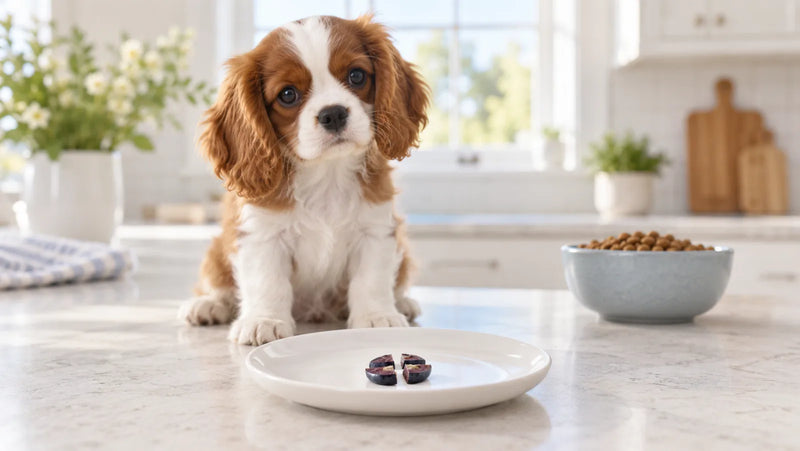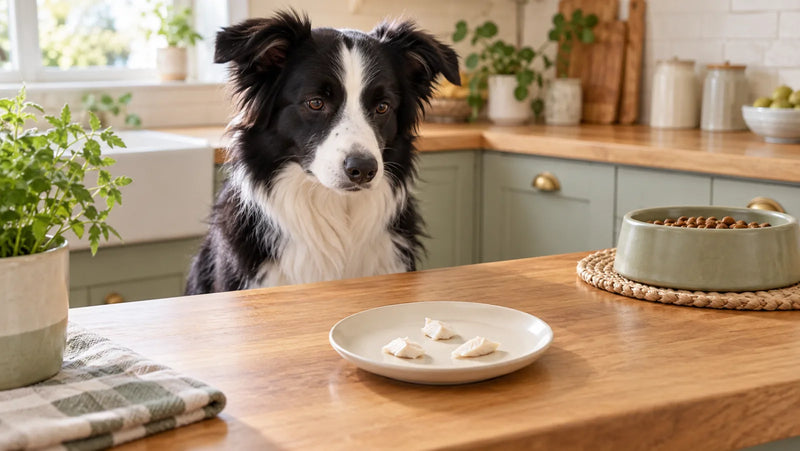

The best treats for senior dogs are easy to chew, easy to portion, and matched to the dog's current health needs. For an older dog, the right reward is not just the one that smells best. It is the one your dog can chew comfortably, digest normally, and enjoy in a small enough serving that it does not crowd out balanced meals.
Senior dogs can still love training, snack time, and food puzzles. The difference is that age makes treat choices less forgiving. Teeth may be tender, calorie needs may change, and some dogs develop health conditions that make random treats a poor idea. Use the guide below to choose with more care.
Best treats for senior dogs: the quick answer
Choose senior dog treats with a clear ingredient list, a texture your dog can manage, and a portion size you can control. Soft, breakable, or small freeze-dried pieces are often easier to use than oversized hard chews. If your dog has dental pain, trouble chewing, weight changes, pancreatitis history, kidney disease, diabetes, or a prescription diet, ask your veterinarian before changing treats.
The safest routine is simple: pick one familiar protein, start with a pea-size piece, watch your dog chew it, and count it as part of the day's food. If your senior dog handles it well, you can slowly make it part of training or enrichment.
What changes when a dog gets older?
A senior dog is not just an adult dog with a gray muzzle. Aging can change how a dog chews, how many calories they need, how well they tolerate rich foods, and how quickly small diet changes show up in stool or appetite.
Teeth and chewing comfort matter more
AAHA's senior care guidance notes that senior pets should be checked carefully when they have trouble chewing, swallowing, or showing discomfort around food. That matters for treats. A chew that looked harmless for a younger dog may be too hard, too large, or too awkward for an older mouth.
Watch the first few bites. If your dog drops the treat, chews on one side, paws at the mouth, avoids chewing, or suddenly refuses a favorite texture, pause the treat and schedule a veterinary dental check.
Weight and calories get less forgiving
Many older dogs are less active than they used to be, so extra calories can add up faster. WSAVA's dog treat guidance recommends keeping treats below 10% of a dog's daily calories. For seniors who need weight control, your veterinarian may recommend an even tighter treat budget.
Rich treats can be harder to tolerate
Some senior dogs do well with real-meat rewards. Others get loose stool from portions that would not have bothered them years earlier. The treat may not be bad; it may simply be too rich, too large, or introduced too fast.
How to choose senior dog treats
Use a four-part checklist: texture, ingredients, portion size, and calorie role. A treat that passes all four is much easier to fit into an older dog's daily routine.
Pick a texture your dog can chew safely
For many seniors, the best texture is one that breaks cleanly into small pieces. That might mean a freeze-dried cube, a thin piece of jerky that can be torn, or a training treat that is already small. Avoid assuming that a hard chew is good for every older dog's teeth. If the treat feels rock-hard to you, it deserves extra caution.
Choose clear ingredients and familiar proteins
Senior dogs do not automatically need complicated functional treats. A clear label is often more useful because you can tell what your dog actually ate. If your dog already does well with chicken, a chicken-based reward may be easier to evaluate than a brand-new protein blend. If your dog is on a veterinary diet, do not add any treat without asking first.
For label help, use our guide to how to read a dog treat label. It explains how to compare ingredient panels, front-of-bag claims, and serving guidance without guessing.
Break treats smaller than you think
A senior dog does not need a large piece to feel rewarded. Tiny pieces are easier to chew, easier to count, and easier to use for training. If the treat is aromatic, one pea-size bite can be enough.
Count treats as part of the daily diet
Treats are not free calories. If you are training often or using treats for medication routines, track the total. Our full portion guide on how many treats a dog can have per day gives a practical way to apply the 10% rule.

American Paws options for older dogs
American Paws makes real-meat treats in Highland, California. The right product still depends on your senior dog's chewing comfort, tolerance, and veterinary needs.
Freeze-dried chicken for light, breakable rewards
Our freeze-dried chicken treats are a light, single-ingredient option for dogs that tolerate chicken. They can be broken into small pieces for gentle reward moments or food puzzles. Add water if your dog prefers a softer bite, and introduce slowly.
Whole-cut chicken jerky for dogs that still chew comfortably
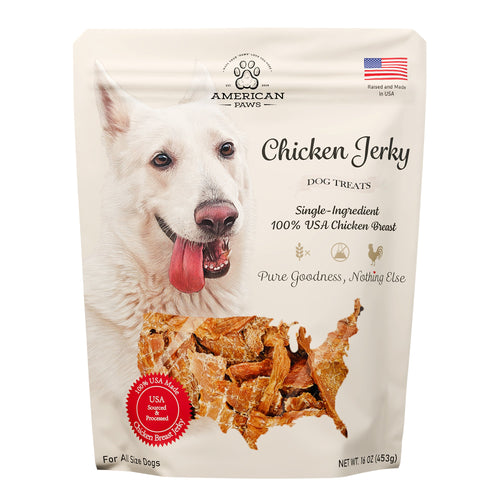
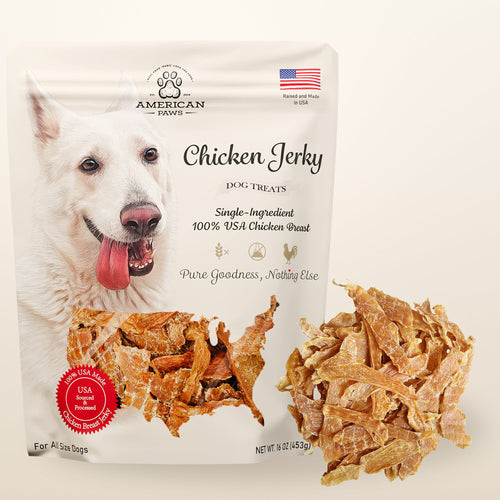
For seniors who still chew well, whole-cut chicken jerky can be a simple single-ingredient reward. Tear it into small strips before serving. If your dog has dental disease, missing teeth, or gulping behavior, choose a smaller or softer format instead.
Beef liver training treats for tiny high-value moments
Freeze-dried beef liver training treats can be useful when you need a high-value reward, but liver is rich. Use tiny pieces and avoid turning liver into a daily handful. For more training context, see our guide to high-value dog training treats.
You can also browse the training treats collection when portion control matters more than a large chew.
Treats to be careful with for senior dogs
The goal is not to fear every treat. It is to remove avoidable friction from an older dog's routine.
Very hard chews
Hard chews can be risky for dogs with worn teeth, dental pain, or a history of fractured teeth. If you cannot dent or break a chew, think carefully before giving it to a senior dog.
Large pieces for gulpers
Some older dogs chew less patiently than they used to. Large pieces can become a choking or stomach-upset risk for gulpers. Break treats down before they reach the dog.
Rich liver portions
Liver treats are often very motivating, but more is not better. Use them like seasoning for training: small, occasional, and counted.
New proteins during digestive trouble
If your dog is having vomiting, diarrhea, appetite loss, or unexplained weight change, do not use treat shopping to troubleshoot the problem. Call your veterinarian first. For a cautious introduction method, read dog treats for sensitive stomachs.
A simple senior treat routine
Once you choose a treat, test it like a small experiment.
Start with a pea-size test
Offer one tiny piece on an otherwise normal day. Do not introduce a new food, topper, chew, or supplement at the same time.
Watch chewing, stool, appetite, and energy
Over the next day, look for comfortable chewing, normal stool, normal appetite, and normal energy. Stop the treat if something changes.
Adjust by body condition and vet guidance
If your dog is gaining weight, reduce treat calories before the habit becomes hard to reverse. If your dog is losing weight, weak, or picky in a new way, that is a veterinary conversation, not a reason to keep upgrading treats.
When to ask your veterinarian first
Ask your veterinarian before changing treats if your senior dog has dental pain, broken teeth, trouble chewing, kidney disease, diabetes, pancreatitis history, food allergies, prescription food, repeated vomiting or diarrhea, unexplained weight change, or a sudden appetite shift. Treats can support a happy routine, but they should not be used to manage medical problems without a plan.
Frequently asked questions
Are soft treats better for senior dogs?
Soft treats can be easier for many senior dogs, especially dogs with missing teeth or tender mouths. They are not automatically better for every dog. The best texture is the one your dog can chew comfortably and safely.
Can senior dogs have chicken jerky?
Yes, some senior dogs can have chicken jerky if they tolerate chicken and still chew comfortably. Tear jerky into small pieces and avoid it for dogs that gulp, struggle to chew, or have dental pain unless your veterinarian says it fits.
Are freeze-dried treats good for older dogs?
Freeze-dried treats can be useful for older dogs because they are often aromatic and easy to portion. Choose a protein your dog tolerates, start small, and add moisture if your dog needs a softer texture.
How many treats should a senior dog have per day?
Keep treats below 10% of daily calories unless your veterinarian gives a stricter limit. Many seniors need less than that because of weight, activity, or medical concerns.
What treats should senior dogs avoid?
Be careful with very hard chews, oversized pieces, unclear ingredient lists, rich handfuls, and any treat that conflicts with a veterinary diet or known health condition.
Choose comfort, clarity, and small portions
The best senior dog treat routine is built around comfort, not novelty. Choose a clear label, match the texture to your dog's mouth, break every serving small, and count the calories. When you are ready to test a real-meat reward, start with an American Paws treat that fits your dog's known tolerance, use a tiny first serving, and let your senior dog's response guide the next step.