
Dog treats for sensitive stomachs should be simple, portionable, and introduced slowly. Look for a short ingredient list, choose a protein your dog already tolerates, break the treat into tiny pieces, and test a crumb before making it part of the routine.
A sensitive stomach is not a reason to guess. It is a reason to slow down, read labels, and keep the rest of your dog's diet steady while you test one new treat at a time. The goal is not to find a magic treat; it is to choose a reward your dog enjoys and handles well. For the wider checklist, see our guide to choosing safe dog treats.
Dog treats for sensitive stomachs: the quick answer
The safest starting point is a treat with a clear label and a texture you can portion carefully. For many dogs, that means a limited ingredient meat treat, a single-ingredient option, or a simple training treat cut very small. For other dogs, even a clean label can be wrong if the protein does not agree with them.
Think in terms of evidence from your own dog. If your dog already eats chicken comfortably, a chicken-based treat may be a sensible test. If chicken has caused problems before, a single-ingredient chicken treat is still the wrong choice. Sensitive-stomach decisions should follow your dog's history first and marketing phrases second.
What makes a treat easier on a sensitive stomach?
Easy-to-evaluate treats usually share three traits: a short ingredient list, a familiar protein, and a small serving size. None of those guarantees a perfect reaction, but they make it easier to spot what works.
Short ingredient lists are easier to evaluate
When a treat has a long list of proteins, starches, flavorings, colors, and sweeteners, it is harder to know what caused a problem. A short label reduces that guesswork. It also makes it easier to compare the treat with foods your dog already tolerates.
Familiar proteins beat novelty for first tests
Novel proteins can be useful in some veterinary diet plans, but do not treat them as automatically gentle. If your dog is doing well on a chicken-based diet, a simple chicken treat may be less disruptive than a brand-new protein. If your dog is on a prescription or elimination diet, ask your veterinarian before adding any treat.
Lower richness and smaller pieces matter
Many stomach upsets come from richness or portion size, not a true ingredient issue. A large chew, a fatty bite, or a handful of rewards can overwhelm a dog that would have handled one small piece just fine.
Sensitive stomach does not always mean allergy
Loose stool after a treat does not automatically mean your dog is allergic. It may mean the treat was too rich, too large, introduced too quickly, or fed on top of other new foods. True food allergies and chronic digestive disease need veterinary guidance.
The American Kennel Club notes that diet can be one factor in digestive issues and that highly digestible foods matter for dogs with sensitive stomachs. That is a useful principle for treats too: choose simple, digestible formats and avoid sudden changes.
How to choose limited ingredient dog treats
Before buying, read the treat the same way you would read your dog's food label. You are looking for clarity, not just attractive words on the front of the bag.
Read the first five label details
Check the protein source, added fats or oils, sweeteners, artificial colors, and serving guidance. Then compare those details with your dog's normal diet. A limited ingredient treat is most useful when it helps you keep the test clean.
If label reading feels confusing, use our guide to how to read a dog treat label before choosing a new bag. It explains how to separate the front-of-package claims from the ingredient panel that actually matters.
Avoid stacking new proteins, toppers, and chews
Do not introduce a new treat, a new topper, a new chew, and a new kibble in the same week. If your dog reacts, you will not know which item caused the issue. Keep the test boring and controlled.
Match texture to your dog
For a sensitive dog, portion control is often more important than treat shape. Choose something you can break or cut without creating sharp pieces. Small dogs, seniors, fast gulpers, and dogs with dental issues may need softer or smaller rewards. For an older dog, our guide to the best treats for senior dogs covers soft textures and what to avoid.

American Paws options to consider carefully
American Paws makes treats in Highland, California, with a focus on real meat and careful production. The right option still depends on your dog. Use the product label and your dog's history together.
Whole-cut chicken jerky for dogs that tolerate chicken
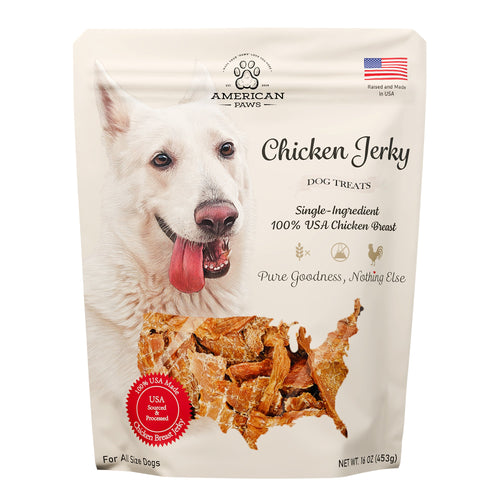
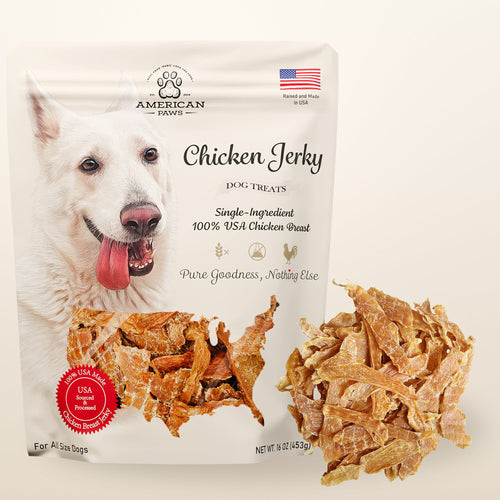
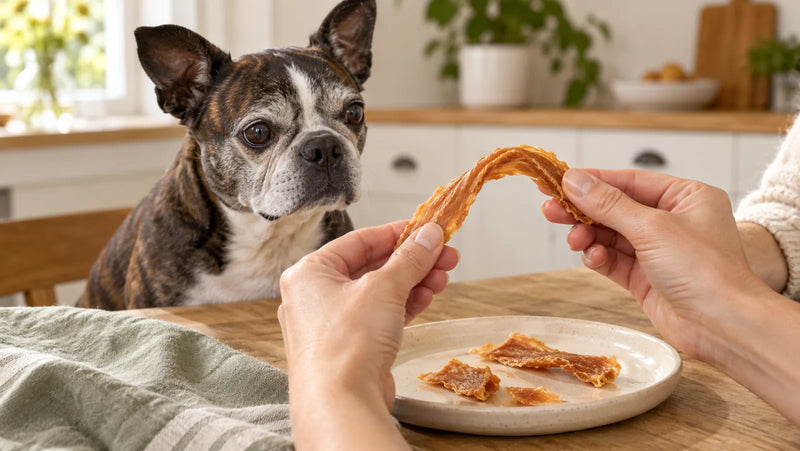
Our whole-cut chicken jerky is a single-ingredient chicken breast treat. For dogs that already tolerate chicken well, it can be easy to evaluate because the label is simple. Break it into a small piece before the first test.
Training treats when tiny pieces matter
If your main goal is training, browse the training treats collection and choose a reward you can portion carefully. Tiny pieces let you reward often without feeding too much total treat.
Freeze-dried options for simple reward moments
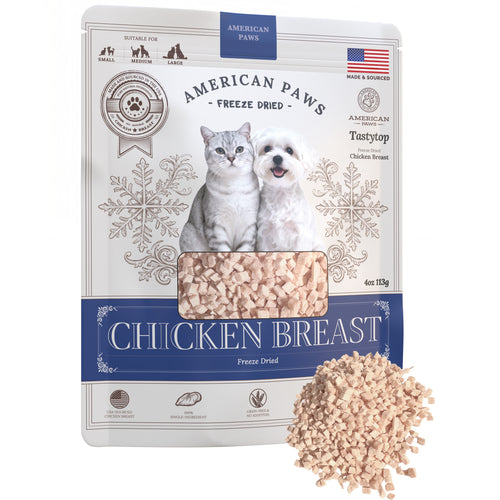
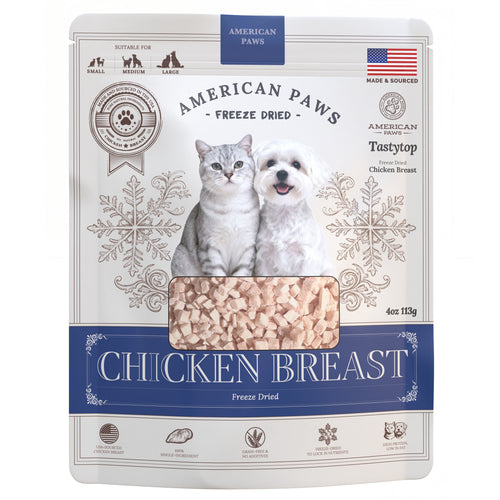
Freeze-dried treats can be useful when you want a light, aromatic reward. Our freeze-dried beef liver training treats are high-value, so use them sparingly, especially for sensitive dogs. Liver is rich, and more is not better.
How to introduce a new sensitive-stomach treat
The first serving should be smaller than you think. Give one crumb or tiny piece on an otherwise normal day. Keep meals, water, exercise, and other treats unchanged.
Start with a crumb
A crumb is enough to test interest and tolerance. If your dog refuses it, do not force the issue. If your dog loves it, still stop after the first tiny serving.
Wait 24 to 48 hours
Watch stool, appetite, gas, vomiting, itchiness, ear redness, paw licking, and behavior. Sensitive dogs often need a full day or two before you know whether a treat is a good fit.
Keep the rest of the diet unchanged
One new thing at a time is the cleanest rule. For a step-by-step plan, use our full guide on how to introduce new treats to dogs.
Portion guide for sensitive dogs
Even a well-chosen treat can cause trouble when the portion is too large. WSAVA's dog treat guidance says treats should make up no more than 10% of a dog's daily calorie intake. For sensitive dogs, the practical starting point is often much lower than that.
Use a treat as a reward, not a second meal. If you are training, cut pieces smaller instead of feeding more. For a broader daily framework, read our guide on how many treats a dog can have per day.
When to stop and call your veterinarian
Stop the new treat if your dog has vomiting, repeated diarrhea, blood in stool, lethargy, swelling, hives, trouble breathing, or a major behavior change. Call your veterinarian for serious symptoms, repeated symptoms, puppies, seniors, dogs with pancreatitis history, dogs with known allergies, and dogs on prescription diets.
Do not use treats to manage an ongoing digestive problem without a veterinary plan. A careful treat choice can support a routine, but it cannot diagnose or treat the reason your dog has stomach issues.
Frequently asked questions
Are single-ingredient treats best for sensitive stomachs?
They can be easier to evaluate because there is only one ingredient, but they are not best for every dog. If your dog reacts to that protein, a single-ingredient treat can still cause problems.
What treats should I avoid for a dog with a sensitive stomach?
Avoid large portions, very rich treats, unclear labels, sudden new proteins, heavily flavored treats, and anything your veterinarian has told you to avoid.
Can chicken treats upset a dog's stomach?
Yes. Chicken works well for many dogs, but not all. If your dog does not tolerate chicken, choose a different plan with your veterinarian's help.
Are freeze-dried treats good for sensitive stomachs?
They can be a good fit when the ingredient is appropriate and the portion is small. Introduce freeze-dried treats slowly because some proteins, such as liver, are rich.
How long should I test a new treat?
Give a tiny first portion and watch for 24 to 48 hours. If your dog stays normal, increase gradually over several days.
Choose simple, then go slowly
The best sensitive-stomach treat routine is simple: pick a clear label, match the protein to your dog's history, start with a crumb, and increase only if your dog stays comfortable. When you are ready to test a real-meat reward, start with an American Paws option that fits your dog's known tolerances, keep the portion tiny, and let your dog's response guide the next step.