
Can dogs eat strawberries? Yes—most healthy dogs can have a small amount of plain fresh strawberry. Wash the fruit, remove the leafy top, and cut or mash it into pieces that fit your dog. Strawberries are an occasional extra, not a nutritional requirement, and every piece belongs inside the same calorie budget as biscuits, chews, toppers, and other dog treats.
The safe answer applies to the fruit itself. It does not automatically apply to canned strawberries in syrup, jam, pie, sweetened yogurt, candy, or a sugar-free strawberry product. Those foods can add sugar, fat, chocolate, xylitol, or other ingredients that change the risk completely.
Can dogs eat strawberries safely?
Plain ripe strawberries are non-toxic to dogs and can be served in moderation. The ASPCA plant database lists strawberry plants as non-toxic to dogs, while the American Kennel Club's strawberry guidance recommends washing the fruit, cutting it small, and avoiding canned or syrup-packed versions.
“Non-toxic” is not the same as “unlimited” or “right for every dog.” A whole berry can be a choking problem for a small dog or fast gulper. Too much fruit can cause loose stool or stomach discomfort, and natural sugar still adds calories. A dog with a prescription diet, diabetes, chronic digestive trouble, or a veterinarian-managed weight plan needs individualized advice before a new extra is added.
For a first taste, choose a sound berry with no mold, fermentation, leaking juice, or rotten area. Offer one tiny piece while your dog is calm and supervised. Stop and call your veterinarian if you see repeated vomiting or diarrhea, facial swelling, hives, breathing trouble, marked weakness, collapse, or another concerning change.
What benefits can strawberries offer dogs?
Useful nutrients without medical promises
Strawberries contain water, fiber, vitamin C, and naturally occurring plant pigments. That makes a small serving a flavorful whole-food extra with a different texture from a dry reward. It does not make strawberries medicine, a complete food, or a necessary supplement.
A dog's complete and balanced food should supply essential nutrition in the correct proportions. A few pieces of strawberry cannot honestly be promised to prevent disease, reverse aging, strengthen immunity, whiten teeth, or cause weight loss. The practical benefit is simpler: some dogs enjoy the aroma and soft texture, and the fruit is easy to divide into a measured occasional portion.
Natural sugar still counts
Fresh strawberry is different from candy, but it still contains naturally occurring sugar and calories. “Fruit” is not a free-food category. A measured piece may fit one dog's plan while another dog—especially one with diabetes, obesity treatment, pancreatitis, or a sensitive stomach—may need a different reward.
Portion also changes the experience. One small cut piece introduces flavor and fiber gently; a bowlful can overwhelm the digestive tract and displace calories better supplied by complete food. Treat the berry as variety, not as a serving of vegetables your dog must finish.
How many strawberries can a dog eat?
There is no evidence-based berry count that suits every dog. Strawberries vary widely in size, and dogs differ in calorie needs, health, age, and chewing style. Use the table below as a deliberately conservative first taste, not a daily prescription.
| Dog size | Conservative first serving | Preparation |
|---|---|---|
| Under 10 lb | 1 thin slice | Mash or mince it |
| 10–25 lb | 1–2 thin slices | Cut into small flat pieces |
| 26–50 lb | About half of a small berry | Quarter lengthwise |
| 51–75 lb | 1 small berry | Cut into several pieces |
| Over 75 lb | 1–2 small berries | Cut and offer one piece at a time |
If that first serving is tolerated, ask your veterinarian how occasional fruit fits the dog's actual calorie allowance. An average-looking berry is not a measuring standard, and a dog never needs to work up to the largest row.
Keep fruit inside the daily treat budget
A common general guideline is to keep all treats and extras at about 10% or less of daily calories, leaving at least 90% for complete and balanced food. The limit covers everything together: strawberry, training rewards, dental chews, table tastes, and meal toppers. Our daily dog-treat calorie guide explains why the total matters more than the number of different snacks.
Ten percent is a ceiling, not a goal. Puppies, tiny dogs, sedentary dogs, and dogs on nutrition-sensitive plans may have very little room for extras. When the calorie content or serving size is unclear, smaller and less frequent is the safer default.
How to prepare strawberries for a dog
Wash, hull, and inspect
Start with clean hands and a clean cutting surface. The FDA's produce-safety guidance says to rinse fresh produce thoroughly under running water and not to use soap, detergent, or commercial produce wash. Rinsing can reduce surface contamination; it does not sterilize fruit.
Discard moldy, fermented, rotten, or badly damaged berries. After rinsing, remove the green leafy cap and firm stem. The top is not classified as poisonous, but it is fibrous, awkward to chew, and unnecessary. Removing it also gives you a clean view of any hidden spoilage beneath the leaves.
Cut for the dog's mouth and chewing style
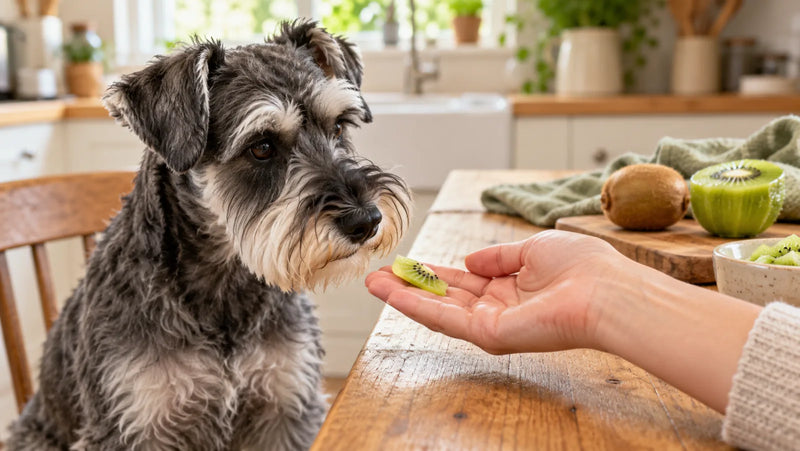
Slice the berry lengthwise, then make smaller flat pieces for toy breeds, puppies, gulpers, seniors, or dogs with dental limitations. A flat soft piece is easier to inspect and portion than a whole round berry. Mash the fruit with a fork for a dog that cannot chew confidently, and offer it from a spoon or mixed into a measured portion of regular food rather than as a slippery lump.
Supervise even when the fruit is soft. Choking risk depends on the dog's mouth, speed, and swallowing behavior, not just the ingredient. If your dog coughs, gags, repeatedly swallows, paws at the mouth, cannot breathe normally, or becomes distressed, treat that as urgent.
Fresh, thawed, mashed, or frozen
Fresh cut strawberry is the simplest form. Plain unsweetened frozen strawberry can also work, but a rock-hard berry is not automatically safer. Thaw it partly and cut or mash it for small dogs, puppies, seniors, fast eaters, and dogs with painful or fragile teeth. Never hand over a frozen clump.
For a warm-day snack, freeze tiny mashed dots or very small cut pieces on a clean tray, then soften them briefly before serving. Keep the amount measured and do not add yogurt, syrup, sweetener, chocolate, or a wooden skewer.

Strawberry foods dogs should skip
Canned strawberries and fruit in syrup
Canned strawberries packed in heavy or light syrup add concentrated sugar and an unnecessary liquid coating. Even cans labeled “in juice” may deliver a much sweeter, larger serving than a cut fresh berry. The safest routine choice is plain fresh or plain unsweetened frozen fruit with an ingredient list you can understand.
Do not assume that draining syrup turns canned fruit into fresh fruit. If a dog steals a small amount, read the full ingredient list and note the amount eaten. The label—not the picture of a strawberry on the front—determines whether there is an urgent ingredient.
Jam, yogurt, smoothies, baked goods, and candy
Strawberry jam, jelly, pie filling, muffins, cake, ice cream, sweetened yogurt, smoothie mixes, fruit leather, gummies, and chocolate-covered strawberries are recipes, not plain berries. They can contain large amounts of sugar and fat, plus chocolate, alcohol, raisins, macadamia nuts, or other dog-unsafe ingredients depending on the product.
Plain fruit-flavored packaging does not prove real fruit is present, and “natural” on a human snack does not make it a suitable dog treat. When you want to share a strawberry, take a small piece from the washed fruit before it enters a recipe.
Sugar-free products and xylitol
Check every sugar-free jam, dessert, candy, drink mix, and baked product for xylitol. The sweetener may also appear as birch sugar or wood sugar. The FDA warns that xylitol can cause a rapid, dangerous drop in a dog's blood sugar and advises immediate veterinary, emergency-clinic, or animal-poison-control contact after a possible exposure.
This warning is about intentionally sweetened processed products, not the normal sugar naturally present in a fresh strawberry. Do not create fear around the berry itself; do take the ingredient list on a sugar-free strawberry product seriously.
What to do after a strawberry-product theft
- Identify the exact food. Was it plain fruit, fruit in syrup, jam, chocolate-covered fruit, a baked dessert, or a sugar-free product?
- Save the label and recipe. Photograph the ingredient list and note xylitol, chocolate, raisins, alcohol, macadamia nuts, and any medication-like additives.
- Estimate exposure. Record the amount missing, time of the theft, package size, and your dog's weight and current symptoms.
- Escalate xylitol immediately. Call your veterinarian, an emergency clinic, or ASPCA Animal Poison Control at 888-426-4435. Do not wait for symptoms.
- Do not improvise treatment. Do not induce vomiting or give salt, oil, milk, charcoal, or another home remedy unless a veterinary professional directs it.
A few plain cut strawberries usually call for observation rather than panic. A large amount can still cause vomiting, diarrhea, or abdominal discomfort. Repeated vomiting, severe diarrhea, weakness, tremors, collapse, seizures, breathing trouble, or a swollen painful abdomen needs prompt veterinary attention.
Dogs that should get veterinarian guidance first
Ask before offering strawberry when your dog has diabetes, pancreatitis, chronic gastrointestinal disease, food allergies under investigation, kidney or heart disease, an obesity-treatment plan, a prescription or elimination diet, trouble chewing or swallowing, or a history of reacting to new foods. The concern may be sugar, fiber, calories, recipe disruption, or texture—not that strawberry is universally toxic.
Puppies also have little calorie room outside growth food. A veterinarian can tell you when extras fit the puppy's age, size, training plan, and digestive history. Fruit is optional; skipping it does not create a nutritional deficiency.
Other dog-safe fruits need their own preparation rules
Fruit safety is ingredient-specific. Our banana safety and serving guide explains why the peel comes off, while the apple safety guide for dogs covers removal of the core, stem, and seeds. Neither preparation can be copied blindly to every fruit.
For other summer-size snacks, see the blueberry portion and preparation guide and the watermelon seed-and-rind safety guide. Blueberries may need mashing for small mouths; watermelon requires every seed and all rind to be removed. “Dogs can eat fruit” is never a substitute for checking the particular fruit and form.
Frequently asked questions
Can puppies eat strawberries?
A weaned puppy may be able to try one tiny mashed piece after the veterinarian approves extras. Puppy food remains the nutritional priority. Introduce one new food at a time, avoid a whole berry, and stop if digestive or skin symptoms appear.
Can dogs eat frozen strawberries?
Yes, if they are plain and unsweetened, but match the texture to the dog. Partly thaw, cut, or mash them for small dogs, puppies, gulpers, seniors, and dogs with dental or swallowing concerns. Avoid whole rock-hard berries and frozen clumps.
Can dogs eat strawberry leaves?
The leafy top is not classified as toxic, but it is fibrous, hard to digest, and unnecessary. Remove the cap and stem before serving. A tiny accidental leaf is different from deliberately offering a pile of tops; call your veterinarian for a large ingestion or persistent symptoms.
Can dogs eat strawberries every day?
Daily strawberry is not necessary. A small measured piece may fit some healthy dogs, but all extras must stay inside the total treat budget and should not crowd out complete food. Dogs with medical or weight-management diets need a veterinarian-approved plan.
Can strawberries upset a dog's stomach?
Yes. A large serving or a sudden new food can cause gas, soft stool, diarrhea, or vomiting. Start with one small piece. Stop feeding the fruit and contact your veterinarian for repeated symptoms, pain, lethargy, blood, dehydration concerns, or any severe reaction.
Keep the berry plain, small, and occasional
Fresh strawberry can be a pleasant bit of summer variety when it is washed, hulled, cut to the dog, and served in a small amount. The avoid list is equally important: no syrup-packed fruit, unclear desserts, chocolate coatings, or xylitol-containing sugar-free products.
If you want purpose-made rewards instead of fruit, compare all current American Paws dog treats by ingredient, texture, and serving size. Whichever reward you choose, count it with every other extra, keep the complete diet in charge, and use your veterinarian for needs that go beyond an occasional snack.