
Are apples bad for puppies? No—plain apple flesh is not bad for most fully weaned puppies when it is washed, completely cored and seeded, and cut into one very small, thin piece. The stricter puppy rules are about readiness, choking prevention, portion control, and protecting the complete growth diet.
Around eight weeks is a common weaning point, not a universal apple birthday. A puppy should already be eating complete-and-balanced puppy food reliably and managing suitable solid textures before trying apple. Offer it as the only new food that day, keep every seed and the entire core out of the serving, and let the veterinary plan overrule a general guide.
Are Apples Bad for Puppies? The Conditional No
Prepared apple flesh can be an occasional taste for many puppies. It is not required for growth, and it should not replace puppy food, encourage a poor appetite, or become an unlimited “healthy” snack. A safe ingredient can still be a bad fit when the puppy is not weaned, the piece is too large or hard, the serving crowds out balanced food, or the puppy has a medical or digestive restriction.
The American Kennel Club’s apple guidance explicitly says puppies can have apples in small amounts and recommends washing the fruit, removing the seeds and core, cutting it into slices or small cubes, and monitoring a first serving. For a young puppy, this article takes the conservative end of that advice: one thin, kibble-size sliver is enough for a first trial.
For the broad adult-dog question, including general preparation and accidental exposures, use our complete apple-safety guide for dogs. This page stays focused on the life stage when stomach capacity is small, chewing skill is developing, and growth nutrition has little room for displacement.
What Age Can Puppies Eat Apples?
Use a readiness checklist, not a birthday
A puppy is ready for a tiny apple trial only when all of these are true:
- the puppy is fully weaned from the mother or milk replacer;
- complete-and-balanced food formulated for growth is being eaten reliably;
- the puppy can chew and swallow appropriately sized solid food without struggling or gulping;
- there is no active vomiting, diarrhea, poor appetite, abdominal discomfort, or recovery from illness; and
- the veterinarian has not restricted extras because of a prescription diet, food trial, medical condition, or growth concern.
Readiness can differ even between littermates. Breed size, dental development, previous food experience, swallowing behavior, health, and the main diet all matter. If one item on the checklist is uncertain, waiting costs nothing.
Around eight weeks is context, not automatic permission
VCA’s veterinarian-authored guide says puppies are typically weaned at about eight weeks. That explains why many families first consider treats around the time a puppy comes home. It does not mean every eight-week-old puppy should receive apple on the first day.
A newly rehomed puppy is already adapting to a new environment, schedule, water, people, and sometimes food. Keeping the diet familiar for the transition can make any stomach change easier to interpret. Ask the veterinarian or breeder what the puppy has been eating, and delay optional people food until regular meals and stools are stable.
How to Prepare Apple for a Puppy
Remove the stem, core, and every seed
Wash and scrub the apple under running water. Cut it open so you can see what you are removing. Discard the stem, the complete central core, and every visible seed before making the puppy portion. Do not hand over a whole apple and expect the puppy to eat around the unsafe parts.
Seed chemistry and the hard core create different concerns, and neither needs to be part of a planned snack. If a puppy already swallowed a core or multiple seeds, do not use a general serving article to guess the risk. Follow our apple-core ingestion guide and call the veterinary team with the puppy’s weight, the estimated amount, the time, and any symptoms.
Cut a thin piece for the individual mouth
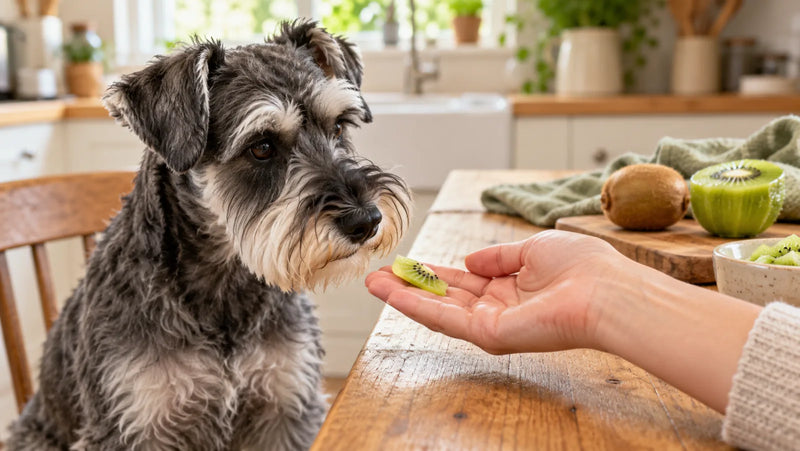
Use the puppy’s familiar kibble as a visual scale, not a medical dose. Cut one short, thin sliver no wider than a piece the puppy already handles comfortably. A flat sliver is easier to inspect and resize than a thick wedge or a whole round coin. Supervise the puppy while it chews and swallows.
Do not use a full adult apple slice, let a small puppy gnaw a wedge, or freeze a large chunk into a hard teething object. If the puppy bolts food, has dental pain, coughs during meals, or has had a choking episode, ask the veterinarian about texture before offering any new solid treat.
Peel only when a softer texture helps
Apple skin is not inherently poisonous, but it adds a firmer texture. Peeling the first tiny piece can make it simpler for a very small puppy or one that is new to crisp foods. A puppy that already handles appropriately cut apple with skin may not need every future piece peeled.
The goal is not to make a nutritional claim about peel. It is to choose a texture the individual puppy can manage and to keep the first exposure easy to interpret.

How Much Apple Can a Puppy Eat?
Start with one kibble-size thin sliver
For the first trial, one very small thin sliver is enough. This is deliberately smaller than an adult serving because the purpose is to test the new texture and tolerance, not to deliver a nutrient dose. Do not add another slice because the puppy begs, finishes quickly, or seems to like the flavor.
If the puppy remains comfortable through the next meals and stools, apple may stay an occasional option in similarly tiny pieces. There is no universal puppy piece count. The puppy’s changing calorie needs, body condition, training rewards, main food, and veterinary plan matter more than the size of the fruit in your hand.
All treats share the puppy’s under-10% calorie ceiling
The same VCA growth guide says no more than 10% of a puppy’s daily calories should come from treats or snacks so the overall diet remains complete and balanced. That ceiling includes apple plus training rewards, chews, toppers, table tastes, food-stuffed toys, and treats offered by every household member.
Ten percent is not a target and not a separate apple allowance. A tiny puppy may have room for very few extra calories, and a puppy using many rewards in training may have no room left for fruit that day. Pieces of measured puppy kibble can often do double duty as rewards. Use our daily dog-treat calorie guide to count the full budget rather than judging one snack in isolation.
Introduce Apple as the Only New Food That Day
Choose an ordinary day when the puppy feels well and the regular diet is stable. Prepare one tiny plain sliver, supervise the bite, and do not introduce banana, yogurt, peanut butter, a new chew, or another treat at the same time. When only one variable changes, a reaction is easier to interpret.
Watch appetite, comfort, skin, vomiting, and stool. Stop apple if loose stool, vomiting, marked gas, itching, or another change follows the trial. Call the veterinarian when signs repeat, are severe, involve pain or lethargy, or the puppy cannot keep food or water down. Trouble breathing, facial swelling, collapse, repeated unproductive retching, or a suspected obstruction needs urgent care.
Our one-new-treat introduction plan covers the full stepwise method. Do not fast a young puppy or use apple as a home treatment for diarrhea without veterinary direction.
Why a Safe Apple Can Still Be a Bad Fit
Skip or postpone apple when:
- the puppy is still nursing or being weaned;
- regular puppy meals are being refused or weight gain is a concern;
- the puppy has vomiting, diarrhea, constipation, abdominal pain, or a recent diet change;
- pieces are gulped without chewing or the puppy struggles with the texture;
- a veterinarian is managing diabetes, excess weight, pancreatitis, kidney disease, or another condition through diet;
- the puppy is on a prescription, hydrolyzed, novel-protein, or elimination diet; or
- the day’s training treats have already used the available extra calories.
Apple contains water, fiber, natural sugars, and various nutrients, but those facts do not turn it into a growth supplement. For that broader nutrition question, read about apple benefits and limits for dogs. Complete puppy food remains responsible for delivering essential nutrients in the right amounts and relationships.
Apple Foods Puppies Should Skip
The controlled trial is fresh plain apple flesh. Skip apple pie, caramel apples, candied or sweetened dried apple, juice, cider, sweetened applesauce, muffins, cake, cookies, cinnamon-heavy desserts, and sugar-free human products. These foods may add concentrated sugar, fat, hard textures, dairy, spices, or ingredients that are unsafe for dogs.
Do not assume “made with apple” means suitable for a puppy. Read the full ingredient list. If a mixed food contains chocolate, raisins or grapes, macadamia nuts, alcohol, xylitol, or another concerning ingredient, contact the veterinarian or animal poison control promptly rather than waiting for symptoms.
When to Ask the Veterinarian First
Ask before the first apple taste if the puppy is very young, unusually small, underweight, recovering from illness or surgery, taking medication with food instructions, or following any therapeutic diet. Veterinary guidance also matters when the puppy has a history of choking, obstruction, repeated digestive upset, food reactions, or abnormal growth.
A general article cannot calculate a medically appropriate portion. The veterinarian can consider current weight, expected adult size, body condition, growth rate, main-food calories, training needs, and the reason for adding a treat.
This Puppy Guide vs the Adult Apple Guides
The broad apple-safety article owns adult preparation, common serving questions, and general incidents. The apple-benefits article owns nutrients, sugar, and honest health limits. The core article owns swallowed-core and seed triage. This page owns the puppy decision: weaning readiness, growth-food priority, extra-small piece geometry, one-new-food testing, and a limited calorie budget.
The same readiness framework applies to other fruits without making them interchangeable. Our banana readiness guide for puppies uses the same fully weaned and complete-growth-food gate, then handles banana’s softer, stickier texture in its own article.
Frequently Asked Questions
Can an 8-week-old puppy eat apple?
Some eight-week-old puppies can try one tiny, thin, fully cored and seeded piece after they are completely weaned and eating puppy food reliably. Eight weeks is a common weaning point, not automatic permission. Wait if the puppy is adjusting poorly, has digestive signs, struggles with solids, or has a veterinary restriction.
Can puppies eat apple skin?
Apple skin is not poisonous, but it is firmer than the flesh. Peeling the first piece can simplify the texture for a very small puppy. Whether skin fits later depends on the puppy’s chewing, digestion, and portion size.
Can puppies eat apples every day?
Puppies do not need daily apple. An occasional tiny piece is easier to fit around training rewards and complete growth nutrition. If a food is offered frequently, the veterinarian should help account for its calories and the puppy’s changing needs.
Are apples good for puppy teething?
Do not use a hard apple wedge or frozen chunk as a teething chew. It can be too large, slippery, or firm for the individual mouth. Use veterinarian-recommended puppy toys and dental care instead; apple is only a small food taste.
What if a puppy swallowed an apple core?
Remove access to the rest and call the veterinary team for advice based on the puppy’s size, how much was swallowed, when it happened, and any signs. Do not induce vomiting unless a professional instructs you. Use the dedicated core article for the chemical-versus-mechanical risk distinction.
Keep the Piece Tiny and Growth Food in Charge
Plain apple flesh is not bad for most fully weaned puppies. The safe version is washed, completely cored and seeded, cut into one short thin sliver, introduced by itself, and counted with every other treat. The puppy’s regular growth diet should remain overwhelmingly in charge.
If apple does not fit, there is no nutritional gap to fill. For a labeled reward after checking age, texture, ingredients, and calories, browse all current American Paws dog treats. No product is automatically right for every puppy, so match the choice to the individual dog and use tiny pieces when the veterinarian approves treats.