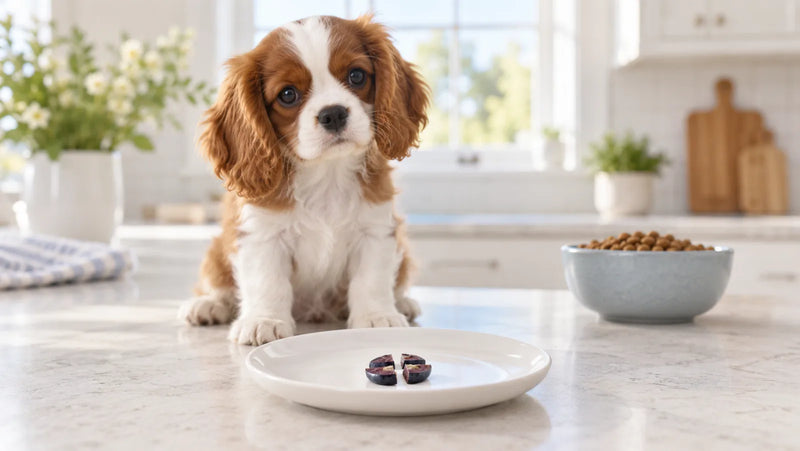

Banana for puppies can be safe in a tiny, peeled, bite-sized amount after a puppy is fully weaned and comfortably eating solid puppy food. There is no banana-specific minimum age: around eight weeks is a common weaning point, not automatic permission, and one piece no larger than the puppy's usual kibble is enough for a first taste.
A growing puppy does not need banana to complete its diet. Use it as an occasional extra, keep the texture and size appropriate for a small mouth, and count it with every training reward, topper, and table bite. The puppy's complete-and-balanced growth food must continue to supply nearly all daily nutrition.
Is banana for puppies safe?
Yes, many fully weaned puppies can eat a little ripe, peeled banana. Banana is not toxic to dogs, and its soft flesh is easy to cut or mash. The important limits are readiness, portion, sugar, fiber, texture, and the individual puppy's health and diet.
The American Kennel Club's banana guide recommends small amounts because bananas contain natural sugar and says the peel should be removed because it is difficult to digest. That general dog verdict does not tell you whether a newly weaned puppy is ready today.
Banana is an optional snack—not puppy food, a vitamin supplement, a digestive treatment, or a required part of socialization. If your puppy is thriving on a growth diet and has never tasted fruit, there is no nutritional deadline to introduce it.
What age can puppies eat banana?
Use readiness, not a birthday
The VCA guide to feeding growing puppies says puppies are typically weaned from their mother's milk at about eight weeks. That makes eight weeks useful context, but it is not a universal banana rule. Weaning timing, size, development, health, and the food a puppy already handles can differ.
A puppy is a more reasonable candidate for one tiny banana taste when all of these are true:
- The puppy is fully weaned rather than still transitioning from milk or formula.
- The puppy reliably eats an age-appropriate, complete-and-balanced growth food.
- The puppy can chew and swallow pieces the size and texture of its usual food.
- Appetite and stool are normal, with no current vomiting or diarrhea.
- A veterinarian has not prescribed a diet or instructed the household to avoid extras.
If those conditions are not met, waiting is safer and costs nothing. A young puppy learns plenty from its regular food, gentle handling, play, rest, and predictable routines.
Puppies who should wait
Do not introduce banana while a puppy is still nursing or being hand-fed, has a poor appetite or inadequate weight gain, is recovering from illness or surgery, has active digestive signs, is undergoing a food-elimination trial, or eats a veterinary-prescribed diet. Ask the veterinarian first if diabetes, swallowing trouble, a history of obstruction, or another medical condition changes what extras are appropriate.
A puppy who is not eating regular meals needs attention to the appetite change, not a sweeter alternative. Do not use banana to coax a very young puppy through prolonged food refusal without veterinary advice.
How much banana can a puppy eat?
The first-taste amount
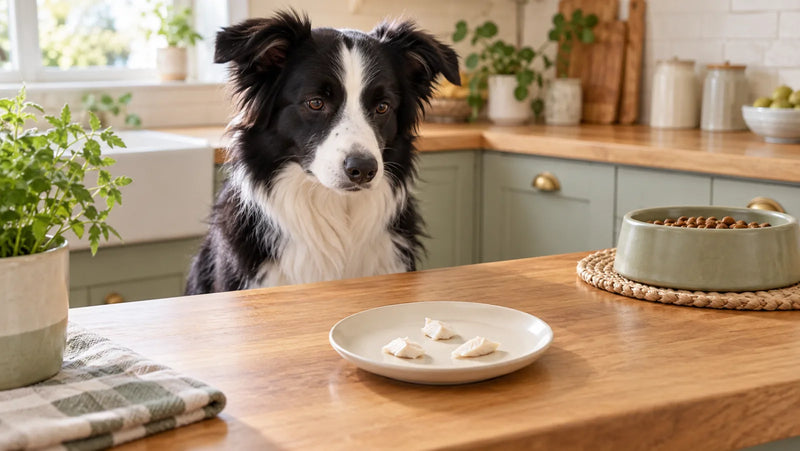
For the first exposure, offer one soft piece no larger than one piece of the puppy's usual kibble, or a pea-size smear of mashed banana for a very small mouth. This is a tolerance test, not a serving target. Give no other new food that day so any change is easier to describe.
Watch the puppy chew and swallow, then observe appetite, behavior, vomiting, and stool through the rest of the day and the next normal meal-and-stool cycle. A tiny first taste cannot prove that every future amount will be tolerated, but it avoids turning the first trial into a large sugar-and-fiber load.
After a tolerated trial
A few tiny pieces on an occasional day are enough for most puppy uses. There is no honest universal answer such as “one slice for small puppies and half a banana for large puppies.” Adult weight, growth rate, current body condition, food calories, activity, training rewards, and veterinary needs all change the available calorie space.
VCA recommends that treats and snacks supply no more than 10% of a growing puppy's total daily calories so the overall diet remains complete and balanced. That is a ceiling for all extras together—not 10% for banana plus another 10% for biscuits, chews, toppers, and training treats.
Use the puppy's food label and veterinary calorie plan for the real denominator, then pre-portion the day's extras. Our daily treat-calorie budget explains the shared 10% rule, but a veterinarian should set an individual target for a growing puppy.
Cut banana to lower choking risk
Remove the peel and stringy fibers, use soft ripe flesh, and match the piece to the puppy's familiar kibble rather than an adult human bite. Mash it for a tiny mouth or cut it into small irregular bits that are easy to flatten. Do not hand over a whole banana, a thick round coin, a skewer, or a piece attached to peel.
Supervise the first tastes. A soft food can still be gulped, and a sticky chunk can be awkward for a hurried puppy. If the puppy swallows without chewing, make the next portion smaller or spread a thin smear on a spoon or food-safe surface that you hold and remove.
Large frozen chunks may be hard, slippery, and oversized. If you choose to freeze banana later, portion it before freezing and let it soften enough for the individual puppy. Do not present frozen banana as a treatment for teething pain or give a hard piece merely because the puppy wants to chew.

Why growing puppies need a stricter limit
Puppies are building bone, muscle, organs, and nervous tissue while their calorie needs change rapidly. Complete-and-balanced growth food is formulated around that life stage. A banana contains nutrients, but listing potassium, fiber, or vitamins does not make fruit a balanced growth supplement.
Banana's natural sugar and calories occupy a larger share of a small puppy's daily budget than many owners expect. Too much fruit can also bring loose stool, gas, or stomach upset. Replacing growth food with banana is the bigger nutritional mistake: the puppy loses room for the protein, fat, minerals, and other nutrients the complete formula was designed to provide in balance.
For the broad adult-dog nutrition question, read banana benefits and limits for dogs. This puppy guide keeps a narrower priority: growth food first, tiny introduction, and no claim that banana improves development. For another puppy-safe extra handled the same careful way, see our pumpkin for puppies guide.
A simple first-banana trial
- Choose an ordinary day. Avoid travel, vaccination day, a new food transition, or a day when the puppy already has digestive signs.
- Prepare plain fruit. Use a ripe banana with no peel, sweetener, dairy, nut butter, chocolate, bread, spice, or other topping.
- Cut one tiny piece. Keep it no larger than familiar kibble, or make a pea-size mash.
- Ask for an easy behavior if you like. A sit, name response, or calm four paws on the floor is enough; the goal is not a long training session.
- Watch the swallow. Stay close, do not let the puppy rush several pieces, and put the banana away immediately.
- Keep the rest of the day familiar. Offer regular meals and water, and avoid stacking other new treats.
If mild loose stool follows, stop banana and return to the regular diet while asking the veterinarian what monitoring is appropriate. Repeated vomiting, marked lethargy, a painful or swollen abdomen, trouble breathing, facial swelling, collapse, inability to keep water down, or suspected swallowing of a large peel or another object needs prompt veterinary contact.
Do not fast a very young puppy, prescribe banana for diarrhea, or use a home remedy for persistent signs without veterinary direction. Puppies have smaller reserves than adult dogs, and “wait it out” is not a universal plan.
Banana is not ideal for every puppy training session
Banana can work as one soft novelty reward, but it is sticky, sugary, and difficult to deliver cleanly through dozens of repetitions. For frequent practice, part of the measured puppy-food ration or a small, easy-to-divide reward is often simpler to count.
Our guide to choosing puppy training treats covers piece size, texture, ingredients, and calorie planning for repeated rewards. If a puppy is ready for a meat-based option, the separate chicken-jerky readiness and texture guide for puppies explains when and how to size that format. Neither food is automatically right for every puppy.
What not to mix with banana
The safest first trial is plain banana because one ingredient makes the response easier to interpret. Skip chocolate, raisins or grapes, macadamia nuts, alcohol, syrup, sweetened yogurt, ice cream, and banana bread. Sugar-free or “keto” spreads and baked goods may contain xylitol, also called birch sugar, which is toxic to dogs.
Peanut butter is unnecessary for the first test. If it is used another time, read every label for xylitol and count both foods in the same treat budget. Do not assume a product is safe because a previous jar from the same brand had different ingredients.
Commercial banana chips often contain added sugar or oil and are firmer than ripe fruit. Whole ripe banana is easier to soften, resize, and portion. Choose no-sugar-added dried fruit only after reading the ingredient and calorie label, and break it for the puppy's mouth rather than copying an adult serving.
Adult banana guides and this puppy guide answer different questions
The general guide to banana safety for dogs owns the broad yes-or-no answer, preparation forms, and dog-wide cautions. The benefits article owns the nutrition tradeoffs. This page owns the puppy-specific decision: weaning and solid-food readiness, protection of growth nutrition, a deliberately tiny first trial, and choking-aware preparation.
That separation matters. An adult-dog slice recommendation can be oversized for a toy-breed puppy, while a generic list of banana nutrients can distract from the complete food that actually supports growth.
Frequently asked questions
Can an 8-week-old puppy eat banana?
Some can, but eight weeks is a typical weaning reference, not automatic clearance. The puppy should be fully weaned, reliably eating complete growth food, able to handle kibble-size solids, free of current digestive signs, and not under a veterinary restriction. Start with one piece no larger than the usual kibble.
Can puppies eat banana every day?
Banana does not need to be a daily food. Occasional tiny portions are easier to fit without displacing balanced puppy nutrition. If you want to use it regularly, ask the veterinarian to include it with all other extras in the puppy's calorie plan.
Can banana help puppy diarrhea?
Do not treat puppy diarrhea with banana on your own. Extra fruit and fiber may worsen some cases, and young puppies can become dehydrated or ill quickly. Call the veterinarian for repeated diarrhea, vomiting, blood, lethargy, pain, poor appetite, or concern about a very young puppy.
Can puppies eat banana peel?
Banana peel is not considered a toxin, but it is tough and difficult to digest and may contribute to choking or an intestinal blockage. Remove it before serving. If a puppy swallowed peel, use the guide on what to do after banana-peel ingestion and call the veterinarian with the puppy's size, amount, timing, and symptoms.
Is frozen banana safe for puppies?
A tiny pre-cut piece that has softened may fit a puppy already known to tolerate banana. Avoid large, hard, slippery chunks and supervise. Frozen fruit does not become nutritionally balanced and is not a veterinary teething treatment.
Keep the first taste smaller than you think
Wait until the puppy is fully weaned and steady on complete growth food, then make the first banana taste no larger than familiar kibble. Peel it, keep it plain, supervise, and stop if digestive or other concerning signs appear. A successful introduction is uneventful—and it can remain occasional.
For everyday training, start with part of the puppy's measured food ration and add extras only when they fit the individual plan. You can compare all American Paws dog treats with your veterinarian's guidance, the label, the puppy's age and chewing skills, and the shared treat-calorie budget in mind.