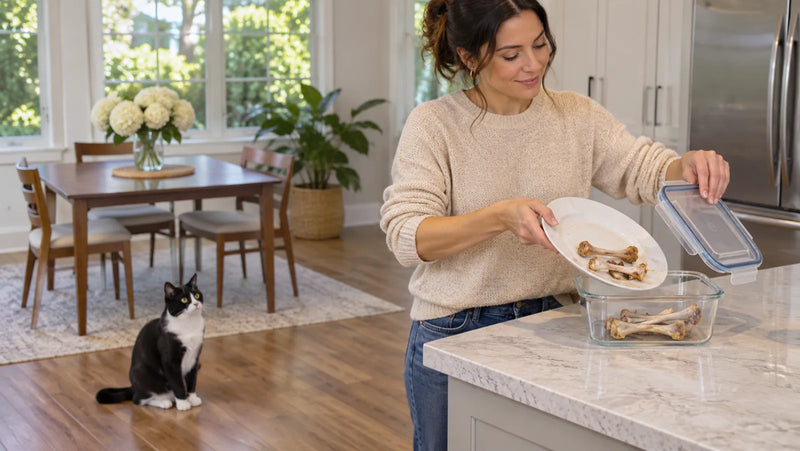
Can cats eat ham? A healthy adult cat may have one tiny piece of lean, fully cooked, boneless, unglazed, unseasoned ham on rare occasions, but cured ham is salty and easy to over-portion. Skip deli piles, country ham, smoked or glazed ham, fatty edges, bones, pan drippings, and meat seasoned with onion or garlic.
Cats with kidney, heart, blood-pressure, urinary, digestive, or prescription-diet needs should follow their veterinary plan instead of sharing ham. Kittens also need an individual answer because complete growth food has a specific nutritional job and a small body leaves little room for salty human-food extras.
The word “meat” does not make every product equivalent to a feline diet. Ham's cure, ingredient list, sodium, calories, fat, cooking status, bone, glaze, and serving size all matter. The practical choice is usually a labeled cat treat or part of the cat's measured complete food rather than a cut from the family plate.
Can Cats Eat Ham? The Short Answer by Form
| Ham form | Decision | Main reason |
|---|---|---|
| One tiny lean, plain, fully cooked, boneless piece | Possible rare taste for a healthy adult cat | Keep it smaller than the cat's usual treat and count it with every other extra |
| Deli ham | Skip as an intentional treat | Thin slices can still carry substantial sodium, calories, brine, flavoring, or other additives |
| Country ham or prosciutto | Skip | Dry curing concentrates salt and makes a human serving easy to over-share |
| Smoked or flavored ham | Skip | Brine, smoke flavor, sugar, spices, and seasonings vary by product |
| Honey-, maple-, or brown-sugar-glazed ham | Skip | Added sugar and seasoning turn it into a mixed-recipe decision |
| Onion- or garlic-seasoned ham | Do not feed | Allium ingredients can damage feline red blood cells |
| Fatty edge or drippings | Skip | Concentrated fat and calories can cause digestive upset and conflict with medical plans |
| Ham bone | Never a cat treat | Cooked and raw bones can injure or obstruct |
| Raw, undercooked, or cook-before-eating ham | Skip | It is not ready for a cat and carries food-safety uncertainty |
The best-cat-treat selection framework gives a more repeatable way to compare ingredients, calories, texture, life stage, and medical-diet fit. Ham usually loses that comparison because its label and serving size were designed for people.
Ham Is Cured Meat, Not Plain Pork
Most ham is cured, which means salt is central to the product even before a cook adds glaze or seasoning. Some ham is injected with a brine or flavoring solution; some is smoked, canned, sliced for deli service, or dry-cured. “Uncured” on the front of a human-food package does not establish that the product is low in sodium or simple enough for a cat.
Read the exact Nutrition Facts panel and ingredient list. Compare the listed serving weight with the amount the cat could reach, then look for salt, brine, broth, sugar, flavoring, smoke flavor, onion, garlic, chives, leeks, shallots, and spice blends. A holiday recipe needs its ingredient list too, because the retail package no longer describes what was added in the kitchen.
Fresh plain pork and cured ham are also different search questions. The dog-specific ham safety page owns canine portions and response details; a cat needs a feline calorie budget, cat-sized texture, and a veterinary-diet check.
Salt Is the Main Everyday Reason to Keep Ham Tiny
A tiny plain ham morsel does not equal a diagnosis of salt poisoning. The everyday problem is simpler: cured meat brings avoidable sodium into a small animal's treat budget, and the amount changes from one ham to another. A few stolen slices, a salty country-ham piece, or a bowl of drippings is a different exposure from one crumb.
The Merck Veterinary Manual review of salt toxicosis explains that excessive sodium intake can cause hypernatremia, especially when fresh water is limited. It also states that toxicity is unlikely when sodium-regulating mechanisms are intact and fresh water is available. That nuance supports calm portion control rather than treating every lick as an emergency.
Keep the cat's normal fresh water available. After a large or very salty exposure, call the veterinarian instead of trying to force water or correct salt at home. Sodium abnormalities require measured clinical assessment and, when treatment is needed, gradual correction.
A Human Ham Slice Is Larger Than a Cat Treat Budget
The WSAVA cat-treat guide gives a useful scale check. Its example lists 1 oz of ham at 46 calories. On the same resource, the example maximum from all treats ranges from 18 to 28 calories per day for average healthy adult cats weighing 2.5 to 7 kg. Exact ham and individual cat needs vary, but one human ounce can exceed the entire example treat allowance.
A sandwich slice or carved holiday portion is therefore the wrong visual unit. If the veterinarian permits a first taste, use one tiny lean shred smaller than the cat's usual treat. Offer it once, separately from the meal, and watch appetite, behavior, vomiting, and stool. Avoid building a daily ham routine.
The cat treat-calorie guide helps combine every extra into one allowance. Ham shares that space with dental products, pill food, training rewards, toppers, and every other cat treat; each item does not receive its own separate 10%.
Glaze and Seasoning Can Change the Answer Completely
Honey, maple syrup, brown sugar, fruit glaze, or sweet sauce adds calories without making ham more useful for a cat. Mustard, gravy, cloves, spice blends, alcohol, and pan sauces add a new list of ingredients. The original ham package cannot answer for a glaze mixed at home.
Onion, garlic, chives, leeks, and shallots deserve special attention. The ASPCA people-food safety resource explains that Allium vegetables can irritate the gastrointestinal tract and damage red blood cells, and that cats are more susceptible than dogs. Powdered, cooked, and mixed-in ingredients still belong in the exposure history.
Scraping visible glaze from a slice does not establish that the meat underneath stayed plain. Marinade, brine, injected solution, pan juices, and spice rub can move beyond the surface. Choose a genuinely plain product from the start or leave ham out of the cat's plan.
Skewers, toothpicks, butcher string, foil, plastic wrap, absorbent pads, and netting create separate foreign-body hazards around holiday leftovers. Secure the food and the packaging before the cat reaches the counter or trash.
Fatty Edges, Drippings, and Ham Bones Stay Out
Trimmed fat, skin, rind, and pan drippings pack more calories into a small bite and can trigger vomiting or diarrhea. A cat with a pancreatitis history, gastrointestinal disease, or a prescribed low-fat approach needs the veterinary plan, not a home estimate of how much fat looks acceptable.
Ham cooking liquid and broth can also carry salt, fat, onion, garlic, and seasoning. Use the actual recipe before considering any liquid; “broth” is not evidence that the food is plain.
WSAVA states that both cooked and raw bones can cause significant damage when cats chew or ingest them. Ham bones can fracture teeth, lodge, splinter, or obstruct. Keep the whole bone, cut fragments, and trash secured. Do not offer a cooked bone because it has meat attached or a raw bone because it feels softer.
Cats With Kidney Disease Need the Veterinary Diet to Stay in Charge
The kidney concern should stay specific. Ham does not cause chronic kidney disease from one tiny taste, and a healthy cat's kidneys are not automatically injured by a crumb. Cats already living with kidney disease have a different nutrition plan.
The Cornell Feline Health Center's CKD resource explains that management includes hydration, electrolyte monitoring, blood-pressure control, and veterinary therapeutic diets restricted in protein, phosphorus, and sodium. Cornell also stresses working closely with the veterinarian so the cat keeps eating the appropriate diet.
That means a cat with CKD should not receive ham as a casual “high-value” workaround. The same veterinary check belongs to cats with heart disease, hypertension, urinary disease, edema, diabetes, food reactions, pancreatitis, gastrointestinal illness, or any prescribed diet. Even a small extra can conflict with a carefully controlled plan or make the main food less appealing.
How to Prepare the Narrow Plain-Ham Exception
If the veterinary plan allows one taste, use a product that is already fully cooked and ready to eat. Follow the package's storage and use-by directions, and start with a batch that remained plain rather than scraping seasoning from a finished holiday ham.
- Read the package and recipe. Confirm fully cooked status and identify sodium, brine, flavoring, sugar, smoke, and every seasoning.
- Select a lean boneless interior piece. Remove rind, visible fat, glaze, skin, and every bone fragment; choose another food if seasoning touched the batch.
- Use clean tools. Keep the cat piece away from raw meat, carving boards with bone fragments, gravy, and seasoned surfaces.
- Cool it completely. Warm meat and pan juices can burn or encourage the cat to gulp.
- Cut one tiny shred. Make it smaller than the cat's ordinary treat and easy to chew.
- Serve separately. Place it on a small clean saucer rather than mixing it into a full meal.
- Count and observe. Include the taste with every other extra and watch the cat afterward.

Raw, undercooked, spoiled, room-temperature leftovers, and packages labeled “cook before eating” stay outside this exception. The fully cooked requirement comes from food safety; the tiny plain portion comes from feline treat management.
Deli Ham, Country Ham, Prosciutto, and Smoked Ham
Deli ham: A thin slice looks light but can still be a large cat portion. Sodium, injected solution, sweeteners, flavorings, smoke, and preservatives differ across products. Use the label, not slice thickness, and skip it as a planned reward.
Country ham and prosciutto: Dry-cured meat is deliberately salty and concentrated. Its strong smell can attract a cat, but scent is not a nutrition test. Keep it for people.
Smoked or flavored ham: Smoking and flavoring can accompany brine, sugar, spice, garlic, onion, or coatings. Exact ingredients matter, and restaurant ham may not come with enough information for a reliable cat decision.
Canned ham and ham spreads: These are processed formulas rather than one plain meat piece. They can be soft enough for a cat to eat quickly and easy for a person to over-spoon. Choose a measured feline product instead.
Keep the Cat Question Separate From the Dog Question
Cats and dogs share some ham hazards, but their portion scales and medical contexts differ. The dog-side article linked earlier handles canine salt, fat, bone, and holiday-plate decisions. For a cat, use the feline calorie allowance, consider greater Allium susceptibility, preserve the complete cat diet, and keep every piece small enough for a cat's mouth.
A cat that steals from a dog's bowl may also ingest a dog-size amount. Record the maximum missing food and the exact recipe rather than describing it as “just one treat.”
A Labeled Cat-Treat Alternative Is Easier to Measure
The plain-turkey decision for cats shows the difference between a tiny fully cooked, skinless, boneless, unseasoned piece and brined, smoked, deli, or holiday turkey. The plain cooked shrimp decision for cats has its own shell, tail, raw-seafood, brine, and sodium checks. Protein alone never replaces form, label, and portion.
For a cat whose veterinary plan already allows chicken, the current American Paws freeze-dried chicken breast page lists 100% USA chicken breast, freeze-dried whole, in naturally small crunchy pieces for cats and dogs. It is labeled for intermittent or supplemental feeding. Break a piece to the individual cat's size and use the veterinary team's portion; the product page's dog feeding chart is not a cat serving guide.
Compare that exact label with the broader American Paws cat-and-dog treat assortment one item at a time. The full collection contains different ingredients and formats, so suitability belongs to the selected product and the individual cat.
What to Do if a Cat Ate Ham
Remove the remaining food and packaging, keep normal fresh water available, and collect the facts:
- the exact ham type, brand, ingredient list, recipe, and cooking status;
- the maximum missing amount and earliest/latest possible time;
- whether glaze, onion, garlic, chives, leeks, shallots, alcohol, bone, skewer, string, foil, or wrapper was present;
- the cat's weight, age, health conditions, medications, and prescribed diet;
- any vomiting, diarrhea, marked thirst or urination, appetite change, weakness, pale gums, tremor, breathing change, collapse, or seizure.
For one tiny plain piece in a healthy cat, remove the rest, maintain the normal routine, and observe. Call the veterinarian if the cat develops symptoms or the product details remain uncertain.
Call promptly after a large amount, very salty product, onion or garlic exposure, bone or packaging ingestion, raw or cook-before-eating meat, unknown recipe, or exposure involving a kitten or a cat with a medical or prescription-diet restriction. ASPCA Animal Poison Control is available at 888-426-4435.
Seek emergency care for seizure, collapse, severe weakness, breathing difficulty, repeated vomiting, or profound distress. Avoid forced water, home vomiting, salt “correction,” or human medication. Electrolyte and toxin cases require case-specific veterinary management.
Frequently Asked Questions
Can cats eat cooked ham?
A healthy adult cat may have one tiny lean, fully cooked, boneless, unglazed, unseasoned piece on rare occasions if the veterinary plan permits it. Check the exact label because fully cooked ham can still be high in sodium and contain brine, sugar, smoke flavor, or seasoning.
Can cats eat deli ham?
Skip deli ham as an intentional cat treat. A thin slice can still be a large feline portion, and sodium, injected solutions, flavors, and additives vary. A measured cat treat with a clear label is easier to control.
How much ham can a cat eat?
Use one tiny lean shred smaller than the cat's ordinary treat, once, rather than a slice or daily portion. WSAVA's example places 1 oz of ham at 46 calories—more than its entire example daily treat allowance for many average adult cats.
Can cats eat honey-glazed ham?
No planned serving. Honey, sugar, syrup, spices, mustard, onion, garlic, alcohol, or other recipe ingredients can change the decision, and scraping the surface does not prove the meat stayed plain.
Can cats eat ham bones?
No. WSAVA advises that cooked and raw bones can cause significant damage in cats. A ham bone can injure the mouth or digestive tract, lodge, splinter, or obstruct. Call a veterinarian after an ingestion.
Can kittens eat ham?
Keep complete kitten food in charge and ask the veterinarian before adding human food. A kitten has a small calorie allowance, an immature body, and specific growth requirements; salty cured ham offers no needed role.
Can cats with kidney disease eat ham?
Use the veterinarian's renal-diet plan. Cornell notes that feline CKD management often includes a therapeutic diet restricted in protein, phosphorus, and sodium, plus close attention to hydration and blood pressure. Ham can conflict with that controlled plan.
Keep Ham Rare, Plain, Lean, and Tiny
Ham is a people food built around curing, not a feline nutrition shortcut. For a healthy adult cat, the narrow exception is one tiny lean, fully cooked, boneless, unglazed, unseasoned taste. Every other form deserves a label, recipe, and health-plan check.
Choose a reward you can measure from its own package. Review the cat-treat buying checklist, then compare the exact product label and ask the veterinary team how it fits the cat's complete diet and medical needs.