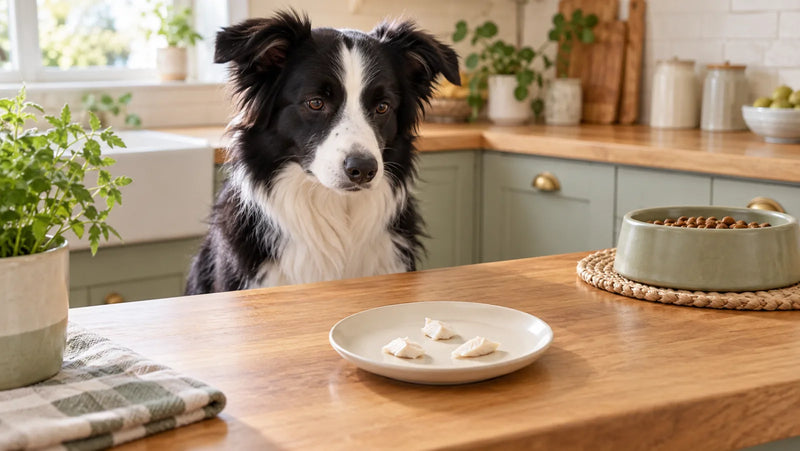

Can cats eat turkey? Yes—most healthy adult cats can have a tiny amount when the turkey is fully cooked to 165°F, cooled, skinless, boneless, and completely unseasoned. Start with one pea-size shred. Keep turkey skin, bones, gravy, stuffing, pan drippings, brined or smoked meat, deli slices, and anything exposed to onion, garlic, chives, leeks, salt, butter, or spice blends off the cat's plate.
That narrow yes does not turn a holiday roast into cat food. The recipe, cut, preparation, portion, and individual cat all matter. Complete and balanced cat food should remain the meal; turkey is only an occasional extra.
Can Cats Eat Turkey? The Short Answer
Plain cooked turkey muscle meat is not inherently toxic to cats. A small piece of breast or another lean cut can fit as a treat for some healthy adult cats. The answer changes as soon as the meat includes skin, bone, seasoning, brine, smoke flavor, rich drippings, or an unknown ingredient list.
Use this one-sentence test: fully cooked, cooled, skinless, boneless, unseasoned, and tiny. If you cannot confirm every part, do not deliberately feed it. Cats with a prescription diet, food sensitivity, chronic illness, pancreatitis history, obesity, or appetite problem need an individual answer from their veterinary team.
The Five-Part Safe Turkey Check
| Check | What passes | What fails |
|---|---|---|
| Cooked | Turkey reaches 165°F, then cools before serving | Raw, undercooked, or only seared meat |
| Skinless | Lean meat with visible skin and fatty pockets removed | Crisp skin, fatty trimmings, butter, or drippings |
| Boneless | Meat inspected with fingers and fork for bone or hard fragments | Cooked or raw bone, neck pieces, or scraps from the carcass |
| Unseasoned | Cooked separately with no salt, rub, sauce, brine, onion, or garlic | Meat picked from a seasoned roast or coated in gravy |
| Tiny | One pea-size first taste; a measured occasional portion if tolerated | A slice, bowlful, meal replacement, or repeated handouts |
Turkey that passes four checks but fails one stays out. Scraping away gravy does not reverse exposure to its ingredients, and pulling meat off a bone does not guarantee that every hard fragment is gone. When the history is unclear, use the cat's normal food or a labeled cat-suitable treat instead.
How to Prepare Plain Turkey for a Cat
- Set aside the cat's portion before seasoning. Use a clean piece of lean turkey, separate from brines, marinades, stuffing, rubs, aromatics, and pan drippings.
- Prevent raw-poultry cross-contamination. Keep raw turkey and its juices away from the cat's bowl, ready-to-eat food, counters, and utensils.
- Cook it thoroughly. The CDC's holiday turkey guidance uses 165°F as the safe internal temperature. Check with a food thermometer rather than color alone.
- Cool and inspect it. Remove every bit of skin, visible fat, cartilage, and bone. Shred the meat so a hard fragment is easier to notice.
- Serve a measured amount. Begin with one pea-size shred on a saucer or mixed into the regular meal. Refrigerate human leftovers promptly; do not leave meat sitting in the bowl for hours.
Plain ground turkey can qualify if it contains only turkey, is cooked through to 165°F, drained, cooled, and offered without oil, salt, onion, garlic, or seasoning. A prepared turkey burger, meatball, sausage, or meatloaf does not qualify merely because turkey is the first ingredient.
Why Turkey Skin and Fatty Drippings Stay Off the Cat's Plate
Roasted skin concentrates fat and usually carries salt, butter, oil, herbs, and seasonings. Pan drippings and gravy add more fat and may contain onion or garlic. Even if a cat loves the smell, these are not the plain lean meat covered by the safe answer.
A rich mouthful can cause digestive upset, and high-fat foods are an especially poor experiment for a cat with a history of pancreatitis, sensitive digestion, weight concerns, or a therapeutic diet. Removing the skin after roasting helps with fat, but it does not make meat safe if the roast was brined, injected, rubbed, basted, stuffed, or cooked in unsafe aromatics.
Turkey Bones Are Not Cat Treats
Do not give a cat turkey bones—cooked or raw. The World Small Animal Veterinary Association's cat treat guide warns that bones can cause serious injury. Risks include broken teeth, choking, and obstruction. Cooked poultry bones can also break into sharp pieces.
Do not offer the neck, wing tip, wishbone, drumstick, carcass scraps, or a piece small enough to swallow. Do not assume a raw bone is a safe exception. Put bones, carving string, foil, skewers, and the carcass in a closed container or secured trash that the cat cannot investigate.
Onion and Garlic Make Seasoned Turkey Unsafe for Cats
Onion, garlic, chives, and leeks belong to the Allium group. They can damage red blood cells, and cats deserve particular caution. The Merck Veterinary Manual's allium toxicosis guidance identifies cats as the most susceptible species and explains that raw, cooked, dehydrated, and granulated forms can be harmful.
That means onion powder in a rub and garlic powder in gravy matter even when no visible pieces remain. Cooking does not neutralize the problem. Neither does rinsing, scraping, straining, or choosing an apparently bare piece from a seasoned roast. Signs associated with red-blood-cell damage may be delayed, so a cat that looks normal immediately after exposure is not automatically in the clear.
If a recipe contains an allium—or you do not know what is in the rub, stock, gravy, stuffing, or seasoning blend—do not intentionally share the turkey. Cats are not small dogs, and their sensitivity is one reason a generic “pets can have turkey” rule is not enough.

Deli Turkey, Smoked Turkey, Brined Turkey and Ground Turkey
| Turkey type | Share with a cat? | Reason |
|---|---|---|
| Plain home-cooked turkey breast | Yes, in a tiny amount | Only when cooked to 165°F, cooled, skinless, boneless, and unseasoned |
| Deli or sandwich turkey | No as an intentional treat | Often high in sodium and may include flavorings, seasonings, or preservatives |
| Smoked, cured, injected, basted, brined, or self-basting turkey | No | Added salt and flavorings may be substantial or unclear |
| Plain ground turkey | Sometimes | Only 100% turkey, fully cooked, drained, cooled, and unseasoned |
| Turkey sausage, burger, meatball, or meatloaf | No unless every ingredient independently passes | Recipes commonly include salt, fat, onion, garlic, binders, or sauces |
| Raw or undercooked turkey | No | Raw poultry can carry disease-causing organisms |
“Low sodium” deli meat is not the same as plain home-cooked turkey. Front-label wording does not disclose every flavoring or establish that the product suits a particular cat's medical needs. A one-time stolen crumb and an item chosen as a regular treat are also different decisions: do not turn accidental tolerance into a feeding plan.
How Much Turkey Can a Cat Eat?
For a first exposure, use one pea-size shred. If the cat tolerates it and has no dietary restriction, the following amounts are conservative occasional starting points—not a prescription, a daily allowance, or a reason to use the full amount.
| Cat | Conservative occasional amount | Decision note |
|---|---|---|
| Any healthy adult trying plain turkey for the first time | One pea-size shred | Offer one new food at a time, then watch appetite, stool, and comfort |
| Small adult, under about 8 lb | Up to 1/2 teaspoon, finely shredded | Use less if other extras were already fed |
| Average adult, about 8–12 lb | Up to 1 teaspoon, finely shredded | Keep complete cat food as the meal |
| Large adult, over about 12 lb | Up to 2 teaspoons only if the calorie plan allows | Body size does not override a veterinary diet or weight plan |
| Kitten, pregnant or nursing cat, or cat with a medical or prescription diet | Ask the veterinary team first | Growth, illness, and therapeutic nutrition change the answer |
All extras share one budget. WSAVA advises that treats contribute no more than 10% of a cat's daily calories; a veterinarian may set a lower limit or no-extras plan. Count turkey together with lickable treats, dental treats, table tastes, toppers, medication foods, and anything else outside the complete diet. The guide to how many treats a cat can have per day shows how to combine them rather than budgeting each category separately.
A cat that stops eating regular food, repeatedly vomits, develops diarrhea, seems painful, or acts unusually after a new food should not receive more turkey. Appetite change in cats can be medically important; contact the veterinary team instead of tempting the cat with an expanding menu of table food.
Thanksgiving Turkey vs the Rest of the Plate
The holiday plate is a bundle of separate decisions. Gravy and stuffing commonly contain alliums, butter, salt, stock, and seasoning. Casseroles may include rich dairy or toppings. Desserts, alcohol, bread dough, strings, skewers, foil, and trash create other hazards. Giving only a bare-looking morsel from that plate does not prove the morsel was never exposed.
The ASPCA's Thanksgiving safety guidance likewise limits shared turkey to a small, fully cooked, boneless amount and warns about raw meat, bones, onion, and garlic. The simplest cat plan is to set aside the tiny plain portion before the human meal is seasoned and keep the cat away from carving and cleanup.
For a mixed cat-and-dog household, use species-specific rules. Our dog Thanksgiving food guide and dog toxic-food guide are written for dogs; they do not replace this cat-specific allium, bone, and portion screen.
What to Do If a Cat Eats Unsafe Turkey
First identify what happened: the exact food or recipe, ingredients and package label, estimated amount, time of exposure, whether bone or wrapping is missing, and the cat's weight, age, health conditions, medications, and current signs. Save the packaging and recipe. Do not induce vomiting or give oil, milk, salt, charcoal, or another home remedy unless a veterinary professional specifically directs it.
Call the veterinarian or an emergency clinic promptly after known onion or garlic exposure, a swallowed bone or string, raw turkey in a vulnerable cat, a large amount of fatty seasoned food, or any concerning unknown exposure. Trouble breathing, choking, collapse, repeated unproductive retching, severe weakness, pale gums, persistent vomiting, marked abdominal pain, or an inability to keep water down needs urgent care.
In the United States, the ASPCA Animal Poison Control Center is available at 888-426-4435; a consultation fee may apply. Because allium-related anemia signs can be delayed, do not wait for visible illness before asking for professional guidance after a meaningful exposure.
A Labeled Chicken Treat Alternative
If the goal is a simple meat reward rather than sharing the holiday roast, use a product with a short, readable label and a clear feeding role. American Paws Freeze-Dried Chicken Breast for Dogs & Cats contains 100% USA chicken breast. It is freeze-dried whole into a light, crunchy treat for cats and dogs and is labeled for intermittent or supplemental feeding.
Chicken is not a substitute when a cat reacts to chicken or follows a restricted diet. Start with a very small cat-appropriate piece, supervise chewing, count it in the same total treat budget, and follow the current package. Store it in a cool, dry place and reseal the bag tightly. The product page's size-based dog feeding guide is not a cat serving chart.
The broader cat treat selection guide compares formats and label questions. If the cat already eats plain chicken, the guide to chicken for cats covers that ingredient specifically. The article on beef liver for cats explains why nutrient-dense organ meat needs its own portion decision rather than borrowing the turkey table.
Frequently Asked Questions
Can cats eat cooked turkey breast?
Yes, if it is fully cooked to 165°F, cooled, skinless, boneless, and completely unseasoned. Begin with one pea-size shred and keep it within the cat's total treat allowance. Turkey breast taken from a brined or seasoned roast does not become plain just because the skin is removed.
Can cats eat deli turkey?
Deli turkey is not a good intentional cat treat. It is often high in sodium and may contain flavorings, smoke, spices, preservatives, or allium ingredients. Choose truly plain home-cooked meat or a labeled cat-suitable treat instead.
Can cats eat turkey skin?
No. Turkey skin is fatty and commonly carries salt, butter, oil, rub, or pan seasoning. Remove it and visible fatty pockets. If the meat itself was brined, basted, injected, or exposed to onion or garlic, do not share the underlying meat either.
Can cats eat turkey bones?
No. Both cooked and raw bones can injure cats. They can break teeth, lodge in the airway, or cause gastrointestinal obstruction or damage. Keep the carcass and scraps in a closed container, and call a veterinarian promptly if a cat swallows a bone.
Can kittens eat turkey?
A kitten's complete growth diet should remain the priority. Because age, size, chewing skill, vaccination status, and medical history vary, ask the kitten's veterinary team before adding table food. Never offer raw turkey, bone, skin, or seasoned meat.
Can cats eat turkey every day?
Plain turkey is not a complete cat diet and should not displace balanced food. A tiny occasional amount may fit some healthy adults, but daily use can crowd the treat budget, reinforce meal refusal, or conflict with a medical plan. Ask the veterinarian if turkey is intended as a recurring topper.
Use the Plain-Tiny-Boneless Rule
The safe answer to “can cats eat turkey?” is deliberately narrow: one tiny amount of fully cooked, cooled, skinless, boneless, unseasoned meat may fit a healthy adult cat. Skin, bones, gravy, stuffing, alliums, brines, smoke, deli slices, and mystery seasoning all change that answer to no.
If a labeled meat reward is easier to control than holiday leftovers, review the current American Paws Freeze-Dried Chicken Breast label. You can also browse all current American Paws treats, checking the exact ingredient list and species guidance for the individual product before feeding.