Can dogs eat collard greens? Yes—many otherwise healthy adult dogs can try a very small amount if the leaf is rinsed, stripped of its tough center stem, cooked plain until soft, cooled, and finely chopped. Start with no more than about 1/2 teaspoon as a one-time first taste. A toy-size dog can start with just a few minced strands.
Do not scoop the dog's portion from a traditional family pot. Collard recipes often include ham hock, bacon, rendered fat, salt, stock, onion, garlic, pepper, hot sauce, vinegar, or sugar. The cooking liquid known as pot likker carries the recipe through the whole pot, so the leaves cannot be made plain again by a quick rinse.
Collard greens are an optional extra, not a nutritional requirement or treatment. Dogs with calcium-oxalate stones, kidney or urinary disease, thyroid disease, a sodium or fat restriction, a prescription diet, or another medically managed plan should receive only foods their veterinarian has approved.
Can Dogs Eat Collard Greens? Yes, Plain and Very Small
The word “greens” is not enough to decide. Format, recipe, portion, and the individual dog all matter.
| Collard format | Practical answer | Why |
|---|---|---|
| Plain, fully cooked, cooled, finely chopped leaf | One tiny first taste may fit an eligible healthy adult dog | Soft texture and a measured portion make the exposure easier to evaluate |
| Raw leaf or tough center rib | Skip it | It is fibrous, harder to chew, and more likely to be gulped in an awkward piece |
| Greens from a ham, bacon, salt, onion, or garlic pot | Do not serve | The recipe changes the food throughout the pot |
| Pot likker or seasoned broth | Do not pour it over dog food | It can carry salt, fat, Alliums, stock, spices, and meat drippings |
| Any collards for a dog on a therapeutic diet | Ask the veterinarian first | Even a small extra can work against a controlled urinary, kidney, thyroid, GI, heart, allergy, or weight plan |
A tolerated taste today does not create a daily serving tomorrow. Complete dog food still supplies the balanced nutrition, and the greens stay a small, occasional extra.
Cook Collard Greens Soft and Chop Them Small
Prepare the dog taste before the family recipe begins. Once the pot contains meat, broth, salt, onion, garlic, or seasoning, the leaves are no longer plain.
- Choose a sound leaf. Discard slimy, moldy, badly wilted, or damaged greens.
- Rinse under running water. The FDA's produce-cleaning guidance says to wash produce under running water and not use soap, detergent, or commercial produce wash.
- Remove the center rib. Fold the leaf and cut away the thick, pale, fibrous stem. Use only the tender leaf for the first taste.
- Reserve a dog-only portion. Move a few leaf pieces to a separate clean pan or steamer before ham, bacon, stock, salt, fat, aromatics, or spices enter the family pot.
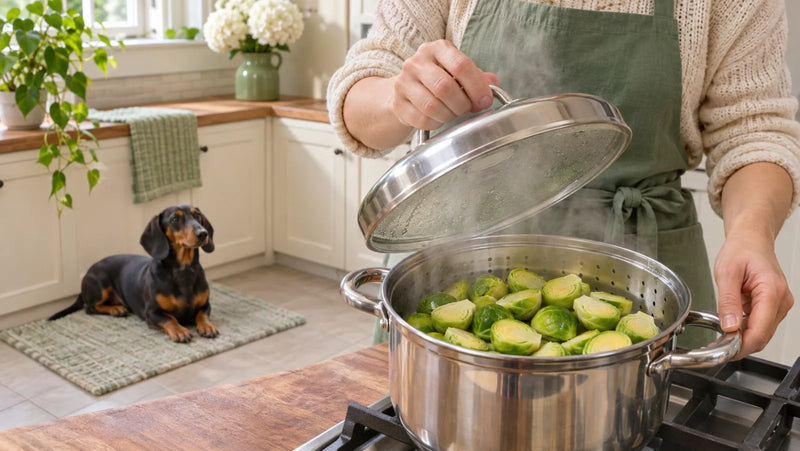
- Steam or simmer in plain water. Cook until the leaf is completely wilted, fork-tender, and easy to mash. Leaf age, thickness, cut size, and pan conditions matter more than one universal minute count.
- Drain and cool. Do not save the cooking liquid as a topper. Let the leaf cool to room temperature.
- Chop very finely. Mince the soft leaf into pieces smaller than the dog's usual food or training reward.
- Measure the first taste. Use up to 1/2 teaspoon for an eligible adult dog; a toy-size dog can begin with a few strands. Serve it separately so the response is easy to track.

Plain means no oil, butter, salt, broth, bouillon, vinegar, sugar, cheese, meat, smoke flavor, pepper, chile, onion, garlic, or seasoning blend. A small amount of a strong-flavored ingredient can spread through a whole pot.
Oxalates Matter Most for Dogs With a Stone or Urinary Plan
Collard greens contain naturally occurring oxalates. That fact does not make one tiny cooked taste poisonous to every dog, and cooking should not be described as removing every oxalate. The important distinction is whether the dog already has a urinary diagnosis or a diet designed to control urine chemistry.
VCA's review of nutrition in urinary-stone management explains that every food, treat, and topper can affect urine composition and can reduce the benefit of an exclusive therapeutic diet. Its calcium-oxalate bladder-stone guidance likewise emphasizes veterinary diets, water intake, monitoring, and avoiding unapproved high-oxalate foods for dogs with a stone history.
A dog with calcium-oxalate crystals or stones, kidney disease, urinary signs, or a prescription urinary diet should not receive collards unless the treating veterinarian specifically allows them. Frequent urination, straining, painful urination, blood in urine, or repeated attempts that produce little or no urine requires prompt veterinary attention; inability to pass urine is an emergency.
Spinach has its own preparation and oxalate context. Compare it separately using the spinach-specific oxalate and preparation guidance rather than treating all dark leafy greens as interchangeable.
Isothiocyanates Explain the Small-Portion Rule
Collards belong to the Brassica family. A peer-reviewed laboratory analysis available through PubMed Central measured glucosinolates in collard leaves, stems, flowers, and roots; when plant tissue is cut and chewed, glucosinolate breakdown can produce compounds that include isothiocyanates. The study establishes the plant chemistry, not a toxic serving for dogs.
Veterinary discussion of related cruciferous greens provides the practical caution. The American Kennel Club's veterinarian-attributed review of kale and isothiocyanates notes that larger exposures can irritate a dog's stomach. That does not justify importing a broccoli percentage or inventing a collard toxic dose. It supports a plain, tiny portion and a stop if the dog develops vomiting, diarrhea, pain, repeated gas, or poor appetite.
More greens are not automatically better. A dog that handles 1/2 teaspoon without trouble has shown tolerance to that exposure, not a need for a tablespoon or a daily bowl. Keep the next decision small and occasional.
Thyroid and Complete-Diet Boundaries
The Merck Veterinary Manual's review of goiter in animals explains that members of the Brassicaceae family can contain goitrogenic compounds that interfere with iodine metabolism. That general animal-nutrition fact does not mean one small cooked collard taste causes canine hypothyroidism.
A dog with diagnosed thyroid disease, an iodine-controlled plan, or levothyroxine timing instructions needs consistency. Ask the prescribing veterinarian before adding collards or another cruciferous vegetable. Do not change medication timing, dose, or food instructions around an experimental snack.
Puppies, pregnant or nursing dogs, and dogs eating home-prepared diets also need a carefully balanced plan. Collards cannot make an incomplete diet complete, and their vitamin or mineral content is not a reason to displace puppy food or another life-stage-appropriate complete diet.
Pot Likker Is Not Plain Collard Greens
Pot likker is the flavorful cooking liquid left after simmering greens. Recipes vary by household and region, and that variation deserves respect: there is no single ingredient list. The safety decision comes from the actual pot.
A traditional batch may include a ham hock, bacon, smoked turkey, cured meat, rendered fat, stock, bouillon, salt, onion, garlic, pepper, hot sauce, vinegar, sugar, or other seasoning. The liquid distributes those ingredients through the leaves. Picking out a leaf or rinsing it under the tap does not reverse hours of cooking in the seasoned broth.
The ASPCA Animal Poison Control list says onion, garlic, and chives can irritate the gastrointestinal tract and damage red blood cells, while excessive salt can cause serious signs. Fatty scraps may also trigger vomiting or diarrhea and can be a particular problem for dogs with pancreatitis or a prescribed low-fat plan.
A ham hock or other bone adds choking, tooth, obstruction, and perforation risk. Do not give the bone, and do not assume every splinter stayed attached during cooking. Reserve a leaf before the family pot or choose a different reward.
How Much Collard Greens Can a Dog Eat?
For a first taste, use no more than about 1/2 teaspoon of fully cooked, drained, cooled, finely chopped plain leaf. For a toy-size dog, a few minced strands are enough. This small exposure makes the ingredient easy to identify and limits unfamiliar fiber and cruciferous compounds.
There is no responsible universal cup, handful, or daily schedule. Body size, normal diet, body condition, medical history, medications, prior food response, and every other extra given that day all change the answer. A dog that tolerated the first taste does not need a larger one next time.
The WSAVA Nutrition Committee's dog-treat guidance recommends that all treats stay below about 10% of daily calories. That ceiling includes dog treats, toppers, chews, table tastes, and collards together. It is not a target and does not override urinary, thyroid, kidney, GI, heart, allergy, or weight restrictions. Our daily dog-treat calorie guide shows how to count the full day.
What to Do After a Larger or Seasoned Serving
Secure the pot, trash, bones, and leftovers. Write down the recipe, largest possible amount, earliest and latest time, and whether the dog reached pot likker, ham, bacon, fat, stock, salt, onion, garlic, hot sauce, a bone, or another ingredient. Add the dog's weight, age, medical conditions, medicines, current diet, and symptoms.
One tiny plain cooked taste: remove access, keep fresh water available, and observe. Do not offer another new food during the observation period.
A larger plain serving: call the veterinarian if the amount is uncertain, the dog is very small or medically vulnerable, or vomiting, diarrhea, repeated gas, pain, or poor appetite appears.
Pot likker, seasoned greens, onion, garlic, or an unknown recipe: call the veterinarian or ASPCA Animal Poison Control at 888-426-4435 with the recipe and exposure facts. Do not induce vomiting or give salt, oil, milk, bread, charcoal, or another home treatment unless the professional handling the case directs it.
A missing bone or severe signs: choking, repeated retching or vomiting, a painful or swollen abdomen, collapse, marked weakness, pale gums, blood, or inability to pass urine needs urgent or emergency care.
Compare Collards With Kale, Spinach and Other Vegetables
Collards, kale, and spinach all arrive as dark leafy greens, but their texture, plant chemistry, common recipes, and serving questions differ. Use the kale-specific portion, thyroid, and stone questions when kale is on the cutting board, and use the spinach review for spinach rather than carrying one leafy-green answer across the category.
The vegetable safety guide for dogs compares safe preparation, plant parts, mixed dishes, and portion logic across a wider range. For other winter sides, review plain parsnip safety and preparation and how to cook plain squash for dogs before the butter, sugar, stock, or seasoning goes in.
Frequently Asked Questions
Can dogs eat raw collard greens?
Skip raw collards. The leaf and center rib are fibrous and harder to chew, especially for a small dog or a dog that gulps food. A tiny amount cooked plain until soft and chopped finely is the more predictable format for an eligible adult dog.
Can dogs eat cooked collard greens?
Some healthy adult dogs may try up to about 1/2 teaspoon of fully cooked, drained, cooled, finely chopped collard leaf with no additions. The serving must come from a plain dog-only batch, not a pot cooked with meat, stock, salt, onion, garlic, fat, or seasoning.
Can dogs eat collard-green stems?
Remove the thick center rib for the first taste. It is tougher and more fibrous than the leaf. A soft young stem may be edible for people after cooking, but it does not improve the dog serving and can create a harder piece to chew or swallow.
Can dogs eat collard greens with ham or bacon?
No planned serving should come from that pot. Ham and bacon add salt and fat, a hock can contain a dangerous bone, and the broth may also contain onion, garlic, stock, pepper, or hot sauce. Reserve a plain leaf before those ingredients enter.
Can dogs drink pot likker?
No. Pot likker carries the ingredients used to season the greens and can concentrate salt, fat, stock, meat drippings, onion, garlic, and spices. Plain water is the appropriate drink for a dog.
Are collard greens bad for dogs with bladder stones?
A dog with calcium-oxalate stones, crystals, urinary disease, or a therapeutic urinary diet should receive only extras approved by the treating veterinarian. Even a small food can affect urine composition or dilute the control provided by an exclusive prescription diet.
Can puppies eat collard greens?
A puppy's complete growth diet has priority, and a small body leaves less room for unbalanced extras. Ask the puppy's veterinarian before adding collards, especially during weaning, digestive upset, a food trial, or any prescribed plan.
Keep the Leaf Plain and the Portion Tiny
Reserve the dog taste before seasoning, remove the center rib, cook the leaf soft in plain water, cool it, mince it, and stop at a measured first taste. Keep pot likker, ham, bacon, bones, salt, onion, garlic, and the family recipe on the human side of the table.
If the recipe or medical fit is uncertain, skip the vegetable and compare the exact ingredients, texture, calories, life-stage information, and feeding directions across the current American Paws dog treats. Choose one appropriately sized item that fits the dog's veterinary plan and count it with every other extra that day.